

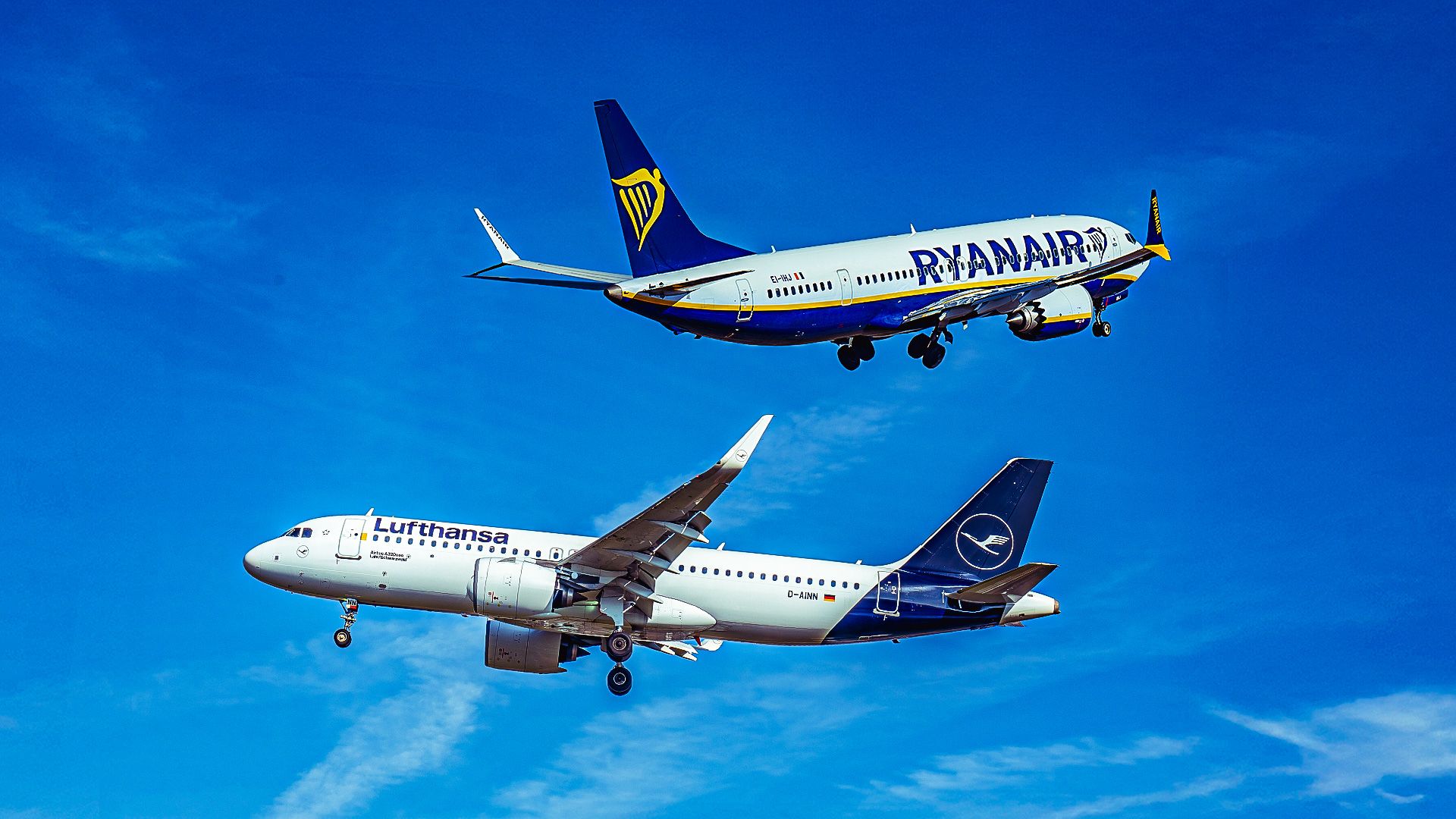
When it comes to the world of narrowbody/single-aisle aircraft, the two most popular aircraft families are the Boeing 737 and the Airbus A320. While both aircraft types entered the commercial market decades ago, they have seen various upgrades and iterations over the years, which have enabled them to continue flying and remain operational today, with the latest variants, the 737 MAX and the A320neo.
Though the MAX and neo aircraft dominate the short-haul market and are popular with operators all around the world, there are a few distinct differences between the two aircraft. These differences range from physical appearances (internal and external), operational capabilities, technology used, and more.
Variants Within The Aircraft Families

Oftentimes, manufacturers develop multiple variants based on the same aircraft design, with different operational capabilities, in order to cater to the requirements of their customers or to focus on a particular type of operation. This is something both  Boeing and Airbus have done with their MAX and neo aircraft families, respectively.
On one hand, with the Boeing 737 MAX series, the manufacturer has created four variants, which include the 737 MAX 7, 8, 9, and 10, with each aircraft increasing in size and therefore increasing its maximum passenger capacity, while trading off its range. However, it is worth noting that the MAX 7 and MAX 10 variants of the aircraft are currently pending certification, with Boeing aiming to have them certified in 2026. As of the end of September, data from Boeing shows MAX aircraft having a delivery backlog of around 4,800 aircraft.
The Airbus A320neo series, on the other hand, covers a few different aircraft types, including the neo variants of Airbus’ A319, A320, and A321 aircraft, as they all fall under the “A320” family. The neo variants essentially offer new, modern, and more efficient engines to the existing aircraft, and thus do not alter in terms of aircraft dimensions, and flight deck commonality is maintained between all the older variants and the neo variants.
Comparing Maximum Passenger Capacity

One of the most important specifications any operator considers when looking to integrate a new aircraft into its fleet is the capacity of the aircraft. How many passengers can they carry on a single flight with a particular aircraft type, in the carrier’s cabin configurations?
While the Boeing 737 MAX and the Airbus A320neo aircraft both operate within the same market, both aircraft types (and variants within the MAX and neo types) offer different passenger capacities, allowing operators to mix and match the variants for operational flexibility. Maximum capacity specifications from Airbus and Boeing show the following:
|
Boeing 737 MAX |
7 |
8 |
9 |
10 |
|---|---|---|---|---|
|
Maximum Capacity |
172 |
210 |
220 |
230 |
|
neo family |
A319 |
A320 |
A321 |
|
|
Maximum Capacity |
160 |
194 |
244 |
|
While Airbus did have an A318 variant in its previous generation of the aircraft line-up, a neo version of the type was never produced and therefore has been excluded from this comparison. The varying capacity enables operators of either type to deploy the correct variants on the different routes, enabling the carriers to right-size operations by ensuring optimal capacity is available on their routes, thereby maximizing airline revenue.
Operational Ranges Of The MAX & neo

Similar to the aircraft capacity, the operational range of the aircraft is also very important to the operator, especially on international routes, where direct flights are always preferable. The range of the 737 and A320 aircraft has been gradually increasing with each new iteration, with the latest MAX and neo variants now capable of flying Transatlantic routes, connecting North America and Europe.
While improved aerodynamics definitely helps increase the range of the aircraft, a key point of improvement was the new and efficient engines, which enabled the MAX and neo aircraft to fly longer than their predecessors. The manufacturer’s specifications indicate the aircraft range as follows:
|
Boeing 737 MAX |
7 |
8 |
9 |
10 |
|---|---|---|---|---|
|
Maximum Range (NM) |
3,800 |
3,500 |
3,300 |
3,100 |
|
neo family |
A319 |
A320 |
A321 |
|
|
Maximum Range (NM) |
3,700 |
3,400 |
3,500 |
|
|
Additional Variants |
A321 LR |
A321 XLR |
||
|
Maximum Range (NM) |
4,000 |
4,700 |
||
The A321 LR and XLR variants still maintain the maximum capacity of 244 seats, but an increased range is possible due to additional fuel tanks being integrated into the aircraft. The latest XLR model allows airlines to fly the narrowbody aircraft non-stop for up to 11 hours, enabling airlines to operate long-haul routes using a single-aisle aircraft, which is perfect for routes that might not be able to sustain widebody aircraft or allow carriers to enter long-haul operations without investing in new widebody aircraft types.
The A321 XLR only entered commercial service in late 2024, with the launch customer of the type being the Spanish carrier,  Iberia. Since then, the type has also entered service with other operators such as
  Aer Lingus in Ireland and Qantas in Australia.
Different Wingtips For The MAX & The neo

Different aircraft have different wing-tip designs and while some look more aesthetic than others, ultimately, they all serve the same purpose, which is to improve the wing’s aerodynamics, by channeling the air flow at the wing tips in a manner to reduce induced drag experienced by the aircraft, thereby improving operational efficiency, while also reducing the effects of wake vortices on surrounding traffic.
While Airbus utilizes the “Sharklet” design for the wingtips on the neo family aircraft variants, similar to the blended winglets seen initially on the 737 NG models, Boeing designed winglets known as Advanced Technology (AT) that are more efficient than the blended winglets the manufacturer had on its preceding 737 NG variants. Apart from reducing fuel burn by around 2% compared to the blended design, the operators have also reported an increase in the aircraft’s operational range.
The AT winglet design proved so popular that, for a decade now, Boeing has been offering slightly modified AT winglets, known as split scimitar winglets for the operators of the older 737 NG aircraft, thereby enabling the older variants to achieve more fuel efficiency and operational performance, enabling these aircraft to remain operational for longer. Even Airbus has previously developed a split scimitar-style winglet for it previously-proposed Airbus A380plus program, citing fuel burn reduction of up to 4%, proving the efficiency of the winglets currently used by the 737 MAX.
Comparing The Aircraft Dimensions

With each iteration of the 737 and the A320 family models, the aircraft have consistently been increasing in size, both in terms of cabin space offered onboard the aircraft, but also exterior features such as the aircraft wing span. The larger the wing span, the more lift the aircraft is capable of generating, better operating economics for the aircraft.
The aforementioned increase in cabin dimensions not only allows for increased capacity but also provides passengers with a better flying experience, allowing manufacturers to design ergonomic cabins with the latest technologies incorporated into the increased space available, such as the Airspace Cabins by Airbus. Considering fuel is stored in wing tanks, increased wing spans subsequently result in increased fuel capacity, increasing aircraft range.
|
Boeing 737 MAX |
7 |
8 |
9 |
10 |
|---|---|---|---|---|
|
Aircraft Height |
40 ft 4 in |
|||
|
Aircraft Length |
116 ft 8 in |
129 ft 8 in |
138 ft 4 in |
143 ft 8 in |
|
Fuselage Width |
12 ft 4 in |
|||
|
Wing Span |
117 ft 10 in |
|||
|
neo family |
A319 |
A320 |
A321 |
|
|
Aircraft Height |
38 ft 7 in |
|||
|
Aircraft Length |
111 ft |
123 ft 3 in |
146 ft |
|
|
Fuselage Width |
13 ft |
|||
|
Wing Span |
117 ft 5 in |
|||
The aircraft wing span is another important factor when it comes to aircraft design. While having a longer wing provides aerodynamic efficiencies and other operational advantages, since the aircraft wing span determines what category of airport an aircraft can fly to and even determines what taxi ways an aircraft can utilize within an airport, manufacturers prefer to keep the wing span as short as possible for the A320 and the 737s, to ensure these aircraft can access maximum number of airports and markets worldwide.
Engine Options Available For The Two Aircraft Types

It is often the case that multiple powerplants are certified for an aircraft type, providing operators with different options when purchasing the aircraft. For the two aircraft being compared, this is true for the A320neo family, as these aircraft can be powered by CFM International’s LEAP-1A engines and Pratt & Whitney’s PW-1100G engines, while the MAX aircraft are solely powered by CFM’s LEAP-1B engines.
Each of these engines deliver different thrust capacities and have varying diameters. While this obviously results in physical differences, more importantly, the engine is almost always the most valuable part of the aircraft, not just because of the power it delivers, but the technology that goes into making the engine as efficient as possible to operate.
CFM’s specifications show that the LEAP-1B powering the MAX aircraft can deliver thrust of 28,000 lbf, with a fan diameter of 5.75 ft. Both the LEAP-1A and the PW-1100G engines for the neo deliver thrust up to 33,000 lbf with a fan diameter of 6.5 ft and 6.75 ft, respectively. The increased size of the LEAP-1B engine, required Boeing to reposition the engine on the wings further forward to ensure sufficient ground clearance.
Rather interestingly, apart from the LEAP-1A and -1B, CFM also has another variant known as LEAP-1C, which is the sole engine option for COMAC’s C919 aircraft, which was developed by the Chinese manufacturer in hopes of competing with the A320 and 737 aircraft types. While the C919 is certified and operational domestically within China, it is yet to receive certification from international regulators and still needs to work on ramping up its production to efficiently compete with the 737s and A320s.
source
