

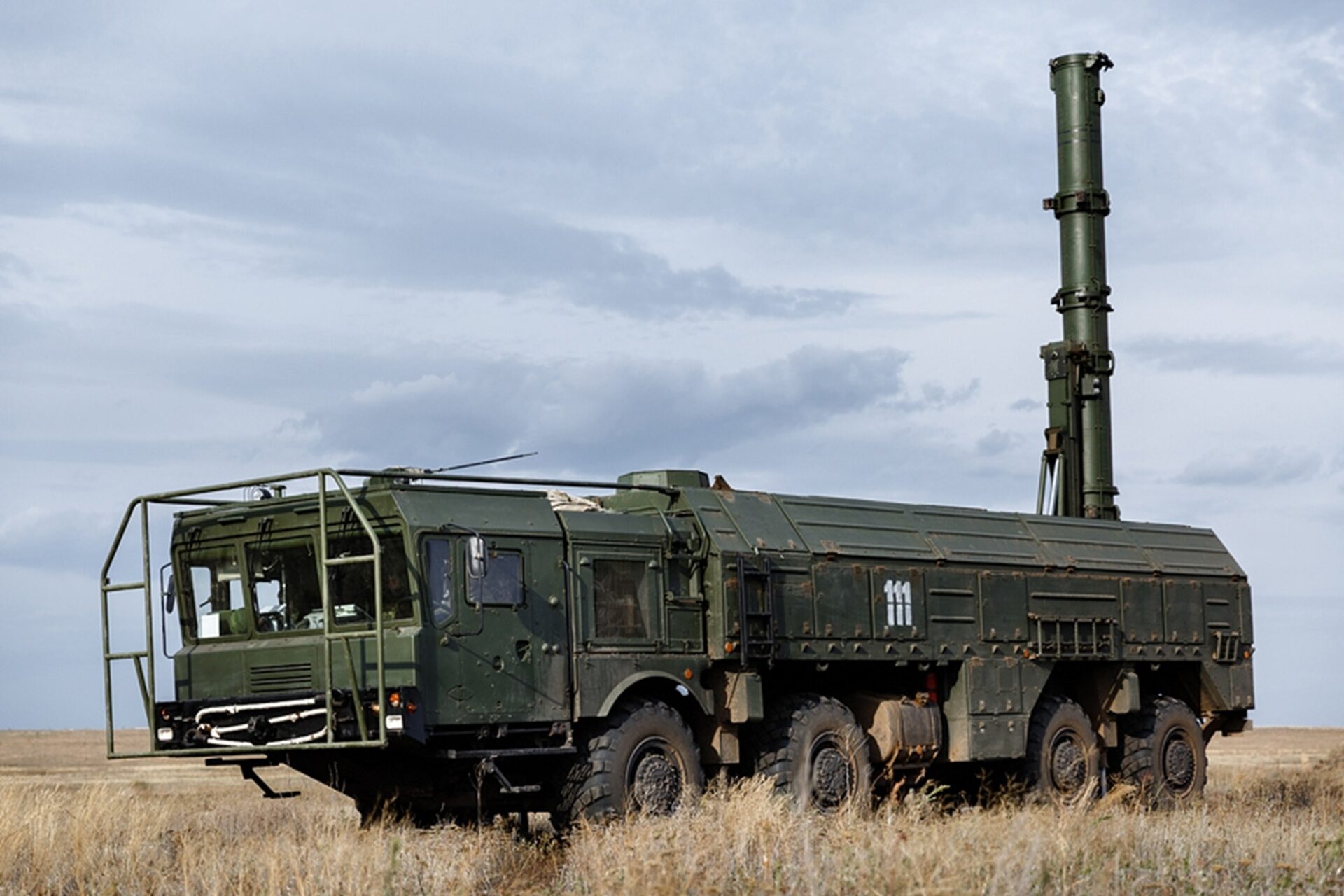
Ukraine has accused Russia of using the 9M729 ground-launched cruise missile, also known as the SSC-8 by NATO, in recent strikes, according to a Reuters report citing Ukrainian Foreign Minister Andrii Sybiha. Another source said the missile has been fired at least 23 times since August 2025, marking what would be its first documented combat use.
Debris recovered near the village of Lapaiivka in western Ukraine reportedly matched the 9M729’s design. One missile, launched on October 5, 2025, was reported to have flown more than 1,200 kilometers (745 miles) before impact, a range consistent with Western estimates of the system’s capabilities.
If confirmed, the deployment moves the 9M729 from a long-running arms-control dispute into active wartime service. The missile was central to Washington’s 2019 decision to withdraw from the Intermediate-Range Nuclear Forces (INF) Treaty, a Cold War-era agreement that banned US and Soviet ground-launched missiles with ranges between 500 and 5,500 kilometers. Then-President Donald Trump accused Moscow of breaching the pact, though Russia denied any violation.
From treaty dispute to battlefield use
Developed by Russia’s Novator Design Bureau, the 9M729 is a ground-launched derivative of the Kalibr cruise-missile family. Western assessments describe it as dual-capable, able to carry either a conventional or nuclear warhead, with a potential range of up to 2,500 kilometers depending on payload. Moscow maintains the missile’s reach is far shorter, arguing that it never violated the INF Treaty.
Its reported use in Ukraine would confirm that Russia is willing to employ a missile that NATO long viewed as a strategic threat to Europe rather than a battlefield weapon. In 2019, US officials claimed that Russia had already deployed multiple battalions of the system, giving it the ability to strike European targets from deep inside its own territory.
Cruise missiles of this type can follow terrain at low altitude, compressing warning times and forcing Ukraine to stretch its air-defense network far from the front lines. Ukrainian officials suggest that defending against such long-range, low-flying weapons consumes valuable interceptors and exposes gaps in coverage.
Kyiv argues that, if Russia can hit targets in western Ukraine from launchers inside its territory, then Ukraine must be able to hold those launch sites at risk. Officials are renewing calls for Western partners to provide long-range cruise missiles such as the US Tomahawk or additional Storm Shadow / SCALP EG stocks.
A post-INF reality for Europe
The 9M729’s combat use underscores the erosion of arms-control limits that shaped European security for three decades.
The INF Treaty, signed in 1987 by Ronald Reagan and Mikhail Gorbachev, eliminated an entire class of ground-launched missiles from Europe and resulted in the dismantling of 2,600 US and Soviet weapons. The United States formally withdrew in 2019 over the 9M729 dispute, with NATO allies backing Washington’s position. Russia suspended its own participation soon after and, by 2024, had abandoned a self-imposed moratorium on deploying such systems in Europe.
With the 9M729 now reportedly used in combat, questions once confined to policy forums have become operational. European NATO members must determine whether their air- and missile-defense networks can reliably detect and intercept low-flying cruise missiles launched from Russia.
US to resume nuclear tests
The missile’s return to combat marks a significant departure from the post-Cold War arms-control framework. On October 30, 2025, U.S. President Donald Trump announced that the United States would resume nuclear weapons testing, thereby ending a voluntary moratorium that had been in place since 1992. This announcement came just days after Russian President Vladimir Putin celebrated the successful tests of the 9M730 Burevestnik missile and the Poseidon drone torpedo.
While details remain limited, the move signals Washington’s intent to modernize its nuclear stance amid growing competition with Russia and China. Combined with Moscow’s fielding of a missile once deemed treaty-breaking, it marks a decisive shift toward a world where conventional and nuclear deterrents are again intertwined.
source
