

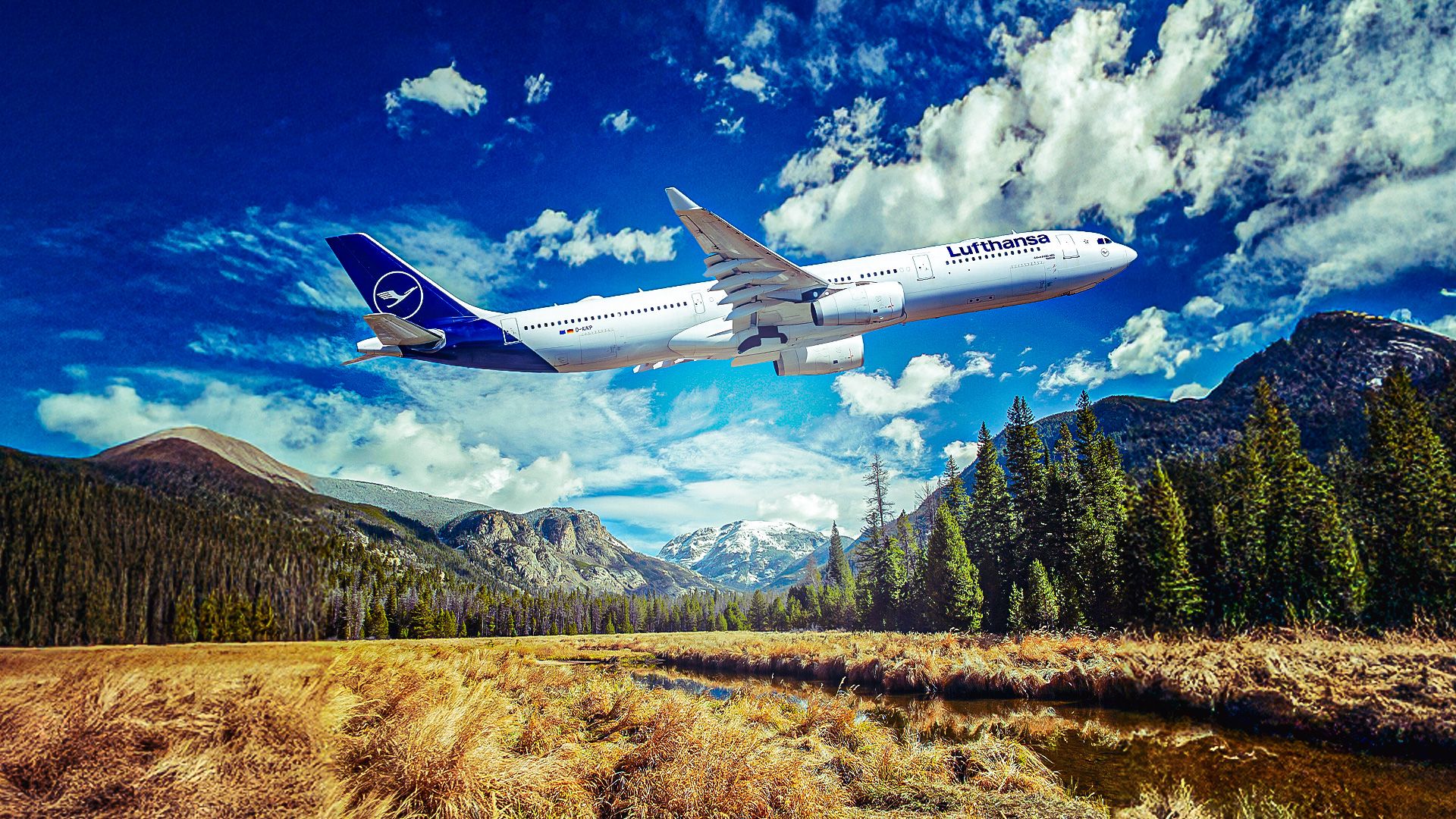
As airlines around the world share their third-quarter financial results with the rest of the industry, German flag carrier and Star Alliance founding member Lufthansa is the latest operator to get in on the act. Q3 of 2025 was a successful one for the Cologne-headquartered airline, with the Lufthansa Group as a whole having achieved its best-ever quarter in terms of its revenue.
Alongside the group’s Q3 revenues growing year-on-year, its operating profit stayed level, with a slight decrease in terms of its operating margin. However, its operating profit for the year so far exceeds that of the first three quarters of 2025. These positive financial indications come hot on the heels of Lufthansa’s controversial decision to cut 4,000 jobs amid a restructuring plan.
By The Numbers

In Q3 of 2025, the airline’s revenue rose by 4% year-on-year from €10.7 billion ($12.43 billion) to €11.2 billion ($13.01 billion). When offset against its operating costs for the third quarter of the calendar year, this gave  Lufthansa a €1.3 billion ($1.51 billion) operating profit, putting it level on this front with last year. In the face of this, its operating margin fell from 12.5% to 11.9%.
However, its year-to-date operating profit has gone up 25%. Indeed, in the first nine months of 2025, Lufthansa’s operating profit amounted to a grand total of €1.5 billion ($1.74 billion), with this figure being some €300 million ($348.6 million) higher than the same period in 2024. However, it isn’t all sunshine and roses, with Lufthansa Chief Executive Officer Carsten Spohr explaining that:
“We remain concerned that Germany as a location for business is benefiting less and less from our success, as shown by the fact that domestic flights within Germany have halved since 2019.”
A Strong Quarter On The Operational Side Of Things

Away from the financial side of things, the German flag carrier and  Star Alliance founding member also enjoyed a strong Q3 from an operational standpoint. Indeed, Spohr noted that “with regularity of over 99% and a double-digit improvement in punctuality,” the wider Lufthansa Group experienced “the best summer in terms of our flight operations in the last decade.”
In Q3 of 2025, the airlines of the Lufthansa Group increased their overall seat capacity by 3% year-on-year. This looks to have been an astute decision, as, with passenger traffic rising by a factor of 5% from 40 million to 42 million, the Group’s average load factor increased to 87.5%. Lufthansa also saved €200 million ($232.4 million) thanks to experiencing fewer flight irregularities.
Despite this performance, the airlines of the Lufthansa Group suffered a 2.2% drop in revenue per available seat kilometer (RASK). It cited competition in Europe and a drop in transatlantic demand as driving forces behind this development. Still, low oil prices and a weak US dollar meant that fuel costs dropped, with growing unit costs (CASK) also having been “significantly mitigated.”
Satisfaction Is Also On The Up Among Both Passengers & Employees

Encouraging though Lufthansa’s Q3 results are, it is the oldest saying in the book that money can’t buy happiness. However, research into satisfaction levels at the German flag carrier found that it also made important steps forward on this front in the third quarter of 2025 as far as both its passengers and employees were concerned. As such, 2025 is being seen as a key turning point.
On the passenger side of things, Spohr notes that “satisfaction rose significantly in the third quarter.” Regarding this development, the Lufthansa CEO cited “numerous digital innovations, upgraded services, and newly designed lounges” as being important driving forces behind it.
Meanwhile, employee satisfaction at Lufthansa reached new highs in the third quarter of 2025, with positive results from the carrier’s annual staff survey. Indeed, the airline explains that the overall engagement index from the survey was at “the highest level since the measurement was introduced ten years ago, apart from the exceptional situation during the pandemic.”
source
