

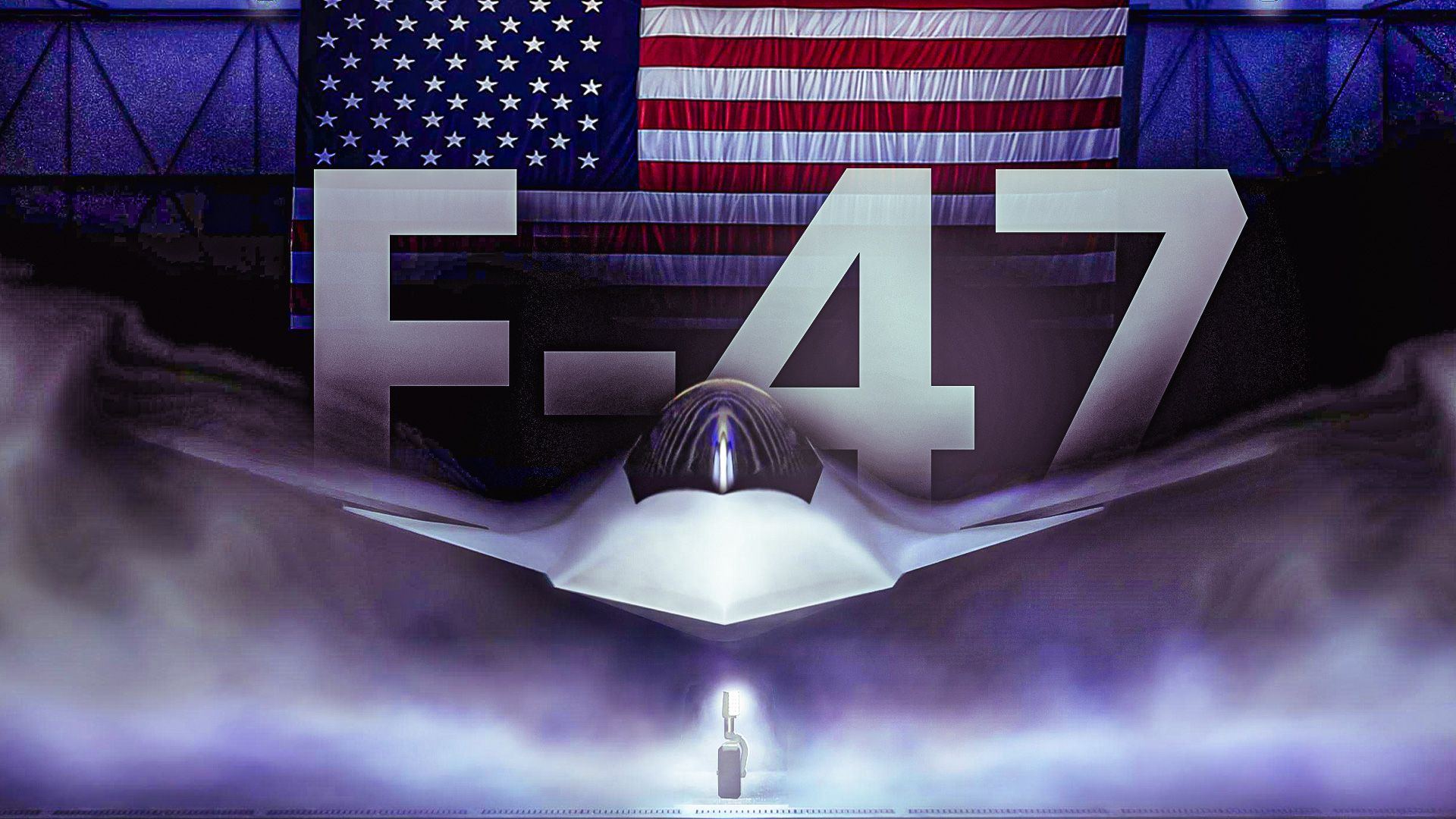
When the United States Air Force announced in March 2025 that Boeing would build its next-generation air-superiority fighter, the stealthy, sixth-generation F-47, the decision sent shockwaves through the defense and aviation communities. For decades, Lockheed Martin has been the undisputed champion of American stealth design, producing icons like the F-22 Raptor and F-35 Lightning II. Boeing’s victory marks a dramatic turning point not only for the company’s future, but for how the US plans to maintain air dominance in the decades ahead.
This was no routine contract award. The F-47 program is the centerpiece of the Next Generation Air Dominance (NGAD) initiative, the most ambitious combat-aircraft project since the 1980s. Its goal is to ensure US air superiority into the 2030s and beyond, combining a manned fighter with a network of autonomous drones, sensors, and digital command systems. The Air Force’s decision to choose Boeing over Lockheed reflects deep strategic reasoning: diversifying the defense industrial base, accelerating delivery timelines, and embracing a new model for manned-unmanned teaming.
The NGAD Contest And Boeing’s Breakthrough

When NGAD was announced, the Air Force described it not as a single aircraft but as a system: a manned fighter working alongside autonomous drones, the so-called Collaborative Combat Aircraft, or CCA. The goal was simple on paper but immense in practice: create a crewed “quarterback” that could control multiple unmanned wingmen, each carrying sensors, weapons, or jammers, and all operating as one coordinated swarm.
By early 2025, both  Boeing and Lockheed Martin had submitted designs. Each promised stealth, range, and intelligence far beyond anything flying today. On March 21, 2025, the Air Force made it official: Boeing’s entry, now called F-47, had won.
Behind that decision lay months of evaluation. One of the strong points of Boeing’s proposal was its level of digital maturity. Engineers had already built a full-scale “digital twin,” allowing the Air Force to analyze everything from radar signature to maintainability before the prototype ever flew. That reduced risk in ways Lockheed’s more experimental design couldn’t match.
Lockheed’s response was swift and pragmatic. Within days, the company said it would double down on its existing F-35 fleet, promising upgrades that could deliver “eighty percent of F-47 capability at half the cost.” It was a clear pivot, and a quiet acknowledgment that, this time, Boeing had outpaced it.
For Boeing, the moment was redemptive. After years of negative headlines, from the Boeing 737 MAX crisis to KC-46 Pegasus tanker delays, this win gave its defense arm a new flagship and a morale boost it sorely needed. For the Air Force, it was a rebalancing act: ending a 25-year era of Lockheed dominance and giving Boeing a chance to lead again in the stealth arena.
Why Boeing And Not Lockheed? The Industrial And Strategic Factors

The Air Force’s choice wasn’t purely about aircraft design; it was also about industrial strategy. For years, Pentagon officials have warned that too much of America’s fighter production capacity was concentrated on a single contractor. With Lockheed building both the F-22 and F-35, the Department of Defense risked over-dependence on one supplier.
Awarding the F-47 to Boeing was a deliberate move to diversify the defense industrial base, a principle often emphasized in congressional oversight reports and echoed by The Washington Post, which noted “the decision also diversifies the production of US military jets.”
Second came the issue of program maturity and risk reduction. Boeing’s design was built upon years of X-plane testing sponsored by DARPA . Those experimental aircraft, which explored adaptive engines, advanced stealth materials, and AI-driven flight control, paved the way for the NGAD platform. That gave Boeing a measurable lead in readiness.
Third was strategic urgency: since China and Russia were developing their own next-generation fighters, such as China’s J-20B and J-35 and Russia’s Su-57M and Su-75 concept, the Air Force needed speed as much as stealth.
Budget documents for Fiscal Year 2026 allocate nearly US $3.5 billion to continue F-47 development, marking it as a top priority. By contrast, the US Navy’s parallel sixth-generation effort, the F/A-XX, has been scaled back to focus resources on the Air Force’s program.
Finally, there was a corporate dimension. Boeing desperately needed a long-term defense anchor to offset its civil-aviation troubles. The F-47 contract provided precisely that: a chance to rebuild credibility, stabilize its St. Louis fighter plant, and attracted a new generation of engineering talent. Lockheed, in turn, would refocus on upgrades and exports.
In short, Boeing won not just because it had the better airplane, but because it offered a lower-risk, higher-readiness path to production, and because awarding the contract to Boeing served America’s industrial and strategic interests.
The Technical And Operational Requirements Driving The F-47

What kind of requirements does the F-47 meet, and why is such a platform needed? According to the USAF announcement, the F-47 is designed to deliver “lethal, next-generation technologies to ensure air superiority for the Joint Force in any conflict.”
Here are some of the core technical and operational drivers:
- Penetration‐capable stealth: The F-47 is expected to combine deep-penetration stealth with long range, modular systems, and the ability to work hand-in-hand with drones. It will likely feature radar-absorbent composites more advanced than the F-35’s, adaptive intakes that hide its engine face, and a new generation of sensors capable of fusing battlefield data across land, sea, air, and space domains.
- Unmanned teaming: One of the hallmark concepts is that the F-47 will not fly alone but act as “quarterback” to multiple drone wingmen (Collaborative Combat Aircraft, CCA) that extend its reach and capability.
- Range and sustainability: Future fights in the Pacific could stretch thousands of miles from safe bases. That’s why the Air Force insisted on a new adaptive-cycle engine, co-developed by GE Aerospace and Pratt & Whitney, that adjusts airflow for efficiency or thrust as needed.
- Modularity and adaptability: Given the pace of technological change, the platform must accept upgrades (sensors, propulsion, weapons) without full redesign. FAA budget documents and USAF commentary point to this as a critical element.
- Speed and agility: While specific performance markers are classified, reports suggest a first flight targeted for 2028 and operations by the early 2030s.
All of that makes the F-47 less a single aircraft and more a platform for future combat concepts: adaptable, updatable, and deeply connected to its unmanned teammates.
The Cost, Timeline, And Risk Calculus

Developing a sixth-generation fighter is not cheap or simple. The Air Force’s 2026 budget allocates around $3.5 billion to keep F-47 work moving, part of what analysts estimate will exceed $20 billion before production. Most of that will flow through Boeing’s St. Louis plant, which already builds the F-15EX and T-7A Red Hawk.
The timeline is ambitious, even by modern standards. The use of digital-twin modeling allows engineers to predict manufacturing issues before physical testing begins, one reason officials believe Boeing can deliver faster.
Indicative Specs of F-47 That We Know So Far
|
Specification |
Value |
Notes / Source |
|---|---|---|
|
Procurement number |
≈ 185 aircraft |
USAF graphic posted by Gen. David Allvin indicates ~185 units. |
|
Combat radius |
1,000+ nautical miles (≈ 1,150+ mi / ~1,850+ km) |
Cited in USAF graphic and press commentary. |
|
Top speed |
Mach 2+ (approx) |
The public commentary cites “Mach 2+” for F-47. |
|
Stealth rating |
Labeled “Stealth ++” (vs F-22 “Stealth +” / F-35 “Stealth”) |
From the analysis of USAF graphics and reporting. |
|
First flight target |
Around 2028 |
Several sources point to a 2028 first flight timeframe. |
|
Initial Operational Capability (IOC) |
Early 2030s (projected) |
Industry reporting expects service entry in the early 2030s. |
|
Engine class/thrust (inferred) |
Approx. ~160 kN (≈ 35,000 lb) / Variable-cycle turbofan |
Analysis of engine tech for F-47 suggests ~160 kN class for “scaled-core” engines. |
|
Role & concept |
Manned “quarterback” fighter commanding unmanned wingmen (Collaborative Combat Aircraft – CCA) |
Confirmed by USAF and multiple sources. |
Sources:The War Zone, The National Interest , af.mil , The Strategist , militaryfactory.com, National Security Journal
Lockheed, for its part, is taking a different route: modernizing the F-35 into what it calls a “fifth-generation-plus” fighter. In a recent earnings call, its CEO described this as a “value equation”, delivering near-NGAD capabilities at half the price for allied customers. That means Lockheed remains the export leader, even as Boeing takes the US lead in technology for now.
What This Means For Lockheed Martin And The Fighter Market

Lockheed Martin may have lost the F-47, but it hasn’t lost relevance. Far from it. The company’s pivot toward upgrading the F-35 shows strategic awareness: the global market for advanced fighters is still growing, but not every country can afford a sixth-generation jet.
What emerges is a two-tier structure. Boeing leads the top end, with a handful of F-47s built for the US and possibly select allies like Japan or the UK. Lockheed, meanwhile, dominates the broader export field, offering upgraded F-35s to dozens of nations.
For Boeing, this is a once-in-a-generation opportunity to reestablish itself as a fighter powerhouse. For Lockheed, it’s a chance to turn the F-35 into a long-term franchise, much like the F-16 was for decades. And for the US government, it’s proof that competition still drives innovation, even in a market dominated by two giants.
|
Category |
Boeing (F-47 NGAD) |
Lockheed Martin (F-35 / F-35+) |
|---|---|---|
|
Generation |
Sixth-generation |
Fifth-generation “plus” |
|
Primary Customer |
US Air Force |
Global allied network (20+ operators) |
|
Role |
Air-dominance “quarterback” with drone integration |
Multirole export platform with incremental modernization |
|
Production Hub |
St. Louis, Missouri (Boeing Defense) |
Fort Worth (US), Cameri (Italy), Nagoya (Japan) |
|
Expected Entry into Service |
Early 2030s |
Ongoing – upgraded variants through 2040s |
|
Export Outlook |
Limited — potential sales to close allies (Japan, UK) |
Broad — available to NATO and Indo-Pacific partners |
|
Strategic Focus |
Long-range penetration, AI-enabled command of unmanned assets |
Affordability, sustainment, and incremental tech insertion |
For aviation and defence watchers, this means we might see a two-track paradigm: one platform for highest-end threats (sixth-gen), another for more cost-effective, transition or export applications. The effect on prices, supply chains, and global competitiveness could be substantial.
Looking Ahead: Deployment, Export, And Tactical Impact

The road to service will be long but consequential. Boeing and the Air Force expect the F-47 to fly by 2028 and enter service in the early 2030s. Once operational, it will gradually take over the air-superiority mission from the F-22, likely flying alongside F-35s and drone formations in mixed packages.
When that happens, tactics will change. The F-47 won’t dogfight in the traditional sense; it will direct others that do. Acting as a command node, it can send unmanned aircraft ahead to probe defenses, jam sensors, or fire long-range missiles without putting the pilot at risk. It’s air dominance through orchestration rather than brute force.
Exports are possible but uncertain. Reports suggest Japan has expressed interest in an export-configured version, though such deals will depend on US policy. If approved, they could mirror the F-35 model, with partners buying tailored versions that integrate with US systems but maintain security boundaries.
For Boeing, the next challenge is industrial: scaling up production, modernizing its St. Louis facilities, and managing a new generation of suppliers. The Air Force will have to manage the task to ensure the F-47, its drones, and existing fleets will talk to each other.
More broadly, the F-47 sends a message to adversaries and allies alike: America is moving fast again. After years of drawn-out development cycles, the Air Force is betting on agility, in both design and strategy.
source
