

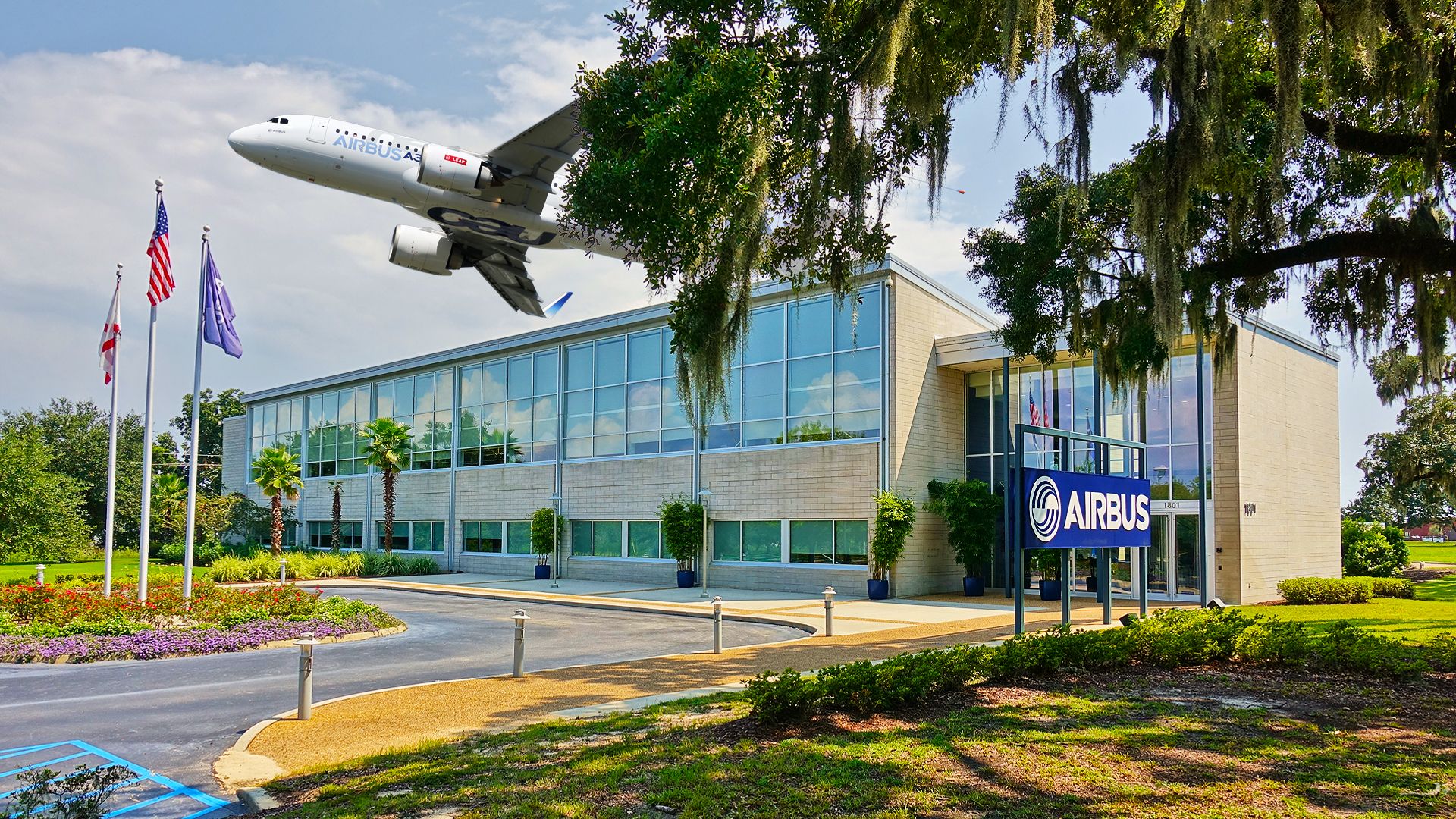
When Airbus officially inaugurated its second A320 Final Assembly Line (FAL) at its plant in Mobile, Alabama, in October 2025, the message was unmistakable: this is no small expansion, but a turning point for Airbus’ industrial footprint in North America. With this addition, Airbus has basically doubled its US A320 production capacity, marking a bold step toward meeting record demand for the Airbus A320neo family.
The timing could hardly be more critical. Airlines across the Americas are racing to modernize their fleets, balancing efficiency targets with capacity needs. Airbus’ US investment reflects not only surging demand but also a deliberate strategy to localize production and shorten supply chains. In this article, we’ll explore why Airbus is ramping up production, what factors influenced the move, what experts and airlines are saying, how it compares to rivals, and what risks and opportunities lie ahead.
What’s Behind This Expansion Move?

In simple terms, Airbus is scaling up US A320 production to meet booming demand, diversify global operations, and strengthen its competitive position in the North American market. The second assembly line in Mobile, Alabama, officially opened earlier this October, doubling the site’s A320 output capacity, adding around a thousand new jobs, and positioning the company to hit its target of producing 75 single-aisle aircraft per month globally by 2027, according to Airbus’ official press release.
The new facility joins Airbus’ existing Airbus A320 and Airbus A220 lines in Mobile, transforming what began as a single-line operation into a central transatlantic hub. Airbus describes the move as “a commitment to American manufacturing excellence,” underlining that the US is now a cornerstone of Airbus production, necessary to meet airlines’ demand both within the US and in Latin America.
That’s a profound shift. When the first US-built A320 rolled out of Mobile in 2016, the operation was modest: only a few aircraft per month. Then, in 2018, the 100th aircraft was delivered to Frontier Airlines straight from the Alabama Assembly line. And now, less than a decade later, Airbus’ Alabama site is emerging as a central piece of the company’s global puzzle.
The development is further magnified when one considers that the same Mobile facility already produces the A220 family for the US market.
What Factors Are Driving This US Expansion?

Airbus’ decision is mostly about strategic balance. The Mobile facility allows Airbus to respond faster to the needs of US and Latin American airlines while easing the strain on its European assembly lines in Toulouse and Hamburg. The company has been open about its goal: spreading production more evenly across continents, which will reduce logistical bottlenecks and strengthen resilience against global supply chain disruptions.
From an economic perspective, Alabama offers powerful advantages. The Mobile Aeroplex at Brookley, where the Airbus campus is located, provides direct access to port, rail, and air transport – an ideal setup for large-scale logistics. Local and state support has also been instrumental. As reported by Made In Alabama, Governor Kay Ivey praised the project as proof that “Alabama is a flying force in aerospace manufacturing,” underscoring how public-private cooperation made the expansion possible.
Another key factor is the presence of the A220 line, which began operations in 2019. Building both the A220 and A320 in the same complex provides Airbus with significant synergies, such as shared training programs, overlapping supplier networks, and cross-compatible workforce skills. The A220 has become a success story of its own: by mid-2025, the Mobile line delivered its 100th A220 aircraft, according to Made in Alabama.
Industrial diversification is the broader goal. The Mobile expansion allows Airbus to offset risks arising from over-reliance on European operations, which have sometimes faced supply chain constraints and labor shortages. Having an American base capable of full A320 production also provides a safeguard against political or economic disruptions that could affect transatlantic trade.
Expert Opinion

Airbus’ expansion in Alabama has been met with enthusiasm from both local stakeholders and industry analysts. Christian Scherer described the Mobile site as a “symbol of Airbus’ commitment to being part of the American industrial landscape.”
For the airlines that will receive these aircraft, the benefits are clear: shorter delivery times, reduced transportation costs, and fewer transatlantic delays.  United Airlines,
  Delta Air Lines, and JetBlue are among the North American carriers taking delivery of Mobile-built jets.
Industry observers see a more profound significance in Airbus’ decision. Analysts at Manufacturing Today note that by doubling its US capacity, Airbus is “sending a strong message that it’s here to compete head-on with Boeing in its home market.”
For the local economy, the impact is equally powerful. The expansion adds roughly 1,000 new high-skilled jobs, creating ripple effects across suppliers and the regional workforce. At the same time, it deepens Airbus’ commitment to community engagement through the adjacent Flight Works Alabama visitor and education center, which offers public tours and STEM programs.
Airbus Vs Rivals

The A320 family’s biggest rival, of course, remains Boeing 737 MAX series, which continues to dominate Boeing’s single-aisle production. Airbus’ decision to increase American A320 assembly is therefore strategic in another sense: it plants the Airbus flag firmly in Boeing’s backyard.
While  Boeing assembles nearly all 737s in the US, Airbus’ dual-continent model (Europe and America) adds a layer of flexibility. This decentralization could become a competitive advantage if supply chain constraints or political factors ever slow output in one region. Airbus is also showing that “Made in America” is no longer a phrase owned exclusively by Boeing.
But the competition is not only about Airbus vs Boeing. Within Airbus’ own product family, the A220 represents a different kind of competitor. The A220, also built in Mobile, serves the 100–150 seat market, which is a sweet spot once dominated by regional jets. For routes where passenger volumes don’t justify a full A320, the A220 provides airlines with exceptional fuel efficiency and range flexibility.
Yet the A320neo family, particularly the A321-series, remains Airbus’ workhorse, offering broader appeal to carriers operating medium-haul and transcontinental routes and effectively replacing the aging Boeing 757 among big US carriers. The Mobile facility’s expansion is a vote of confidence in that larger-capacity segment.
Main Competitors Comparison Table
|
Aircraft |
Typical Seats |
Max Range (nm) |
US Assembly? |
|---|---|---|---|
|
A220-300 |
130–150 |
~3,400 |
Yes (Mobile, AL) |
|
A320neo |
150–180 |
~3,400 |
Yes (Mobile, AL) |
|
Boeing 737 MAX 8 |
162–178 |
~3,500 |
Yes (Renton, WA) |
|
Embraer E195-E2 |
120–146 |
~2,600 |
No (Brazil) |
Outside Airbus, the Embraer E2 family is often touted as a potential challenger to the A220. The Brazilian manufacturer’s E-175-E2 and E195-E2 are technologically advanced and boast impressive fuel efficiency. However, US airline adoption remains limited due to pilot scope-clause restrictions that cap the size and weight of regional aircraft. As a result, the E2’s US potential remains constrained, while the A220 continues to gain ground.
In the North American context, Airbus now occupies both the middle and upper segments of the narrow-body market – something no other manufacturer can match. By building both the A220 and A320 families domestically, it has effectively fortified its position in Boeing’s strongest market.
The Challenges Of This Bold Expansion

Every significant industrial ramp-up carries inherent risks. For Airbus, the challenge lies in maintaining quality and consistency as it scales up. Training a thousand new workers while integrating advanced production systems requires meticulous planning and oversight. As the Flight Works Alabama education center illustrates, Airbus is investing heavily in workforce development to mitigate this risk.
Supply chain strain remains another concern. Engines, avionics, and raw materials are all under global pressure. Even as Airbus increases line capacity, it must ensure that suppliers can keep up. Shortages of Pratt & Whitney GTF engines, for example, have already caused temporary bottlenecks across A320neo programs. We can also observe another issue with A220 engines that led to groundings and delays across most companies operating this aircraft type.
Risk Overview Table:
|
Challenge |
Potential Impact |
Airbus Mitigation |
|---|---|---|
|
Supply-chain disruptions |
Delayed deliveries |
Dual-sourcing, global vendor partnerships |
|
Workforce ramp-up |
Training and quality issues |
Robust training programs, Flight Works Alabama |
|
Demand fluctuations |
Underutilized lines |
Flexible output planning |
|
Geopolitical shocks |
Tariff/trade barriers |
Locally-based US production |
Economic cycles add another layer of uncertainty. If airline demand softens in the next few years, Airbus could find itself with idle capacity, though the current backlog of over 8,000 A320 family aircraft worldwide suggests that scenario remains distant. Still, the company must tread carefully to avoid overextension.
Despite these challenges, Airbus’ steady approach in Alabama over the past decade offers confidence. The company started small, learned the regional industrial culture, and scaled gradually. The new FAL represents not a leap of faith, but the logical next step in a long-term plan.
Overall Takeaway

Airbus’ decision to boost A320 production in the US is a strategic pivot toward a more balanced, globalized production network. By doubling its A320 final assembly capacity in Mobile and leveraging the success of its A220 line, Airbus is positioning itself as both a transatlantic manufacturer and a local American employer.
The implications are significant. Airbus gains stronger ties with US airlines, greater resilience against global supply shocks, and a direct challenge to Boeing’s home-field dominance. For American aerospace, it represents a diversification of industrial capability, expanding a region that has become one of the South’s most dynamic manufacturing corridors.
Looking ahead, the new line is only part of a broader Airbus transformation. Similar modernization efforts are underway in Toulouse and Hamburg, while the company continues to optimize the A220’s global supply chain. If all goes to plan, by 2027, Airbus could be producing nearly 1,000 single-aisle aircraft per year, a figure that seemed almost unimaginable just a decade ago.
The story of Airbus in Alabama is a story of evolution: from an ambitious newcomer to a deeply embedded player in US aviation manufacturing. As the first A320s from the new line prepare for delivery in 2026, one thing is clear: the future of Airbus’ single-aisle empire is being built, quite literally, on American soil.
source
