

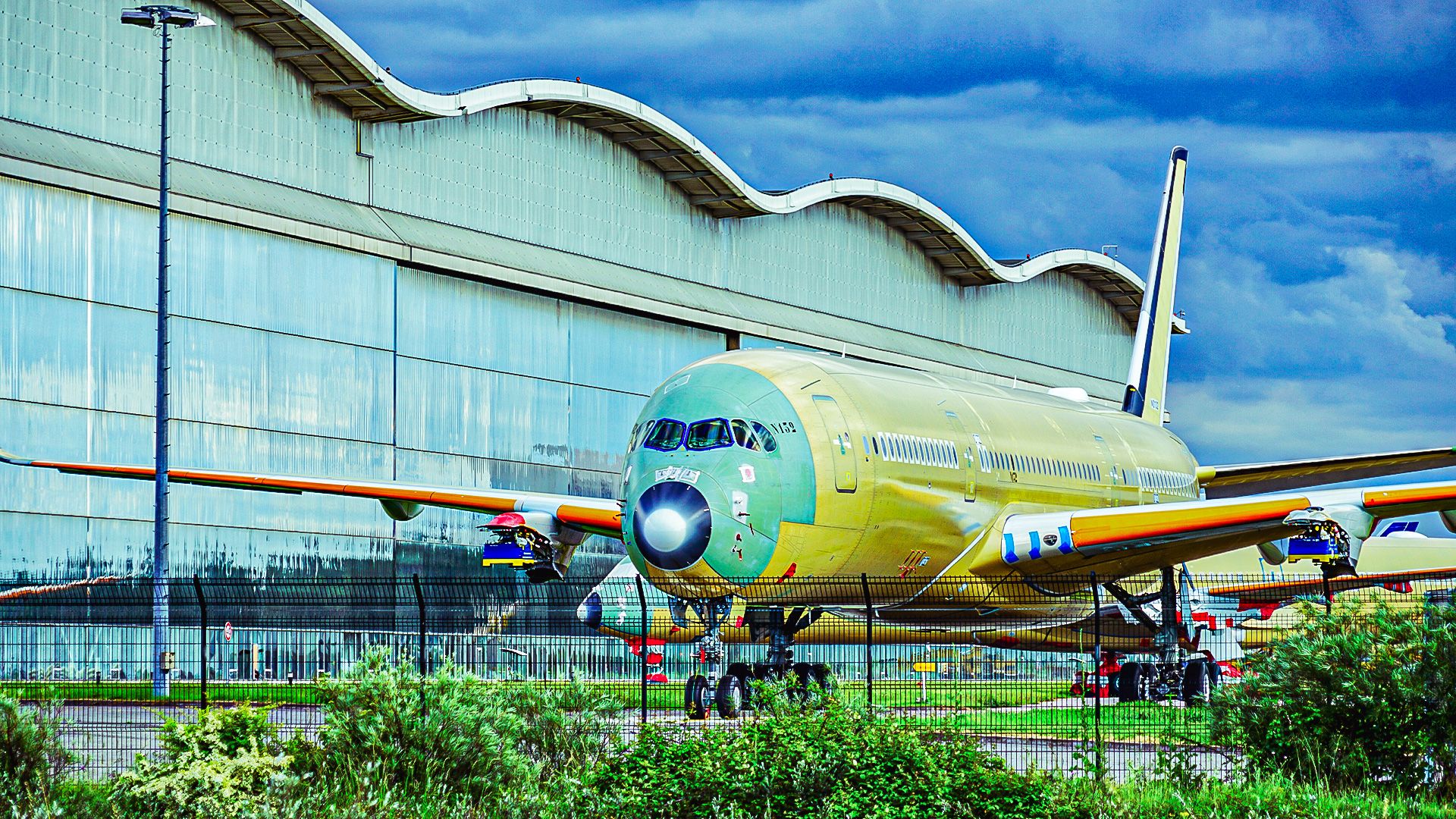
Airbus production has long been seen as a key indicator of the global aviation industry’s strength and stability. Each aircraft that rolls off the assembly line represents not just advanced engineering, but also the health of airline demand and supply chain resilience. As travel continues to grow through 2025, Airbus’ output reflects how effectively the company is meeting both market and internal expectations. Its performance helps define trends across aviation, influencing competition, labor, and logistics worldwide.
Airbus’ manufacturing figures also serve as a glimpse into the company’s long-term industrial ambitions. With global facilities operating near full capacity, Airbus is focused on scaling efficiency and sustainability simultaneously. From its narrowbody powerhouses to advanced widebodies, every delivery represents a balance between demand, innovation, and precision.
A Global Factory In Full Flight

Airbus’ production levels have rebounded to some of the highest in its history. According to Forecast International, the manufacturer delivered around 73 aircraft in April 2025, including 56 Airbus A320neo family jets, 10 A220’s, and 7 widebodies. At that pace, Airbus is producing between 850 and 900 aircraft annually, a figure that closely matches its pre-pandemic output. The A320neo family continues to dominate deliveries, making up roughly 80 percent of total production. This consistency shows that Airbus’ global assembly network is once again operating at near full strength.
The company’s own forecasts confirm this growth trajectory. Airbus plans to reach 1,000 annual deliveries by 2026, with narrowbody aircraft leading the increase. It is a strategic focus that aligns with rising airline demand for efficient short and medium-haul aircraft. By maintaining steady A320neo production while expanding A220 capacity, Airbus ensures flexibility across markets. Each delivery milestone reinforces its position as the leading commercial aircraft manufacturer worldwide.
From Toulouse to Hamburg and Mobile, assembly lines now move at an impressive pace. The manufacturer is producing more than two aircraft per day, showing the success of its lean production strategy. This output rate is even more remarkable given the ongoing global supply chain challenges. Airbus’s focus on coordination across continents helps minimize delays and maintain consistent delivery schedules. Together, these efforts make 2025 one of Airbus’ strongest years of operational performance to date.
The Hidden Forces Powering Airbus’ Output

Airbus’ total production output is influenced by multiple interconnected variables. According to Forecast International, the A320neo family remains the company’s top priority, with rate targets approaching 75 aircraft per month. That number is supported by a network of four major final assembly lines spread across Europe, Asia, and the United States. Engine availability continues to play a crucial role, as suppliers like Pratt & Whitney and CFM International work to meet surging demand. Airbus manages this challenge by prioritizing customers based on delivery windows and engine readiness.
The company’s production system thrives on flexibility and global coordination. Its facilities in Toulouse, Hamburg, Tianjin, and Mobile all contribute to balanced capacity distribution. Having multiple lines in operation allows Airbus to adapt quickly to regional challenges, from labor shortages to shipping delays. This geographic diversification also supports the company’s environmental goals by reducing unnecessary transport and optimizing regional parts usage. Overall, the integration of digital oversight and international cooperation keeps Airbus’ output stable even under pressure.
|
Airbus 2025 Production Overview |
||
|
Aircraft Family |
Estimated Monthly Rate |
Primary Markets |
|
A220 family |
14-16 |
North America, Europe |
|
A320neo family |
70-75 |
Worldwide |
|
A330neo |
3-4 |
Middle East, Europe |
|
A350 family |
10-12 |
Global Flag Carriers |
Each of these aircraft families supports Airbus’ broader strategy of balanced growth. The A220 program is still ramping up, but already plays a critical role in smaller market segments. Meanwhile, widebody aircraft like the A350 continue to deliver strong performance among major airlines. This mix allows Airbus to sustain high output without over-reliance on one product line. It’s a model built on resilience and adaptability rather than short-term speed.
Inside Industry Reactions And Airline Confidence

Industry observers have generally praised Airbus’s ability to balance growth with reliability. According to Airbus, the manufacturer’s backlog reached more than 8,600 aircraft by mid-2025, representing years of guaranteed production. This level of demand highlights Airbus’ strong reputation among global carriers. Airlines like Delta,  Lufthansa, and IndiGo continue to voice confidence in Airbus’ delivery stability, even as they manage tight operational schedules. The company’s clear communication and planning have helped preserve customer trust during a complex ramp-up phase.
Aviation analysts often describe Airbus’ recovery as methodical and consistent. Rather than racing to exceed pre-pandemic numbers, the company focused on restoring manufacturing discipline. This measured approach has reduced rework incidents and improved aircraft inspection efficiency. Experts also note that Airbus’ production reliability has been crucial in securing new orders during a competitive market. Such discipline may be one reason Airbus continues to outperform Boeing in total deliveries.
For airlines, this stability has tangible benefits. Predictable delivery schedules allow better fleet planning and route expansion decisions. Airbus’ precision in fulfilling contracts translates into smoother transitions for carriers introducing new aircraft types. Many industry leaders cite the manufacturer’s proactive communication as a key advantage over its rivals. This professional reputation now underpins Airbus’ global commercial success as demand remains strong across continents.
The Transatlantic Rivalry In Numbers

When compared directly, Airbus maintains a clear lead over its main competitor. According to Airbus, the company consistently delivers between 10 and 15 percent more aircraft annually than Boeing. This success is primarily driven by the A320neo family, which continues to dominate the single-aisle market. Boeing has made progress in recovering its 737 MAX production rates, but Airbus’s consistency gives it an operational advantage. The European manufacturer’s diversified product lineup further strengthens its global position.
Airbus benefits from having multiple well-established aircraft families in production. The A350 and A330neo provide steady output alongside the A320neo, whereas Boeing’s widebody lines are still rebuilding momentum. This broader portfolio helps Airbus manage fluctuations in market demand more effectively. While Boeing’s 787 line is improving, Airbus’s ability to meet both long and short-haul needs ensures ongoing stability. Analysts suggest that such diversification will keep Airbus slightly ahead for the foreseeable future.
The competition between the two giants continues to shape modern aviation. Both manufacturers are investing heavily in digital production and sustainability initiatives. Airbus’s cautious expansion strategy contrasts with Boeing’s more aggressive recovery efforts. While Boeing is focusing on efficiency, Airbus is prioritizing long-term resilience and customer trust. This philosophical difference may define how both companies perform through the remainder of the decade.
What Could Slow The Climb For Airbus In 2025

Airbus’ path toward producing over 1,000 aircraft annually comes with significant challenges. According to Forecast International, the main constraint remains the global supply chain. Engine availability and component delivery delays continue to slow down final assembly operations. Even a minor disruption can affect schedules across multiple sites. Airbus is responding by strengthening its relationships with suppliers and investing in digital supply monitoring systems.
Workforce development presents another potential obstacle. The company is actively hiring and training thousands of skilled engineers and technicians across Europe, Asia, and North America. Finding and retaining these specialists is crucial to sustaining production growth. Airbus has partnered with technical universities and regional training centers to expand its talent pipeline. This investment in education helps reduce dependency on any single labor market.
Economic and geopolitical conditions also influence Airbus’ growth potential. Shifts in trade policies, raw material costs, or energy availability can affect production planning. However, the company’s decentralized manufacturing model provides a cushion against local disruptions. Airbus’s ability to adapt its network quickly is key to maintaining stability through uncertainty. Continued agility will be essential as the company aims for record-breaking delivery numbers by 2026.
Building The Future Of Flight

Airbus’ future production strategy focuses on expansion, innovation, and sustainability. According to Airbus, new final assembly lines in Tianjin and Mobile will support the ongoing ramp-up of A320neo production. The upcoming A321XLR program will add further momentum as airlines seek longer-range narrowbodies. This next phase marks a critical evolution in Airbus’ manufacturing network. The company’s balanced growth model ensures both flexibility and environmental accountability.
By 2026, Airbus aims to produce 75 A320-family aircraft per month, setting a new record in narrowbody output. This unprecedented rate will depend on advanced logistics, improved automation, and predictive maintenance systems. Artificial intelligence and digital twin technology are already being used to optimize production sequencing. These innovations will help Airbus increase efficiency without sacrificing quality. Such technological integration positions the company as a leader in next-generation aerospace manufacturing.
Looking further ahead, Airbus’ production will increasingly reflect its sustainability commitments. The manufacturer is exploring the use of alternative materials and energy-efficient processes across all facilities. Hydrogen propulsion research and hybrid systems could also influence future assembly methods. The long-term goal is not only higher output but cleaner, smarter production. If achieved, Airbus will redefine what large-scale aviation manufacturing can look like in the twenty-first century.
source
