

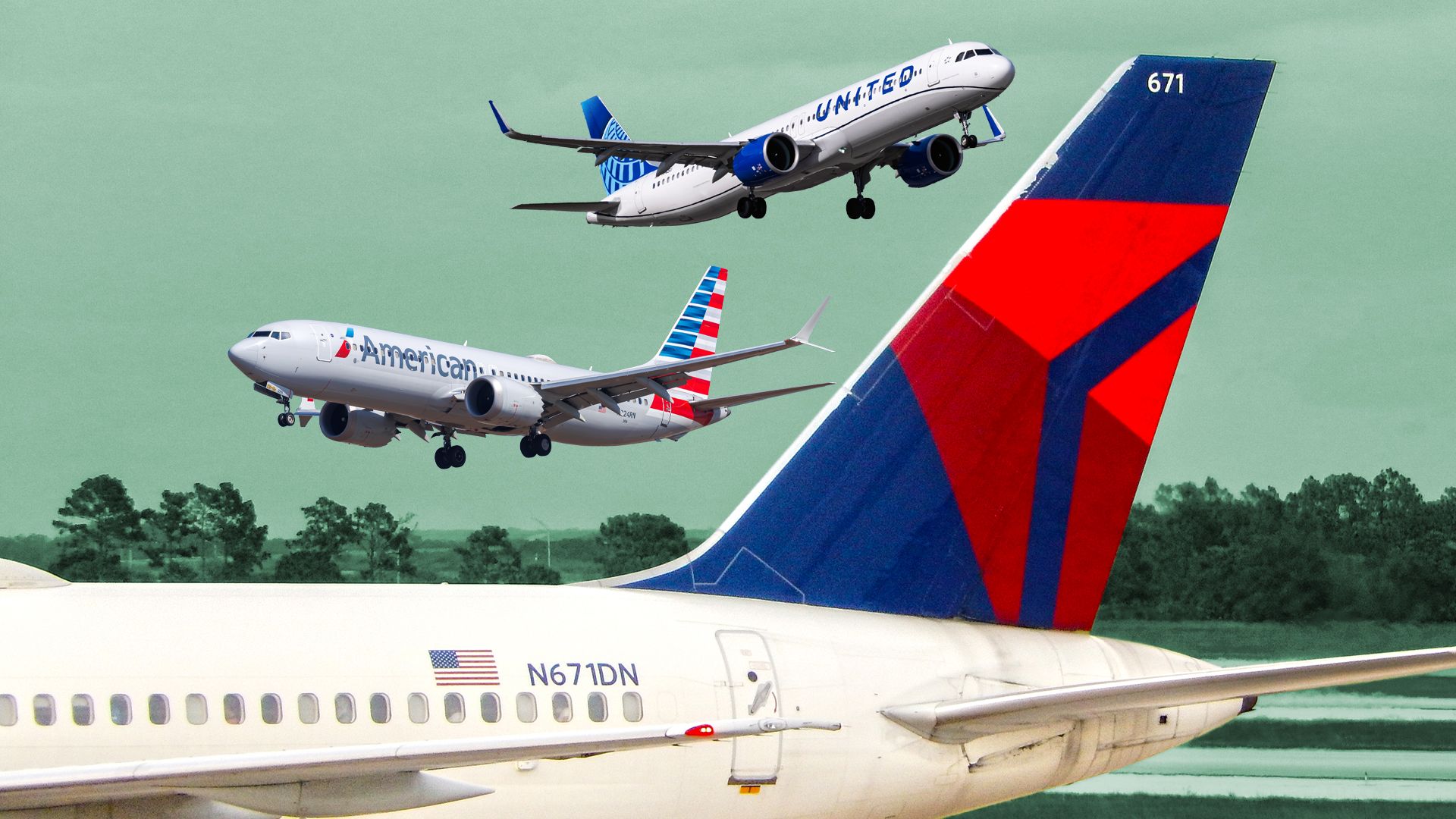
The largest airline in the world can be measured in various ways, and in most metrics, the same few usual suspects consistently appear. Airlines in the United States tend to be the largest in the world, carrying a huge number of customers, both on domestic flights between large US cities and international flights across the oceans.
This large number of planes and flights requires many pilots to be employed by US-based airlines. Thus, this article will investigate the airlines with the highest number of employed pilots in the world, in order to determine which is the largest by this metric.
Which Are The Largest Airlines?

In the most commonly used metrics to measure the largest airline in the world, the ‘Big Three’ US-based airlines, United, American and Delta, for the most part came up ahead of airlines elsewhere in the year of 2024. This information provides the best way to contextualize the number of pilots employed, with the same airlines also leading the pack. The largest airlines are listed by metric below, according to multiple sources:
|
Leading Airlines Worldwide By Metric (2024*) |
|
|
Metric |
Airline |
|
Most available seat miles (ASMs) |
United Airlines |
|
Most revenue seat miles (RPMs) |
United Airlines |
|
Largest mainline aircraft fleet |
United Airlines |
|
Most mainline employees |
United Airlines |
|
Most destinations served |
United Airlines |
|
Most valuable by revenue |
Delta Air Lines |
|
Most valuable by assets |
Delta Air Lines |
|
Most valuable by market capitalization |
Delta Air Lines |
|
Most valuable by brand value |
Delta Air Lines |
|
Most passengers carried |
American Airlines |
|
Most total employees |
American Airlines |
|
Most freight carried in tonne-kilometers |
FedEx Express |
|
Most countries served |
Turkish Airlines |
It is worth noting that American, Delta, and United also have their respective regional brands – American Eagle, Delta Connection, and United Express – which are operated by a mixture of smaller airlines, including some that are wholly-owned subsidiaries.
 United Airlines is the operator with the most mainline employees. According to ALPA, an aviation safety and security company, in the current year, the airline employs 17,813 professional pilots and flightcrew members, making it the largest airline in the world by pilots employed, although
  Delta Air Lines is not far behind, with 17,347 employed, only 466 fewer.
As of May, the annual median airline pilot salary was $226,600, according to Epic Flight Academy. Assuming that all flightcrew members of United Airlines are working pilots, since the mean average wage is also over $200,000, that represents an investment of over three-and-a-half billion dollars in pilots’ wages alone from the airline.
How The COVID Era Affected Pilot Hiring

Due to the nature of the job, pilots are required to retire at 65 years of age, and this retirement from the profession necessitates the hiring of new pilots to fill the gaps left by retiring veterans. The pandemic era from 2020 to 2022 saw a noticeable drop in pilot numbers, according to AOPA, as many pilots either retired or left due to nearly all US-based major airlines mandating COVID-19 vaccines for employees, according to CBS News.
|
Major US Airline Pilot Hiring History (FAPA, 2025) |
|||||||||||||
|---|---|---|---|---|---|---|---|---|---|---|---|---|---|
|
Airline |
Jan |
Feb |
Mar |
Apr |
May |
Jun |
Jul |
Aug |
Sep |
Oct |
Nov |
Dec |
YTD |
|
Alaska Airlines |
|||||||||||||
|
Allegiant Air |
|||||||||||||
|
American Airlines |
190 |
157 |
157 |
65 |
37 |
131 |
244 |
981 |
|||||
|
Atlas Air |
|||||||||||||
|
Delta Air Lines |
194 |
102 |
183 |
21 |
500 |
||||||||
|
FedEx |
|||||||||||||
|
Frontier |
39 |
38 |
32 |
16 |
6 |
131 |
|||||||
|
Hawaiian Airlines* |
10 |
20 |
10 |
8 |
15 |
20 |
10 |
93 |
|||||
|
JetBlue |
|||||||||||||
|
Southwest Airlines |
17 |
14 |
31 |
||||||||||
|
Spirit Airlines |
|||||||||||||
|
UPS Airlines |
20 |
22 |
15 |
27 |
31 |
15 |
33 |
27 |
190 |
||||
|
United Airlines |
133 |
236 |
157 |
180 |
29 |
24 |
22 |
37 |
217 |
1035 |
|||
|
TOTALS |
603 |
553 |
561 |
319 |
99 |
55 |
52 |
221 |
498 |
0 |
0 |
0 |
2961 |
*Numbers from May through August are estimates.
FAPA notes that the numbers above include some double counting, as they list all hires, including those when a pilot moves from one airline to another. However, the numbers hired do add some levity to the fact that United Airlines is the biggest employer of pilots, followed by American and Delta. Combined with the normal retirement of pilots, the COVID-era losses to the pilot workforce required a record-breaking over 13,000 new pilot hires in 2022 and more than 12,000 in 2023 to keep the planes in the air.
Pilot Hiring Rates Level Off

According to Tim Genc, executive editor of the Future and Active Pilots Alliance, who spoke with AOPA, approximately 42,000 airline pilots will reach 65 years of age and retire over the next 15 years, resulting in a significant need for new pilots to take to the skies. Currently, there is still room for expansion for major US airlines, as they have yet to fill all the space on their rosters. Genc stated that expansion has been slowed compared to earlier forecasts:
“[The number of retiring pilots] was supposed to peak in 2026, but the forecasts have been revised, and now retirements are expected to peak in 2031.”
To put into perspective the magnitude of the hiring boom in 2022, only 4,834 airline pilots were hired in 2024, which was much closer to a realistic figure of 5,000 new hires for a healthy airline pilot market. Certainly, demand for airline travel sharply increased following the lifting of COVID-19 restrictions, and the commercial passenger market is still struggling to meet demand. However, things appear to be stabilizing, according to Genc.
For pilots, it is beneficial when demand exceeds supply, as it means wages will be pushed up. Genc illustrates this by mentioning the so-called “lost decade” of the airline industry, which lasted from the late 1990s until around 2010. At the time, there were too many pilots, rather than too few, and new hires at regional airlines were paid remarkably low wages for their time and skills.
The Latest On United And Delta Pilot Careers

According to ALPA, United Airlines has recently focused its Master Executive Council (MEC) on initiating a ‘Union First’ campaign for its pilots. The campaign aims to utilize ALPA’s resources to improve career-impacting issues, such as safety, scheduling, and personal and financial well-being. The Council has also instituted more frequent polling of pilots, aiming to better serve pilots and facilitating their negotiation process in the future. According to the United MEC:
“United pilots set the bar for aviation safety, professionalism, and unity. We are committed to representing and supporting this dedicated group every step of the way.”
Delta’s MEC is also fighting for its pilots, as after ratifying an ‘industry-leading’ contract in March 2023, according to ALPA, the Delta Master Executive Council (MEC) aggressively began using the grievance process to enforce this contract, ensuring that Delta management complies with the agreements as signed by both parties, Delta and its pilot’s representatives.
|
United and Delta Operations Overview |
||
|
United |
Delta |
|
|
Daily Flights |
Over 4,500 |
Over 4,000 |
|
Destination Cities |
Over 300 |
Over 290 |
|
Destination Continents |
5 |
6 |
Overall, it appears to be a good time to become a pilot, especially if the unions of the respective companies are unified. As for the wider industry, while high tariffs implemented in the US have had an impact, the global airline economy has demonstrated resilience. While there was an initial shock, overall global economic activity has remained relatively robust, with most regions experiencing moderate growth, according to ALPA.
The ‘Big Three’ US Airlines Keep Growing

In 2024, the International Air Transport Association (IATA) predicted record profits for the global airline industry, with total net profits increasing by $5.1 billion compared to 2023, and US commercial airlines accounting for around 40 percent of the increase. However, some interesting trends have been observed so far, including a growing demand for premium travel, but lower-than-expected corporate demand.
Generally, price-sensitive travelers do not have additional disposable income, and domestic demand has weakened, while international demand has strengthened, according to ALPA. In short, people are continuing to splurge on leisure and luxury, but the average American is not willing to pay more than before. The most recent data corroborates this, indicating that inflationary pressures are slowly starting to build.
For US airlines, business will remain steady for now, and future pilots will have a shot at a good career with them. The US air traffic control industry is also hiring in large numbers. The capacity for growth remains for the ‘Big Three’, including the largest, United Airlines, but eventually, the trend will reverse again, as growth, no matter how steady, cannot last forever.
source
