

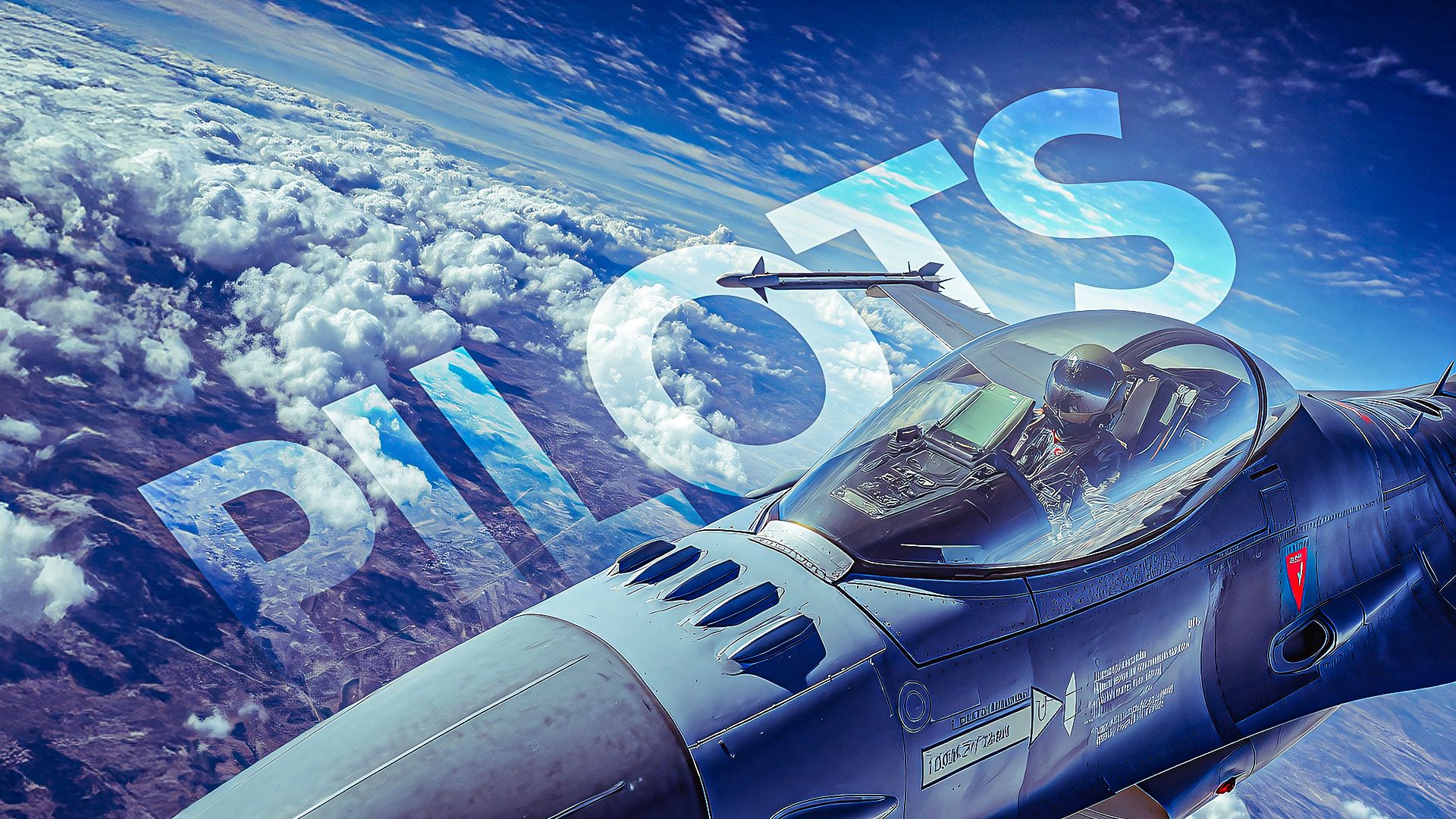
In the skies of military power, one question stands out: which air force has the most pilots and why? That honor, by most counts, belongs to the United States Air Force (USAF). In our article, we will explore why it leads, how many pilots it fields, how many aircraft it operates, how many planes the average pilot flies, and finally, how one becomes a USAF pilot today.
Understanding the scale of the USAF’s pilot corps is important: it reflects the logistics, training, retention, and industrial base necessary to sustain global air power. For aviation enthusiasts, prospective pilots, or defense watchers, this guide gives a grounded look at one of the world’s most complex flying organizations.
The USAF’s Dominant Pilot Force

The United States Air Force is regularly ranked as having the largest pilot force in the world. According to the previous Simple Flying article, the USA leads the list with 14,486 pilots. To put that in context, the runner-ups are far behind: Russia is listed with 4,211 pilots; China with 3,304; India with 2,296. The USAF’s pilot count encompasses not only fighter, bomber, transport, and reconnaissance pilots, but also those who fly training jets, mobility aircraft, and remotely piloted systems (drones). That scale gives the USAF structural depth: so many pilots are needed to fly worldwide missions, handle rotation schedules and training sorties, and account for attrition.
Understanding the numbers: The pilot total figure (14,486) is often used as a benchmark, sometimes aggregated from various public and defense analyst sources. But in internal USAF planning, the numbers shift based on active duty, Reserve, Air National Guard, and unmanned systems crewmembers.
It’s worth noting that achieving and sustaining such a pilot force is not trivial. The Air Force has struggled in recent years with shortages and unmet billets. For example, media reports indicate that in 2024, the USAF fell short of its pilot goals by nearly 1,850 pilots, including 1,142 fighter pilot positions alone, as described in the Air Force Times.
Likewise, on the active duty side, the USAF seeks about 13,000 pilots, but some 6% of those slots (741) are unfilled, as reported in another Air Force Times article. The Air National Guard and the Air Force Reserve show similar gaps. This underscores that even the “largest” pilot force has operational stress and recruitment challenges.
The Aircraft Fleet: How Many Planes Does The USAF Operate?

It’s not enough to have pilots, as they must have aircraft to fly. So, how many planes does the USAF operate? According to various public sources on the United States Air Force, the USAF operates roughly 5,500 military aircraft (though that number also includes support and training aircraft). That figure is often rounded and spread across fighters, bombers, transports, tankers, helicopters, trainers, reconnaissance platforms, and unmanned systems.
Additionally, the USAF’s Air Education and Training Command (AETC) is responsible for training new pilots and aircrew and has its own fleet for training missions. AETC is said to fly approximately 1,400 aircraft, according to the Air Force website.
In fiscal planning documents, USAF leaders often break out combat aircraft separately from training and support types. Not all 5,500 aircraft are frontline combat jets: many are transports, tankers, trainers, or ISR (intelligence, surveillance, reconnaissance) platforms. For instance, some analysts refer to ~1,206 fighter jets in the “mission inventory” number (excluding support types), as per Defense One.
But how many aircraft are there per pilot? With approximately 14,486 pilots and 5,500 aircraft, the rough average is about one aircraft per 2.6 pilots. But that is a simplistic division, because:
- Many pilots are not flying full-time; some are in training or part of the Reserve/Guard.
- Some aircraft types require crews, i.e., multiple pilots (for example, bombers or multi-crew transports).
- Not all aircraft are flown equally; some have limited flight hours, maintenance downtime, or are in reserve.
- Unmanned systems have different crew-to-aircraft ratios.
In practice, the number of active aircraft a pilot flies is much lower. A single pilot might be qualified on one or two types over their career, and could fly varying numbers of missions. Some fighter squadrons maintain 24 aircraft, but not every jet is flyable every day due to attrition, maintenance, and scheduling, which reduces actual availability, according to Air & Space Forces Magazine.
A better metric might be the number of flying hours per pilot per year, or sortie rates per aircraft per pilot, but such data is often internal to the USAF and not publicly available. That said, the sheer numbers demonstrate the scale: thousands of pilots, thousands of aircraft, and a complex balancing of pilot availability, aircraft readiness, maintenance, scheduling, and mission demand.
How Many Aircraft Each Pilot Flies (Or Can Fly)

It is a common misconception that fighter pilots always fly the same jet. In reality, many pilots are rated on multiple aircraft types throughout their careers. The SlashGear article “Do Fighter Pilots Always Fly the Same Jet?” notes that while a pilot is typically assigned to a specific aircraft model (e.g. F-16, F-35), they may also fly older models, test variants, or transition across types depending on needs.
In USAF practice:
- A pilot begins in Undergraduate Pilot Training (UPT) flying training aircraft (like T-6, T-1, or T-38).
- After UPT, they are assigned an aircraft track (fighters, bombers, mobility, ISR, etc.) based on performance, preference, and force needs.
- They enter Advanced Flight Training specific to their designated aircraft.
- Over a career, some pilots cross-train, upgrade to newer variants, or move among aircraft depending on promotion, squadron needs, or transition missions.
Thus, a fighter pilot might fly F-16s or later F-35s, while a mobility pilot might fly different transport or tanker types. A bomber pilot might manage multiple bomber classes or variants over time.
However, pilots typically do not fly dozens of aircraft simultaneously. They are qualified in a manageable number (one to a few) and fly within their specialty. Training costs, safety, and mission specialization limit the breadth of their qualifications. So, while the USAF has ~14,486 pilots and ~5,500 aircraft, each pilot is not juggling many jets at once; instead, pilots are assigned to specific roles and trained accordingly.
How To Become A USAF Pilot

For many readers, one of the most interesting parts is how one becomes a USAF pilot today.
Become an Officer: First, to become a pilot, you must be an officer in the US Air Force. There are three common pathways:
- US Air Force Academy — a four-year undergraduate academy that commissions officers.
- Reserve Officers’ Training Corps (ROTC) — a university program leading to a commission upon graduation.
- Officer Training School (OTS) — for college graduates who did not go through the academy or ROTC.
Once commissioned, you’re eligible to compete for pilot training slots. You can find out more on the official USAF website.
Once selected, student pilots begin Undergraduate Pilot Training (UPT). This is a rigorous program that teaches students fundamental aviation skills, instrument flying, formation flying, navigation, and more. During UPT, students complete a standardized curriculum that tests their aptitude across multiple flying regimes. Success here is required to earn “pilot wings” (i.e. to become rated pilots).
Aircraft Assignment & Advanced Training: After UPT, pilots are assigned to a specific aircraft track, such as fighters, bombers, mobility, tanker, or ISR, depending on performance, preference, and service needs.
They then go through specialized or advanced flight training tailored to their aircraft type. This includes weapons training, tactics, mission systems, and real-world operational training. Once complete, pilots are assigned to their operational squadrons and begin flying real missions (training, peacetime, or operational).
Throughput, Challenges, and Goals: Producing enough pilots is a constant challenge. In fiscal year 2023, the USAF produced about 1,350 pilots, slightly under its earlier goal of 1,470, according to IGDA. The USAF aims to improve that via changes to its training pipeline: the Air Education and Training Command (AETC) is working to produce 1,500 pilots annually (active, Reserve, Guard, and international) from FY 2026 onward.
Selection Criteria & Competition: Because pilot slots are limited, the selection process is competitive:
- Strong academic record (especially STEM subjects)
- Excellent physical condition and medical fitness
- Superior performance in flight aptitude/screening exercises
- Leadership, discipline, and good character
- Willingness to commit to a service obligation (often for many years)
Only a fraction of applicants will become fighter pilots; the majority will be allocated to other aircraft types. Some estimates suggest that only 0.3 % of USAF applicants become fighter pilots (though this number should be treated with caution, as it depends on assumptions about the total candidate pool and selection rates), as discussed on the Aviation Stack Exchange forum.
The route is demanding, but for many it is a dream: to earn wings, fly military aircraft, contribute to national defense, and perhaps one day transition to advanced platforms or test pilot roles, or retire from the military to become an airline pilot.
Challenges & Future Outlook

Even though the USAF has the largest pilot corps globally, it is not without strain. As described by the National Interest, several negative factors persist:
- Pilot Shortages: Repeated reports highlight gaps in fighter, bomber, mobility, and training pilot billets.
- Retention: Many pilots leave the military for the commercial aviation sector, lured by higher pay, more stable schedules, and lower risk.
- Aging Aircraft: Many USAF aircraft are older, with maintenance and readiness issues, limiting flight hours for training and operations.
- Force Structure: The USAF sometimes retires aircraft faster than it acquires new ones, shrinking flying capacity and limiting pilot usage.
USAF Fleet Overview By Category:
|
Category |
Estimated Active Aircraft |
Example Types |
|---|---|---|
|
Fighters / Attack |
~1,600 |
F-35A, F-22A, F-15E, F-16C/D, A-10C |
|
Bombers |
~140 |
B-52H, B-1B, B-2A |
|
Tankers / Refueling |
~500 |
KC-135, KC-46, KC-10 |
|
Airlift / Transport |
~700 |
C-17, C-5M, C-130, VIP aircraft |
|
Special Operations / Tiltrotor |
~130 |
CV-22, AC-130J, MC-130J |
|
Helicopters |
~110 |
HH-60, MH-139, UH-1N |
|
Trainers |
~1,100 |
T-6, T-1, T-38, T-7 |
|
ISR / Reconnaissance |
~100 |
RC-135, U-2, RQ-4, MQ-9 |
|
Unmanned Systems |
~2,200 |
MQ-9, RQ-4, small UAS |
|
Total Active Fleet (approx.) |
~5,500 |
— |
Source: Simple Flying
To counter these challenges, leaders advocate for greater aircraft procurement (especially modern jets), recapitalizing Reserve units, increasing pilot production, and boosting retention incentives. In the coming decade, we may see shifts in how many pilots are needed, how many are retained, and which aircraft they fly, especially as unmanned systems and automation evolve.
USAF Still At The Top

When you look at pilot numbers, the United States Air Force stands out clearly: it leads the world in terms of sheer pilot manpower. With an estimated 14,486 pilots, the USAF outpaces any other air force by a wide margin. Its fleet of ~5,500 military aircraft provides the hardware for those pilots to operate, though not all aircraft are flown constantly or evenly.
Yet each pilot is not juggling dozens of jets; most fly only a limited number of aircraft types over their career, per their specialty. Becoming a USAF pilot is a multistage, competitive process: you must become an officer, enter training, survive screenings, and specialize in a particular aircraft track.
Even with its scale, the USAF faces real challenges: pilot shortages, retention issues, aging aircraft, and the demands of sustaining a global mission. The future depends on how well the USAF invests in training, modernization, and force structure to maintain its lead.
source
