

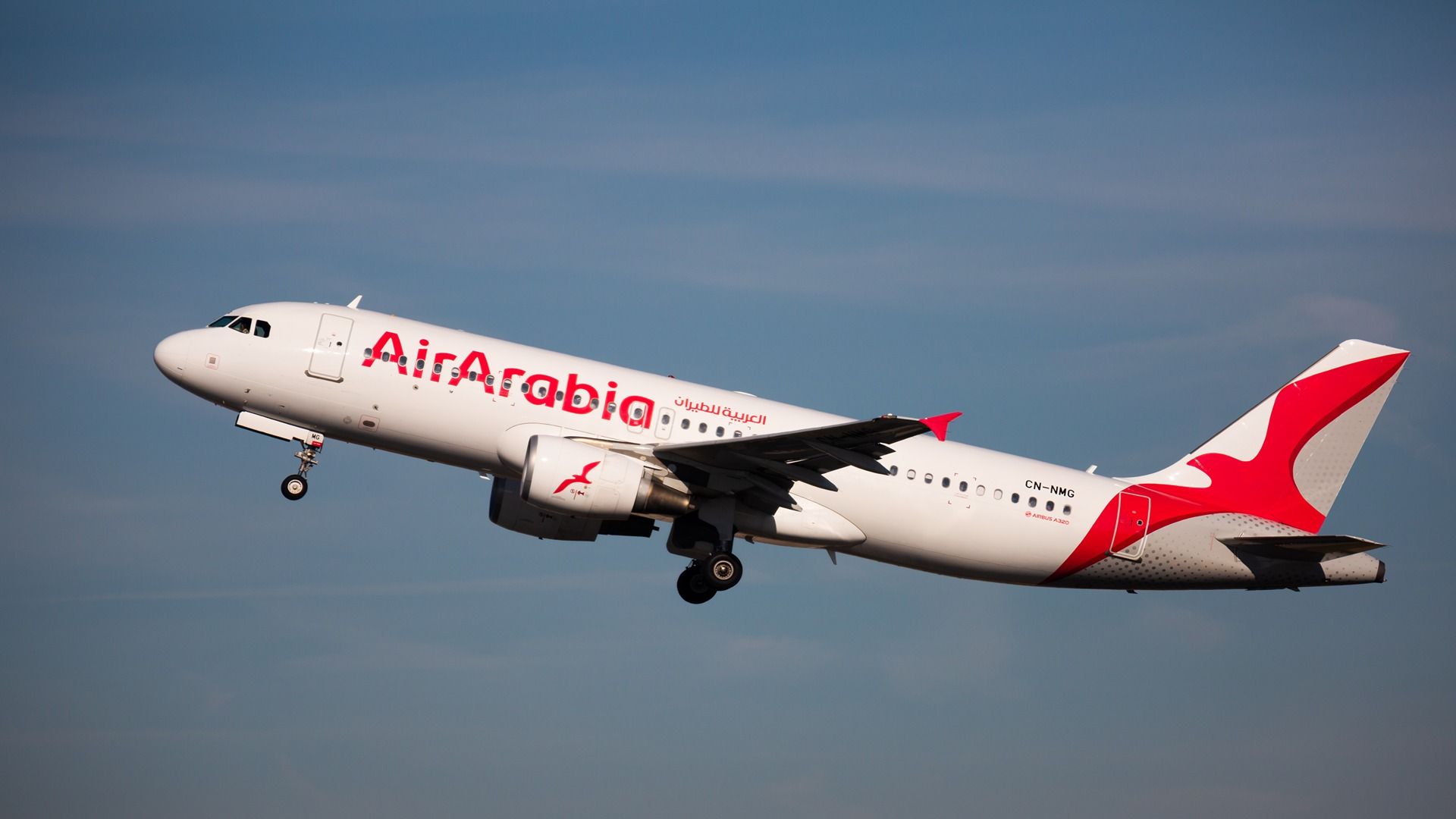
About a month ago, an A320 aircraft operated by Air Arabia (Morocco) reportedly lost altitude shortly after taking off from Italy, triggering the aircraft’s GPWS, before the aircraft recovered and resumed flight towards Jordan. After conducting a preliminary assessment of the incident, Italy’s Civil Aviation Authority has classed it as a serious incident and earlier this week opened a safety investigation.
Data reports that the aircraft had descended as low as a couple hundred feet over the sea before the crew recovered the aircraft and continued the flight.
Avoiding A Deadly Incident With Water

On Monday, the Italian Civil Aviation Authority, ANSV (Agenzia Nazionale per la Sicurezza del Volo), issued a press release regarding an incident from September 20, when an Airbus A320 aircraft operated by Air Arabia (Morocco), flying from Catania Airport (CTA) in Italy to Amman Airport (AMM) in Jordan, suffered loss of altitude, shortly after taking off from CTA.
As per the report translation, the ANSV has completed its preliminary investigation and has categorized the event as a serious incident, and has opened a safety investigation to understand the reason behind what could have been a disaster.
The report from the ANSV further states that the Ground Proximity Warning Systems (GPWS) were triggered due to the proximity to the water in this incident. Fortunately, the aircraft recovered and continued its flight without further incidents. In this instance, the aircraft had no passengers onboard and was operating with only two pilots and four cabin crew members onboard the aircraft.
Publications such as Yahoo News report that the aircraft came as close as 200 feet (61 m) from the water surface of the sea, before regaining its altitude.
What Is GPWS? How Does It Work?

The aforementioned GPWS stands for Ground Proximity Warning System, and as the name suggests, it is a system onboard aircraft that alerts the flight crew when the aircraft is flying close to the ground (in this case, water) or any other surface where the aircraft should not be. Upon detecting proximity to any such surface in flight, the pilots get both audible and visual alerts in the flight deck, including preventative actions such as an audio warning stating “Pull Up”.
The system functions based on different modes, and each of them have different safety boundaries in terms of the alerts the pilots receive when the system is triggered.
Modes one, two, and four of the GPWS represent Excessive Rate of Descent, Excessive Terrain Closure, and Incorrect Configuration Close To Terrain, respectively, and provide alert call-outs when the first safety boundary is penetrated and warning call-outs such as “Pull Up” and “Too Low, Terrain” when the second boundary is penetrated.
The GPWS functions by the system accessing data from various in-flight systems such as Air Data Computer, Radio Altimeter, ILS, Navigation Systems, and more to understand the environment of the aircraft and trigger the warnings as and when required.
The GPWS Detects Other Anomalies In Flight Profile

Apart from proximity to terrain and excessive descent rates, the GPWS detects other abnormalities in the flight profile, too. The following are all the functionality modes of the GPWS, along with its alerts and warning call-outs.
|
GPWS Mode |
Alerts upon exceeding the first boundary |
Warnings upon exceeding the second boundary |
|---|---|---|
|
1. Excessive Descent Rate |
“Sink Rate” |
“Pull Up” |
|
2. Excessive Terrain Closure |
“Terrain… Terrain” |
“Pull Up” |
|
3. Altitude Loss During TO/GA |
“Don’t Sink” |
|
|
4. Proximity to terrain in incorrect aircraft configuration (gear/flap position) |
“Too Low Gear” / “Too Low Flaps” |
“Too Low Terrain” |
|
5. Descending Below Glide Slope |
“Glide Slope” |
|
|
6. Descending Below Minimums / Exceeding Bank Angles |
“Minimums” / “Bank Angle” |
|
|
7. Detecting Wind Shear (EGPWS) |
“Wind Shear” |
While GPWS is a common system and available in most modern jet aircraft, the seventh mode, EGPWS, which detects windshear, is new compared to the other six modes. EGPWS stands for Enhanced GPWS.
The system is particularly helpful to pilots when operating at night or during low-visibility operations, when the pilots do not have visual inputs from outside the flight deck as confirmation to the data from the instruments, thereby reducing the chances for potential pilot disorientation and terrain collisions.
source
