

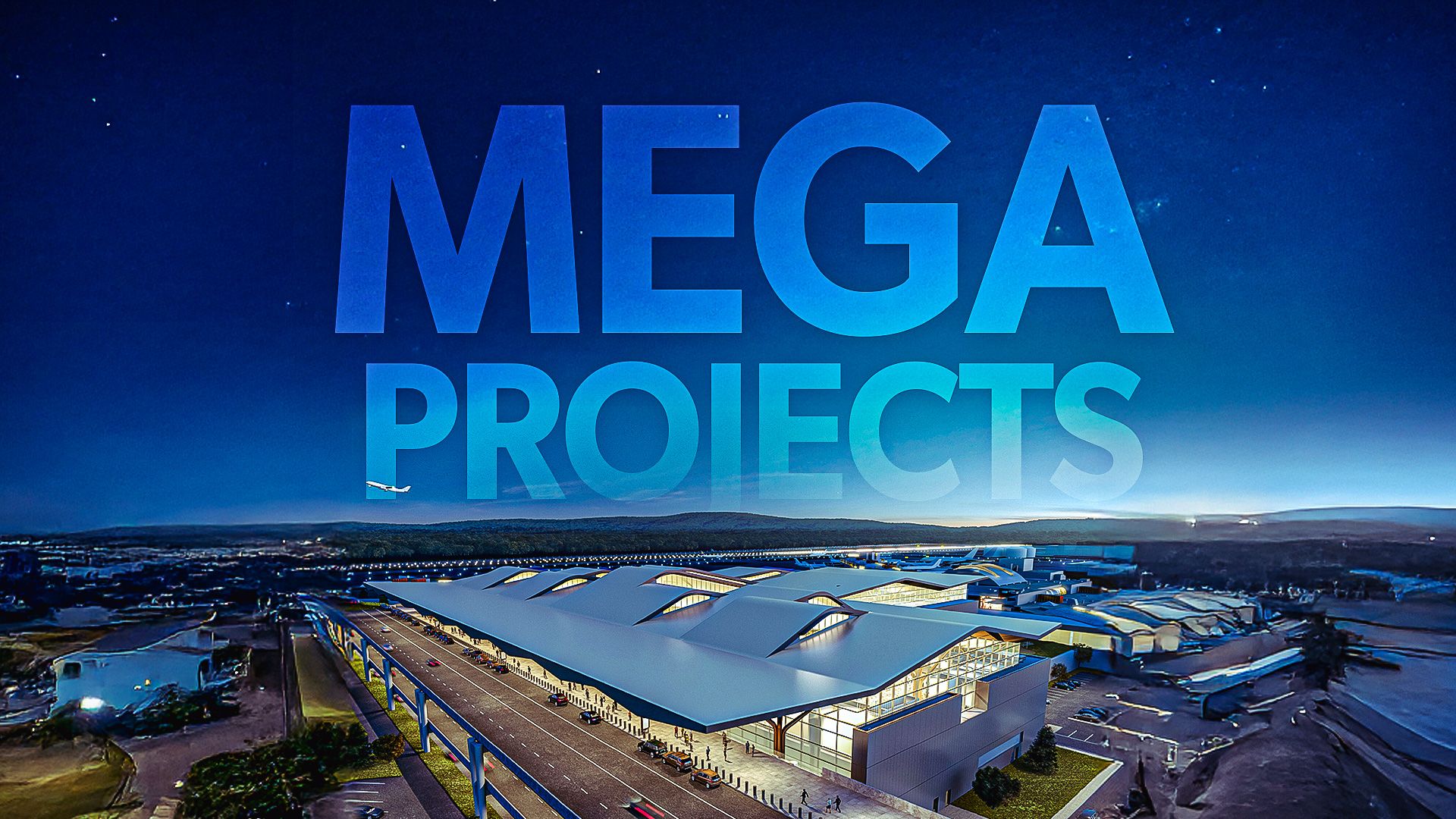
Airports are in constant need of improvement. This is because modern travel demand continues to outgrow the existing buildings and systems at airports, which were mostly designed decades ago. Larger aircraft, more full schedules, more connection requirements, and the need for more runways, gates, and roads all ultimately strain an airport’s resources. Upgrades ultimately are needed to help cut back on delays and smooth out every step of the passenger journey, making it easier for passengers to get from curb to runway as efficiently as possible. Airports are also upgraded to offer improved security, as smarter layouts and better screening systems allow people to move through facilities more quickly without lowering safety guidelines. Ultimately, clear signs and wider corridors, combined with more elevators, will help families and travelers who struggle with reduced mobility.
Weather disruptions are hitting harder than ever before, making operational resilience more crucial than ever. Stronger power, flood protection, and backup systems ultimately help airlines keep operations running. Across the board, airport improvement offers exceptional choice and optionality for customers. We examine five of the highest-profile airport improvement projects in the United States this year, and the potential impacts they could have on all different kinds of customers.
A Look At Runway Work At Boston Logan International Airport (BOS)

Boston Logan is currently in the process of implementing a safety-oriented improvement project centered on Runway 09/27. Airport authorities have indicated that the landing strip will be closed until mid-November 2025 in order to install a new FAA-compliant Engineered Materials Arresting System (EMAS) and complete associated runway-area safety work. Passengers will likely experience delays, especially at peak times. This work ultimately will not lengthen the runway or change its declared distances, but is rather an effort to help stop aircraft overruns.
Local officials have been quick to explain EMAS as a bed of crushable blocks, akin to a highway truck-arrestor that decelerates aircraft that overshoot or undershoot the runway. With Runway 09/27 currently out of service, the airport’s peak arrival and departure rates will drop from 50-55 per hour to just around 40, which will ultimately tighten capacity when winds favor that runway and during the busy afternoon banks.
Industry reports attempted to put the project’s cost at roughly $110 million, largely financed by Federal Aviation Administration (FAA) funding. Construction occurs seven days a week, and the process will also include the construction of a pier supporting EMAS at the harbor end of the runway. Similar pier-type configurations have been used in the past during a variety of safety-related upgrade programs at Logan. In short, temporary closures increase near-term schedule pressure but do not change the airport’s long-term runway geometry.
A Deeper Look At Airport Improvements At John F. Kennedy International Airport (JFK)

 New York JFK Airport is currently in the middle of a full-scale makeover that will see aging terminals be fully replaced, while two other facilities will be expanded in order to boost capacity at the airport. The headline project is the airport’s New Terminal One on the south side, a 2.6 million-square-foot, 23-gate complex that will be open in phases from 2026 onwards and will ultimately become JFK’s largest international terminal. The facility features an expansive check-in, security system, and concession-oriented space designed to make it a home for long-haul flag carriers.
On the north side, Terminal 6 is a $4.2 billion terminal built by JFK Millennium Partners, and it will add 10 gates to the facility linking it directly to JetBlue’s Terminal 5. The first six of these gates are slated to open in 2026, with the facility’s completion expected in 2028. Terminal 4 is Delta Air Lines’ home, and it has undergone a $1.5 billion expansion that is largely complete, featuring 10 additional gates and increased baggage capacity. This ultimately consolidated all of Delta’s resources into a single terminal that would allow for connections to be streamlined.
Terminal 8, which is home to American Airlines and British Airways, also recently finished a $400 million upgrade that added five widebody gates to the facility. Altogether, these projects rework roads and curbs, and they add modern security and baggage systems, alongside expanded retail and lounges. The objective of this is to reduce congestion and delays while improving the passenger experience and airline operating efficiency across the board.
Chicago-O’Hare International Airport (ORD) Is Also Undergoing Improvements

Chicago’s O’Hare overhaul, which has been branded as ORDNext, is a project reshaping the airport in order to add gates, simplify connections, and replace the airport’s aging facilities. The near-term centerpiece of this effort is Concourse D, a $1.3 billion satellite that is now under construction just west of Terminal 1. It is the first new concourse set to open at O’Hare in more than 30 years, and it is slated to add 19 additional gates to the airport, offering improved widebody capabilities and better, faster connections. The target completion date for this facility is late 2028.
This will ultimately pave the way for the O’Hare Global Terminal, which is set to replace Terminal 2 and offer more than double its space to create a unified international-domestic hub without reducing gate capacity during construction. A second satellite facility, Concourse E (which will add 24 gates), is also in the works. A new underground tunnel will link passengers, baggage, and operations to the new satellite. This program’s timeline will stretch into the early 2030s.
On the existing side, the airport’s Terminal 3 will be upgraded through an ElevateT3 project that will modernize checkpoints, corridors, and other amenities to relieve pinch points and improve accessibility while longer-term work proceeds. Altogether, these projects are designed to boost the airport’s capacity, reduce misconnects, and improve the overall passenger experience, all while positioning O’Hare to handle growth more reliably over the next decade.
Los Angeles International Airport (LAX) Is Also Undergoing Improvement Efforts

The overhaul of  Los Angeles International Airport (LAX) focuses on making the facility easier to access, navigate, and operate within. The airport’s landside access modernization program delivered a new consolidated car rental facility, which streamlined the renting process for over 21,000 vehicles and eliminated more than a dozen different shuttle bus routes. The airport’s rail connection was improved in June 2025, when the Los Angeles International Airport Metropolitan Transit Center Station opened, linking the C and K lines of the system with frequent shuttles to all terminals, according to Condé Nast Traveler.
The large missing piece here is the automated people mover, which will offer terminal-to-parking and terminal-to-rail connectivity. This is not targeted for 2026 after schedule extensions were confirmed. Major airside and curbside changes under the Airfield and Terminal Modernization Program added a handful of elevated roadways, planned the addition of Terminal 9, and increased pedestrian links. Roadway work also progressed throughout 2030. Here is a current breakdown of the facilities at LAX:
|
Category: |
Specification: |
|---|---|
|
LAX Terminals: |
4 |
|
LAX Runways: |
9 |
The airport’s construction included the temporary removal and future relocation of the airport’s iconic LAX letters. The airport is also improving wayfinding with increased gate and terminal renumbering processes designed to reduce overall confusion. The net result will be fewer curb bottlenecks and simpler transfers within the airport.
Similar Efforts Are Underway At Dallas/Fort Worth International Airport (DFW)

The push to upgrade Dallas/Fort Worth International currently centers on plans to augment the larger Terminal F and expand Terminal C. Terminal F currently offers 31 gates, which set a record for a terminal built using modular construction. The facility offers premium lounges, dedicated parking, and a new Skylink station. The facility was opened in phases and targeted a partnership with  American Airlines.
Terminal C is currently undergoing reconstruction in phases, and a pier expansion will add nine more gates. The facility also features upgraded concessions and garages, with a similarly prefabricated megastructure that supported this expansion build. This all complements broader work programs, including the DFW Forward group of more than 180 projects across terminals, the airfield itself, and roads that will completely transform the airport.
At the end of the day, Dallas/Fort Worth International is a major intercontinental hub, one that connects destinations all across the globe. These kinds of improvements enable smoother flows and tightened domestic-international connectivity, all while offering ground-access relief that should cut down on delays and support the airport’s growth as a global hub.
What Is The Bottom Line?

Airport improvement efforts are emblematic of the industry’s continued drive towards growth. Passenger airlines continue to see more and more demand for their services each year, and operators are adding more flights to their networks.
However, airport capacity is ultimately a limiting factor, one that can prevent a facility from continuing to be a global hub. As a result, both airlines and government players (those behind airports) will extensively invest in the development of airport infrastructure.
The fact that airports across the United States are continuing to improve their facilities and expand their operational capabilities is undeniably a positive thing to see. This demonstrates the continued interest in developing the nation’s airport infrastructure and catering to growing demand for generations to come.
source
