

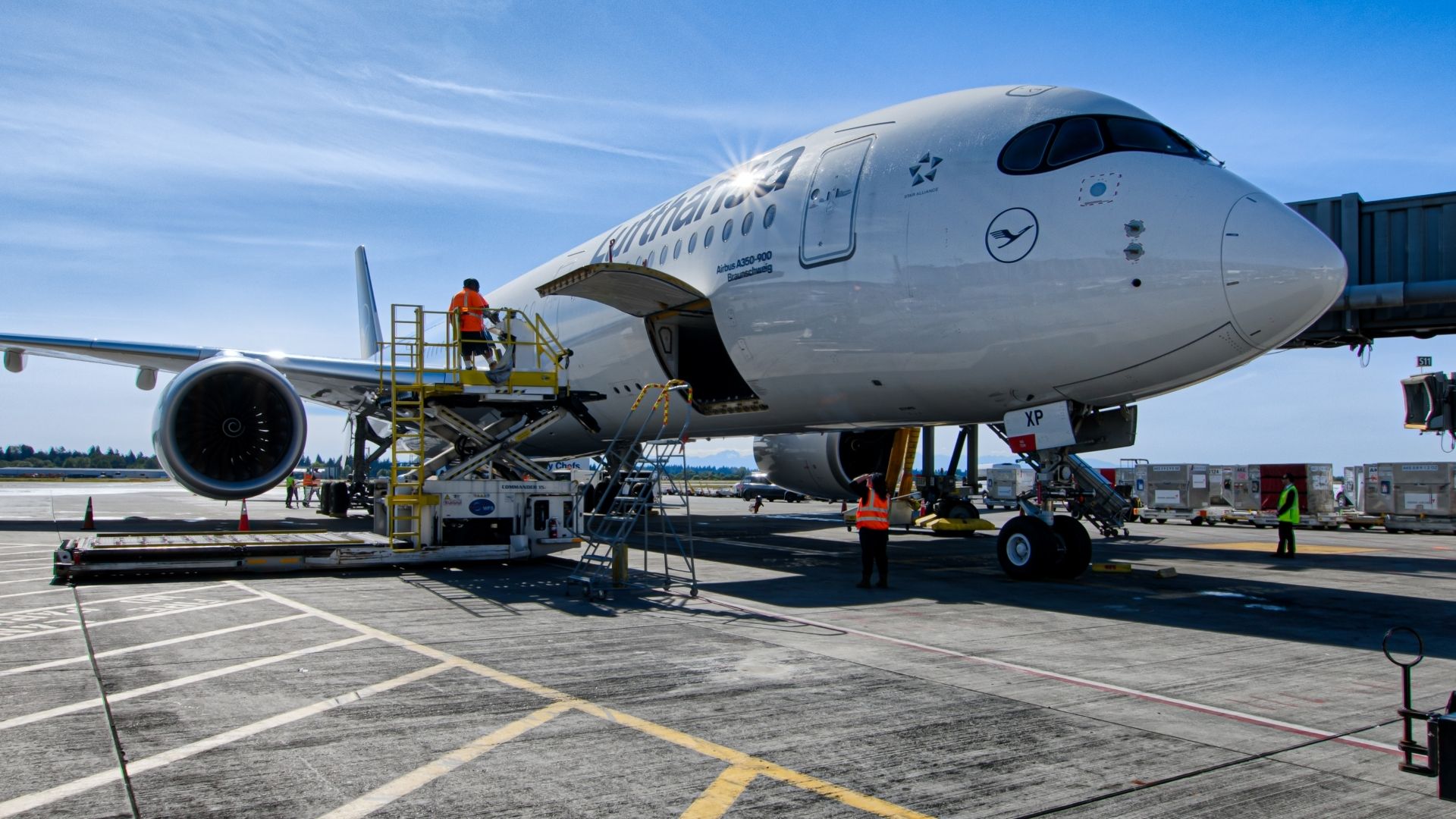
German leisure carrier Discover Airlines has shared its ambitious growth plans with the world, as it looks to grow its fleet to 40 aircraft by the middle of 2028. As well as achieving this by receiving more examples of its existing models, the airline will also boost capacity by adding Airbus A350s.
These planes are set to serve as the future flagship of the long-haul fleet at Discover Airlines, with this side of its operations currently served by widebody twinjets from the Airbus A330-200 and A330-300 lines. In addition to serving the German leisure carrier’s existing long-haul routes, the A350’s range means that Discover Airlines could also open new corridors. These jets will come from flag carrier Lufthansa.
Discover Airlines & The A350

As confirmed by the German leisure carrier in a statement released yesterday, Discover Airlines will gradually introduce four Airbus A350-900 widebody twinjets into its long-haul fleet from 2027. These, One Mile At A Time observes, will not be brand-new aircraft, but, rather, jets that are transferred from parent company Lufthansa that don’t feature the German flag carrier and  Star Alliance member’s Allegris cabin.
With Lufthansa being Discover’s parent company, it isn’t uncommon for such transfers to take place. According to One Mile At A Time, the four aircraft that will be the subject of this transfer are Lufthansa’s ex-Philippine Airlines A350-900s. These have a four-abreast business class cabin that will see direct aisle access from all business class seats at Discover Airlines for the first time. Discover CEO Bernd Bauer said:
“With the further development and expansion of our fleet, including the deployment of the A350, we are further strengthening our existing offering, with even more comfort and attractive options for our guests.”
The A350 Could Open New Routes For Discover Airlines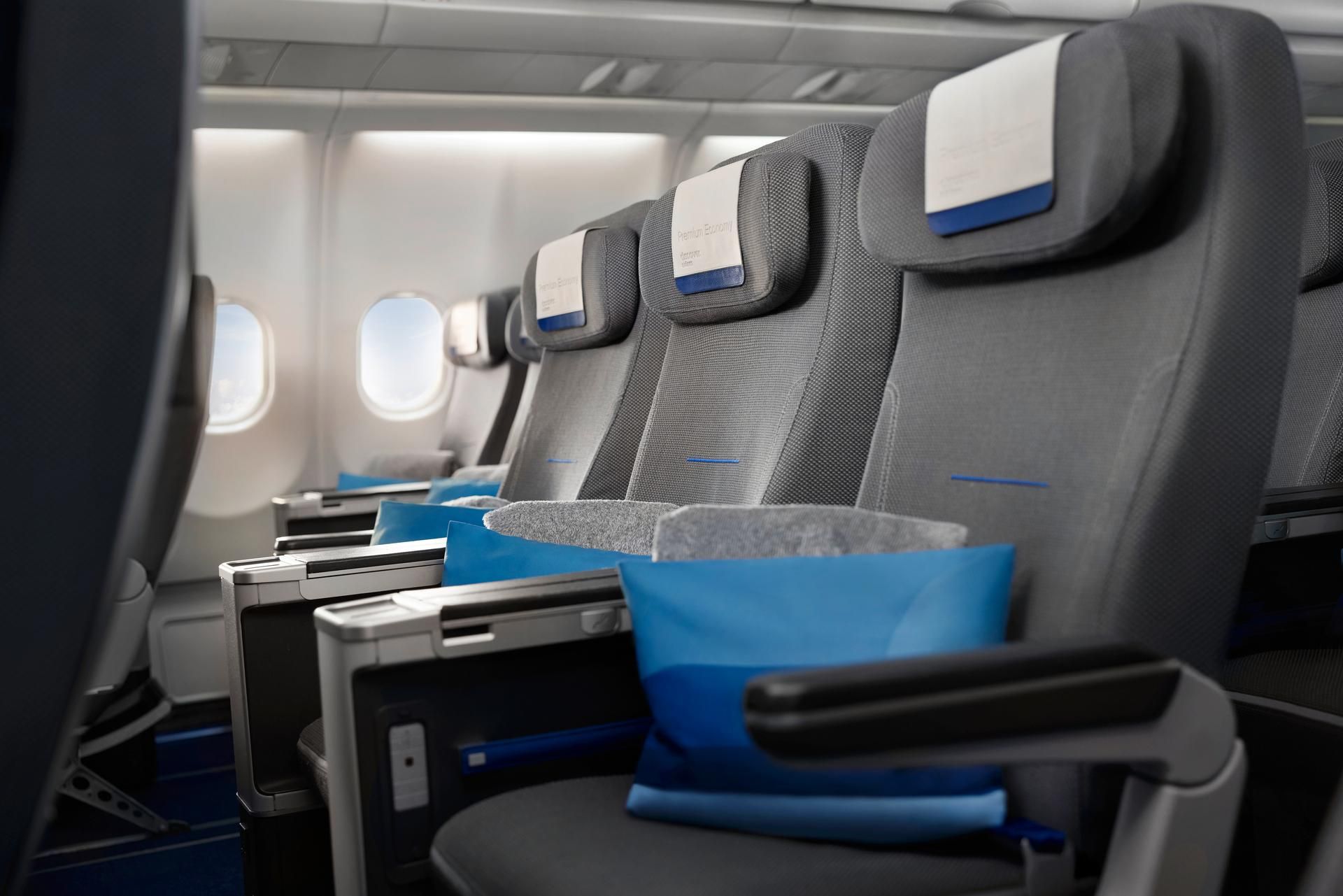
Discover Airlines has a diverse long-haul network, and, while it plans to withdraw its seasonal service from Frankfurt Airport (FRA) to Alaska’s Anchorage (ANC) in 2026, it still has plenty of interesting intercontinental routes at its disposal. Among these distant destinations are Orlando International Airport (MCO) in Florida and Windhoek (WDH) in Namibia, which Discover identifies as good fits for its incoming A350-900s.
However, the type’s extended range means that the German leisure carrier could also use it to unlock new long-haul corridors. According to Airbus, the A350-900 has a typical range of 15,750 km (8,504 NM), giving it a considerable edge compared to Discover Airlines’ existing A330-200 (13,450 km / 7,260 NM) and A330-300 (11,750 km / 6,340 NM) widebodies. It also has a slightly higher passenger capacity.
With this in mind, Discover notes that “the possibility of flying to leisure destinations that cannot be reached with the current fleet” will be made available by the presence of the Airbus A350-900 at the German leisure carrier from 2027. It identifies “South and Central America, southern Africa, and Southeast Asia” as potential markets on this front, describing the A350 as the “future flagship of the long-haul fleet.”
Part Of A Wider Fleet Expansion

According to fleet data made available by ch-aviation, Discover Airlines currently has a grand total of 30 Airbus twinjets at its disposal. This figure is split between 16 A320-200s (8.5 years old on average), three A330-200s (21 years old on average), and 11 A330-300s (18.9 years old on average).
However, by the middle of 2028, the leisure carrier is aiming to have boosted its total fleet size to some 40 aircraft. Along with the transfer of four ex-Philippine Airlines Airbus A350-900s from parent company  Lufthansa, this will be achieved with the addition of four A320s and five A330-300s, with its three A330-200s set to be retired from service. Their withdrawal in 2026 will coincide with the A330-300 arrivals.
After consolidating its Airbus A330 fleet to consist entirely of the A330-300 variant, with 16 examples present by the end of 2026, Discover is also set to refurbish these widebody twinjets. Indeed, from 2027, the carrier plans to fit them with a next-generation cabin that has three classes of travel.
source
