

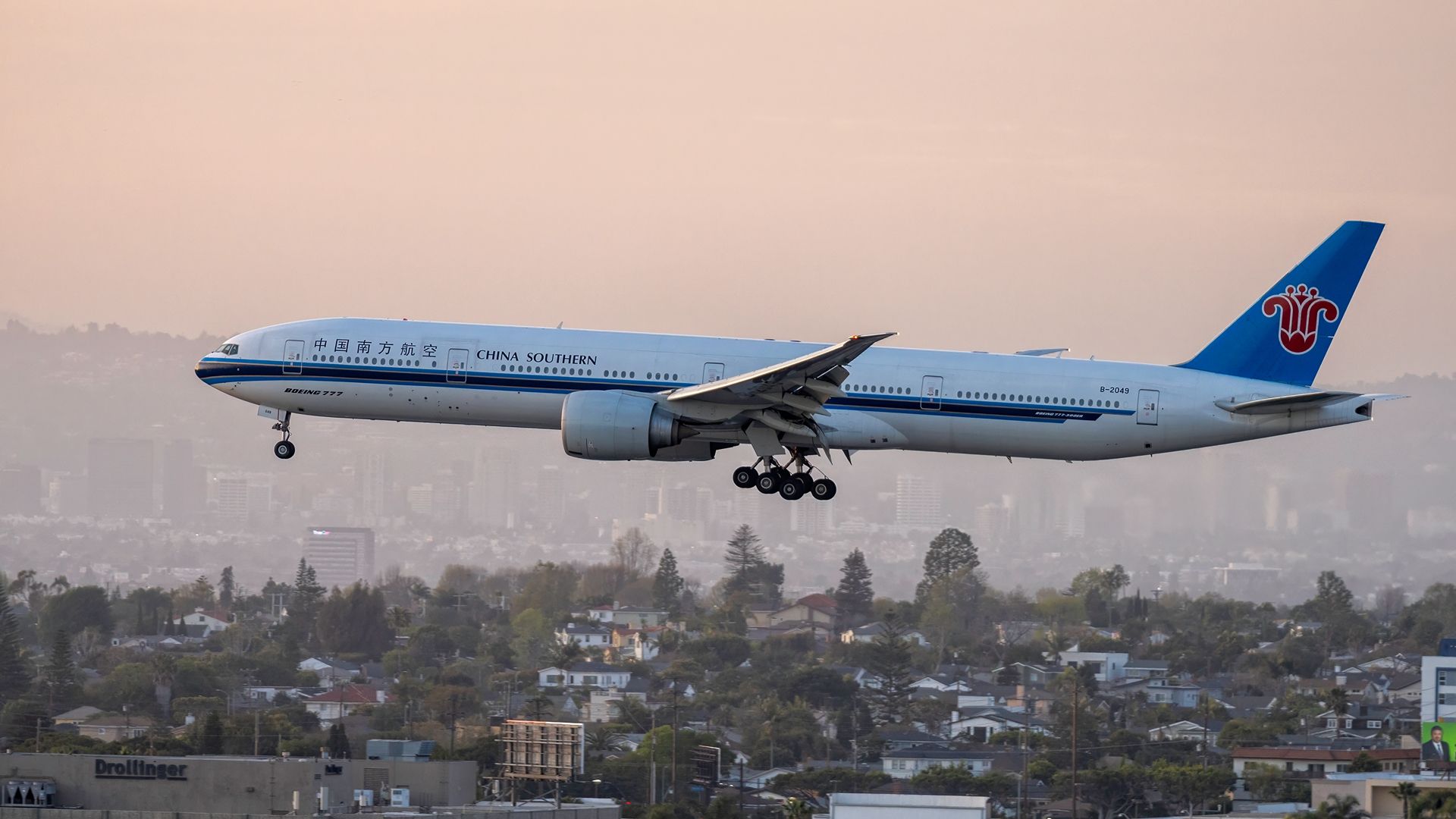
Earlier this week, the Trump Administration proposed a ban on Chinese airlines flying over Russia on routes to and from the United States, arguing that it puts US carriers at a disadvantage. Chinese carriers have been able to fly these routes with less fuel and shorter times compared to their US rivals, resulting in what the US Department of Transportation (DOT) deems “substantial adverse competitive effects on US air carriers.”
Should this proposed order be put into practice, it could have a significant impact on US-China flights in both the short and long term. While cargo flights are exempt from the order, passenger-carrying flights, particularly those to and from the US East Coast, are the most impacted.
US Proposes Restrictions On Chinese Airlines Flying Over Russia

The US has long been critical of Chinese airlines flying over Russian airspace en route to and from the US since its own carriers were barred from doing so in 2022. Airlines have also taken exception to this, lobbying the US to not raise flight allowances for Chinese airlines unless they agree to avoid Russia.
With US airlines unable to fly over Russian airspace, they have operated less economical routings than their Chinese counterparts. This has made these routes less profitable by adding fuel costs and often forcing carriers to fly with lighter passenger or cargo loads.
As it stands, US and Chinese airlines operate roughly an even split of seat capacity between the two countries. Although capacity is only around 30% of pre-pandemic levels, US-China flights are in high demand and there is significant room for growth.
How Much Would Change For Chinese Airlines?

Several Chinese airlines stand to be impacted by the order in the short term, but the extent to which they will be affected is questionable. According to AviationWeek, only four of the 18 direct US-China routes flown by Chinese carriers have entered Russian airspace within the past week, suggesting the advantage isn’t as significant as the US believes. These four routes in question are:
Much of this is because Chinese carriers already agreed not to use Russian airspace on new routes launched last year, when the DOT raised its weekly flight limit from 35 to 50 flights. However, they did not agree to stop using Russian airspace on routes that were already in place, much to the ire of US airlines.
The longer-term impact of this order would likely be more significant, particularly with Chinese airlines eager to reinstate routes lost over the pandemic. The Chinese government has already hit back at the proposal, claiming it would undermine US interests. The DOT has given airlines just two days to respond to the order, and it could come into effect as early as November if passed.
Hot And Cold Relations

It has been a volatile time for relations between the US and China over the past couple of years. Flights between the two countries have slowly been on the mend since plummeting during the COVID pandemic, and both governments have been eager to facilitate more travel. The DOT increased its flight limit on Chinese carriers from 35 to 50 weekly roundtrips back in March 2024.
But US carriers have lobbied the government not to increase them any further unless Chinese airlines agree to stop flying over Russian airspace. Before the pandemic, Chinese carriers were operating more than three times as many flights as they are allowed today, and there were more than double the number of airport pairings.
Boeing is also in the middle of negotiations with China for up to 500 aircraft and has a backlog of over 200 aircraft committed to Chinese customers. However, the ongoing tariff war threatens to complicate the deal after President Trump suggested a 100% tariff on China could come into force soon. Additionally, the White House could impose export controls on critical parts needed for China’s commercial fleet, which includes over 1,800 Boeing-made aircraft.
source
