

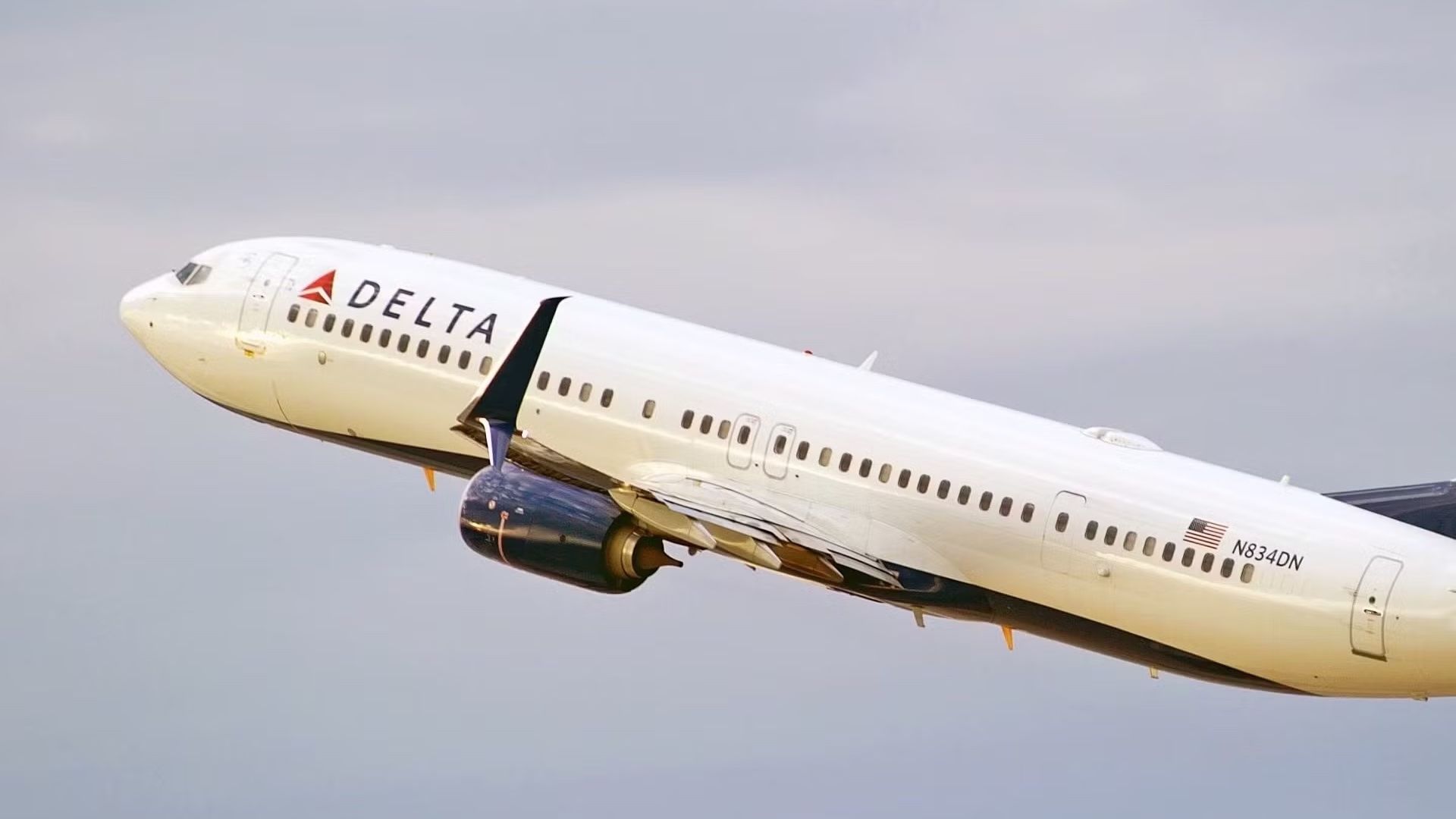
Atlanta-based legacy carrier  Delta Air Lines (NYSE: DAL) retrofitted several Boeing 737-800 and Boeing 737-900ER aircraft with Boeing’s special Split Scimitar Winglets, and subsequently upgraded these models with Aviation Partners’ Blended Winglets. This unique winglet adds both a reshaped upper winglet and a downward-facing strake in addition to changes at the tip of the winglets, which were designed to weaken the wingtip vortex significantly.
A lower amount of drag evidently reduces block fuel and extends the range or payload of the jet on hot-and-high or long-haul sectors while also trimming carbon output. This move complements earlier installations across the airline’s dynamic fleet, which aimed to standardize and improve operating efficiency across the airline’s narrowbody workhorses. From a strategic perspective, this retrofit helps improve unit costs while not removing any individual models from service. This move also helps hedge against fuel-price volatility by incorporating structural savings into its network instead of cutting schedules.
A Deeper Look At The Deal

Back in 2015, Delta Air Lines began the process of purchasing Split Scimitar Winglets from Aviation Partners Boeing (APB). The winglets that were acquired through this strategic arrangement would be used to upgrade its Boeing 737-800 and Boeing 737-900ER fleets with these capabilities. Delta Air Lines would be using these new winglets to upgrade its older-generation ubiquitous Blended Winglets, which were also manufactured by Aviation Partners Boeing.
Delta Air Lines had previously purchased and installed APB winglet products across its fleet. These included the winglets that were placed on Boeing 757-200 models, Boeing 757-300s, and Boeing 767-300ER aircraft. These winglets have increasingly become an important component of Delta’s operational profile. They reduce fuel consumption significantly by reducing the amount of drag experienced by the aircraft. This allows for significantly more efficient engine operation and better fuel efficiency, while also improving aircraft performance as a result.
These new winglets will earn a strong return on investment for Delta as they will deliver exceptional savings in jet fuel consumption by offering exceptional gains in efficiency. A number of recent challenges in the industry have pushed carriers to explore cost-saving options. Craig McCallum, senior director of sales and marketing at Aviation Partners Boeing, had the following words to share back when the deal was announced, per Aerospace Global News:
“The recent challenges for the industry have forced many airlines to focus on efforts other than emissions reduction and operational efficiency.”
What Exactly Motivated This Unique Deal?

Delta Air Lines’ decision to purchase additional APB winglet products is a relatively clear indication of the carrier’s unwavering dedication to building a sustainable future for air travel. Even though this is mostly messaging, there is a solid, environmentally oriented argument to be made for this investment. The addition of winglets reduces the fuel consumption of any given aircraft by reducing the drag that is created by a jet’s wingtip vortices, or locations where different kinds of air interact.
The carrier was very quick to highlight this during its announcement of the new partnership. It noted the exceptional benefits that this particular investment would offer to the flying public, as well as individual customers who could see lower fuel prices as another component contributing to more affordable airline tickets. Passengers who were mostly unfamiliar with the specifics behind the engineering that allows these winglets to contribute to lower fuel consumption were likely not impacted by this particular decision.
The team at Aviation Partners Boeing, which is led by Chief Commercial Officer Patrik LaMoria, was also quick to highlight the sustainability benefits that this particular investment brings to the table. It helps Delta reduce per passenger emissions, improving the overall experience for the general public, which sees benefits in lower amounts of carbon emissions. In a statement, LaMoria had the following words to share:
“We could not be more excited and honoured to continue our partnership with Delta Air Lines to reduce aircraft fuel consumption and carbon emissions. We are inspired by Delta’s ambitious sustainability goals and extremely grateful for their continued endorsement of APB products.”
What Benefits Does Delta Achieve Financially From This Decision?

There are a number of financial reasons why Delta Air Lines would be interested in upgrading the winglets on its Boeing 737-800 and Boeing 737-900ER models. Reducing fuel consumption is, frankly, not something that Delta is interested in exclusively from a sustainability standpoint, but also from a perspective of financial management. Lower fuel consumption equates to less money spent on the acquisition of fuel, which can be an expensive, variable commodity that rapidly increases any airline’s cost basis.
As a result, Delta’s decision to invest in additional winglets seems financially shrewd. The winglets themselves were not particularly expensive additions to the airline’s jets, as they pretty much come in one piece and do not require all that much work to install. Regulatory limitations on this kind of operational process are relatively limited, as they are not structurally integral components and thus are subject to significantly less scrutiny than other elements of the aircraft’s construction. The investment, as a result, faced limited financial and execution risks.
By adding these winglets, Delta Air Lines earns a small return on every single flight, as the fuel savings quickly carry over, rewarding Delta for its decision to invest in this relatively small upgrade. Lower fuel prices pad Delta’s margins, with it being the largest individual variable expense that the company faces. Not only is it a variable expense, but it is also one that is mostly subject to macroeconomic headwinds, giving Delta somewhat limited control.
What Would Shareholders Think About This Move?

In recent years, we have seen significant increases in values-oriented shareholder activism. Shareholders have been quick to call out companies in energy-intensive sectors for not embracing the energy transition and not being more concerned about things like their carbon footprint. Legacy players in the industry have been quick to find ways to adopt energy-transition inclusive strategies while also finding ways to continue improving bottom-line performance.
This strategy has proven reasonably effective in recent years, and companies like airlines have continued to take the opportunity to improve margins and reorient their messaging to better relay an interest in improving carbon efficiency. Some carriers, including Delta, have carefully worded investor relations materials to demonstrate their interest in sustainability and other ESG-oriented initiatives.
This move, which Delta made over a decade ago, demonstrates the company’s continued commitment to improving its financial performance while reducing carbon output. In our eyes, this is an excellent way to appeal to shareholders.
A Brief Overview Of The Boeing 737 Fleet Operated By Delta Air Lines

The Boeing 737 fleet is the backbone of Delta’s narrowbody operations, and it anchors a dynamic domestic network. It is centered on Boeing 737-800 and higher-capacity Boeing 737-900ER models. Both of these subfleets use the CFM56-7B engines and feature Boeing’s unique Sky Interior cabins with seatback screens, high-speed Wi-Fi, and Delta’s three cabin layouts (including First, Comfort+, and Main). The Boeing 737-800 is primarily used for mid-density leisure and business travel routes, while the Boeing 737-900ER has slowly become the workhorse for most of Delta’s hub-to-hub flying.
This aircraft adds extra seats and increases aircraft range during peak banks, especially for flow travel from Florida and the West Coast. Delta Air Lines’ decision to upgrade its jets using these new winglets allows the airline to improve its fuel consumption and carbon emissions across the massive domestic network that the airline uses these jets to serve. The carrier’s interest in lowering operating expenses and sustainability is very clear across its dynamic Boeing 737 fleet.
|
Boeing 737 Variant |
Number Of Aircraft In The Delta Fleet |
|---|---|
|
Boeing 737-800 |
77 |
|
Boeing 737-900ER |
153 |
|
Boeing 737 MAX 10 |
100 (ordered) |
Delta has an outstanding order for the Boeing 737 MAX 10, an aircraft that still remains awaiting certification from manufacturer Boeing. This allows the carrier to upgauge capacity on slot or gate-constrained markets, which will create a three-gauge structure for the airline’s Boeing 737 family. The fleet’s role is exceptionally clear, as it aims to maximize gauge and reliability on high-frequency domestic flight banks.
What Is The Bottom Line?

At the end of the day, Delta’s decision to improve the fuel efficiency of its Boeing 737-800 and Boeing 737-900ER fleet through the addition of these winglets is a strong strategic and financial choice. Though this decision was made years ago, the impacts are still visible today.
These upgraded winglets deliver best-in-class fuel efficiency for the airline, offering an exceptional variety of choices for operators. Legacy airlines need low fuel unit costs in order to achieve the best operating margins, a key element of any airline’s financial picture.
Ultimately, investors have been impressed with Delta’s ability to make innovative fleet management decisions, including those that improve operating expenses. This is a principal reason that the airline has continued to be rewarded by investors with higher trading multiples.
source
