


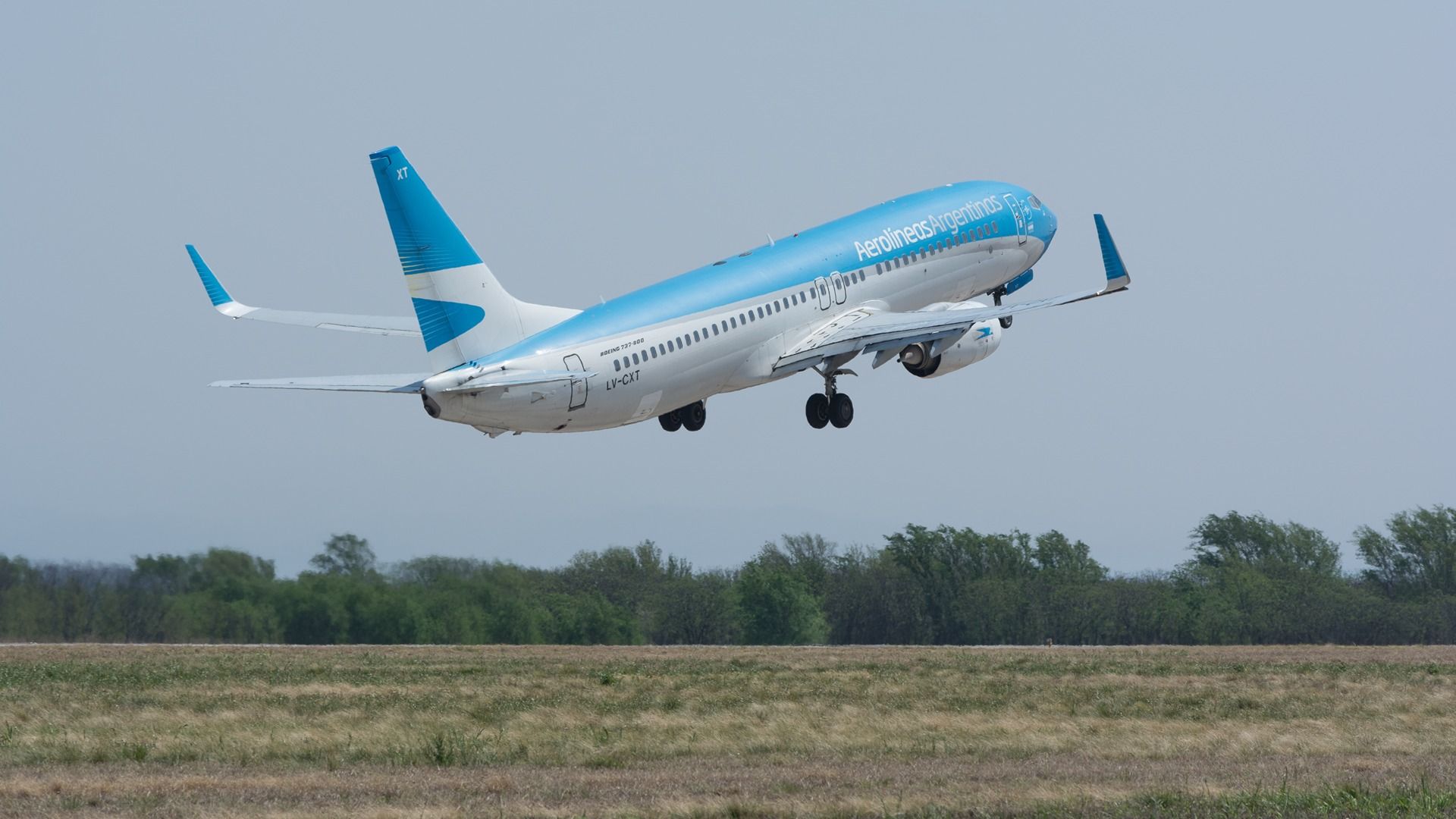
Aerolíneas Argentinas has grounded eight Boeing 737-800 aircraft following the latest incident in which the left engine failed, forcing the plane to make an emergency landing at Buenos Aires Ezeiza International Airport (EZE) last week. All eight aircraft are equipped with CFM International CFM56 engines, and this grounding follows repeated issues with the engines within the past year, raising questions about their reliability.
In a statement published on October 16, 2025, the airline announced the preventive suspension of eight Boeing 737-800 aircraft. It confirmed that all engines met the manufacturer’s inspection standards but noted a recurring pattern of failures involving the same engine type. The Argentine national airline has requested a technical review from CFM International, a joint venture between GE Aerospace and Safran, before returning the engines to service.
Engine Issues Linked To Four Aerolíneas Argentinas Flights

 Aerolíneas Argentinas experienced at least four incidents within the past year that were linked with Boeing 737-800 engine failures. All of these aircraft were equipped with CFM56 engines. The most recent incident involved an Aerolíneas Argentinas 737-800, registered as LV-FSK.
On October 14, 2025, flight AR 1526 operating from Buenos Aires Aeroparque (AEP) to Córdoba (COR) encountered an issue during its initial climb, when the left CFM56 engine produced a loud bang and visible flames. The flight crew subsequently shut down the affected engine as a precaution and diverted it to EZE airport. No injuries were reported.
The grounded aircraft included jets with registration LV-FQY, LV-FQZ, LV-FSK, LV-FUA, LV-FUB, LV-FUC, LV-FVM, and LV-FVO. The airline said that CFM International had recommended inspections of these engines after 17,200 flight cycles. However, none of the affected units had reached that threshold. Therefore, the carrier has requested a technical assessment from the engine manufacturer, as well as input from regional operators using similar engines who have experienced comparable incidents. In a comment to Simple Flying, a CFM International spokesperson said:
“Safety is our top priority. We are supporting Aerolíneas Argentinas, as well as the NSTB in the investigation opened by the JST.”
Aerolíneas Argentinas Boeing 737 Fleet

The Boeing 737 family forms the backbone of Aerolíneas Argentinas’ narrowbody operations. The airline deploys its 737 fleet across an extensive network of domestic routes as well as regional flights throughout South America and the Caribbean.
Aerolíneas Argentinas currently operates a fleet of 48 Boeing 737 aircraft, divided into four variants, including 28 Boeing 737-800s, 13 Boeing 737 MAX 8s, five Boeing 737-700s, and two Boeing 737-800SF freighters. The airline has been a CFM customer for over 25 years, and all its aircraft are powered by CFM engines. The 737-800s have an average age of 10.4 years, according to ch-aviation.
According to the engine manufacturer, CFM provides Aerolíneas Argentinas with support from a team of more than a dozen local and international specialists who assist the airline in its operations. The company also offers engine diagnostics, alerts, and recommendations, along with access to a 24-hour customer support desk.

The push to privatize Aerolíneas Argentinas has gained momentum under President Javier Milei’s administration, which began in 2023.
In a historic shift, the airline has declared that it will not rely on government funding in 2025, the first time since it was renationalized in 2008. The milestone comes after the carrier received about $8 billion in state subsidies over the last 16 years, according to a report by the Buenos Aires Herald.
In early 2025, the airline announced that it had reduced its workforce by about 13%, cutting around 1,600 positions, including 85 senior management roles. According to company executives, these measures, along with the elimination of unprofitable routes and a streamlined management structure, were key to improving financial discipline and helping balance the company’s books.
