


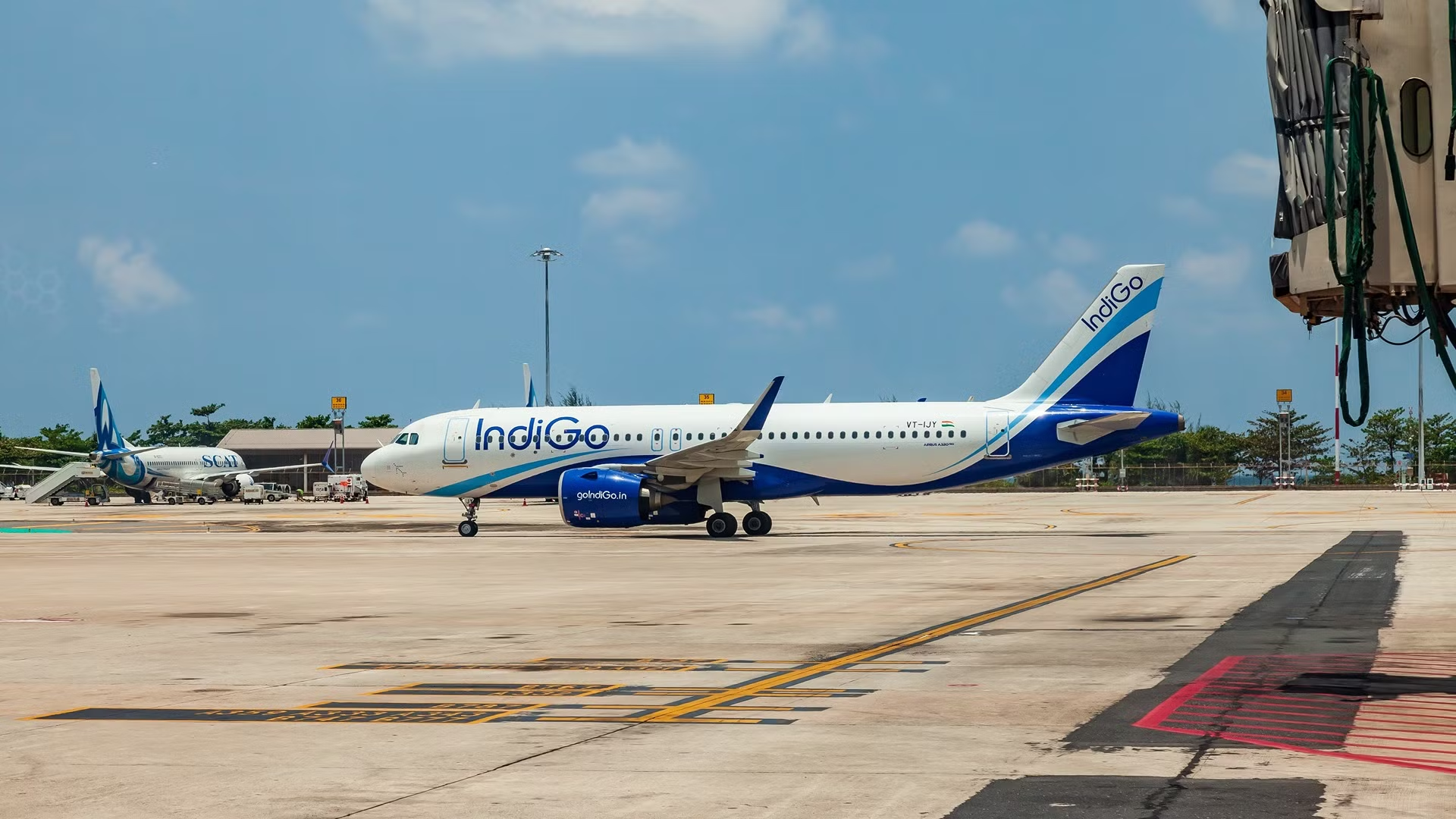
European aircraft manufacturer Airbus has projected that the Asia Pacific region is forecast to need up to 20,000 (19,560 specifically) additional aircraft to sustain growth and demand. This is primarily driven by demand from the two most populated countries in the world, India and China. The number of aircraft needed represents 46% of all global aircraft requirements across the next two decades.
In a report by The Economic Times, it outlines that the Asia-Pacific region is positioned to see annual passenger numbers grow by 4.4%, surpassing the global average, which sits at 3.6%. This demand is clear, with the likes the IndiGo, one of the largest airlines in Asia, having a long list of aircraft on backorder, with its order sheet sitting at nearly 1,000 aircraft with Airbus (including narrow and widebody airplanes).
42,520 Aircraft Needed Globally

Demand for new aircraft globally has been fueled by a number of factors that extend beyond the post-pandemic travel surge and fleet expansion. Newer aircraft have many technological advancements that are helping airlines travel further, for longer, and potentially for less. This has led to the industry remaining under pressure to optimize its fuel consumption, improve the passenger experience, and enable operational efficiency.
Aircraft orders were a topic of discussion at the latest Association of Asia-Pacific Airlines (AAPA) Annual Assembly of Presidents, which was held in Bangkok between November 14 and 15, with the region expecting demand for at least 20,000 new aircraft across the next two decades, of which 3,500 airplanes are expected to be widebodies. The remaining 16,000 narrowbody airplanes account for more than 47% of all new delivies globally for the next two years across this time period.
Of this number, 68% of all aircraft deliveries are to support fleet expansion, while the remaining 32% are set to replace older aircraft as part of airline fleet renewal programmes. These newer aircraft will contribute to lower carbon emissions, improved onboard experiences, and overall better operational efficiency for airlines.
Continued Growth In The Region

With increased annual passenger growth, surpassing the global average, strong economic expansion, and the growth of low-cost carriers across Asia, demand has skyrocketed. While the likes of AirAsia, IndiGo, and Cebu Pacific regularly hit the headlines for their aggressive expansion across the region and beyond, several smaller airlines continue to see an upward trajectory. A prime example of this is ZIPAIR Tokyo, which has continued to expand its long-haul footprint from Japan to the United States.
Further south, looking at Jetstar, the low-cost arm of Australian flag carrier Qantas, recently withdrew its Singapore-based operations, Jetstar Asia. This was in part due to rising costs and huge competition from other Asian carriers. Fortunately for those in Australia and New Zealand, the reallocation of aircraft to other Qantas Group airlines like Jetsar Airways (which covers Australia and New Zealand) will see these airplanes providing additional capacity both domestically and across the Tasman.
In India, air travel is popular due to the increased affordability and speed of travel across the highly populated nation. The emergence of several low-cost carriers in India has facilitated additional trade, business, and tourism, which can reduce the travel times to smaller, remote areas of the country.
Flying Green

In addition to continued passenger and aircraft demand, some Asian nations are taking additional steps to support lower global emissions. Singapore is set to add a new green fuel tax (officially the Sustainable Aviation Fuel Levy), which will look to raise money for the purchase of SAF. This is set to be charged to those traveling to and from the country, but not those transiting via Changi International Airport (SIN).
The cost of this new charge will be determined by the route and destination, class of travel for the passenger. This will be implemented from October 1, 2026. There will be four geographical regions that will take into consideration this cost, set out in bands, as detailed below, as per a report by New Zealand news outlet, Stuff:
|
Band One |
Southeast Asia |
|---|---|
|
Band Two |
Northeast Asia, South Asia, Australia, Papua New Guinea |
|
Band Three |
New Zealand, Africa, Central and West Asia, Europe, the Middle East, and the Pacific Islands |
|
Band Four |
North and South America |
The goal of this levy is to enable the small nation of Singapore to make major leaps forward in the development and use of SAF, in an effort to build Changi into a ‘sustainable and competitive air hub’. This cost is expected to be applied to all tickets sold from April 1, 2026, and will be in full effect on cargo and business flights from October 1.
