


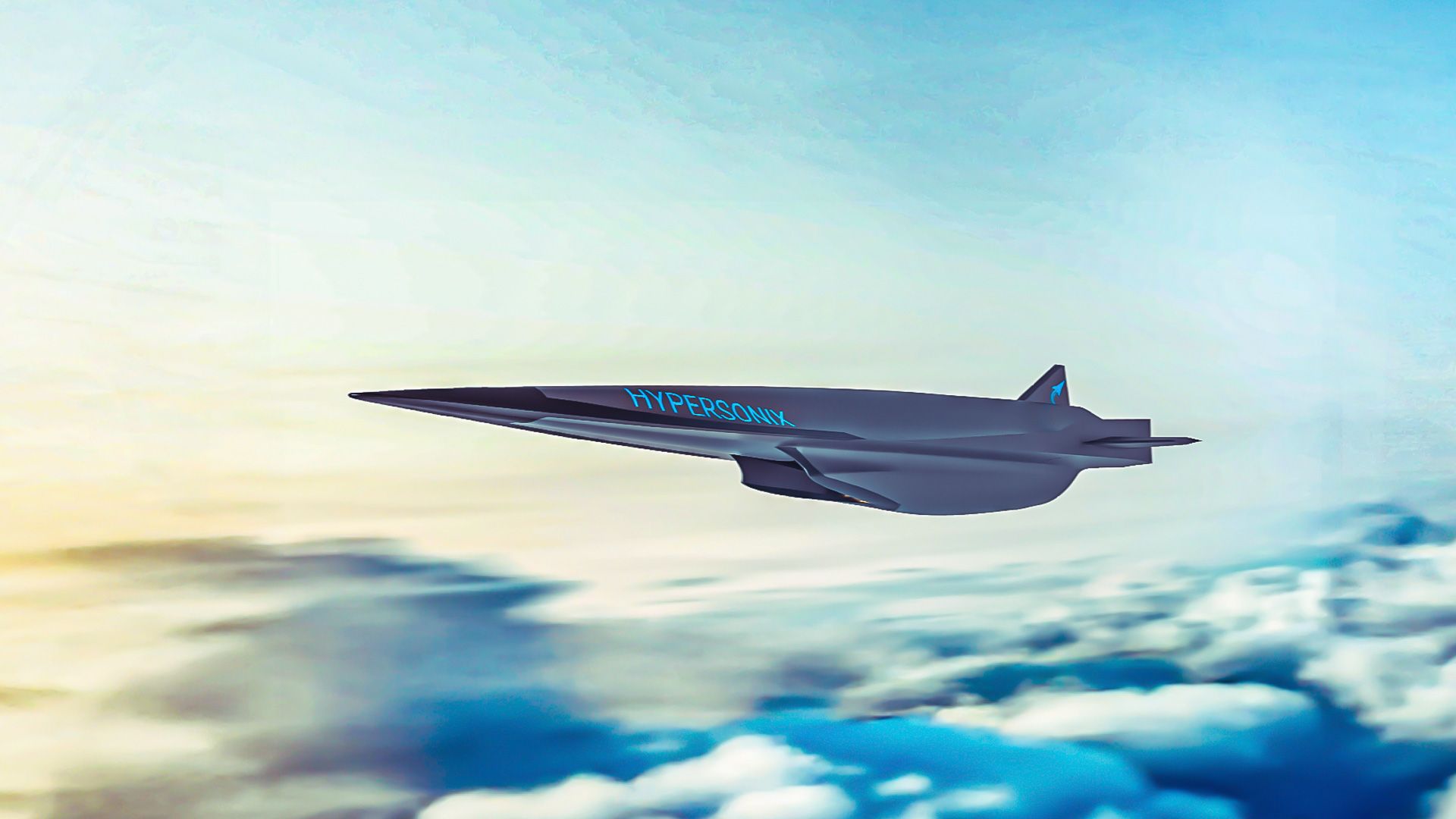
Imagine an aircraft streaking across the sky at over Mach 12, which is twelve times the speed of sound! Moreover, it is powered not by conventional jet fuel but by hydrogen fuel, meaning that it produces 0% CO₂ emissions. Sounds like science fiction, but it may become a reality soon. That’s precisely the bold ambition of Hypersonix Launch Systems (HLS), the Brisbane-based company charting a new frontier in high-speed flight. In our article, we pull back the curtain on that vision: the promise of hydrogen-fueled hypersonic vehicles, the engineering hurdles, the history behind them, and where things stand today.
Pure research, defense projects, and a limited number of experimental flights have long dominated the race for hypersonic flight. However, we now see a company targeting hydrogen-powered scramjets for operational platforms. Why hydrogen? Why hypersonic? And what happens when you combine the two? We’ll explore how Hypersonix is attempting to create the world’s first hydrogen-powered hypersonic jet, what we know so far, and how these fit into the broader sweep of aviation and aerospace history.
The Vision: Hypersonics And Hydrogen Come Together

Hypersonic flight, typically defined as speeds exceeding Mach 5, is one of the most significant challenges in aerospace: it involves extreme temperatures, air-breathing propulsion, advanced materials, and high energy requirements. For decades, most hypersonic vehicles have been either rocket-boosted (non-air-breathing) or scramjets powered by kerosene or other hydrocarbon fuels.
But the new trend is experimenting with hydrogen. On its website, Hypersonix states that its engines are “hydrogen-fueled for higher Mach” and produce only H₂O exhaust when using green hydrogen. Their proprietary scramjet engine, known as the “SPARTAN”, is described as “3D-printed, reusable, capable of reaching Mach 12 with no moving parts” in public materials.
The idea is that hydrogen’s high energy density per unit mass and its clean exhaust (water rather than CO₂) make it ideal for high-speed flight in the atmosphere. Combine that with a scramjet (supersonic combustion ramjet) and you get a propulsion system that ingests air at hypersonic speed, mixes it with hydrogen, and burns.
Of course, “twelve times the speed of sound” remains a very ambitious goal. The report in Interesting Engineering declared that Hypersonix is developing “the world’s first hydrogen-powered hypersonic jet” and mentions Mach 12 as a target.
In short, the vision is to create a reusable, hydrogen-fueled hypersonic aircraft, or arguably the first hypersonic jet of its kind, with major implications for defense, space launch, rapid transport and sustainability.
The Engine & Platform: SPARTAN, DART, VISR

In many ways, the heart of the story is the engine: the SPARTAN scramjet. Developed by Hypersonix, this engine is reportedly 3D-printed, air-breathing, hydrogen-fueled, and aiming to reach speeds of up to Mach 12 without requiring moving parts.
Platform breakdown:
- DART AE: An 11.5 feet (about 3.5 meters) demonstrator vehicle powered by SPARTAN, intended to fly under the US Defense Innovation Unit (DIU) “HyCAT” program.
- VISR: A larger fully-reusable eight-meter aircraft, hydrogen-fueled, designed for intelligence, surveillance, and reconnaissance missions, using four SPARTAN engines and high-temperature ceramic-matrix composites.
- Delta Velos: Next generation, reusable high cadence launch system, again hydrogen-fueled, targeting up to Mach 12.
Let’s put the details into a mini-table for clarity:
|
Platform |
Purpose |
Key Specs |
|---|---|---|
|
DART AE |
Demonstrator |
3.5 meters long, hydrogen-fueled SPARTAN, hypersonic testbed. |
|
VISR |
Reusable ISR hypersonic aircraft |
8 meters in length, hydrogen-fueled, four SPARTAN engines, Mach 5-10 range indicated. |
|
SPARTAN engine |
Core propulsion system |
3D-printed, hydrogen-fueled scramjet, up to Mach 12, no moving parts. |
Sources: AeroSpace Testing International, Hypersonix, The Government of Australia
The technical implications are substantial: installing a scramjet, feeding hydrogen fuel at high Mach speeds, managing extreme heat loads, and manufacturing via additive methods (3D printing) all point to a transformative engineering effort.
A History Of Hydrogen Use & Hypersonics In Aviation

Although Hypersonix is breaking new ground, the roots of hydrogen-fueled flight and hypersonic air-breathing engines go back decades.
Hydrogen-fueled aviation: Hydrogen has been considered a potential fuel for aviation since at least the 1950s, with some successful test flights conducted in recent years on regional and general aviation aircraft using experimental hydrogen-powered engines. Hydrogen benefits include high specific energy and clean combustion (producing water vapor rather than CO₂). The challenge lies in producing and storing hydrogen (either in cryogenic or high-pressure form), considering the volume and insulation required, and integrating it into aircraft design constraints, ultimately enabling the aircraft to achieve supersonic speeds.
The concept of “zero-emission” aviation often refers to hydrogen as a potential solution. For example, the concept of Zero Emission Hyper Sonic Transport (ZEHST), proposed by EADS/JAXA in 2011, envisioned a Mach number of ~4.5 using hydrogen and a combination of engine types, as described in the ResearchGate paper. At the same time, Airbus is conducting its own research to develop conventional, subsonic, hydrogen-powered aircraft suitable for passenger and cargo transportation.
Hypersonic air-breathing engines (scramjets and beyond): Australia has already been researching this technology for over 20 years. The university project HyShot (University of Queensland Centre for Hypersonics in Australia) in the early 2000s demonstrated supersonic combustion under flight conditions, as reported in another ResearchGate paper. The idea of scramjets, or supersonic combustion ramjets, has been explored in many national defense and space launch programs.
Hypersonix is combining these two threads: hydrogen fuel and scramjet hypersonic propulsion, and attempting to integrate them into operational platforms.
This combination is crucial: hydrogen fuel is lighter, allowing for higher exhaust velocities (in theory), and when applied in scramjet architectures, offers a path to pushing Mach 8+ and Mach 10-12 regimes, rather than the Mach 2–4 domain of most supersonic jets.
The Science Behind Astronomical Numbers

The headline figure of “Mach 12” (approximately 12 times the speed of sound) sounds impressive, serving both as a technical target and a signaling device. But what does it mean, and what is the science behind these numbers?
Let’s break it down. Mach 1 is roughly 1,235 km/h (at sea level). Mach 12 is therefore approximately 14,820 km/h (at sea level, while 12,000 km/h is at an altitude of 30,000 meters). At these speeds, the aircraft traverses about 245 km per minute. For reference, the International Space Station (ISS) orbits Earth at approximately Mach 22 (27,600 km/h). Imagine spanning continents in under an hour, with impressive cosmic speeds!
At the same time, technical hurdles encompass everything related to physics and its limitations. At Mach 12, you are in what atmospheric engineers call the “hypersonic regime”: flying in the Earth’s atmosphere and not in space means that the heat loads on the airframe are extreme, the air begins to dissociate, shockwaves dominate the flow field, and engine integration (intake, combustor, exhaust) becomes extremely challenging.
That’s why it was easier to reach hypersonic speed in space but not in the dense atmosphere. Materials must survive severe thermal stress, and aerodynamic design must maintain stability at high speeds and altitudes. Hydrogen fuel introduces additional complexity: cryogenic or high-pressure storage, fuel handling at high speeds, and mixing/igniting hydrogen in supersonic airflow.
But why does hydrogen help? According to Hypersonix, hydrogen enables higher Mach numbers due to its higher specific energy and cleaner exhaust. Their website states, “Air-breathing scramjet propulsion with no moving parts. Hydrogen-fueled for higher Mach.”
Why it matters: The practical implications of reaching Mach 10–12 are multifold:
- Rapid global transport: civilian or cargo flights in minutes, rather than hours.
- Defense/ISR missions: hypersonic platforms that strike or surveil at timescales previously impossible.
- Access to space: hypersonic atmospheric flight can serve as a first stage or air-launch system for space vehicles.
- Sustainability: using green hydrogen could dramatically reduce CO₂ emissions for high-performance flight.
- In short, reaching Mach 12 isn’t only about speed for its own sake, but it’s about enabling a new category of flight.
Where Things Stand Now, And The Competitive Landscape

What do we actually know about the current status of Hypersonix’s program, and how does it compare with other initiatives?
Hypersonix’s current status: Hypersonix recently raised US$46 million (Series A) to accelerate its hydrogen-powered hypersonic aircraft and engine development, as per Aerospace Testing International. This funding will support: the NASA-backed launch of DART AE under the US HyCAT programme, advanced manufacturing capabilities in Queensland, and the development of VISR.
Hypersonix is not the only company researching hypersonic flight. There are other hypersonic propulsion efforts globally; for example, the Franco-Swiss company Destinus Aerospace (Destinus) is developing a hypersonic hydrogen-fueled UAV and passenger aircraft concept.
Currently, the vast majority of traditional hypersonic programs (especially for the military) use kerosene-fueled scramjets or rocket boosters + glide vehicles. Hypersonix’s unique angle is combining hydrogen and scramjet for operational platforms.
The broader aerospace and defense context sees many nations investing heavily in hypersonics (US, China, Russia, Australia), both for strategic reasons and then for commercial purposes.
However, there are numerous challenges to making this sci-fi technology a reality. Firstly, demonstration flights are still pending; claims of Mach 12 targets remain, not yet proven in sustained atmospheric flight. Secondly, hydrogen storage on aircraft remains non-trivial, as volume, insulation, cryogenics, and high-pressure systems all add weight and complexity. Additionally, reusable hypersonic air-breathing vehicles are, by definition, more complex than one-off testbeds; therefore, transitioning to a fully operational “jet” is a steep climb. Lastly, thermal management, engine life, material fatigue, and aerodynamic control at hypersonic speeds remain active areas of research.
Thus, while the ambition is real, the actual operationalization remains in progress. But the fact that Hypersonix has secured major funding and is under contract via the US DIU/HyCAT program is a strong signal of industry confidence.
What The Future Might Hold

The potential of hydrogen-powered hypersonic flight reaches far beyond breaking speed records. If Hypersonix succeeds, the implications for global transport, defense, and space access could be transformative. A hydrogen-fueled jet capable of Mach 12 could reduce intercontinental travel from hours to minutes, allowing passengers or cargo to move between continents in the time it takes to watch a short film. In logistics, that same speed could deliver critical supplies and equipment across the globe almost instantly. Meanwhile, in the space sector, reusable hypersonic craft could serve as the first stage of orbital launch systems, cutting costs and emissions simultaneously.
For aviation, hydrogen is not merely a cleaner alternative but a catalyst for higher performance. Its high energy density allows sustained propulsion at hypersonic speeds while emitting only water vapor when burned with oxygen. Hypersonix’s SPARTAN engine embodies this balance between speed and sustainability, meaning that “green flight” and record-breaking velocity can coexist. The company’s focus on reusability is equally important: if hypersonic vehicles can fly repeatedly rather than serve as expendable testbeds, the economics of high-speed flight could change overnight, paving the way for commercial viability.
As Hypersonix co-founder Dr. Michael Smart explains, the SPARTAN is “more than a propulsion system – it’s a breakthrough in reusable hypersonic flight.” His words highlight a broader vision: one where clean hydrogen power, efficient manufacturing, and revolutionary speed come together into a practical aviation platform. With the DART AE and VISR programs progressing and hydrogen scramjets moving from laboratory tests to the runway, the line between today’s aerospace science and future air travel is starting to blur. The era of sustainable hypersonic flight might arrive sooner than anyone expected.
