


The Boeing 767 has long been regarded as one of the most versatile widebody aircraft ever built, bridging the gap between narrowbody efficiency and long-haul capability. Since entering service in the early 1980s, the twin-engine jet has flown everything from short regional routes to intercontinental flights, becoming a mainstay for airlines worldwide. While most 767s shared broadly similar configurations, some operators chose paths that made their aircraft stand out from the rest.
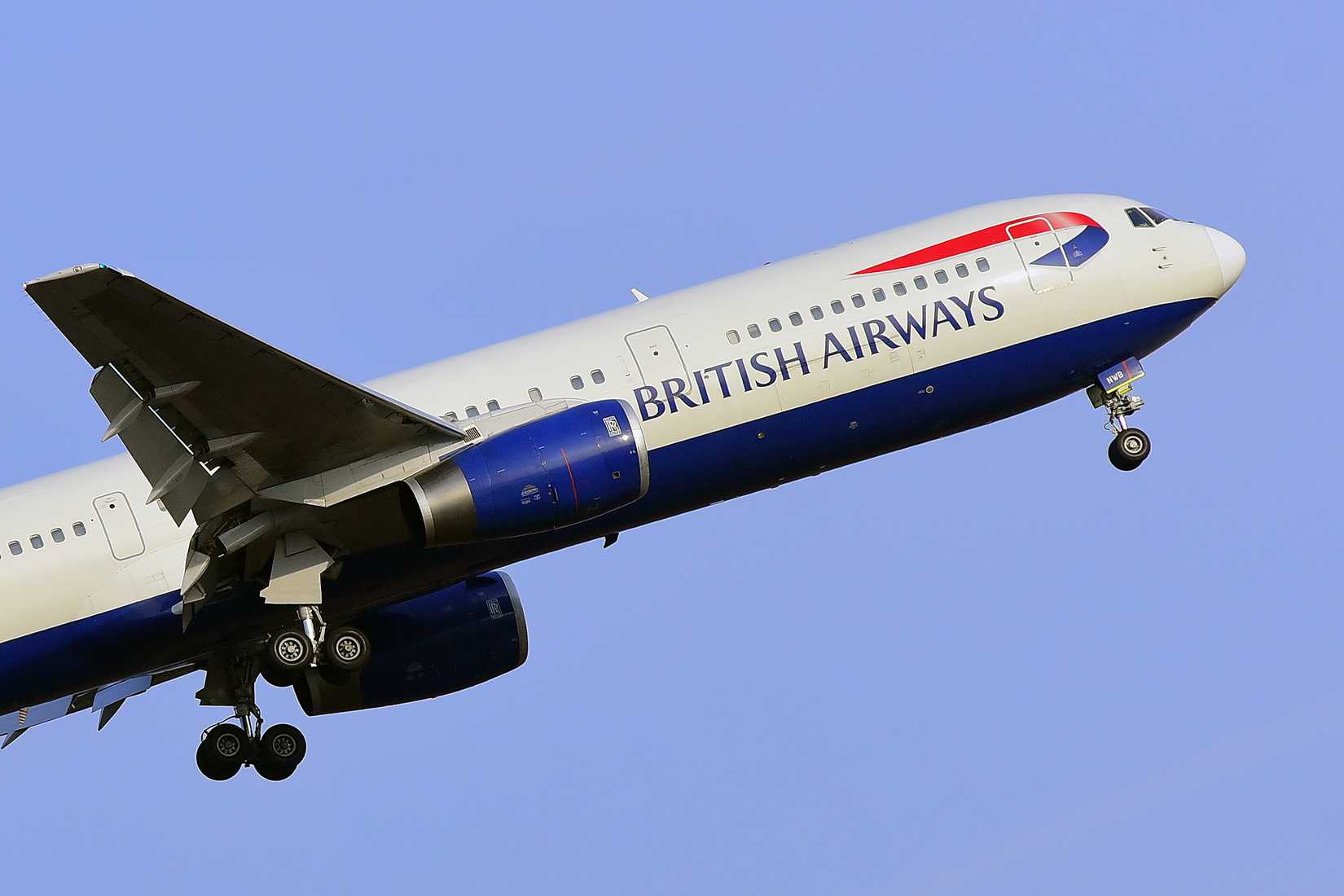
Among them, British Airways operated one of the most distinctive Boeing 767-300ER fleets in commercial service. Through a combination of unique engine selection, structural adaptations, and unusually flexible route deployment, BA’s 767s differed markedly from those flown by most other airlines. These differences were not accidental, but the result of deliberate strategic and engineering decisions that set British Airways’ 767-300ERs apart from the rest of the global fleet.
The History And Development Of The Boeing 767

The Boeing 767 was developed in the late 1970s as part of Boeing’s response to rising fuel prices and airline demand for more efficient widebody aircraft. It was designed to sit between smaller capacity narrowbodies like the Boeing 737 and larger, higher capacity widebodies such as the Boeing 747, offering twin-engine efficiency with intercontinental range. The aircraft first flew in 1981, and the 767-200 entered service in September 1982 with 

A major innovation of the 767 was its advanced flight deck, which allowed it to be flown by a two-pilot crew rather than requiring a flight engineer. This cockpit philosophy later became the foundation for Boeing’s “glass cockpit” approach and was shared with the 757, enabling cross-crew qualification. This made the aircraft especially attractive to airlines focused on operational flexibility.
The 767 evolved through several variants, with the 767-300ER becoming the most successful. The extended-range model allowed airlines to operate long-haul routes more efficiently than older three and four-engine aircraft. By the late 1980s and early 1990s, the 767 had become a backbone aircraft for transatlantic and medium-long-haul routes worldwide.
The Boeing 767 At British Airways


Initially, British Airways used the Boeing 767 primarily on long-haul services, including transatlantic routes from London Heathrow to destinations across North America. The aircraft offered the range and payload needed for these missions while being significantly smaller and more fuel-efficient than the Boeing 747, which dominated BA’s long-haul fleet at the time. This made the 767 ideal for “thinner” long-haul routes that could not consistently support the capacity of a jumbo jet, allowing BA to expand its network without the financial risk of operating larger aircraft.
As the airline introduced newer long-haul aircraft such as the Boeing 777 and later the Boeing 787, the role of the 767 gradually shifted. British Airways redeployed many of the aircraft onto shorter European and domestic routes, where their widebody capacity was well-suited to high-demand sectors. This adaptability significantly extended the useful life of the type within BA’s fleet and highlighted the flexibility of the 767 design. Few airlines operated the 767 across such a wide spectrum of missions, from transatlantic long-haul flights to high-density short-haul services, for such an extended period of time.


Why Delta Air Lines Is Retiring Its Boeing 767-300ERs
Reading the title of this video, you probably already know why Delta might be retiring its Boeing 767-300ERs… because… well… they’re old airframes. At the same time, these relatively small widebodies lack a direct newer-generation, modern, replacement, meaning that Delta has hung on to them perhaps longer than it would prefer.
An Unusual Choice Of Rolls-Royce Engines


The most obvious difference between BA’s 767s and those flown by other airlines was the engine choice. While the majority of Boeing 767-300ERs were powered by General Electric CF6-80C2 or Pratt & Whitney PW4000 engines, British Airways selected the Rolls-Royce RB211. The RB211 produced around 59,000–60,500 lb of thrust, placing it firmly within the upper end of the 767’s thrust range. British Airways ultimately operated 28 RB211-powered 767-300ERs, making it by far the largest, and effectively the only major customer for this configuration.
British Airways’ decision was driven by fleet strategy rather than outright performance gains. At the time, BA already operated substantial fleets of RB211-powered Boeing 747-400s and Boeing 757s, both of which used closely related variants of the same engine family. By standardizing on Rolls-Royce powerplants, BA reduced the number of engine types it had to support, simplifying maintenance procedures, spare-parts inventories, and engineer training across multiple aircraft types. This commonality delivered long-term operational and cost benefits, even if it meant diverging from the most popular 767 engine options.
However, the RB211 was a relatively rare choice on the 767 platform. Out of more than 650 Boeing 767-300s and 300ERs delivered worldwide, only a small handful were ever fitted with Rolls-Royce engines outside British Airways. Most airlines preferred the broader support networks and higher production volumes associated with GE and Pratt & Whitney engines. As a result, the RB211-powered 767 never achieved widespread adoption, leaving BA’s aircraft as a technical and operational outlier within the global 767 fleet.
Structural And Engineering Modifications

The Rolls-Royce RB211 engines fitted to British Airways’ Boeing 767s were significantly heavier than the General Electric and Pratt & Whitney alternatives. This additional mass increased the loads transmitted through the wing structure and engine pylons, requiring specific structural reinforcement that was unique to RB211-powered aircraft. As a result, BA’s 767s incorporated strengthened pylons and associated components that were not found on the more common CF6- or PW4000-equipped variants.
Early in the aircraft’s service life, inspections identified issues related to these increased stresses, prompting further engineering work. This included additional strengthening of engine mounts and pylon structures, as well as enhanced inspection regimes. While the problems were ultimately resolved and the aircraft continued to operate reliably, they underscored how BA’s engine choice pushed the 767 airframe closer to its structural limits than most other operators ever encountered. Airlines using lighter engines did not require comparable modifications.
These engineering differences meant that British Airways’ 767s were not simply standard aircraft fitted with an alternative engine option. Instead, they effectively formed a distinct sub-variant of the 767, with unique structural characteristics and maintenance requirements. This further separated BA’s fleet from the rest of the global 767 population and reinforced its reputation as one of the most technically distinctive implementations of the type.

The Striking Differences Between The Boeing 767-300ER & -400ER
The Boeing 767-400ER is both a stretched and modernized aircraft that drew heavily from Boeing’s early 777 program.
A Rare Configuration With Limited Global Uptake


British Airways was essentially alone in ordering the Boeing 767-300ER with Rolls-Royce RB211 engines. Outside of BA, only a very small number of aircraft were ever delivered with this powerplant, making the configuration exceptionally rare within the global 767 fleet. This limited uptake reinforced the view that BA’s decision was highly tailored to its own operational philosophy, rather than a broadly attractive option for the wider airline industry.
Because the RB211-powered 767 was so uncommon, most airlines, leasing companies, and maintenance providers concentrated their resources on supporting CF6- and PW4000-equipped aircraft, which together accounted for the vast majority of 767 deliveries. This imbalance in aftermarket support reduced the appeal of the Rolls-Royce option for potential customers, as it offered fewer shared spares, less widespread engineering familiarity, and reduced leasing flexibility compared with the more popular engine choices.
|
Engine Model |
Max Thrust (per engine) |
Bypass Ratio |
Approx. SFC (lb fuel/lb thrust‑hr) |
Fan Diameter |
|---|---|---|---|---|
|
CF6‑80C2 (General Electric) |
52,500–63,500 lbf |
4.97–5.31:1 |
0.32–0.34 (cruise) |
93 in (2.36 m) |
|
PW4000‑94 (Pratt & Whitney) |
50,000–62,000 lbf |
4.8–5.0:1 |
Slightly more efficient than CF6 early on |
94 in (2.38 m) |
|
RB211‑524H (Rolls‑Royce) |
59,000–60,500 lbf |
4.1–4.3:1 |
0.34-0.36 (cruise) |
86.3 in (2.19 m) |
As a result, British Airways’ 767s stood apart visually, mechanically, and operationally from almost every other example of the type. To aviation enthusiasts and industry professionals alike, they represented one of the most unusual yet successful mainstream 767 configurations ever flown by a major airline, underlining how distinctive BA’s approach truly was.
A Long, Flexible, And Distinctive Legacy

British Airways operated the 767-300ER for nearly three decades, finally retiring the type in 2018. Over that period, the aircraft evolved from being a cutting-edge long-haul airliner into a highly versatile workhorse, serving everything from transatlantic flights to high-density European sectors. Its longevity was a testament not only to the inherent flexibility of the 767 design but also to BA’s ability to adapt its use as fleet priorities and market demands changed. Few aircraft types in any airline have enjoyed such a varied and extended career within a single carrier.
The combination of Rolls-Royce RB211 engines, structural uniqueness, and flexible deployment gave BA’s 767s a distinctive identity. They were instantly recognizable to passengers and aviation enthusiasts alike and became closely associated with the airline, particularly on high-frequency transatlantic services between London and North America and on busy European routes during the 1990s and 2000s. The aircraft’s versatility allowed BA to optimize capacity on routes that could not economically justify larger jets like the 747, while still offering a widebody passenger experience.
Today, BA’s 767-300ERs are remembered as a technically distinctive and strategically important fleet. Their differences from other 767s, including engine choice, reinforced structure, and operational flexibility, were the result of deliberate, long-term planning rather than chance. This careful tailoring of the aircraft to the airline’s operational philosophy made the RB211-powered 767s one of the most interesting and unusual chapters in the 767’s history, leaving a lasting impression on both the airline and the global aviation community.
source