


The US is home to one of the world’s largest and most complex aviation networks, spread across vast distances, multiple climates, and more major cities than any individual airline could possibly serve from a single location. This environment, combined with decades of deregulation and consolidation, has pushed airlines to develop multiple hubs and crew bases across the country.
In this article, we will take a closer look at the different hubs and crew bases operated by the four largest carriers in the US – 


Each Hub Plays A Distinctive Role


For many passengers, especially those familiar with more centralized aviation systems in smaller countries, the sheer number of hubs operated by US carriers can seem excessive. Yet in the US, a sprawling aviation market shaped by geography, demographics, and deregulation, multiple hubs are not just practical, they are essential to how the system works.
The US domestic network alone covers thousands of miles and hundreds of medium-sized cities that lack the demand to sustain nonstop service on their own. Still, airlines solve this by building hub-and-spoke networks, allowing passengers from smaller markets to connect through strategically placed hubs.
Each hub fills a different geographic or commercial niche, with some serving as gateways to international markets while others focus on domestic connections. Even hubs that appear close together, such as 


The 5 Airlines That Operate The Most Daily Flights
US carriers mostly top the list.
Crew Bases Follow A Similar Distribution


Crew bases naturally mirror these operational realities, as airlines need pilots and cabin crew positioned close to the aircraft they operate and available to operate at the correct time. Large, banked hubs with tight departure waves require sizable standby crews, ensuring last-minute substitutions can be made without disrupting dozens of onward connections.
In addition, geographically isolated airports, such as Daniel K. Inouye International Airport (HNL) or, to a lesser extent, 
American Airlines


American Airlines operates the widest array of hubs among all major US carriers, with its network having been shaped by a mixture of mergers with the likes of Trans World Airlines (TWA) and US Airways. Today, the oneworld carrier operates 10 hubs, as outlined in the table below:
|
Airport |
IATA Code |
|---|---|
|
Charlotte Douglas International Airport |
CLT |
|
Chicago O’Hare International Airport |
ORD |
|
Dallas/Fort Worth International Airport |
DFW |
|
Los Angeles International Airport |
LAX |
|
Miami International Airport |
MIA |
|
John F. Kennedy International Airport |
JFK |
|
LaGuardia Airport |
LGA |
|
Philadelphia International Airport |
PHL |
|
Phoenix Sky Harbor International Airport |
PHX |
|
Ronald Reagan Washington National Airport |
DCA |
Let’s take a closer look at three of American Airlines’ three largest hub airports. 
Another of American Airlines’ major hubs is Charlotte Douglas International Airport (CLT), which the carrier inherited when it merged with US Airways in 2013. Today, the airport serves as one of the country’s most efficient domestic connecting hubs, offering high flight frequency for passengers connecting across the region. In 2024, the busiest destinations from the airport were Orlando International Airport (MCO), LaGuardia Airport (LGA), and Dallas/Fort Worth International Airport (DFW).
Meanwhile, American Airlines’ hub at Miami International Airport (MIA) acts as the airline’s primary gateway to Central America, South America, and the Caribbean, giving it a unique role within the network. From the airport, American Airlines operates an extensive schedule to major business centers, leisure hotspots, and secondary cities across the region, leveraging Miami’s strong cultural and economic ties. The hub also supports a growing transatlantic presence, with seasonal and year-round service to key European destinations, including 

These Are American Airlines’ Leading Hubs By Passenger Numbers
American Airlines has around a 60-70% market share at Dallas/Fort Worth, Charlotte, and Miami airports.
United Airlines


This structure allows United Airlines to serve regional and transcontinental markets efficiently while also supporting one of the largest international operations among US carriers, with each hub contributing a specific strategic advantage. For example, 
Houston George Bush Intercontinental Airport (IAH) maintains the carrier’s presence in Texas and facilitates routes to Central and South America. On the West Coast, San Francisco International Airport (SFO) serves as United Airlines’ primary transpacific hub, while 

These Are United Airlines’ Leading Hubs By Passenger Numbers
Newark is the main United hub, while it has other major hubs in other airports across the country.
Delta Air Lines

Delta Air Lines uses a hub system that differs slightly from those of American Airlines and United Airlines in that, instead of operating from an extensive list of hubs of varying sizes, the SkyTeam carrier concentrates most of its operation into a smaller collection of extremely large and highly efficient hubs. By far the largest of these is at 
Minneapolis/St. Paul International Airport (MSP) and Detroit Wayne County Metropolitan Airport (DTW) are both legacy hubs from Delta Air Lines’ merger with Northwest Airlines, and provide the carrier with strong access to the Upper Midwest and Great Lakes regions.
Meanwhile, Delta Air Lines’ dual operations at John F. Kennedy International Airport (JFK) and LaGuardia Airport (LGA) allow the carrier to serve both premium international and business-oriented domestic travelers in one of the most competitive aviation markets in the world. Meanwhile, Delta Air Lines’ presence at both Seattle-Tacoma International Airport (SEA) and Los Angeles International Airport (LAX) strengthens the airline’s West Coast presence.
When it comes to Delta Air Lines’ crew bases, Hartsfield-Jackson Atlanta International Airport (ATL) alone hosts a vast number of pilots and cabin crew, reflecting the scale of operations there, while airports such as Minneapolis/St. Paul International Airport (MSP), Detroit Wayne County Metropolitan Airport (DTW), and Salt Lake City International Airport (SLC) continue to host major crew bases tied to the Northwest Airlines legacy and remain essential to the carrier’s domestic coverage. Meanwhile, Delta Air Lines’ West Coast bases support the airline’s ambitions across the Pacific Ocean and are home to many crews trained on long-haul aircraft such as the Airbus A330-900 and A350-900.
Southwest Airlines

|
Airport |
IATA Code |
|---|---|
|
Chicago Midway International Airport |
MDW |
|
Baltimore/Washington International Airport |
BWI |
|
Denver International Airport |
DEN |
|
Las Vegas Harry Reid International Airport |
LAS |
|
Phoenix Sky Harbor International Airport |
PHX |
|
Dallas Love Field Airport |
DAL |
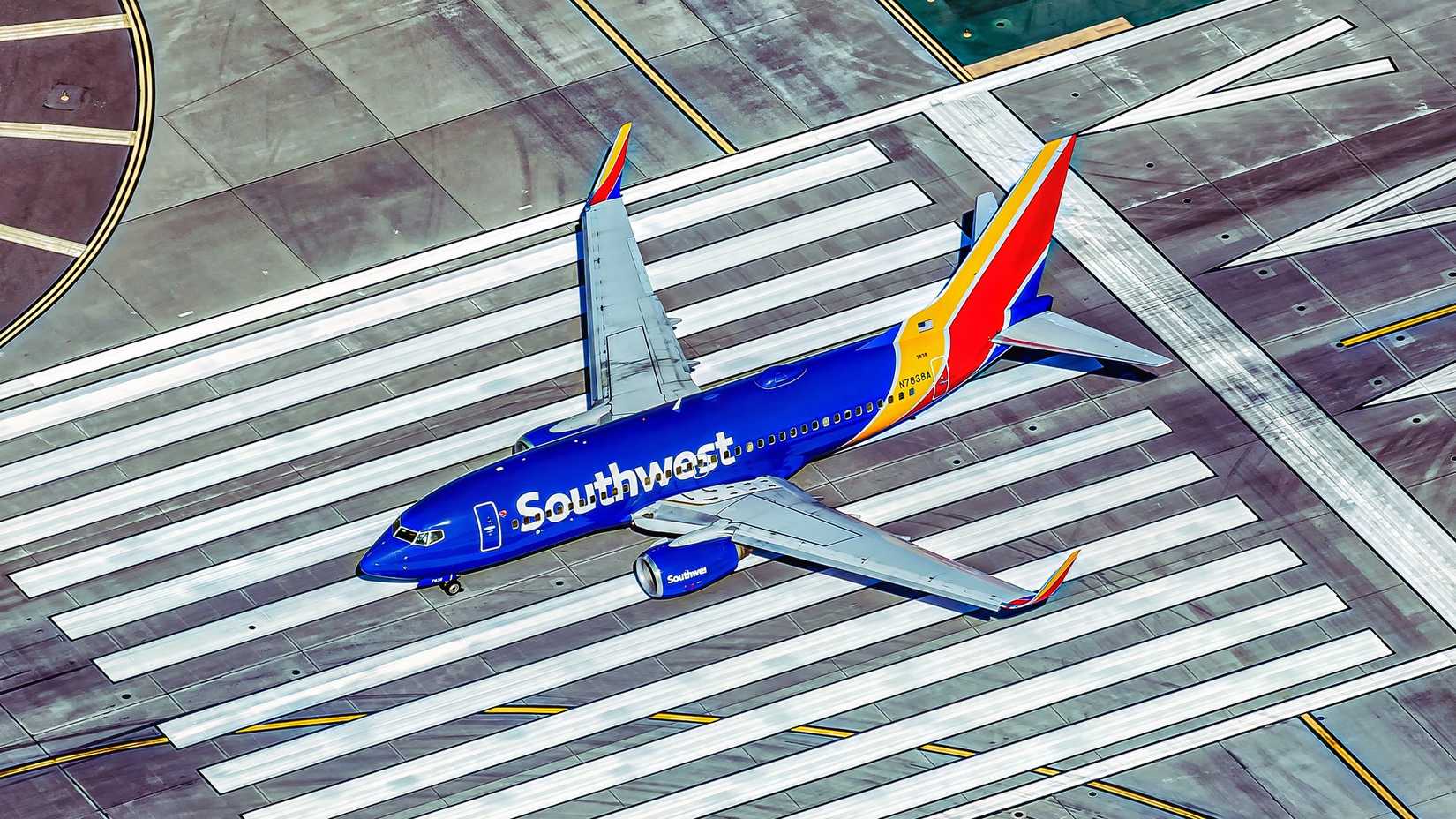
The airline does not bank flights in the legacy-carrier style, but these airports still facilitate a significant number of passenger connections, even if such connections are not formally emphasized. Southwest Airlines’ crew bases are distributed across its entire network, and the fact that it flies only Boeing 737s simplifies crew assignments, as there is no need to split crews by aircraft type. The latest data from ch-aviation shows that the carrier is currently the world’s largest operator of the 737, with a total of 810 aircraft in its fleet, comprising 334 737-700s, 203 737-800s, and 273 737 MAX 8s.
source