


The 


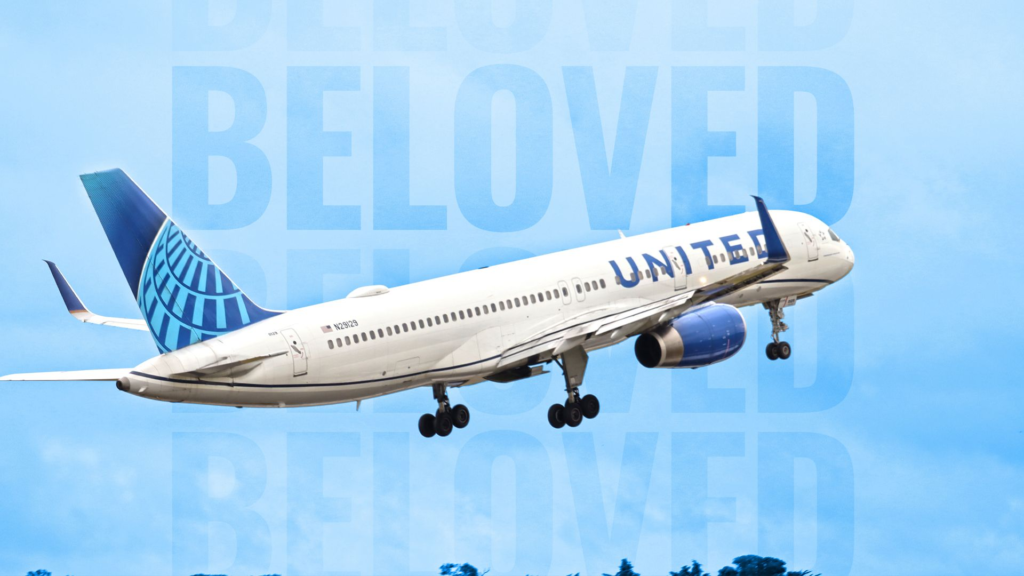
Currently, United’s 757 fleet consists of 40 757-200 aircraft and 21 of the longer 757-300 variant. These aircraft have an average age of 26.9 years, with the aircraft’s retirement planned as early as 2026. 
The unique characteristics of the 757 have allowed United Airlines to be successful in niche markets not suitable for widebody operations and out of range for narrowbodies. Examples of these are summer seasonal transatlantic routes to secondary cities in Europe or thinner intra-continental US domestic flights. Besides the aircraft’s unique role within United Airlines’ network strategy, keeping the aircraft also made economic sense. Due to the age of the 757 fleet, the aircraft are completely paid off by now, increasing margins. Another important factor for the airline to keep operating the 757 is the fleet commonality with the 767, of which United Airlines currently operates 53. This has reduced costs for United Airlines through economies of scale in maintenance and training.
The End Of An Era


Although the Boeing 757 has been a powerhouse for United Airlines and still serves a clear purpose today in the airline’s fleet composition, the increasing age of the 757 fleet means it won’t be long before the commercial life of the Boeing 757 within United Airlines’ fleet is over. Older aircraft tend to be less fuel-efficient compared to newer aircraft models, and as sustainability regulations and ambitions increase, the aircraft is losing its edge. Furthermore, as the global fleet of Boeing 757s decreases, fewer spare parts become available, and heavier maintenance checks are required, increasing maintenance costs compared to newer aircraft types.
Besides economic and sustainability reasons, the passenger experience on the 757 might struggle to compete with that of more modern aircraft. Although the aircraft is often considered by passengers to be more comfortable than other narrowbody aircraft, such as the Airbus A320 and Boeing 737, it might struggle to compete against the cabin experience and lower engine noise of modern widebody aircraft on transatlantic routes.
For a long time, no clear replacement existed for the Boeing 757. Boeing never created a new iteration of the aircraft, unlike the 737, 747, and 777. And the development of a new mid-sized Boeing aircraft, often suggested to be the Boeing 797, has never materialized. However, with the introduction of the Airbus A321neo and its extra-long-range (XLR) variant, a suitable successor to the 757 is finally on the market. United Airlines has ordered 50 Airbus A321XLR aircraft to replace the existing 757 fleet, with deliveries starting at the beginning of 2026. The Airbus A321XLR offers even more range than the 757 and a similar capacity, allowing it to cover the same niche in United Airlines’ network as the 757 currently does, while also being more fuel efficient, improving the passenger experience, and lowering maintenance costs.
What Makes The 757 So Special?


The Boeing 757 offers United Airlines a bridge between narrowbody and widebody aircraft. With a range of 3,900 nautical miles (7,200 km) and a capacity of 180 to 230 seats, the Boeing 757 can fly longer routes than narrowbody aircraft, such as the Boeing 737 or Airbus A320, at less capacity than larger widebody aircraft. This makes the aircraft well-suited for mostly thinner long-haul routes and continental domestic routes in the US. For comparison, the Boeing 737 MAX 8 only has a range of 3,550 nautical miles (6,570 km) and a typical configuration of 162 to 178 seats in a two-class layout. Perhaps the aircraft closest to the 757’s unique characteristics is the Airbus A321neo. This aircraft has a range of 4,000 nautical miles (7,400 km), while the extra-long-range variant can even reach up to 4,700 nautical miles (8,700 km) with 180 to 220 seats in a two-class configuration.
|
Boeing 757-200 |
Airbus A321 LR / A321XLR |
|
|
Range |
3,900 NM (7,200 km) |
4,000 NM (7,400 km) / 4,700 NM (8,00 km) |
|
Fuselage Length |
155 ft 3 in (47.3 m) |
146 ft (44.51 m) |
|
Capacity (two-class) |
~ 200 |
~ 206 |
|
Maximum Take Off Weight (MTOW) |
255,000 lb (115,660 kg) |
213,800 lb (97,000 kg) / 223,000 lb (101,000 kg) |
The longest scheduled 757 route in United Airlines’ network is its daily summer seasonal route from Newark to Stockholm, the capital of Sweden. This route covers 3,415 nautical miles (6,325 km) and has a block time of 8 hours 15 minutes, which also makes it the longest scheduled 757 flight overall. Other transatlantic routes the aircraft is scheduled to fly on include Newark to Edinburgh, Porto, Brussels, Dublin, and Malaga. From Washington Dulles and Chicago O’Hare, the airline also serves Edinburgh and Keflavik, as well as Dublin from Washington and Shannon from Chicago.
As the existing fleet of 757s around the world is aging, and modern aircraft such as the Airbus A321 XLR are entering the market, the days of the 757 are numbered. The German leisure airline Condor, recently retired the Boeing 757-300 with one final service from Frankfurt to Vienna and back. And over the next few years, other operators, such as the Icelandic flag carrier, are also planning to phase out the aircraft type. However, this will far from be the end for the aircraft, as numerous cargo airlines still operate it. Current passenger aircraft might also still end up as cargo aircraft through passenger-to-freighter conversions (P2F).
A Revolutionary Aircraft At The Time

When the Boeing 757 was first introduced over four decades ago, it was around 20% more fuel efficient than its predecessor, the Boeing 727. The aircraft’s powerful engines delivered strong thrust, allowing the Boeing 757 to operate from high-altitude and short runways, as well as under high-temperature conditions. Adding to the Boeing 757’s appeal for airlines was its long range of up to 3,900 nautical miles (7,200 km). This made it one of the first twin-engine aircraft to receive ETOPS certification, allowing for transatlantic flights with a lower capacity than the long-haul aircraft on the market at the time.
Revolutionary at the time was a new flight management system and the introduction of electronic flight instrument systems (EFIS), eliminating the need for a flight engineer. Later, a new winglet design improved the aircraft aerodynamics, which resulted in enhanced lift, reduced drag, and up to 35% better fuel efficiency. The aerodynamics of the Boeing 757 later influenced the design of the Boeing 767, Boeing 777, and even military aircraft such as the C-17. Furthermore, the cockpit of the Boeing 757 is nearly identical to the Boeing 767, which allowed for crew cross-training, a groundbreaking concept at the time.
Considering the role the Boeing 757 played in shaping commercial aviation as we know it and its strong operational track record, it is perhaps no surprise that many love this aircraft. Pilots even compare the Boeing 757 with a sports car, praising the aircraft for its hands-on flying and responsive handling. Something newer aircraft, such as the Boeing 777, do not have.
Why the A321neo Is Revolutionary?

Similar to how the Boeing 757 reshaped aviation in the 1980s, the Airbus A320neo (new-engine option) family is redefining aviation today. The A320neo family is the next iteration of the popular A320 family, which was first introduced in 1984. Over the years, more than 12,000 A320 family aircraft have been delivered. The A321ceo (current-engine option) was an extended version of the original A320ceo, having entered commercial service in 1994. At the time, the Airbus A321ceo was merely a higher-capacity version of the aircraft with a maximum capacity of 220 seats.
The new engines of the A321neo have improved the aircraft’s efficiency, reducing fuel consumption by around 20%. Furthermore, the range has been significantly extended compared to the A321ceo, which, combined with Airbus’ Sharklets, allows the aircraft to now operate transatlantic flights once reserved for widebodies or the Boeing 757. The A321XLR takes this even further with larger fuel tanks, extending range to nearly 4,700 nautical miles (8,700 km), which is enough to connect city pairs such as New York–Rome or Chicago–Lisbon nonstop. This will provide airlines like United with the flexibility to open new long-thin routes profitably, effectively filling the market niche the Boeing 757 once dominated.
Inside, the A321neo features Airbus’ Airspace cabin, offering quieter interiors, larger overhead bins, improved air quality, and customizable lighting, an experience far more in line with modern widebody comfort. The A321neo shares many common features and characteristics, including the flight deck, with the A320neo family, resulting in significant economies of scale advantages when operating multiple different aircraft from the family. With greater range, efficiency, and comfort, it defines a new generation of single-aisle aircraft built for sustainability and versatility in the modern era of air travel and well-suited to continue the legacy of the Boeing 757.
source