



Boeing is one of the largest commercial aircraft manufacturers in the world, founded in 1916, nearly 110 years ago. Since then, the company has produced a wide variety of aircraft. This includes the Boeing 707, which helped usher the commercial aviation industry into the jet age. The company also currently produces one of the most popular narrowbody families of aircraft of all time, the Boeing 737 series. Boeing has also produced some of the most popular widebody aircraft in the world, including the Boeing 777 and the Boeing 787.
However, Boeing also produced one of the most recognizable aircraft ever, the 747. This aircraft, informally known as the “Queen of the Skies”, features a second deck at the front of the fuselage and is powered by four large engines under its wings. The 747 was the world’s first widebody airliner, with over 1,500 examples built across all variants. Even so, the aircraft has been mostly removed from commercial passenger service and has since taken a dominant role in the air cargo industry. Let’s take a closer look at this large aircraft’s role in the freighter industry, as well as why 

The Delivery Of The Final Boeing 747


On January 31, 2023, Atlas Air accepted delivery of the final production Boeing 747. This aircraft is the 747-8F variant, and is operated by Atlas Air for Apex Logistic under a long-term agreement. John Dietrich, the President and Chief Executive Officer (CEO) of Atlas Air Worldwide at the time of the delivery, spoke about the acceptance of the legendary aircraft.
He stated,
“Our company’s history and success are directly linked to the 747 platform, and we are honored to continue our long history of flying this iconic aircraft for our customers around the world. Atlas Air was founded over 30 years ago with a single 747-200 converted freighter. Since then, we have spanned the globe operating the 747 into well over 800 airports in over 170 countries with nearly every series of the aircraft, including Boeing’s 747 Large Cargo Freighter for the transport of 787 Dreamliner parts.”
The last delivered 747-8F is registered as N863GT. According to ch-aviation, the aircraft has a C/N of 1574 and a manufacturing serial number of 67150. Atlas Air operates this aircraft from its base at Incheon International Airport (ICN) in Seoul, South Korea. Atlas Air first placed the order for this aircraft in January 2021, and it flew for the first time in December 2022.
Why Boeing Ended Production Of The Boeing 747


The final delivery of the Atlas Air Boeing 747-8F marked the end of the production of the legendary aircraft. This ended more than five decades of the manufacturing of the aircraft, as it was introduced in the late 1960s. Boeing’s decision to end production of the jumbo jet was driven by a combination of shifting market demands, economic pressures, and the evolution of aircraft technology.
Overall, in the 21st century, most airlines and operators have shifted toward favoring more fuel-efficient twin-engine airliners over the large Boeing 747 that utilized four engines. One of the major factors for this was the 747’s operating cost. Compared to newer aircraft like the Boeing 787 Dreamliner or the Airbus A350, the 747 consumed significantly more fuel and required more maintenance. The 747 became less viable over the years, especially as airlines looked to cut costs.
Another reason for the phase-out was the shift in airline route strategies. Point-to-point travel has become prominent in recent years, especially as long-range and fuel-efficient aircraft reduced the need for ultra-high-capacity aircraft like the 747. Aircraft like the 747 were originally designed for hub-and-spoke networks. While the 747 is no longer in production, the aircraft remains a powerful symbol of the jet age, especially as the first widebody introduced.
The Early Days Of The Boeing 747

In the 1960s, commercial air travel was seeing a significant increase. The introduction of the jet age, led by the Boeing 707 and the Douglas DC-8, led to an increase in long-haul travel. However, Juan Trippe, the President of Pan American Airways, reached out to Boeing to develop an aircraft that was over twice the size of the Boeing 707. In 1965, Boeing began development of a new aircraft, later designated the 747.
Pan Am kicked off the program by ordering 25 aircraft in April 1966. To build this incredibly large aircraft, Boeing also had to build a new factory, which would later become the largest building by volume ever built. The first 747 was rolled out of the new facility in Everett, Washington, in 1968. This aircraft conducted its maiden flight in February 1969, kicking off the flight testing program.
The Federal Aviation Administration (FAA) awarded the 747 its airworthiness certificate in December 1969. Pan Am officially introduced the Boeing 747 into commercial service on January 22, 1970, flying from John F. Kennedy International Airport (JFK) in New York City, New York, to London Heathrow International Airport (LHR) in the UK.
The Boeing 747 In Recent Years

Since the Boeing 747 was introduced in the late 1960s, Boeing has produced over 1,500 total aircraft. Over the next five decades, Boeing introduced several new and improved variants to ensure the aircraft remained viable in commercial operations. This includes the following variants:
|
Aircraft Variant |
Introduction Year |
|---|---|
|
747-100 |
1970 |
|
747-SP |
1976 |
|
747-200 |
1971 |
|
747-300 |
1983 |
|
747-400 |
1989 |
|
747-8 |
2011 |
After its introduction, the 747 revolutionized the commercial aviation industry due to its long-range capability and its high passenger capacity. Over the years, the 747 would become the flagship aircraft for major global carriers. This includes Pan Am, 
However, beginning in the late 1990s, more fuel-efficient aircraft began to dominate the long-haul commercial market. Because of this, many airlines began to retire their 747 fleets and move on to newer aircraft. Even so, many of these aircraft found a second life in the air cargo sector. The 747’s large fuselage, high payload capacity, and nose-loading feature made it ideally suited for transporting freight. Today, while few airlines operate 747s in passenger service, the aircraft continues to play a vital role in the cargo industry.
The Major Design Features And Performance Specifications Of The Boeing 747
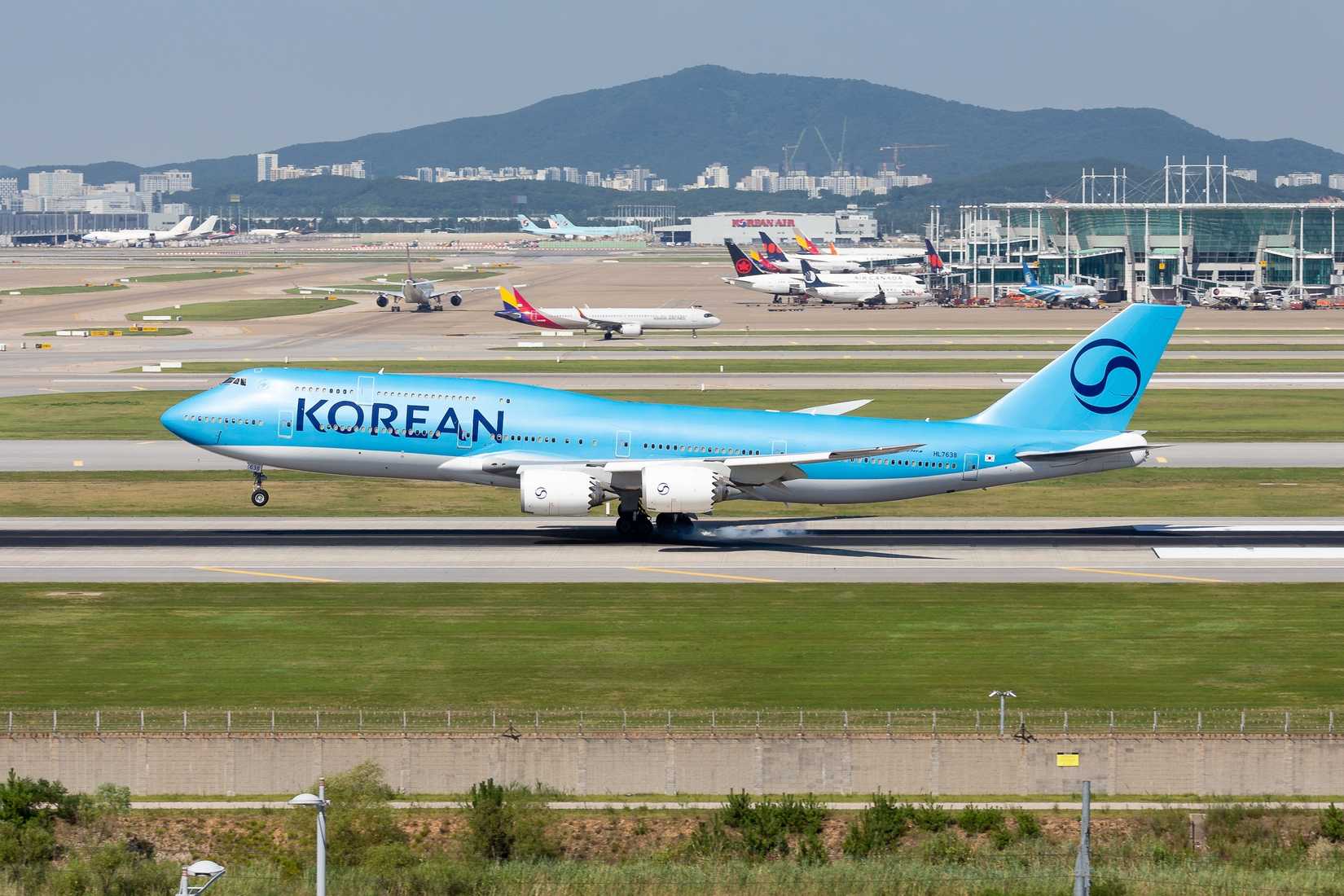
The Boeing 747 was the first widebody airliner to be introduced. It featured a large fuselage with two aisles and a recognizable upper deck at the front of the fuselage. This allowed the aircraft to fit a maximum of over 600 passengers in a high-density configuration. However, depending on the variant, multi-class configurations of the aircraft could fit between 275 and 475 passengers.
The aircraft can be powered by different engines, typically chosen by the customer. Original variants were powered by the Pratt & Whitney JT9D, Rolls-Royce RB211, or General Electric CF6 engines, while the newest variant, the 747-8, was powered by only the General Electric GEnx turbofan engine. This engine provided the aircraft with over 50,000 pounds of thrust. The last Boeing 747 delivered, a 747-8F, is able to achieve the following performance specifications:
|
Length |
250 feet two inches |
|---|---|
|
Height |
63 feet six inches |
|
Wingspan |
224 feet seven inches |
|
Maximum takeoff weight (MTOW) |
987,000 pounds |
|
Typical cruise speed |
504 knots (580 miles per hour) |
|
Range |
7,730 nautical miles (8,900 miles) |
|
Service ceiling |
43,100 feet |
Additionally, the Boeing 747 features a highly swept wing, which is swept at an angle of just under 38 degrees. This allowed the aircraft to reach an efficient cruise speed at altitude. This large wing utilizes split control surfaces and triple-slotted flaps. The 747 also features redundant hydraulic systems and large landing gear that each have four wheels.
How The Boeing 747 Became A Workhorse In The Cargo Industry
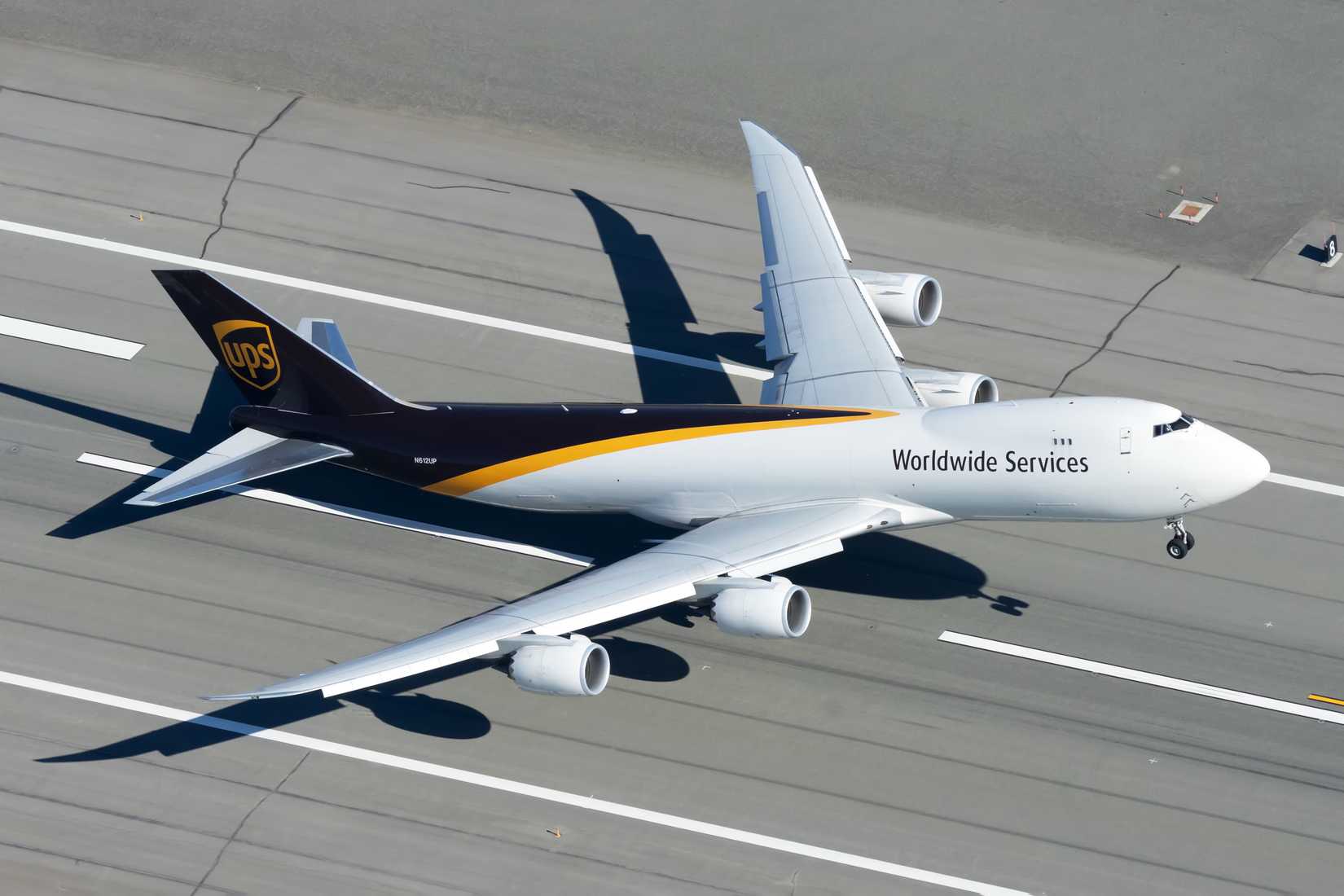
The transition of the Boeing 747 from commercial service into the air cargo industry represents one of the most successful continuations of aircraft ever. The 747 was originally designed to meet the growing demand for high-capacity and long-haul flights. However, as the industry began to change over the past several decades, many airlines began to retire their older 747s. Rather than being scrapped, many of these aircraft found new life in the air cargo sector, where their size, range, and unique design features made them a viable choice.
The unique design of the 747 allowed for the aircraft to have a nose-loading capability. This became invaluable for the loading of oversized or unusually shaped cargo that could not fit through standard cargo doors. Because of this, the 747 became a favorite among air cargo operators.
Boeing responded to this shift in demand by producing several dedicated freight variants of the 747, including the 747-400F and the 747-8F. These models were equipped with reinforced floors, specialized cargo handling systems, and more powerful engines. Several operators, such as UPS, Cargolux, and Atlas Air, quickly adopted the freighter variants into their fleets. Today, while the 747 has been phased out of production, it remains a major component of the global cargo network.
source