


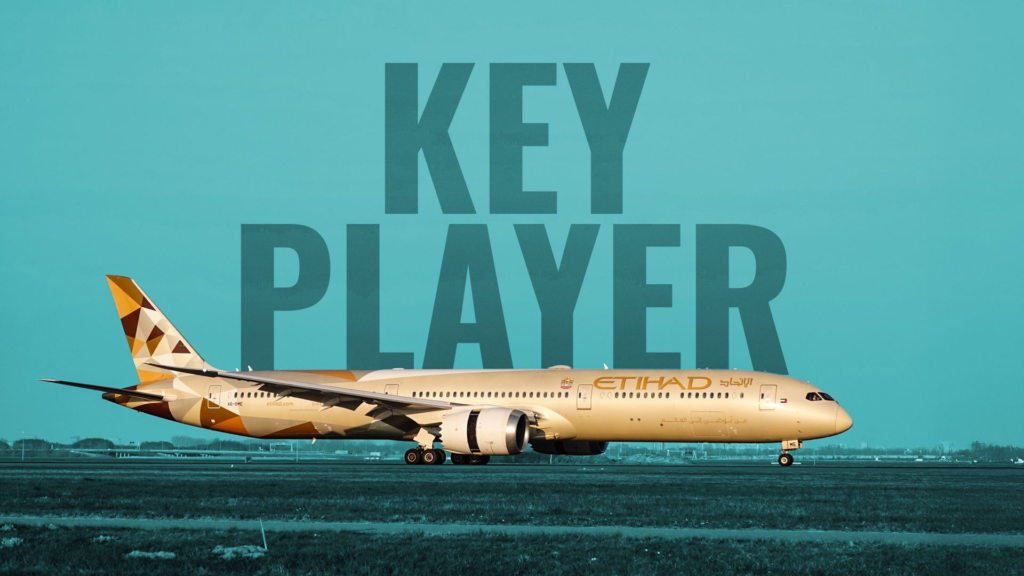
The Boeing 787 Dreamliner has become a favorite among Middle Eastern airlines thanks to its strong mix of efficiency, range, and passenger comfort. The 787’s fuel-efficient engines and lightweight composite structure help to deliver significant cost savings while maintaining high performance in the region’s hot temperatures, which makes the aircraft especially attractive for airlines across the region looking to expand to new destinations without committing to the size of a widebody like the 777.
In this article, we will take a closer look at some of the Middle East’s largest operators of the Boeing 787, their fleets, and the routes on which they deploy their aircraft. We will also use data from Cirium, an aviation analytics company, to review the routes currently flown with the 787 by the region’s two largest operators of the aircraft.
The Region’s Largest Operators Of The Boeing 787

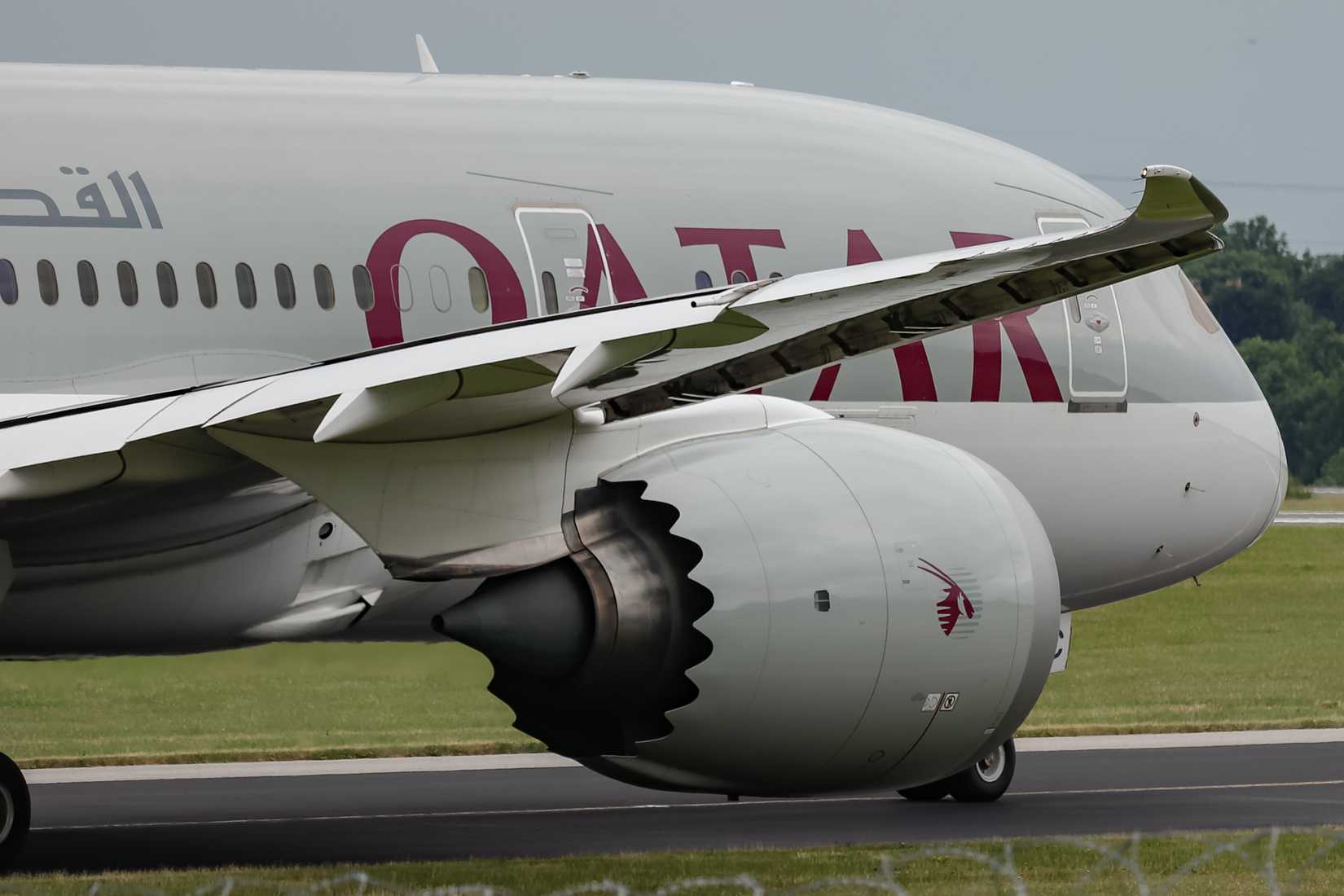
The latest data from ch-aviation shows that 

The largest operators of the Boeing 787 across the Middle East are outlined in the table below:
|
Rank |
Airline |
Boeing 787-8 |
Boeing 787-9 |
Boeing 787-10 |
Total |
|---|---|---|---|---|---|
|
1 |
Qatar Airways |
32 |
24 |
– |
56 |
|
2 |
Etihad Airways |
– |
37 |
10 |
47 |
|
3 |
Saudia |
– |
13 |
8 |
21 |
|
4 |
Gulf Air |
– |
10 |
– |
10 |
|
5 |
Oman Air |
– |
8 |
– |
8 |
|
6 |
Royal Jordanian Airlines |
7 |
– |
– |
7 |
|
7 |
Iraqi Airways |
2 |
– |
– |
2 |
|
8 |
Riyadh Air |
1 |
– |
– |
1 |
Qatar Airways & The Boeing 787


Qatar Airways took delivery of its first Boeing 787 in November 2012, and has since gone on to become the largest operator of the aircraft in the Middle East. The oneworld carrier’s 787-8s are able to accommodate up to a maximum of 254 passengers in a two-class configuration – 22 in business class and 232 in economy class, while its larger 787-9s can carry up to 311 passengers – 30 in business class and 281 in economy class.
Qatar Airways’ busiest Boeing 787 routes in terms of the number of flights operated from its hub at 
|
Ranking |
Destination |
Aircraft |
Number Of Flights |
|---|---|---|---|
|
1 |
Kathmandu Tribhuvan International Airport (KTM) |
Boeing 787-8 |
82 |
|
2 |
Barcelona El Prat Airport (BCN) |
Boeing 787-9 |
75 |
|
3 |
Manchester Airport (MAN) |
Boeing 787-9 |
73 |
|
4 |
Colombo Bandaranaike International Airport (CMB) |
Boeing 787-8 |
65 |
|
5 |
Copenhagen Airport (CPH) |
Boeing 787-8 |
63 |
|
6 |
Berlin Brandenburg Airport (BER) |
Boeing 787-9 |
60 |
|
7 |
Frankfurt Airport (FRA) |
Boeing 787-9 |
60 |
|
8 |
Hanoi Noi Bai International Airport (HAN) |
Boeing 787-9 |
60 |
|
9 |
Munich Airport (MUC) |
Boeing 787-9 |
59 |
|
10 |
Dublin Airport (DUB) |
Boeing 787-9 |
58 |


787-8 Vs 787-9 Vs 787-10: How The Dreamliner Variants Differ
The three 787 variants are tailored to different market segments to fill niches and offer a placement for different previous-generation aircraft.
Etihad Airways & The Boeing 787
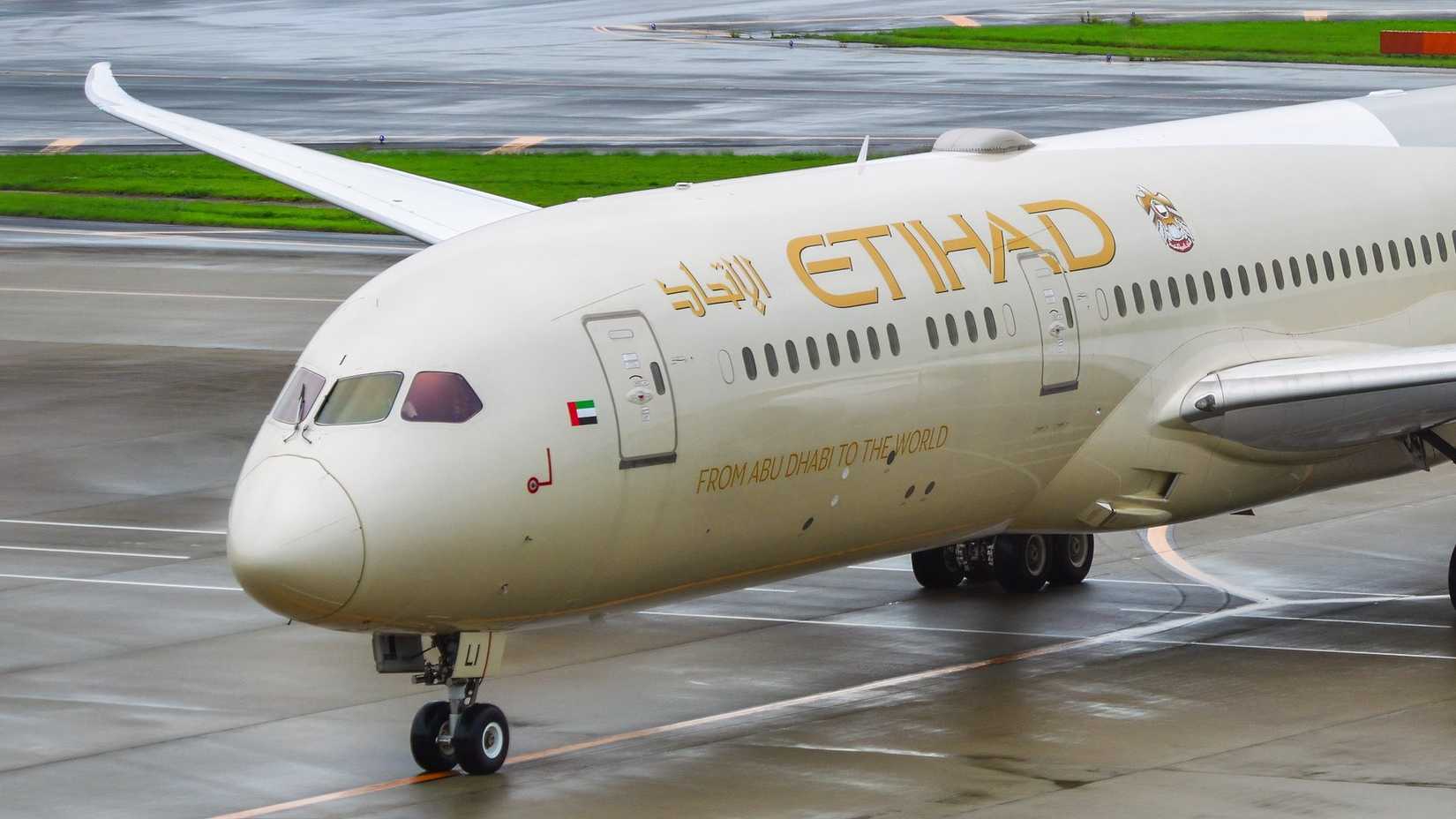

Etihad Airways operates a variety of different cabin configurations onboard its fleet of Boeing 787s, with total passenger capacities ranging from 226 on its lowest-density 787-9s to 327 on its highest-density 787-10s, made up of 32 in business class and 295 in economy class. In a recent interview, Jeremy Pollock, Etihad Airways’ General Manager, told Simple Flying:
“The Boeing 777 aircraft and the 787 aircraft are going to undergo a retrofit program, which was announced last year by the CEO. I believe it’s a three billion dirham investment, which will start at some point in 2026. Therefore, our whole aircraft will have a refreshed product, which is to be announced in the next couple of months. Which is great in terms of keeping everything else.”
From its hub at Abu Dhabi International Airport (AUH), Etihad Airways deploys its fleet of 47 Boeing 787s to destinations across the world, including new routes to the likes of Hong Kong International Airport (HKG). The airline’s busiest 787 routes in November 2025 in terms of number of flights are listed in the table below:
|
Ranking |
Destination |
Aircraft |
Number Of Flights |
|---|---|---|---|
|
1 |
Phuket International Airport (HKT) |
Boeing 787-10 |
63 |
|
2 |
Milan Malpensa Airport (MXP) |
Boeing 787-9 |
61 |
|
3 |
Madrid Barajas Airport (MAD) |
Boeing 787-9 |
60 |
|
4 |
Munich Airport (MUC) |
Boeing 787-9 |
60 |
|
5 |
Moscow Sheremetyevo International Airport (SVO) |
Boeing 787-10 |
58 |
|
6 |
Kuala Lumpur International Airport (KUL) |
Boeing 787-9 |
56 |
|
7 |
Barcelona El Prat Airport (BCN) |
Boeing 787-9 |
54 |
|
8 |
Male Velana International Airport (MLE) |
Boeing 787-10 |
50 |
|
9 |
Frankfurt Airport (FRA) |
Boeing 787-9 |
47 |
|
10 |
Seoul Incheon International Airport (ICN) |
Boeing 787-9 |
47 |
Saudia & The Boeing 787

Saudia’s relationship with the Boeing 787 has become one of the defining features of its modern long-haul strategy. The airline introduced the aircraft into its fleet in the mid-2010s, using it to refresh its brand and product and expand its global reach. With both the 787-9 and 787-10, the Saudi Arabian flag carrier has been able to deploy the aircraft on key routes to Europe, Asia, and North America, matching capacity with demand while benefiting from its strong fuel efficiency.
For the airline’s passengers, the Boeing 787 has also brought a noticeable step forward in comfort. Saudia’s 787s feature quieter cabins, larger dimmable windows, and improved air quality, all of which help create a more pleasant experience on long flights. The airline has also used the aircraft to showcase its updated onboard service and new cabin designs.
Arved von zur Muehlen, Chief Commercial Officer at Saudia, told Simple Flying at the World Travel Market in London:
“We have a fixed order of 39 787s, split between -9s and 10s. We still have a lot of white spots on our map, and I think the 787 is an ideal aircraft for us. If you think of Europe, the USA, parts of Africa, and even in Asia, the 787 is our working horse of choice. We need the capacity. Next year we will get a plane per month. In 2027, we will get a plane per week. So, 2027 is the year when we expect a lot of deliveries to happen for us.”

Here’s Why Saudia Decided To Introduce A Retro Brand Identity
Faced with a rival flag carrier, Saudia is reaching back for its old livery to reassert its position as the legacy flag carrier.
Future Operators Of The Boeing 787
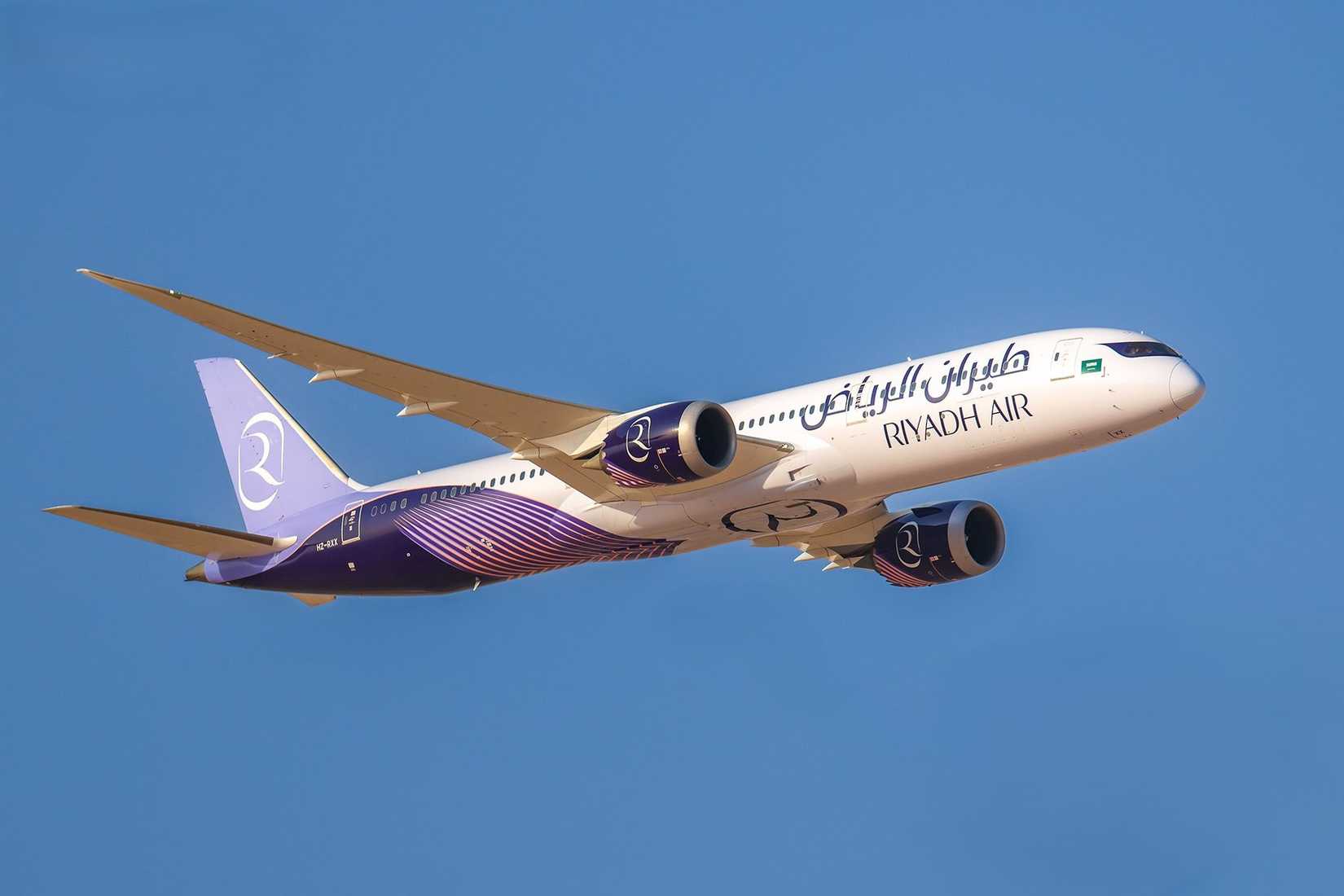
The list of the largest operators of the Boeing 787 in the Middle East is soon set to be shaken up, as carriers across the region continue to take deliveries from the US manufacturer. One new addition to the list will be 


Another carrier that will soon significantly grow its fleet of Boeing 787s is newcomer 

New Boeing 787 Operator: Riyadh Air Makes Debut With Flight To Heathrow
Flights are not bookable to the public until new aircraft arrive.
About The Boeing 787

The Boeing 787 has become a cornerstone of modern long-haul travel since it first entered commercial service with All Nippon Airways in October 2011. Designed around fuel efficiency and passenger comfort, the aircraft introduced a largely composite airframe and next-generation engines that helped airlines cut fuel burn significantly compared to older widebody aircraft. For many carriers, this opened the door to long, thin routes that were previously uneconomical.
The Boeing 787-8 was the first variant to debut in 2011, followed by the larger 787-9, which entered service with Air New Zealand in August 2014. The stretched 787-10 completed the trio, joining 
Inside the cabin, the Boeing 787 is known for its passenger-friendly features. Larger windows, a lower cabin altitude, and higher humidity levels all contribute to a noticeably more comfortable experience on long sectors. The quieter interior, thanks in part to the aircraft’s advanced engines and aerodynamic design, has also become a standout feature for passengers.
Today, the Boeing 787 family remains central to many airlines’ long-haul strategies, across the Middle East and beyond. The aircraft’s combination of efficiency, range, and passenger appeal continues to reshape global airline networks, enabling more non-stop links between cities and providing a modern, comfortable product across a wide range of routes.
source