


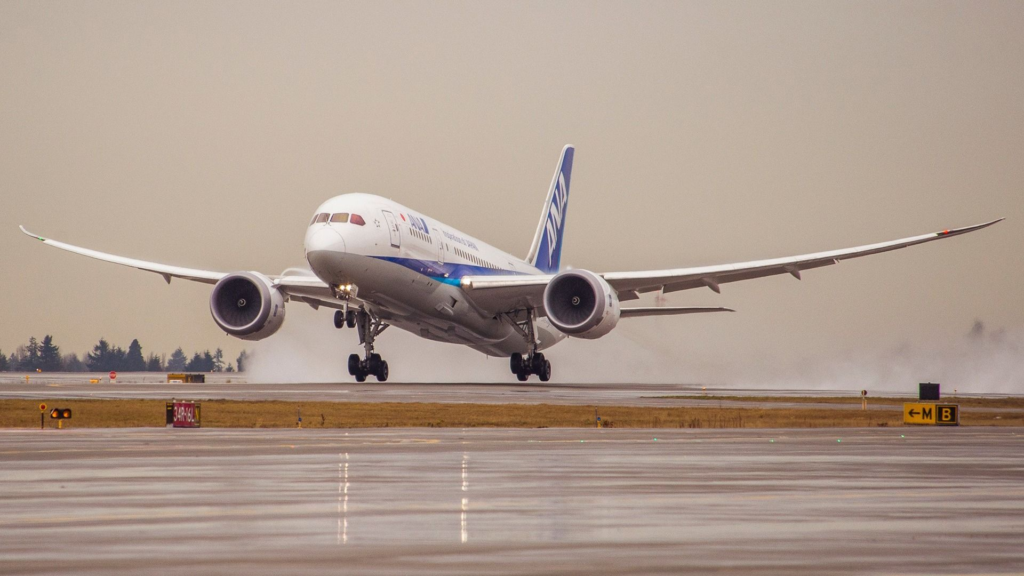
The Boeing 787 Dreamliner is often described as a super-efficient aircraft that is comfortable for both passengers and crew. Boeing says that it is “a dream to experience” and “a dream to operate.” The Dreamliner is popular with airlines due to its fuel efficiency and long range, and passengers like it because it has a spacious and comfortable cabin.
The 787 was designed to replace the 767 and work alongside the workhorse Boeing 777, and was planned to be partly made of composite materials and offer superior fuel efficiency. The aircraft was also aimed at expanding airlines’ network growth and allowing them to operate new routes that they could not have served with other aircraft types. It is a long-haul aircraft but smaller and lighter than comparable jets.
Why The Boeing 787 Has An Edge

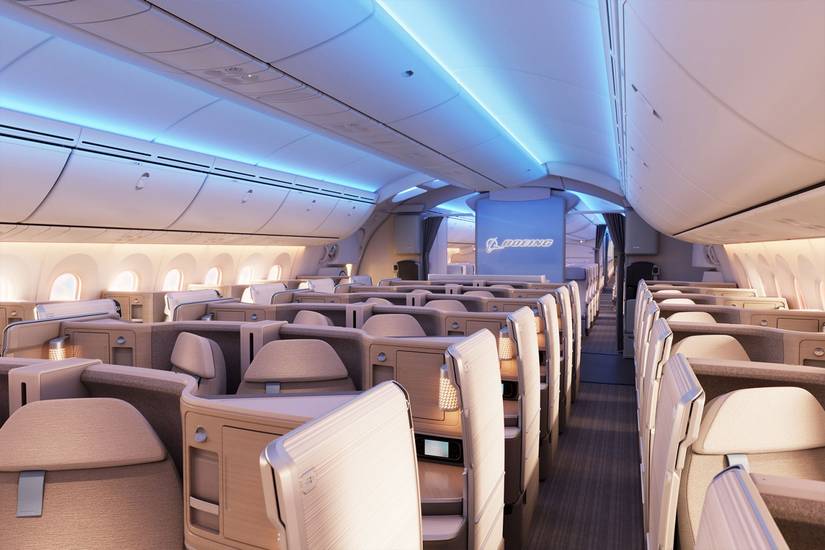
Passengers and crew love the Boeing 787 for its wide, spacious, and quiet cabin, and the overhead lockers and windows that are 30% larger than on other widebodies. The carbon fiber fuselage and lower cabin altitude enhance comfort in the cabin, and the fresh air system is something of a game-changer in terms of comfort and health for passengers and crew. Indeed, it uses outside air and advanced compressors that improve humidity in the cabin.
This lessens dehydration, stops headaches and swelling, and reduces fatigue that usually occurs for many on long-haul flights. Jet lag is reduced, and everyone on board is left feeling fresh and ready to go. The Dreamliner can also fly at a higher altitude, so flights are smoother.
Pilots love the flight deck for its comfortable, adjustable seating. The cockpit also has the same Boeing commonalities as other models, but with new technology, and some features are customizable. This is efficient when operating a mixed fleet of Boeing aircraft and requires a shorter transition time. They also like the advanced crew rest area above the first-class cabin, which also has adjustable temperature and lighting controls for better rest.
Some cabin crew prefer to work on the 787 rather than larger aircraft such as the 747 and Airbus A380, as it is a more sociable, enjoyable environment and allows them to provide a more efficient service. There are between eight and ten cabin crew on the 787 compared with up to 24 crew on the A380. With a potential working day of up to 20 hours for both the pilots and the cabin crew, the Dreamliner offers staff more comfort, as its name alone suggests a luxurious and comfortable flight for all.
The Finer Details

The Dreamliner was launched in 2004, its maiden flight was in December 2009, and it entered service in October 2011. The original Boeing 787-8 was stretched into 787-9 and then the 787-10, which gave the 787 greater range and more capacity. Compared to the Airbus A380, which required considerable investment in terms of airport infrastructure to accommodate it, Boeing decided to build an aircraft with fewer passengers but with better performance, so it could use more airports.
The increased fuel efficiency was 40-50% better than that of the Boeing 747-400, and it realized that it could have fewer passengers and lower revenue but still be profitable. Therefore, the Boeing 787 could fly such routes as Houston-Lagos, Denver-Tokyo, or Charleston-London.
Qantas used the Boeing 787-9 on its first non-stop service from Perth to London, a mammoth flight of 17 hours. The airline conducted a feasibility study called ‘Project Sunrise‘ to research ultra-long-haul flights for the 787 and the effects on passengers and crew. As part of the study, it flew from New York to Sydney, a flight of 19 hours and 16 minutes. Qantas has now decided to use the Airbus A350-1000 for Project Sunrise, and ordered 12 of the aircraft in 2022.
History & Background

Development started in 2001 under the name ‘Project Yellowstone.’ Boeing wanted an aircraft built of lightweight composites that could seat around 225 passengers and could burn 20% less fuel. In 2002, the manufacturer held meetings with 25 prospective customers about the new super-efficient aircraft. In April 2004, ANA ordered 50 of the aircraft worth $6 billion, and its name was changed to the Boeing 787 Dreamliner. It was the largest launch order in Boeing’s history, according to Stanford University.
Boeing and its partners around the world would be responsible for designing and manufacturing the aircraft. Large sections of the aircraft, like the fuselage and wings, would be assembled and then sent to Boeing’s factories in Everett, Washington, and Charleston, South Carolina. These subassemblies were not transported by land or sea, but by four Boeing Dreamlifters. These were modified variants of the 747-400 and were designed especially for shipping the Dreamliner parts around the world.
The wings were manufactured in Japan, the wingtips in South Korea, and the fuselage in Italy. The passenger doors were made in France, the cargo doors in Japan, and the wing/body fairings in Canada. Meanwhile, the landing gear was manufactured in the UK. Amazingly, the Boeing 787 can be fully assembled in just two to three days.
How The Airlines See The Dreamliner
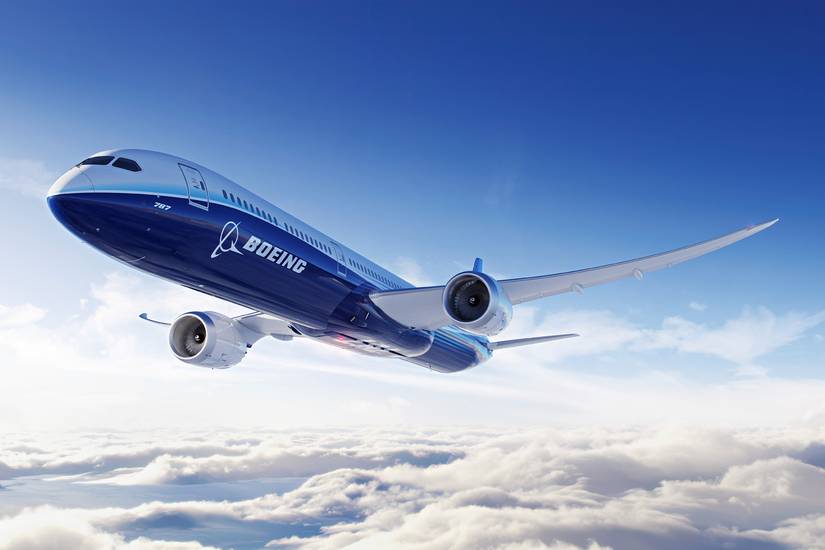
It is clear that the airlines appreciate the Boeing 787, for its fuel efficiency and operational costs are reduced in turn. Over 1,000 of the aircraft are in service on long-haul routes. Take-off and landing in the Dreamliner is much quieter than the Boeing 767, and its noise footprint is 60% smaller. It uses 25% less fuel than the 767, and can also be recycled when it comes to the end of service. This is because the composite materials can be processed and reused a second time. If a retired 787 is dismantled, 94% of its total weight can be recycled according to Boeing.
One of the key factors in the Boeing 787’s popularity with airlines is that it can expand their fleets. Airlines can use the type to trial a new route and see if there is enough demand to make money. Then, if the demand for the route is strong, they can use larger jets like the Boeing 777, as they can carry more passengers and cargo. Since the aircraft entered service in 2011, the 787 has launched 425 new direct routes.
|
Variant |
Delivered (per Boeing) |
|---|---|
|
787-8 |
399 |
|
787-9 |
681 |
|
787-10 |
126 |
|
Total |
1,206 |
As of August 2025, Boeing has built over 1,215 units of the 787, and it is the most popular widebody aircraft on the market, complementing the 777 and replacing the 767. The Boeing 787 competes with the Airbus A330neo, A350, and A380, as well as the 747-8. Boeing expects to complete an average of seven Dreamliners a month this year, meaning that it will complete 84 of the aircraft by the end of 2025.
Technical Considerations


The Boeing 787’s wings are flexible, which enables the aircraft to climb to a higher altitude for the given weight compared to other aircraft. Therefore, it can fly above turbulence and is more likely to receive shortcuts and fly more direct routes, which in turn saves fuel and time. This makes it popular with pilots and airlines alike. The 787’s efficient design enables a fuel burn of 20% less, and the GEnx engines are 60% less noisy.
Its engines are not using power for the air conditioning system, which makes the aircraft more efficient and reduces carbon emissions. The aircraft is made with carbon fibers instead of the usual aluminium, which is lighter and stronger and can withstand higher cabin pressure. Therefore, the altitude in the cabin is 30% lower than similar aircraft at the same cruising altitude. The cabin altitude is set at 6,000 feet instead of the usual 8,000 feet, making the cabin much more comfortable.
|
787-8 |
787-9 |
787-10 |
|
|---|---|---|---|
|
Passengers (two-class) |
248 |
296 |
336 |
|
Range nmi (km) |
7,305 nmi (13,530 km) |
7,565 nmi (14,010 km) |
6,330 nmi (11,730 km) |
|
Length |
57 m (186 ft) |
63 m (206 ft) |
68 m (224 ft) |
|
Wingspan |
60 m (197 ft) |
60 m (197 ft) |
60 m (197 ft) |
|
Height |
17 m (56 ft) |
17 m (56 ft) |
17 m (56 ft) |
|
Engine |
GEnx-1B / Trent 1000 |
GEnx-1B / Trent 1000 |
GEnx-1B / Trent 1000 |
The Boeing 787 is lighter and smaller and uses less fuel than the larger 777. The fuselage, wings, and tail consist predominantly of carbon fiber composites, and make up 50% of the aircraft’s weight. Composite materials allow for aircraft sections to be produced in solid pieces, which are then bonded and bolted together. The final assembly of the aircraft originally took six days to complete, but 

Why The Dreamliner Is Widely Loved

The Boeing 787 Dreamliner is the world’s best-selling widebody aircraft in terms of total orders, and it is popular with passengers and crew due to the spacious cabin, large windows, and a better cabin environment. The jet is twice as quiet as similar aircraft, and the health benefits of the reduced 6,000 feet cabin altitude are considerable.
For airlines, the Boeing 787 is extremely fuel-efficient and saves operational costs, while also allowing them to grow their network and introduce new flights. The aircraft also helps them reach their environmental and sustainability goals as it can be recycled at the end of service.
It has been over 14 years since the 787 was first introduced, and since then, it has carried more than a billion passengers and operated over five million flights. All Nippon Airways (ANA) was the launch customer for the aircraft, ordering 50, and it now has 91 units, of which 83 are in service. Boeing accrued over 2,000 orders for the Boeing 787 from 89 customers worldwide, and, in April this year, it announced that the global fleet of 787s had surpassed 1,175 aircraft.
source