


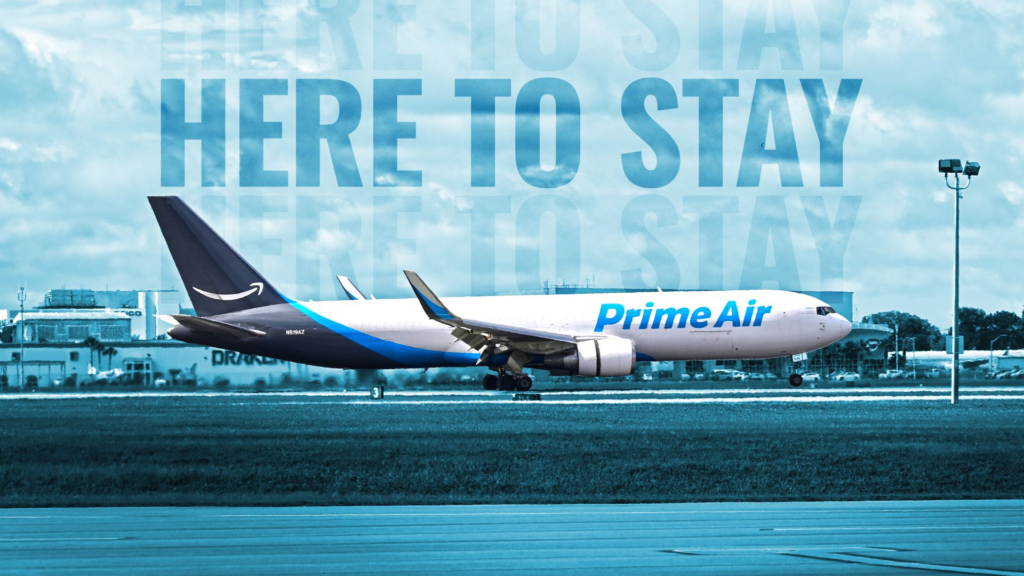
Boeing is facing a gap in deliveries in its new-build widebody freighters as its last two Boeing widebody freighter types enter their home run, and the replacement Boeing 777X is delayed. Production of both Boeing’s 777F and 767-300F is due to wind up in 2027, and production of the 767 family of aircraft will cease except for any orders for the Boeing 767-2C, aka KC-46 Pegasus air tanker.
Even so, the Boeing 767 is set to continue flying as a freighter and military tanker deep into the second half of the 21st century. The Boeing 767 is no longer competitive as a passenger aircraft, but it remains prized as a freighter. This is partly thanks to its reliable and easy-to-maintain CF6 engine and partly thanks to its robust landing gear and engineering.
Looming End Of Boeing 767-300F Production

It’s been many years since Boeing ceased delivering the Boeing 767 as a passenger aircraft after it was replaced by the cleansheet, next-generation Boeing 787 Dreamliner. However, it remains in production as the mid-sized freighter sized between converted and new-build narrowbody 737s and 757s and larger 777Fs and 747-8Fs. Boeing did not produce a 787 freighter, although it hasn’t ruled that out for the future. For now, it is focused on getting the next-generation 777-8F (a 777X aircraft) into service.
In 2022, the FAA adopted the ICAO 2027 emissions rules that sounded the death knell for new production 767F and 777F aircraft. Starting January 1, 2028, neither of these aircraft will be compliant with new regulations. While the FAA has granted an exemption for the 767F until 2033, it makes little or no difference, as the rules remain in effect internationally, meaning any post-2027 aircraft might be restricted to operating in the US. While the aircraft are older designs, the economic factors of the freighter industry differ from the commercial passenger industry, and fuel savings is not the same overbearing pressing concern.
Orders for the freighter 777F and 767F continued to roll in through 2024. Boeing has not received any more orders for its 767 freighter in 2025, although it has received another 13 orders for the outgoing 777F, including eight for FedEx. Interestingly, FedEx and UPS have ordered new-build 777Fs but not the next-generation 777-8F freighters. It’s likely that discounts offered by Boeing, along with fleet commonality, offset the savings they would enjoy from operating more fuel-efficient aircraft. Boeing is now clearing its backlog as these production lines prepare to close and transition to the next generation of freighters.
Remaining New Production Boeing 767s (& 777Fs)


As of the time of writing, Boeing has 25 Boeing 767Fs remaining on its order book; these include five for FedEx, 12 for UPS, and eight for unidentified customers. Boeing delivered 10 767Fs in the first three quarters of 2025, with five going to FedEx and five to UPS. Additionally, after fulfilling the orders for Japan, it has four KC-46 tankers on order by Israel and 60 ordered by the US Air Force. Boeing delivered two tankers to Japan and eight to the US Air Force in the first three quarters of 2025.
The US Air Force needs to replace its aging KC-135 tankers and is looking for a next-generation solution. The KC-46 is intended only as a partial replacement, and budget constraints may lead the Air Force to place more orders for the existing KC-46. This means at minimum 85 more 767 family aircraft will be delivered, with any future orders over and above that being tankers.
|
Delivered In The 1st 3 Quarters 2025 |
Number On Order |
New Orders In 2025 |
|
|---|---|---|---|
|
Boeing 767-300F |
10 |
25 |
|
|
Boeing 767-2C (KC-Pegasus) |
10 |
64 |
|
|
Boeing 777F |
29 |
56 |
13 |
Boeing has a total of 56 Boeing 777Fs remaining to be delivered. These include 10 for Emirates, eight for FedEx, four for National Airlines, three for Silk Way West, four for Turkish Airlines, one for Yangtze River Finance Leasing, six for Volga-Dnepr, and 20 for unidentified customers. Western sanctions on Russia made the delivery of those six aircraft to Volga-Dnepr questionable. Boeing has delivered 29 Boeing 777Fs so far in 2025 (none to Volga-Dnepr).
Phase Out Of Passenger 767s

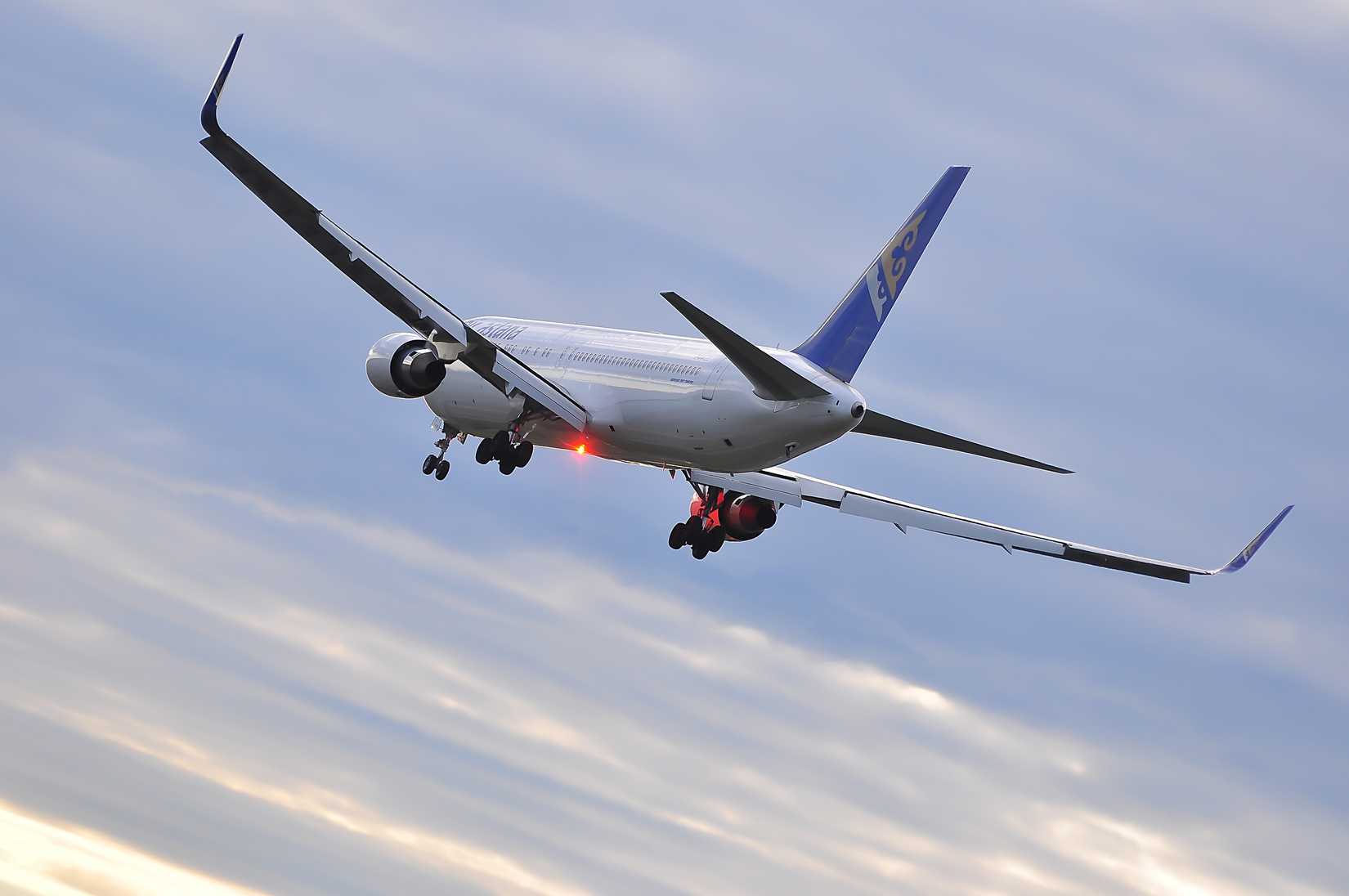
It has been more than a decade since the final passenger Boeing 767-300ER was delivered to Air Astana, as the 787 Dreamliner superseded the type. It has been a quarter of a century since the final Boeing 767-400ER was delivered to Continental Airlines. As passenger 767s are retired from service and replaced by A321neos, A330neos, or 787 Dreamliners, many are converted into freighters. At the same time, Boeing continues to deliver new-build Boeing 767s as freighters.
This means that, with every passing year, the Boeing 767 is being transformed into a freighter aircraft. The top two operators of the 767 are new FedEx, with 125 aircraft, and UPS, with 80 aircraft. Delta has the third-largest, but declining fleet at 65 examples, down from 124, while Amazon Air has 55, United Airlines has 53, and Air Transport International has 45. Only 192 Boeing 767-300ER passenger aircraft remain in service, along with 37 Boeing 747-400ERs. Most (approx 490) of the world’s operational 767s are now 767-300F freighters.
The most recent Delta 767 retirement (N175DN) exited its fleet in September 2025 and plans to retire the remaining -300ERs by 2030. United is replacing both of its -300ER and -400ER variants with 787-9s by 2030. Most airlines have now placed orders to replace their aging 767s in passenger service. Japan Airlines is the third-largest operator of the passenger 767-300ER, with fewer than 30 remaining in service. These are expected to retire by 2028 as they are replaced by the Airbus A321neo.
Airlines Modernizing The Boeing 767

Even as passenger airlines modernize to the Boeing 787 Dreamliner, Airbus A321neo, and Airbus A330neo, cargo airlines are modernizing to the 767 and 777F. Modernization for airlines like UPS and FedEx means something different from what it does for passenger airlines. Neither of these airlines has ordered the next-generation Airbus A350F or 777-8F. Instead, they are working to replace even older aircraft, such as the Airbus A300-600RF and the McDonnell Douglas MD-11F.
These freighters intend to continue flying the 767 for decades. They will also likely continue to scoop up retiring passenger 767s and convert them into freighters. Even though freighter aircraft typically have high utilization rates —spending more time flying than their passenger counterparts —fuel expense is not a major concern. A range of factors drives this. Freighters can more easily pass along fuel costs to shippers than the very competitive passenger market. Operational flexibility is more important in this industry.
They operate on nighttime and secondary routes, and maintenance, ground handling, and capital or lease costs are typically factored more heavily into the aircraft’s economics. They often fly on tight overnight hub schedules that force them to take suboptimal routes and altitudes to meet them, increasing fuel burn. For freighters, load factors are variable, and markets are cyclical. Having low capital/lease expenses means periods of low demand are less damaging.
Average Retirement Age Of Widebody Freighters

The average retirement age of widebody passenger aircraft is 25 to 30 years. For reference, Delta’s remaining 767-300ER fleet is now 29 years old, and its 767-400ER fleet is 25 years old. United’s respective fleets are similar in age. By contrast, freighter widebodied aircraft remain economical to operate for much longer. Widebody freighters typically operate until they are 30 to 40 years old.
When it comes to FedEx, its Airbus A300-600 fleet is now around 30 years old, its MD-11 fleet is 32 years old, and its Boeing 757 fleet is almost 34 years old. The Boeing 767 makes up its youngest widebody fleet at just 6.4 years old. The most recent A300-600F FedEx retired (in June 2025) was 32 years old. This was a similar age for its most recently retired MD-11, which retired in February 2025 at the age of 32. Note that Planespotters.net lists both of these aircraft as “stored,” meaning they could be brought back into service. Although it’s also possible that FedEx will cannibalize them for parts.
Assuming FedEx and other freighters keep their new 767-300Fs flying for 32 years, then the type can be expected to remain in service until 2059. That is 32 years after the final example is delivered. In practice, a few aircraft typically serve even longer —up to 40 years or more —as specialized aircraft such as waterbombers or flying hospitals. One can expect a few 767s to remain flying through the 2060s.
Even Longer In US Air Force Service


New regulations may be forcing the end of the 767 and 777 freighters before they become uneconomical as new-build cargo freighters. Still, they will remain flying into the second half of the 21st century. They may serve even longer in the US Air Force or in other foreign militaries worldwide.
The US is continuing to order the 767 as a tanker. The oldest KC-135 tanker still flying for the Air Force has the tail number 57-1419 and was built in 1957. That aircraft is now over 67 years old. If the final 767-2C/Pegasus tanker is delivered in 2030 and the aircraft serves as long as the old KC-135, the Boeing 767 could remain in service until 2097.
This means the Boeing 767 has a chance to serve for many years to come. But at any rate, unless something fundamental changes (like conventional tanker aircraft becoming obsolete), the Boeing 767 will mostly disappear from regular passenger service around 2030, from freighter service in the 2050s, and from miltiary service sometime after that.
source