


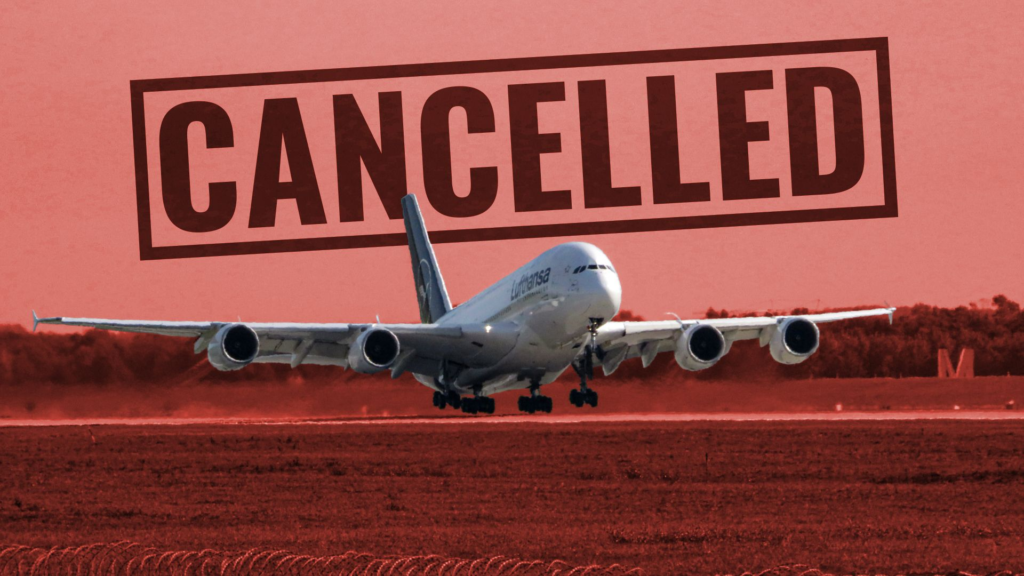
The Airbus A380 is the highest capacity passenger aircraft and one of two iconic jumbo jets. What many people don’t know is that it could also have been one of the world’s highest-capacity cargo airliners, because Airbus almost developed an A380F. The manufacturer launched the A380F in 2001 and soon amassed orders for 27 aircraft and a further 20 options. Another option considered was a modular A380 with both a passenger and cargo deck, adjustable for different requirements. However, the jet disappeared from its website in 2013, never to return.
Learn more about how market inviability, fundamental design flaws, and broader issues with the Airbus A380 program that led Airbus to drop the A380F in 2013. We then consider how the jet would have performed in today’s market and the incoming threat it would face from the 777-8F, a jet set to revolutionize the freight industry.
What Would The A380F Have Offered?

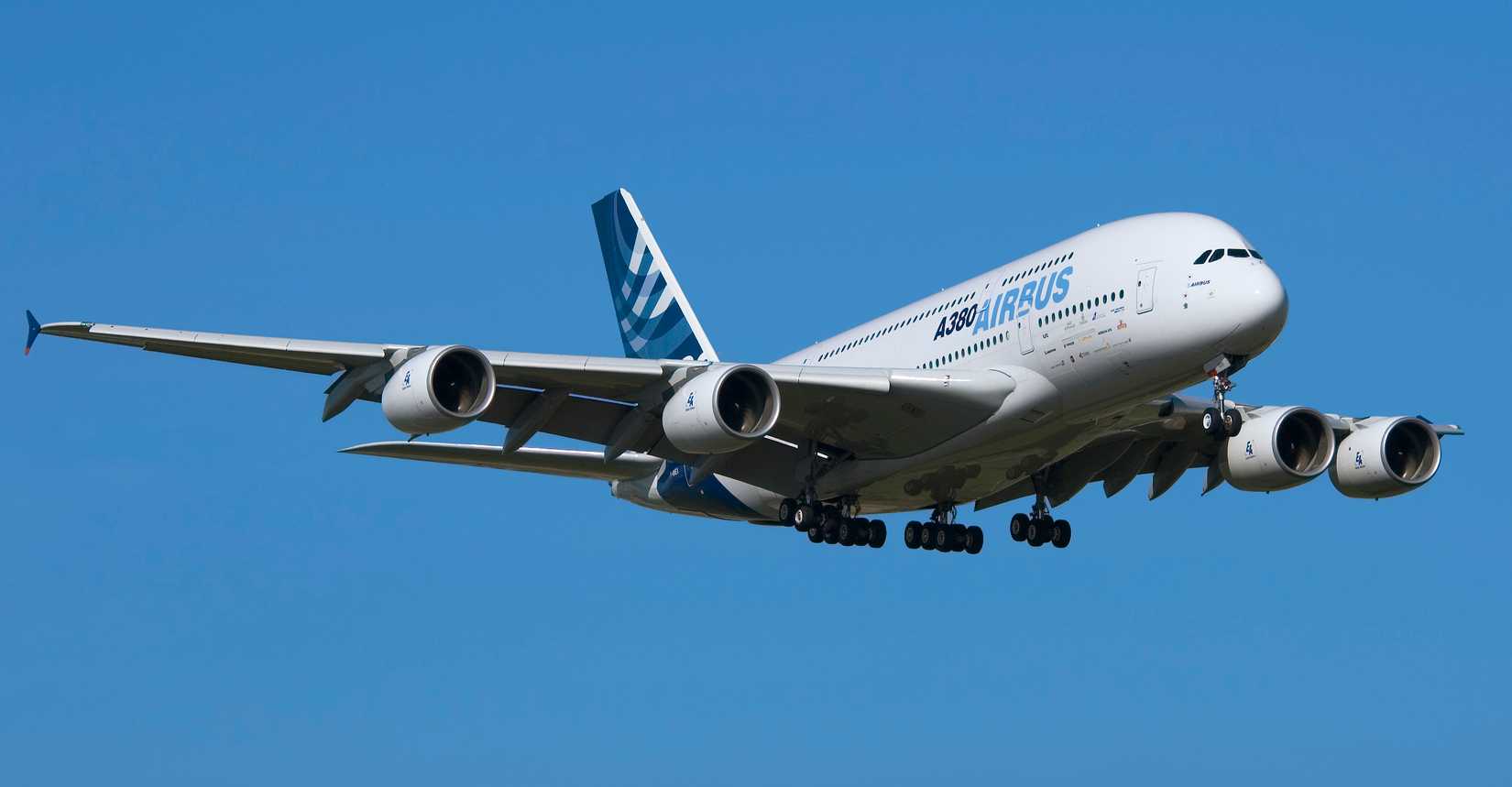
Had the A380F come to fruition, it would have been a world-leading freighter. Only the Antonov An-225 Mriya would have had a higher payload capacity, as the A380F would have had a capacity of 330,000 lbs (150 tonnes). This impressive capacity would have been spread over three cargo decks. It is also double the capacity of the McDonnell Douglas MD-11F. The A380F may have then held this title after the destruction of the Mriya during Russia’s illegal invasion of Ukraine. The maximum payload could have been transported 5,600 nautical miles (10,400 km). The range and size of the aircraft would mean freight companies would have to use it in the same way as their passenger equivalents: hub and spoke. For example, the A380F could have been ideal for deployment between Asian and European hubs, reaching destinations like Dubai and Hong Kong.
The jet’s main competition would have come from the Boeing 747-8F, which would have had a 7% higher payload and a better range. It is expected that the operating costs would have been higher, partially offset by the greater efficiency of the more modern aircraft and the higher revenues cargo carriers could have achieved.
Design Problems And Economic Inviability


A key reason that Airbus had to scrap the A380F was that the central flaws meant that airlines would not have been able to leverage it for commercial success. The idea of using two decks is ideal for carrying passengers who are comparatively light. Most cargo is substantially heavier, meaning that only the bottom level would be compatible with the heaviest cargo, while the top layer would have to be saved for light cargo. Combined with this, the A380F would not have shared the 747’s nose door, requiring cargo to be loaded the old-fashioned and slower way. This combination of limitations would severely restrict the types of cargo that could be transported.
Another hefty limitation for the A380F would have been its enormous size. As noted by Flexport, the “A380F would be too fat to fly at a profit.” The jet would have a slightly higher capacity than the 747-8F by weight, but substantially higher by volume. As a result, it would frustrate carriers by reaching its maximum payload far before its maximum cubit weight.
These design flaws would have combined to yield marginally better operating revenues than the 787-8F, which would have soon been outweighed by the A380F’s inflexibility, higher unit cost and the limitations on the kinds of cargo it could carry. However, as the A380F never entered service, it is impossible to know if freight carriers could have operated the jet at a profit.
Production Problems Faced The A380F


Another nail in the A380F’s coffin was the program’s broader production issues. Such revolutionary aircraft struggle to be delivered on time. Development took a decade and a half, years longer than expected, and production issues followed. Each jet had over 310 miles (500 km) of wiring, explaining many of the issues. An Airbus mechanic described the issue: “The wiring wasn’t following the expected routing through the fuselage.”
Technology problems also led to issues as engineers from the different European nations weren’t using the same software. French engineers used CATIA and CIRCE for 3D modeling, while German engineers used the US-originating design software Computervision. Friction grew between international teams as German engineers felt like CATIA and CIRCE were being imposed on them, which worsened when the Toulouse-based management blamed the Germans for wiring miscalculations.
Amid these problems and the resulting decline in confidence in the program, Airbus struggled to convince prospective A380F customers to continue supporting the program. After its launch, Airbus received orders from International Lease Finance Corporation (5 firm) and Emirates (2 firm) in 2001. An order from FedEx Express (10 firm and 10 options) followed in 2002. Three years later, its rival UPS put in an order (10 firm and 10 options). These orders did not last long. FedEx Express and UPS canceled theirs in 2006 and 2007 respectively. Emirates and International Lease Finance Corporation then converted their orders to passenger models. Although Airbus continued to market this jet until 2013, it received no further orders. Furthermore, there appears to have been no meaningful interest in reviving the A380F program.
747-8F, The Jet That Would Have Competed With The A380F


This article has mentioned the 747-8F several times as a freighter that the A380F may have struggled to compete with due to its inflexibility, high unit cost and cargo carrying limitations. The -8F is considered the last jumbo freighter, building on aircraft like the -400F to include improved engines, aerodynamics and avionics. It also had space for two extra containers and two extra pallets. The combination of these updates yielded a 16% decrease in ton miles compared to the 747-8F.
The table below breaks down the critical specifications freight carriers take into account when operating the Boeing 747-8F according to Cargolux.
|
Maximum takeoff weight |
990,000 lbs (449,000 kg) |
|---|---|
|
Maximum revenue payload |
295,000 lbs (134,000 kg) |
|
Wingspan |
224 ft 7 in (68.45 m) |
|
Overall length |
250ft 2 in (76.25 m) |
|
Cabin width (floor level) |
19 ft (5.9 m) |
|
Main deck volume capacity |
24,462 cubic feet (692.7 cubic meters) |
|
Lower compartment volume capacity |
5,330 cubic feet (150.9 cubic meters) |
|
Bulk volume capacity |
520 cubic feet (14.5 cubic meters) |
The 747-8F emerged in 2005, four years after the A380F. The first customers were Cargolux and Nippon Cargo Airlines, who placed firm orders in November 2005, almost a year before the configuration of the aircraft was confirmed. Boeing began major assembly in August 2006 and deliveries began in October 2011. Once the jet was in service, it was discovered to be even more effective than predicted. After six months, Boeing announced that the fuel burn was 1% lower than expected.
The Aircraft That Would Be A New Challenger To The A380F


Had the A380F entered into service, it would already be facing threats to its longevity, most likely in the form of the incoming 777-8F, suggesting it was a good idea to drop the program. This jet will combine progress made by the 777X program with lessons from the 777F. The aircraft got off to a fantastic start when Qatar Airways put in a firm order for 34 777-8Fs and 16 options. Worth $20 billion, the deal is considered the most valuable cargo aircraft order in Boeing’s history. The first delivery is expected in 2028, though this may be pushed back by broader delays with the 777X. Simple Flying’s Steven Walker suggests that much of this aircraft’s success is down to the explosion in the freight market in the post-pandemic era.
The table below reveals the expected specifications for the 777-8F according to the Airport Compatibility Brochure published by Boeing:
|
Wingspan |
235 ft 5 in (71.8 m) unfolded or 212 ft 9 in (64.8 m) folded |
|---|---|
|
Length |
232 ft 6 in (70.9 m) |
|
Maximum takeoff weight |
805,000 lbs (365,000 kg) |
|
Maximum landing weight |
649,000 lbs (294,000 kg) |
|
Main deck volume capacity |
21,060 cubic feet (596 cubic meters) |
|
Low deck volume capacity |
5,291 cubic feet (150 cubic meters) |
|
Bulk volume capacity |
600 cubic feet (17 cubic meters) |
Like the A380F, the 777-8F represents a substantial increase in cargo capacity while making great strides forward in efficiency. It will be capable of carrying 31 pallets on the main deck and 13 on the lower deck. This is a 17% increase in volume compared with 777F and is comparable with the 747-400F jumbo jet. The aircraft will have a range of 5,000 miles (8,000km) while carrying its full payload, a little under the range projected for the A380F. Utilizing advances from the General Electric GE9X engines, it will conduct these tasks much more efficiently, helping freight carriers reach their sustainability objectives. However, all this remains speculation. Like the A380F, the 777-8F has been struck by broader production and development issues within its family that could threaten its existence in the coming years.
source