


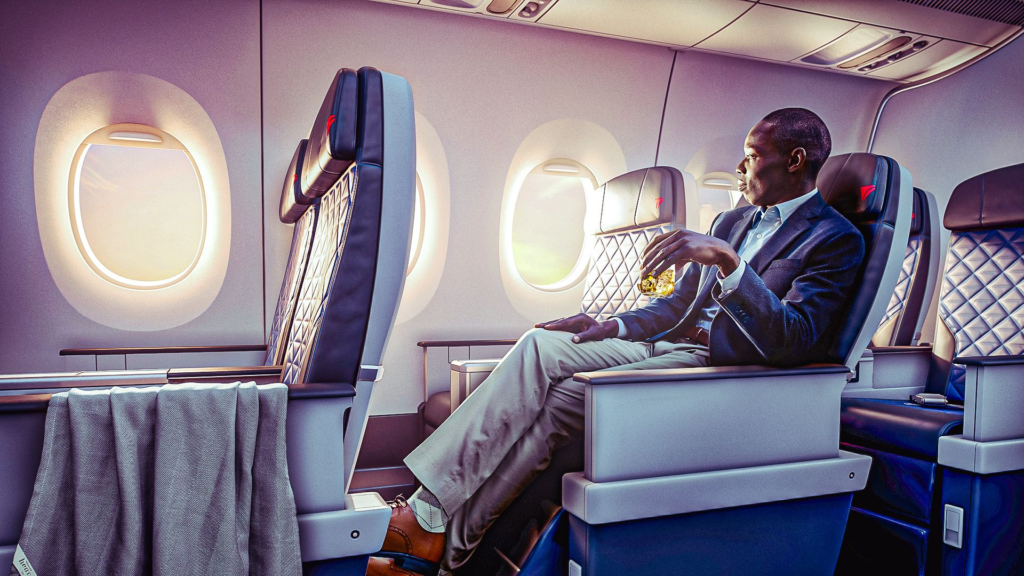
Premium Economy has quickly evolved from a niche offering into a major cabin class, providing travelers with a comfortable middle ground between economy and business at a significantly more accessible price. Its popularity reflects a broader shift in demand, driven by leisure passengers who want more space and comfort. As airlines continue refining their cabin products, premium economy has also become an important tool for revenue management, allowing carriers to segment customers more effectively and capture travelers who are willing to pay a moderate upgrade for added comfort.
At the same time, the specific focus on premium economy on its own, along with the rise of premium economy and the continued improvement of business-class suites, has accelerated the decline of first class. Many airlines are phasing out their most luxurious cabins in favor of a more profitable three-class model incorporating primarily economy, premium economy, and business class, leaving first class as a more limited offering. In many cases, modern business-class suites now offer privacy and amenities once reserved for first class, further reducing the need for a separate top-tier cabin.
The Birth Of Premium Cabins

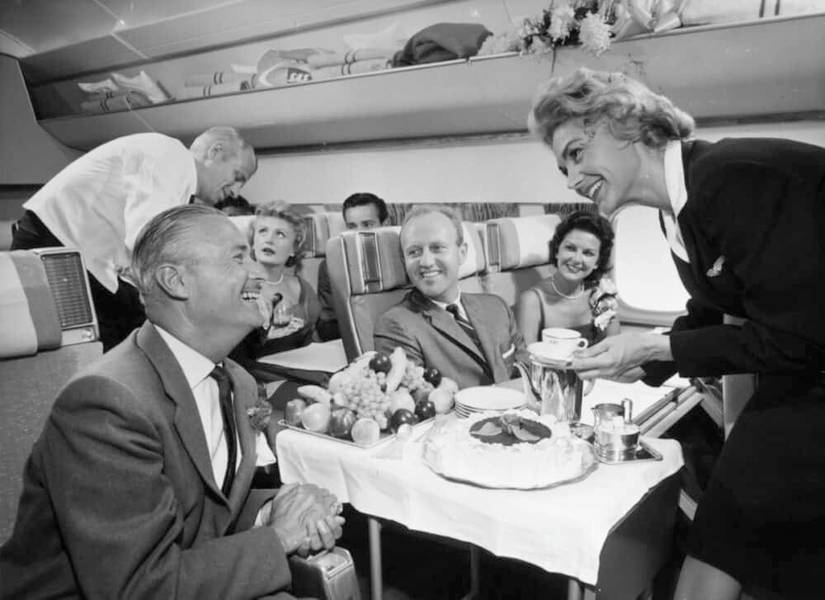
1948 is the widely recognized start of premium cabins. British Overseas Airways Corporation (BOAC) introduced a formal two-class service, First Class and Tourist Class, on long-haul routes. Throughout the 1950s, major airlines such as Pan Am, Trans World Airlines and Air France expanded their first-class services, offering larger seats, fine dining, and more personalized service to attract wealthy travelers during the early jet age.
Premium economy specifically was introduced more than 30 years ago, with EVA Air and Virgin Atlantic being among the earliest adopters. It was designed as a true “middle class” of travel: wider seats, more legroom, better service, at a price far below business class.
Since then, adoption of the class, along with expectations, has surged, with a large proportion of airlines offering premium economy (or their own version of it), and many travelers selecting it as their preference. The class has undergone significant evolution and will continue to develop as the industry evolves.
What Is Premium Economy?


So, what exactly is premium economy? Premium economy is a travel class on airplanes that sits between economy and business class. It offers a noticeable upgrade from standard economy without the high cost of business.
Although exact details vary vastly by airline, in general, premium economy offers more legroom (wider seats, extra recline, more pitch), larger, more comfortable seats (often with footrests or leg rests), improved in-flight meals, priority service (earlier boarding, faster check-in, extra baggage allowance depending on airline) and generally improved amenities (bigger screens, better headphones, amenity kits).
In some cases, such as All Nippon Airways (ANA) and Japan Airlines (JAL), premium economy passengers have access to the airline’s airport lounges, alongside further enhancements over economy seats in terms of airline rewards within their traveler reward schemes. Premium economy has become a very obvious choice for many passengers. As popularity increases, we will no doubt see improvements and refinements to these offerings, as well as new offerings.


Cathay Pacific Airbus A350-1000 Economy Vs Premium Economy: Features Compared
How to decide whether to splash out on Premium Economy or stick with Economy on Cathay A350 long haul routes.
The Rise In Popularity


Premium economy cabins are becoming more common and popular. CAPA (Centre for Aviation) says that over the past decade, the share of widebody aircraft with a premium economy offering has risen from under 20% to around 45%, with North America leading the way, achieving about 90% coverage on widebodies. In addition, they report that new aircraft deliveries are being configured with more premium economy seats. CAPA reports that more than 60% of widebody deliveries over the past few years include premium economy.
So, what is causing this rise? In short, premium economy offers more comfort without the very high cost of business class. As travelers, especially for long-haul, increasingly value rest, productivity, and space, this “sweet spot” becomes very attractive. Business class and first class are often too expensive or inaccessible for many passengers, particularly on long-haul and ultra-long-haul flights. They also include many ‘superfluous’ or ‘wasteful’ luxuries that some travelers simply do not want to pay for.
Many passengers now value space and the relative ‘value’ of an airfare. This somewhat excludes business/first class offerings. It’s not just relevant to inflight class either; many airports are increasingly applying premiumization to their products, and more passengers are buying premium services (fast-track, lounges, priority) even if they’re not flying business.
Are Airlines Doubling Down On Premium Economy?


Airlines appear to be increasingly doubling down on premium economy, as evidenced by the statistics mentioned previously. One such example is Emirates, which is investing heavily in retrofitting its aircraft through a multi-billion-dollar program to convert over 200 jets to introduce or expand premium economy. Airlines are seeing strong uptake and acknowledging premium economy as a clear revenue gain. For premium economy specifically, the ability to charge more per seat for a relatively low additional cost to the airline.
For example, Air France-KLM reported a 27% year-on-year increase in revenue from its Premium/Premium Comfort cabins during the first half of 2025, with this class now making up 8.1% of their passenger network revenue. Meanwhile, Emirates is targeting 4 million premium economy seats per year by 2026, underlining how seriously they take this segment as a long-term part of their growth strategy.
A clear example of how premium cabins can reshape airline revenue is 


Why American Airlines Doesn’t Want Flagship First Class Anymore
In 2022, the airline confirmed that it would eliminate its so-called Flagship First class.
Where Can Airlines Go Next?
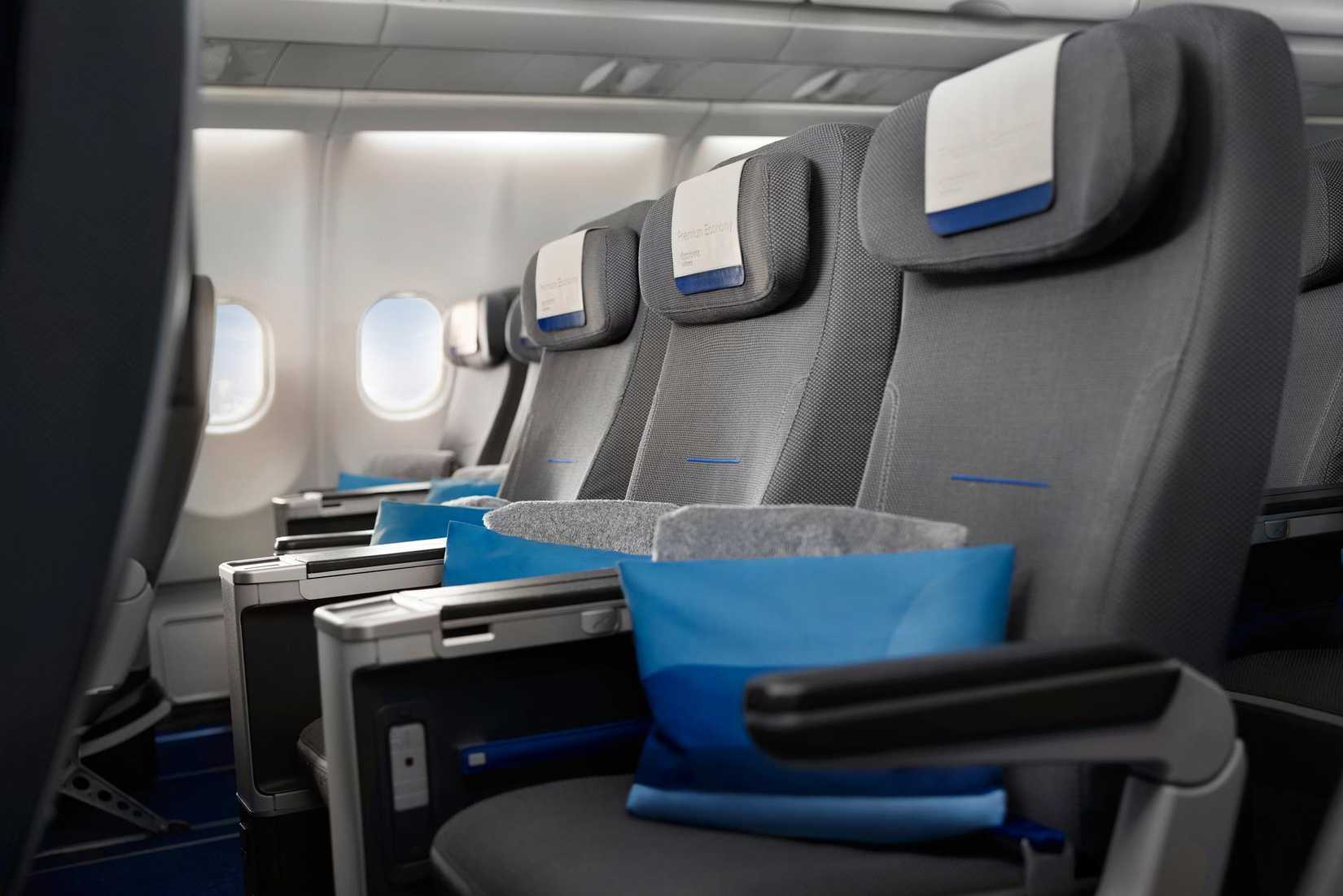
In reality, airlines can push premium economy forward however they like. One way might be by sharpening its identity between the economy and the business classes. This means developing seats with greater privacy, better leg and foot support, and modest yet meaningful enhancements such as improved bedding, upgraded dining, and larger entertainment screens. These are relatively low-cost improvements compared with business class, but they allow airlines to justify higher fares while giving passengers a noticeably better experience on long-haul flights.
Another big opportunity lies in ground-experience upgrades, which can sometimes be the worst part of the journey. Although some do, very few airlines offer lounge access or priority services for premium economy today, but demand for perks is rising. Carriers could introduce premium-economy-specific lounges, priority security lanes, express bag drop, or guaranteed overhead bin space. Enhancing the ground journey would make premium economy feel like an ‘actual’ product rather than just a slightly bigger seat, and would differentiate airlines in competitive long-haul markets.
Finally, airlines could innovate through smarter cabin strategies and personalization. Future cabins could feature tiered products, such as a ‘Basic’ and ‘Premium’ offering, seasonal cabin configurations, or hybrid recliner products for ultra-long-haul flights. Subscription-based upgrade models, dynamic pricing, and personalized add-ons would let travelers customize their comfort without jumping to full business class. Together, these moves position premium economy as a flexible, experience-driven cabin, the next major profit lever in airline strategy.
The Cabin Type Of The Future?

Premium economy has become a major revenue driver for airlines because it strikes an ideal balance between comfort and cost. Many travelers, especially business travelers with tighter budgets and leisure travelers who want an upgrade without paying for business class, are willing to spend significantly more for extra legroom, wider seats, and better service. This demand creates a strong, steady market for a product that feels like a luxury but remains accessible to a broad segment of flyers.
From an airline economics perspective, premium economy delivers far higher profit margins than regular economy. The seats take up only modestly more cabin space, yet they command fares that can be 50–150% higher than standard economy. Since operating costs (fuel, staffing, and maintenance) don’t increase proportionally, the additional revenue ends up largely in the bottom line. For many carriers, premium economy produces a better return per square foot of cabin space than both business class and economy.
Additionally, premium economy boosts airlines’ overall cabin segmentation strategies. By offering more gradations of comfort, basic economy, regular economy, extra-legroom economy, premium economy, business, and first class, airlines can capture more willingness to pay across customer types. The product also encourages upselling: travelers who’d never pay for business class often justify a smaller premium for enhanced comfort. Altogether, Premium Economy improves revenue management, increases customer satisfaction, and fills a highly profitable middle tier that airlines previously lacked.
source