


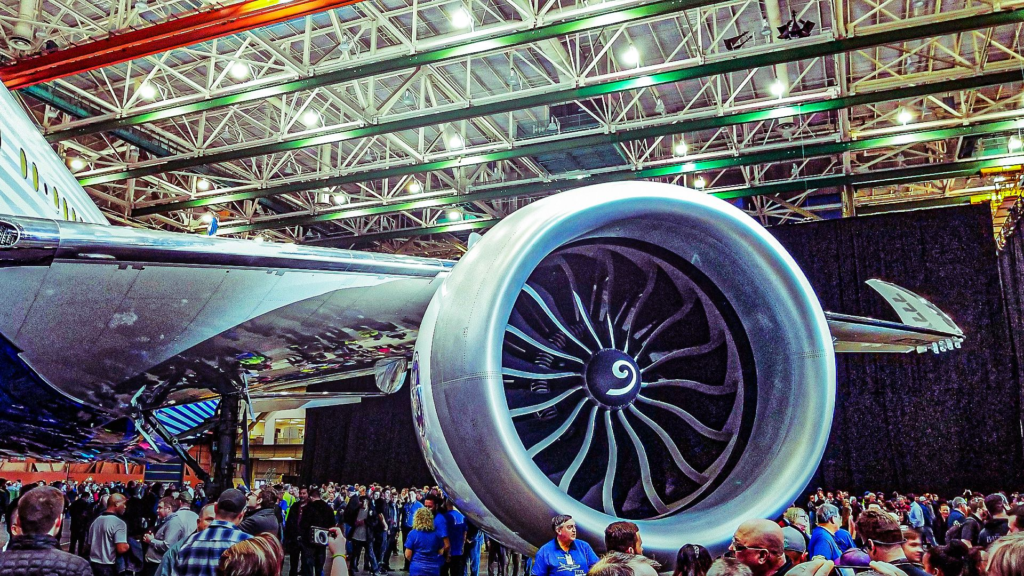
The GE9X, when it enters service with the Boeing 777X, will be the largest jet engine in history. It will be the latest in a line of big twin-aisle engines that have steadily made long-haul flying quieter, cleaner, and more economical. One can also think of it as a careful blend of strength and utility, with a huge front fan improving fuel efficiency while advanced lightweight materials used in the engine’s construction help reduce its overall weight. This design helps the engine make less noise without sacrificing thrust. What sets the GE9X apart is not just its size but also how all the different pieces work together. The engine’s airflow is managed with a smooth, effortless feel, trimming overall fuel burn and emissions while giving airlines the range, payload, and flexibility they are looking for.
The engine is built for today’s reality, with tighter environmental targets driving more volatile fuel costs and broader adoption of sustainable aviation fuels. For passengers, the headline benefits are clear, as the engine will create a quieter cabin, reduce overall vibrations, and help the aircraft reach farther-flung destinations with fewer stops. In short, the GE9X is not just another big engine but rather a statement about the direction of the overall widebody market.
A Brief Overview Of The GE9X Engine

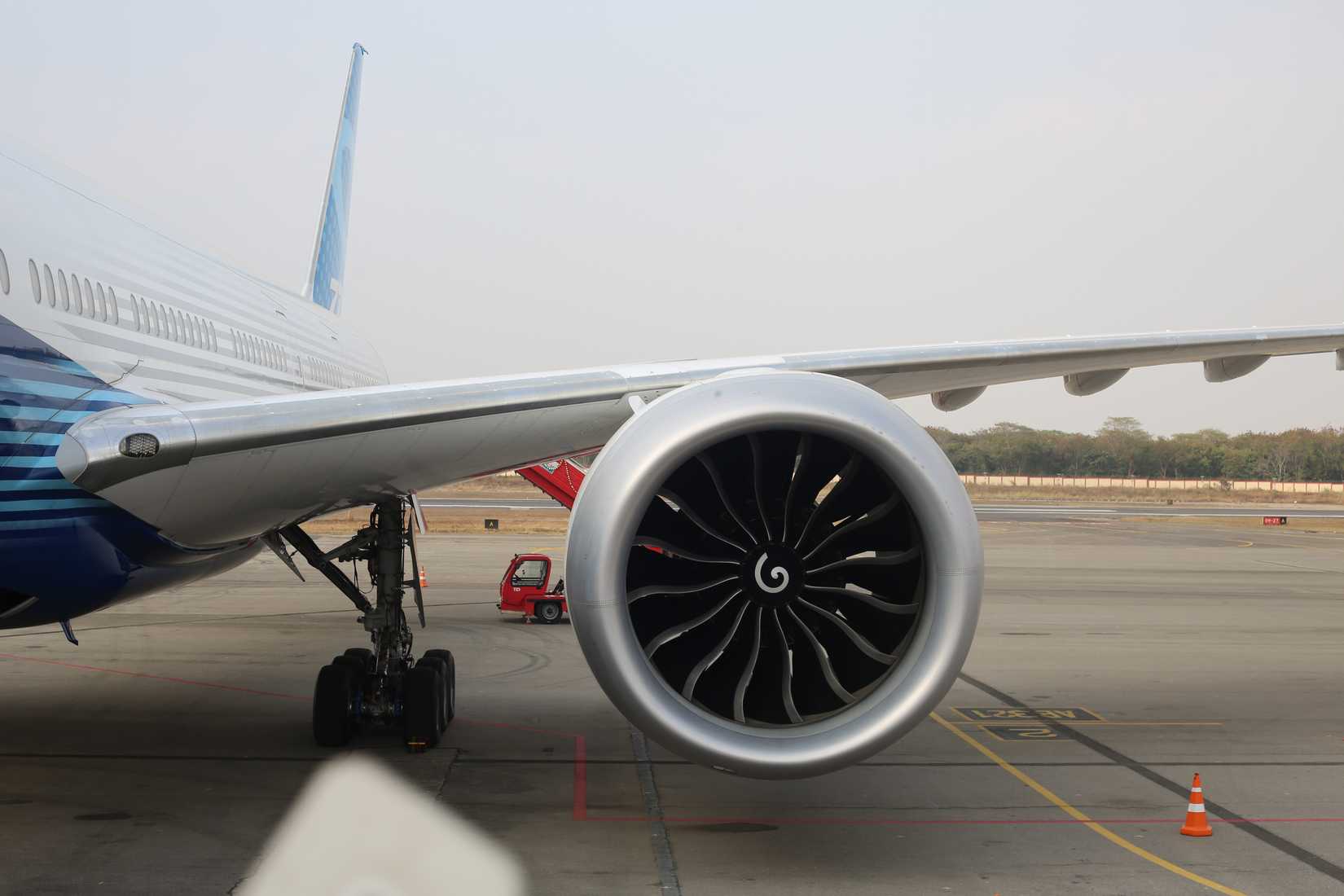
Let’s begin this story by taking a first look at the GE9X from a technical standpoint. The General Electric-built engine is a high-bypass turbofan purpose-built for the 777X, sized around a 134-inch composite fan with just 16 blades. This makes it one of the largest engines to ever enter service while also offering lower weight and drag. This massive fan helps maintain a bypass ratio near 10:1, offering the market’s strongest propulsive efficiency. The engine’s overall pressure ratio, which sits around 60:1, is also market-leading.
The engine’s impressive efficiency is largely due to its advanced core and multi-stage high-pressure compressor, which reduce fuel burn compared to other GE90 variants. The engine leverages its lightweight construction and use of heat-tolerant materials to maintain a ceramic matrix that incorporates extensive additive components, reducing cooling needs and overall mass. A next-generation combustor and refined turbine aerodynamics also help the engine trim its overall carbon emissions and limit its noise footprint. The engine is controlled via full-authority digital engine control, which manages variable-thrust vanes and bleed flows across a wider operating envelope.
During testing, the engine outperformed expectations, setting a thrust record of 134,300 pounds, though in service it is optimized for efficient long-haul cruise rather than peak takeoff power. The net effect is a large-fan architecture that sups fuel and runs cooler for a given performance point, delivering quieter, steadier thrust that can support the aircraft’s range and payload targets. In short, it is a large-fan, ultra-efficient engine design that utilizes advanced materials and manufacturing processes to turn size into practical efficiency gains.
A Deeper Look At The Engine’s Development
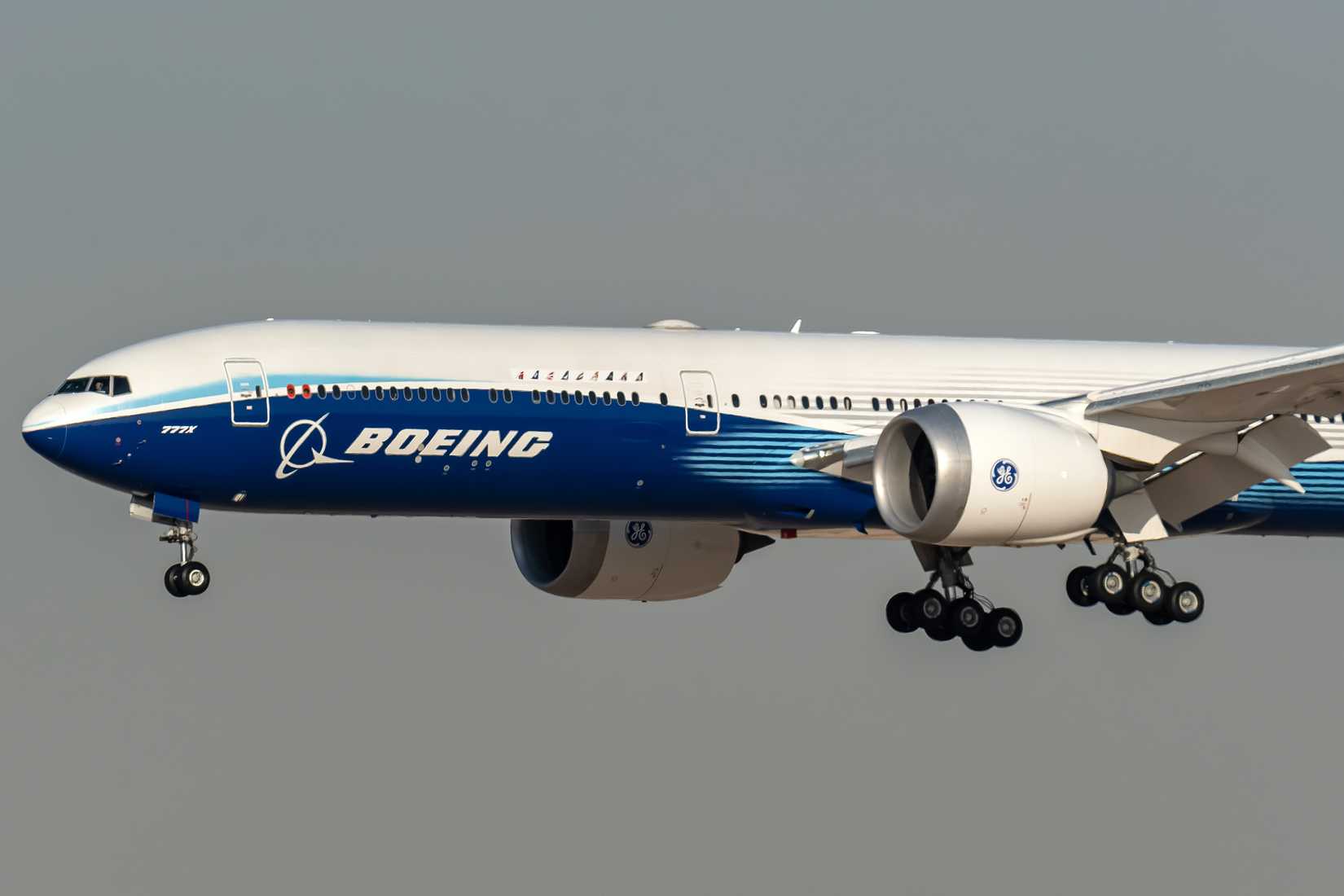
General Electric formally launched the GE9X for Boeing’s 777X line in 2012 as a clean-sheet successor to the GE90, before the manufacturer iterated the architecture throughout the 2010s, before ultimately settling on the 134-inch composite fan design that we will soon see in the skies. The very high-pressure core will deliver around 10% lower fuel burn than the GE90’s most fuel-efficient variants. Ground tests for the engine began in April 2016, allowing design engineers to test the engine’s aerodynamics, systems behavior, and thermal management, all of which would be followed by extensive icing and endurance campaigns.
Flight testing for the engine on the General Electric Boeing 747-400 testbed started in March 2018. In parallel, GE pursued reliability issues typical of a new engine core, notably redesigning the high-pressure compressor’s hardware after 2019 findings, which pushed the Boeing 777-9’s first flight back to January 2020. The program also demonstrated the engine’s raw power, setting a Guinness World Record mark of 134,300 pounds during a block test. Here are some specifications for the GE9X engine, according to figures from the engine’s Federal Aviation Administration type certification:
|
Category: |
GE9X Engine Specification: |
|---|---|
|
Overall bypass ratio: |
10:1 |
|
Overall weight: |
21,230 lbs (9,630 kg) |
|
Thrust-to-weight ratio: |
5.2:1 |
Overall certification concluded in September 2020, following roughly 5,000 hours of testing and 8,000 full-engine cycles across eight different test powerplants. This ultimately cleared the way for extended-range twin-engine operational performance standards (ETOPS) work and the overall fleet introduction, which were aligned with the 777X’s schedule. This development arc combined scale with the materials needed to support manufacturing advances, such as composites, ceramic-matrix alloys, and other additive materials. These were all aimed at improving durable efficiency rather than peak-rated thrust, reflecting an overall shift towards cruise economy.
What Makes The Engine More Capable Than The GE90?

When compared with its predecessor, the GE90, the GE9X is built first and foremost around operational efficiency. The much larger 134-inch composite fan and a higher bypass ratio convert more engine power into useful thrust, trimming overall fuel burn by roughly 10 percent compared to the earlier GE90. The GE9X’s fan uses just 16 carbon fiber blades, significantly fewer than the GE90, which reduces weight and drag and makes maintenance easier. On the inside, a markedly higher overall pressure ratio and a redesigned core squeeze more power out of each kilogram of air that passes through the engine.
The engine’s extensive use of advanced materials, especially ceramic-matrix composite in hot-section parts, helps reduce overall cooling air needs and heat stress. These things improve overall durability and operating efficiency. Overall emissions and noise are lower, thanks to the engine’s powerful combustor and refined turbine aerodynamics, which curb pollutant emissions across the board. The aforementioned lower noise can be attributed to lower fan tip speeds.
Although the GE9X has lower certified thrust than the GE90, it is optimized for cruise, delivering steadier, quieter, and more economical long-haul performance. To put it simply, the GE9X trades headline takeoff thrust for a step-change in real-world fuel burn, overall emissions, and noise.
Why Might Airbus Be Afraid Of This Engine?


Airbus has a relatively simple concern with this specific engine. Specifically, the GE9X could give the Boeing 777X a compelling economic story that could hurt Airbus’ market-leading A350-1000 sales. The GE9X’s huge fan and 10:1 bypass ratio translate into lower fuel burn. The overall total fixed cost advantage cited by GE for the engine is around 55 when directly compared to the Trent XWB engine built by Rolls-Royce that powers the Airbus A350-1000.
This is certainly enough to sway overall seat-mile costs, range, and payload tradeoffs, making the jet much more cost-efficient on the margins. Size and materials also reduce noise and overall maintenance requirements, strengthening the Boeing 777-9’s pitch for long-haul missions. Meanwhile, Rolls-Royce’s path to a step change, the UltraFan program, remains purely in the demonstration stage.
There is a pretty clear case to be made that the GE9X may be the most cost-effective engine ever to hit the market. Unfortunately for Airbus, they may be in a position where they simply have nothing else to offer operators that can beat the exceptional economics and performance of this model.
What Is The Current Plan For The Engine’s Entry Into Operational Service?

The General Electric GE9X has been certified. As of September 2020, the engine has complete approval from the Federal Aviation Administration (FAA) to enter operational service. The engine’s commercial service entry now hinges on the Boeing 777-9’s certification and first deliveries. Earlier this year, Boeing had guided the engine’s entry into service for around 2026, though multiple recent reports indicate another slip could push the timeline back to 2027.
This implies that the engine’s first airline service will likely be at some point over the next eight quarters. Lufthansa remains the intended launch operator for the type. GE, in the meantime, continues to ramp up production and complete endurance and ETOPS certification work to ensure the engines are ready to go once the planes are certified.
In short, the technical barriers to the GE9X’s service entry have already been cleared, and the Boeing 777-9’s development calendar continues to restrict it. If Boeing can achieve certification earlier, we could see this engine in the skies as soon as 2026.
What Is The Bottom Line?

At the end of the day, the General Electric GE9X will be the most powerful engine ever to fly passengers onboard a commercial aircraft. It is absolutely massive, and it will fittingly fly the largest twin-engine aircraft to ever take to the skies. The exceptional model can operate services worldwide and will quickly impact airline fleets and route networks.
The GE9X builds on decades of engineering excellence from engine manufacturer General Electric. The US-based company has built many of the world’s most capable and best-selling jet engines.
Few passengers will think about the massive engine flying them across the globe at all. Nonetheless, the power plant will certainly be something to marvel at once it becomes a common sight at global airports.
source