


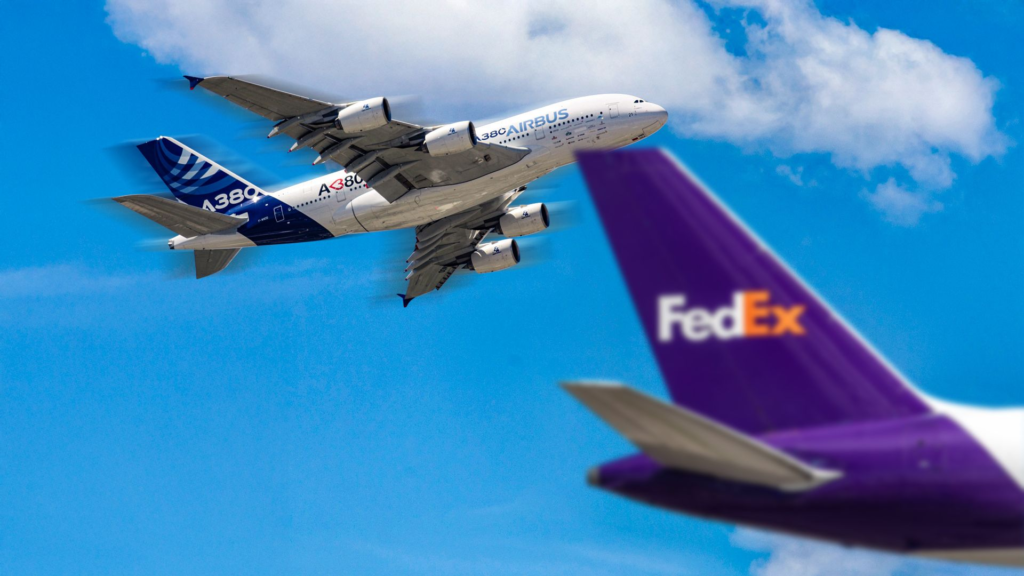
The Airbus A380 is one of the most impressive aircraft ever made from an engineering and technical perspective. It’s also one of the most comfortable airliners to fly on, and one of the most visually striking planes to ever enter service. However, the type was a sales flop, with only 251 orders and scores of tales in regards to its lack of market, its suboptimal design, its poor fuel efficiency as a result of the engines being half a generation behind the 787, as well as poor cargo capacity, in an attempt to explain its failure.
While the Airbus A380 was only ever produced as a passenger airliner in its A380-800 variant, Airbus did also sell a cargo version of the A380F. This, too, failed to gain much traction as the A380’s design meant that it would max out on weight before the interior was full, thereby negating the benefit of the A380 in its increased size. For FedEx Express, however, a company that focuses on shipping lightweight packages, the type was perfect on paper, and it even bought 10 examples, but what happened to this order?
The Airbus A380 In A Nutshell

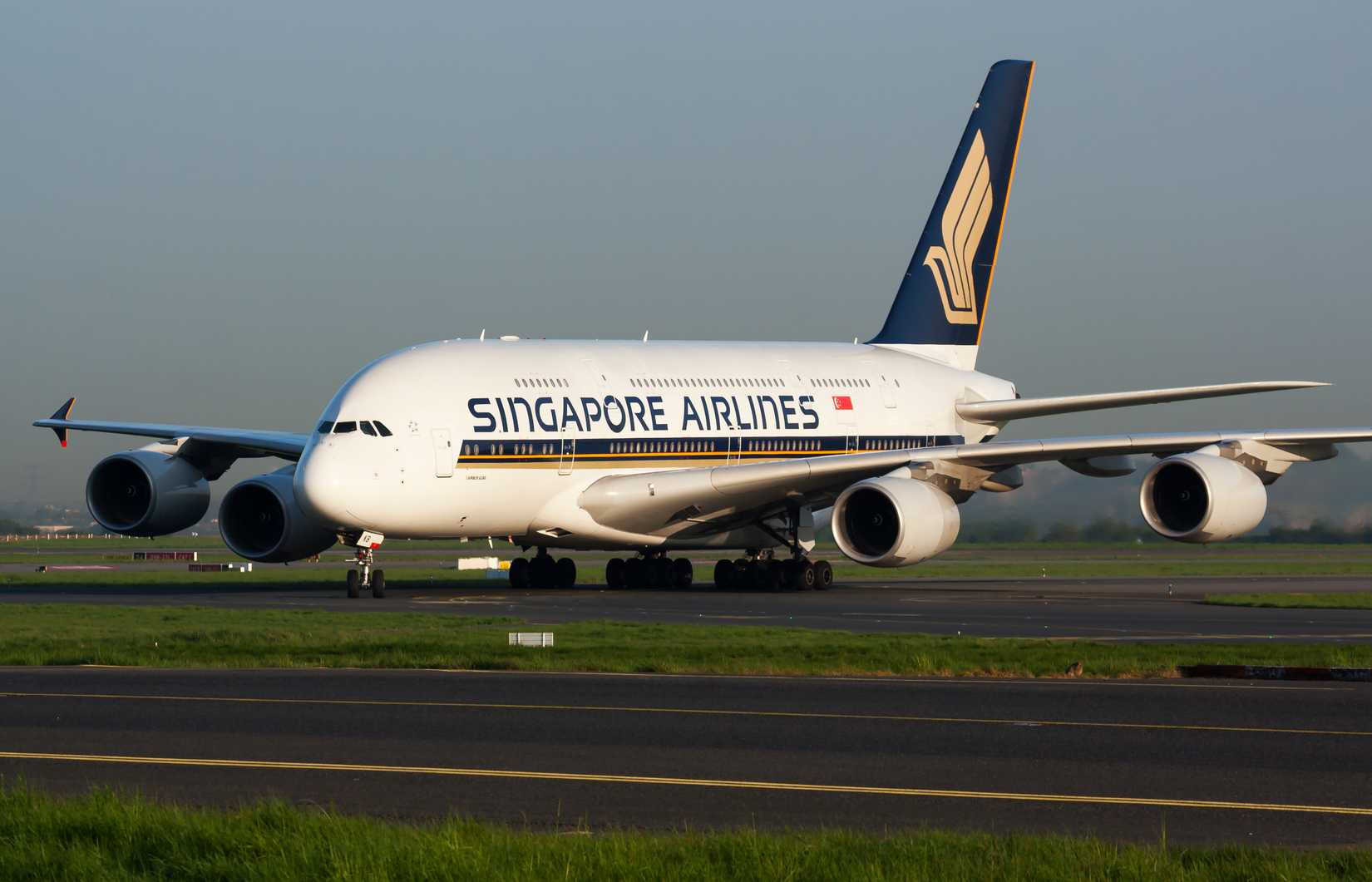
The Airbus A380 was the world’s first full double-decker jetliner, unlike the earlier Boeing 747, which only had a partial upper deck. Airbus began studies of a double-decker in 1988 and formally announced the preliminary stages of the project in 1990, before presenting the A3XX concept in 1994. It would formally launch the A380 in 2000, with flight testing beginning in 2005. Finally, after two years of delays due to electrical wiring issues, the Airbus A380-800 entered service with Singapore Airlines in 2007.
The A380 is powered by either the Rolls-Royce Trent 900 or the Engine Alliance GP7200 (a hybrid between the Pratt & Whitney PW4000 and the General Electric GE90). Production lasted until 2021, and while many airlines struggled to fill the enormous double-decker, Emirates was all in, ordering nearly half of all A380s sold. Some airlines also managed to use the A380 effectively, most notably British Airways with its fleet of 12, but the type as a whole has proven difficult for several of its operators.
Airbus developed the A380-800 as a shrink, with an oversized wing and tail, along with an exceptionally long range. The intent was to stretch the A380 into a longer A380-900 variant, with reduced range and superior operating economics. Additionally. Airbus sold a freighter variant of the A380-800, but sales were tepid, with only four customers ordering a total of 37 examples. The A380F was ultimately cancelled as Airbus elected to focus on the passenger variant.
Looking Deeper At The Airbus A380F


The Airbus A380F would have been the freighter variant of the A380-800. It would have competed with the Boeing 747-8F, but would be capable of transporting 150 tons over a 5,600 NM (10,400 km) distance, 10 tons more and 1,210 NM (2,270 km) than the 747-8F. However, while the A380F would have been capable of carrying 7% more payload, its interior volume would have been 32% higher than the 747-8F, and it would have been more expensive to purchase and operate.
Essentially, operators of the A380F would max out the aircraft’s weight before its volume, and they’d be paying a premium for space that they couldn’t use compared to the Boeing 747-8F. The A380 received more than five times the sales of the passenger 747-8I variant, but the 747-8F sold more than twice as many as the 747-8I (107 vs 48). Airbus, meanwhile, only ever received 37 A380F orders before the variant was cancelled. These came from Emirates (two), ILFC (five), FedEx Express (10), and UPS Airlines (10).
|
Aircraft |
Orders |
|
|---|---|---|
|
Airbus A380-800 |
251 |
|
|
Airbus A380F (Cancelled) |
37 |
|
|
Boeing 747-8i |
48 |
|
|
Boeing 747-8F |
107 |
|
|
Total |
251 |
155 |
While the A380F would have made for a poor freighter compared to the 747-8F for many cargo airlines, FedEx and UPS primarily ship lightweight packages. An A380F would allow the two carriers to ship more packages without being concerned about maxing out the aircraft’s weight capacity, and the added floor space is exactly what both airlines require. In addition to their firm orders, FedEx and UPS also held 10 options each for the A380F.


Why Airlines Don’t Want Their Airbus A380s Anymore
A look at the challenges of operating a fleet of Airbus A380s today, and the future outlook on the type.
What Happened To FedEx’s A380F Order?
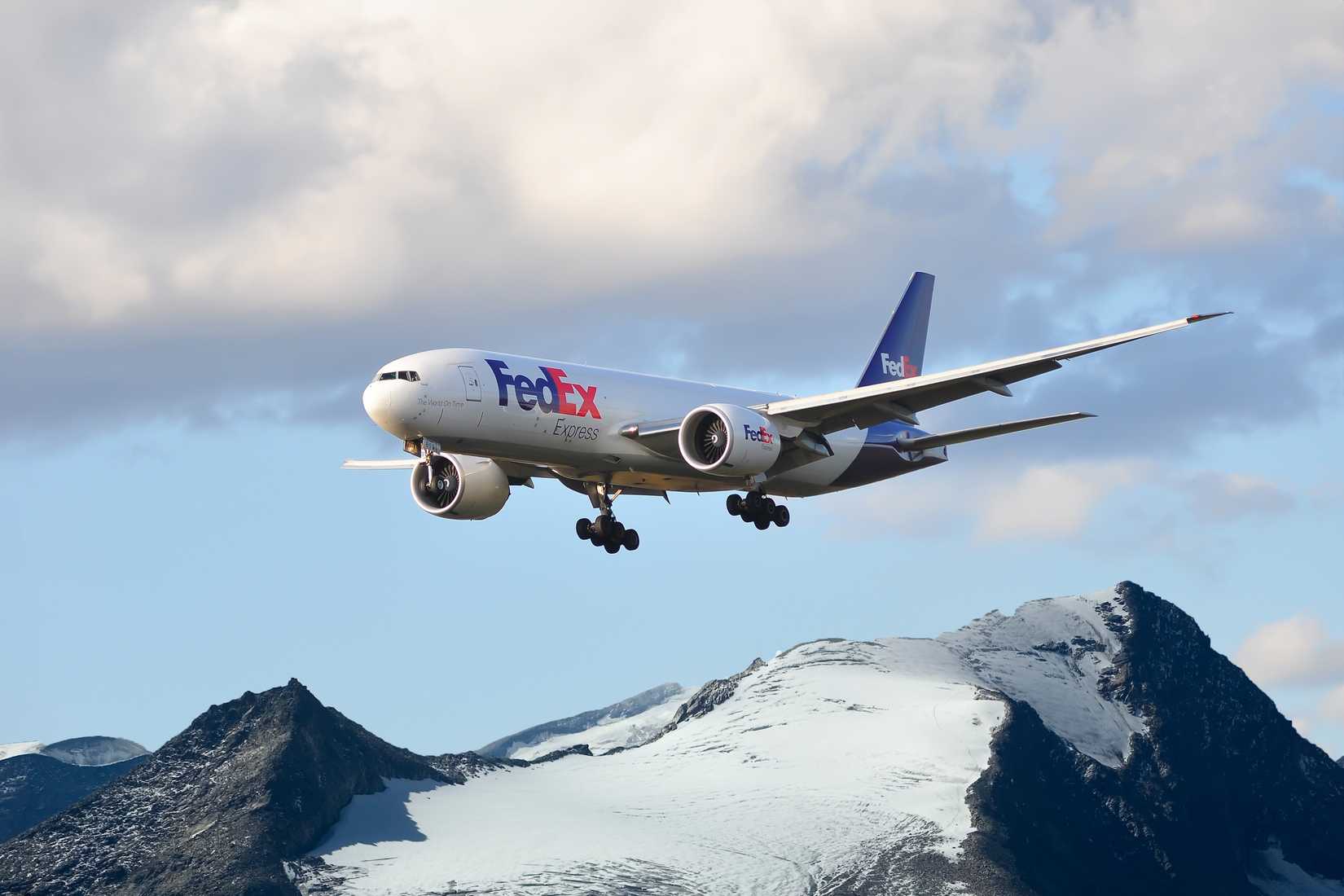
Fedex Express was all in on the A380F (which would have been powered by GP7200 engines) and even expressed interest in ordering a freighter variant of the proposed A380-900. The carrier drafted up plans to prepare its hubs to accommodate the superjumbo, with the intention that a single A380F could effectively displace two McDonnell Douglas MD-11Fs. However, the problem with the A380F wasn’t the aircraft itself, but rather that FedEx Express couldn’t get the planes on time.
Airbus initially targeted 2005 as the A380’s entry into service, but the program experienced multiple delays primarily due to issues with the plane’s wiring. As the wiring required redesigns and repeated delays led to a balloon in development costs. Airbus was stretched thin with the redesigns along with the A350 program, and decided to concentrate on the passenger variant. While it stopped short of cancelling the A380F initially, it effectively paused the variant’s development and did not give a concrete delivery date.
|
Aircraft |
Airbus A380-800 |
Airbus A380F |
Airbus A350 |
Airbus A350 XWB |
|---|---|---|---|---|
|
Program Launch |
2000 |
2001 |
2004 |
2006 |
|
Original entry into service |
2005 |
2008 |
2010 |
2013 |
|
Actual entry into service |
2007 |
Cancelled |
Redesigned |
2015 |
At the same time, FedEx was experiencing financial struggles. While it desired the capacity that the A380F would bring, it would also be expensive to acquire. It’s unclear whether this was due to A380F delays or if it coincided with the program’s struggles, but FedEx elected to revise its business model. In November 2006, FedEx formally cancelled its orders for the Airbus A380F to concentrate on the smaller and cheaper Boeing 777F, although it remained open to reordering the type when its development was more solid.
Cancellations For The Airbus A380F
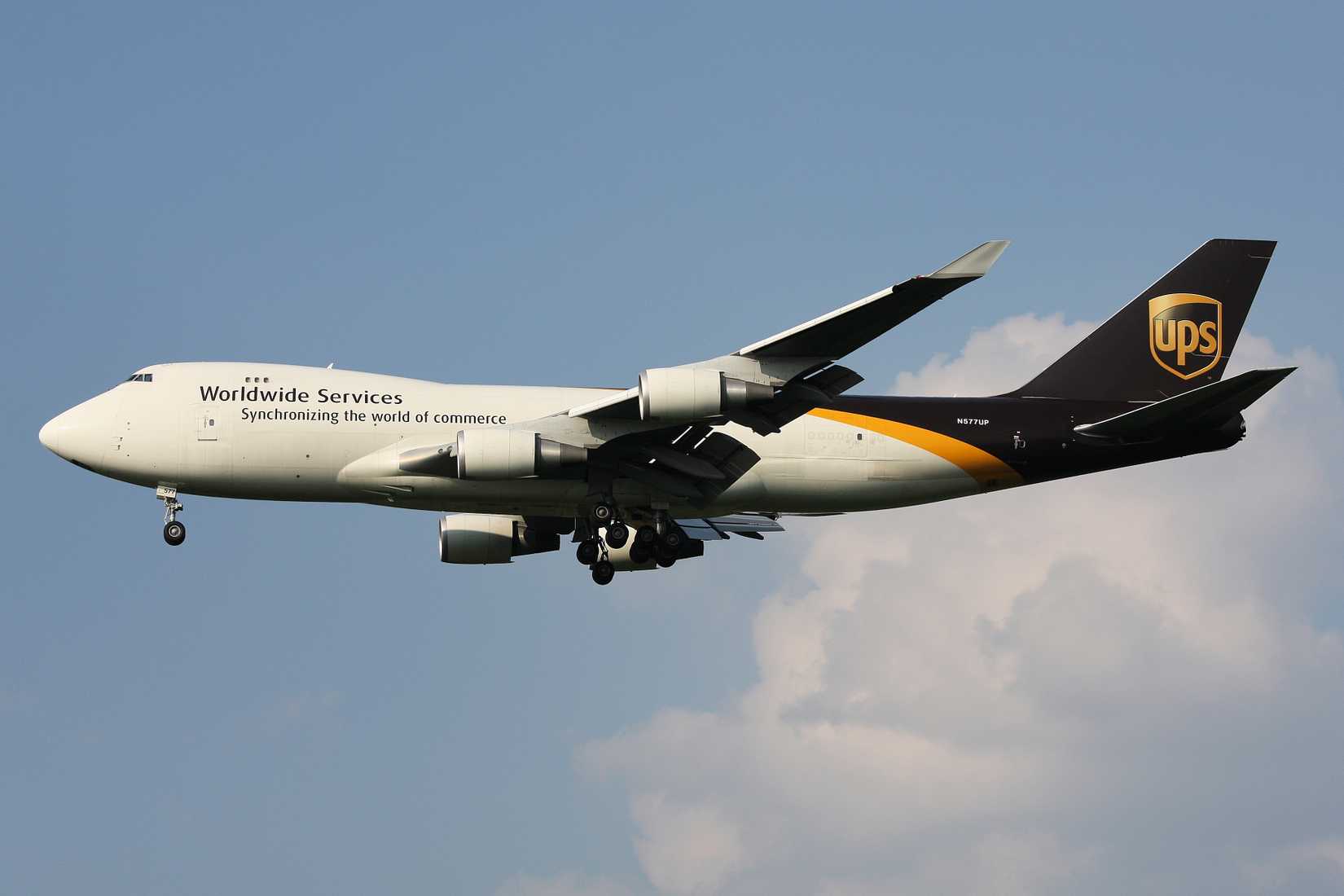
ILFC held orders for five A380Fs with four options, while Emirates had ordered two A380Fs with five options. After the A380F was put on pause, both airlines chose to convert their orders to passenger A380-800s in 2006, leaving UPS Airlines as the final A380F customer with 10 firm orders and 10 options. However, while rival FedEx Express was initially firmly committed to utilizing the quadjet in its network, UPS was less optimistic.


The delays on the A380F led UPS Airlines and Airbus to revisit the order. The two parties initially agreed that UPS would keep its order, but that it reserved the right to cancel the order at no cost should the program incur any further delay. Ultimately, however, with no interest in developing the A380F from Airbus’s side, UPS Airlines formally cancelled its order in 2007, incurring no penalty, and marking the end of the Airbus A380F.

Did A Design Flaw Really Kill The Airbus A380?
While the aircraft seems to have made somewhat of a comeback in recent years, the program was a failure for Airbus.
Other Proposed Airbus A380 Variants


The A380 from the start was optimized for a larger variant than the A380-800. The A380-800 was essentially designed as a shrink, akin to the Airbus A319-100 or the Airbus A330-200. While the A380-800 had trouble competing even against the Boeing 777-300ER on per-seat costs, an A380-900 would come with far superior operating economics and may have been more competitive. However, Airbus never received enough A380-800 orders to justify launching the A380-900.
The proposed Airbus A380neo was an attempt to address a critical flaw with the original A380: the engines. The Trent 900 and GP7200 were essentially in between the engines found on the Airbus A330 and Boeing 777 and those found on the Boeing 787, in terms of technology and fuel burn. By equipping the A380 with the Rolls-Royce Trent XWB or the proposed Rolls-Royce Advance, the aircraft would have significantly lower fuel burn. However, Airbus was unable to build a business case for the A380neo.
In 2017, Airbus rolled out the A380plus. While it stopped short of being a reengine, the A380plus was a significant overhaul to the aircraft. It would come with new split-scimitar winglets, refinements to the rest of the wing, a three-ton increase in Maximum Takeoff Weight, and longer maintenance intervals. Additionally, the A380plus would also use the in-flight entertainment system, flight management system, and fuel pumps from the Airbus A350. However, there were no takers for the A380plus.
The Bottom Line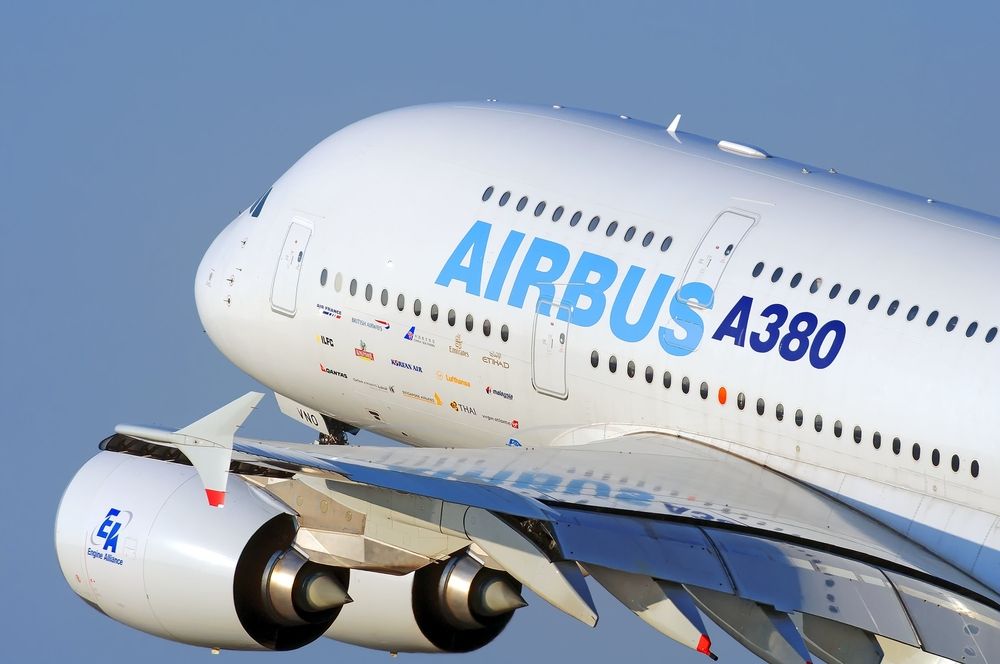

For many cargo airlines, Airbus’s A380F would have made for a poor alternative to the Boeing 747-8F. The aircraft’s primary advantage, the increased floor space, would be underutilized as the plane would max out on gross weight before volume, and most airlines couldn’t justify this considering the price premium over the 747-8F.
This wasn’t the case for FedEx Express, which, initially, may have been the A380F’s greatest champion. However, faced with ever-increasing delivery delays, a need for more cargo capacity, and less than optimal cash flow, the company cancelled its orders to instead concentrate on aircraft that it knew could be delivered, namely, used MD-11s and the Boeing 777F.
source