


There are so many different types of airplane seats out there, and they all have their own unique design quirks. Along those lines, have you ever noticed how some first and business class seats have three-point seatbelts (that go over your shoulder), while others don’t? Let’s talk about why that is…
Premium airplane seats with three-point belts
For the most part, airplane seats simply have lap belts, which are much less restrictive seatbelts than you’ll find in cars. While cars typically have three-point belts that you wear over your shoulder, it’s rare to find that on airplanes. Well, the exception is in some first and business class seats, which do have a shoulder belt. So, what’s the logic for this, and why is it required in some premium seats, and not others?
The Federal Aviation Administration (FAA) in the United States has a “16g rule,” as it’s called, requiring that certain crashworthiness standards are met, in the event that there is an emergency. This policy is part of the complicated seat certification process, and is based on research, accident data, and analysis, and is intended to provide increased protection for passengers in impact-survivable accidents.
For most kinds of seats, shoulder belts aren’t required, due to how aircraft cabins are configured. For example, in economy, the intent is typically that the soft seat back in front would “absorb” some of the impact of an accident.
However, in premium cabins, it’s a different story, and that explains why you’ll sometimes see shoulder belts at certain seats. For example, this is most common with seats that aren’t fully forward or rear facing, like herringbone or reverse herringbone seats.
This is because if there’s a sudden deceleration and you’re sitting at an angle to the direction the aircraft is traveling, your body could move differently, in a way that could increase danger.

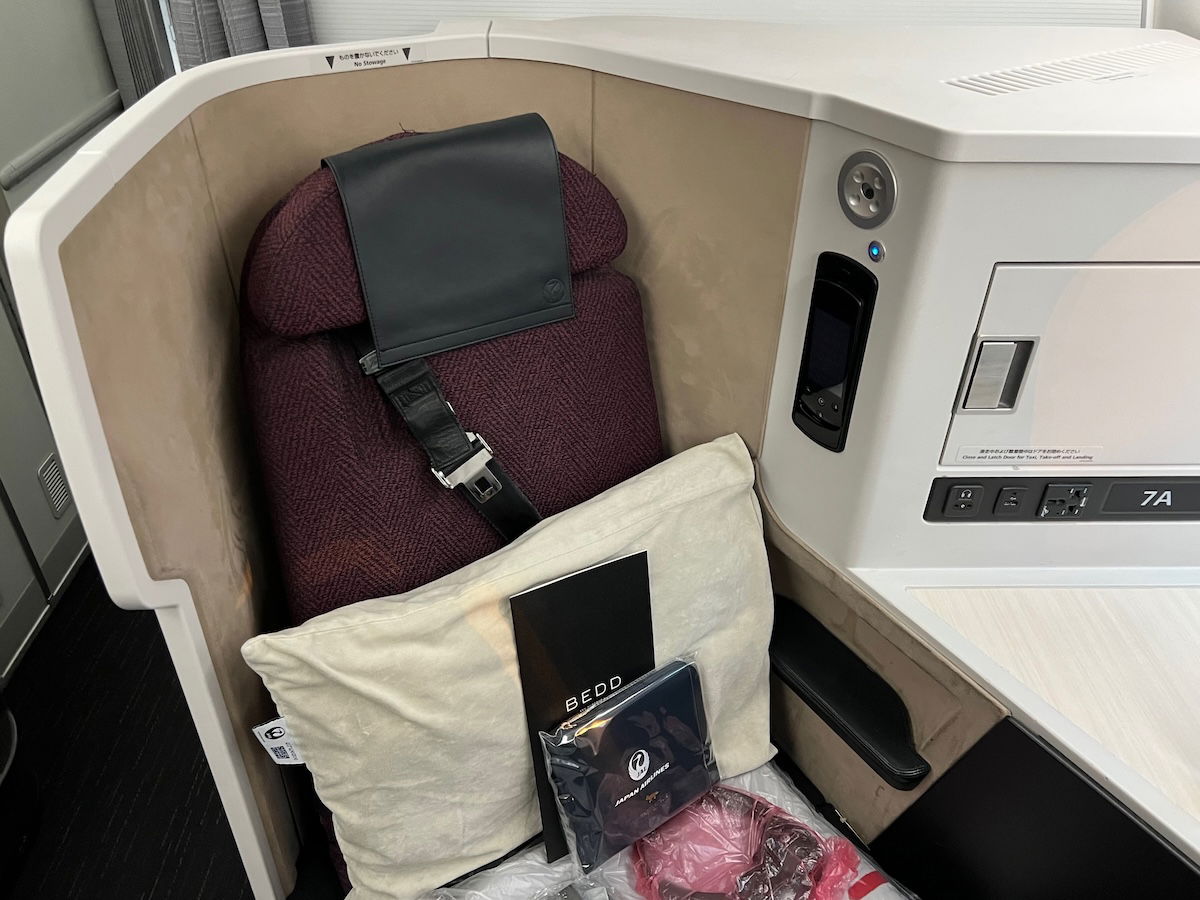
However, you’ll also sometimes find shoulder belts in fully forward or rear facing seats. This is typically for cabins where the impact couldn’t easily be absorbed in the event of a sudden deceleration. For example, if you’re in a hard shelled seat where you could otherwise easily hit your head on a hard surface, a shoulder belt might be needed.
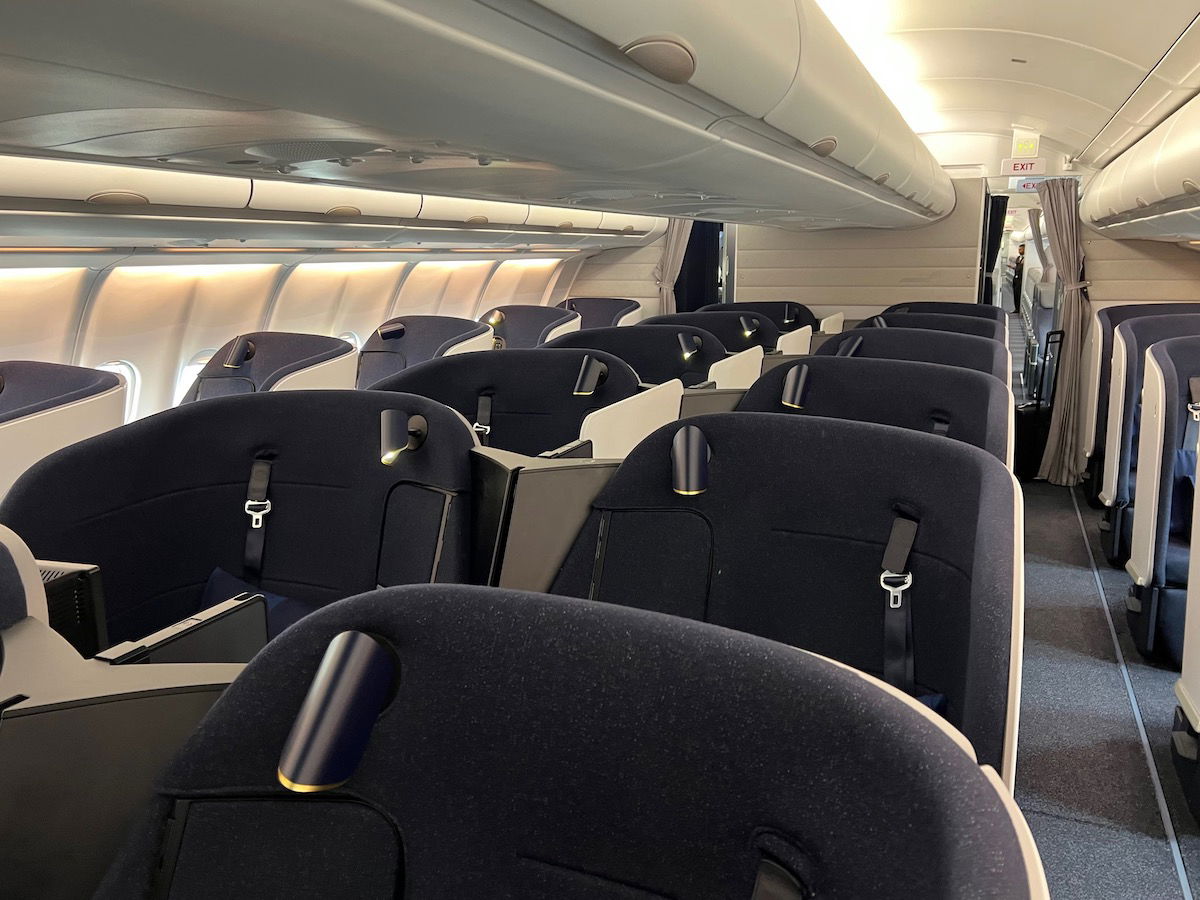
Airbag seatbelts are used as an alternative
Now, you might be thinking to yourself “but I’ve flown in a reverse herringbone seat without a shoulder belt, how is that possible?” There’s actually an alternative to the three-point belt that airlines have. Rather than having a shoulder harness, seats can instead have airbag seatbelts (those are the really thick seatbelts that you’ll find on some airlines).
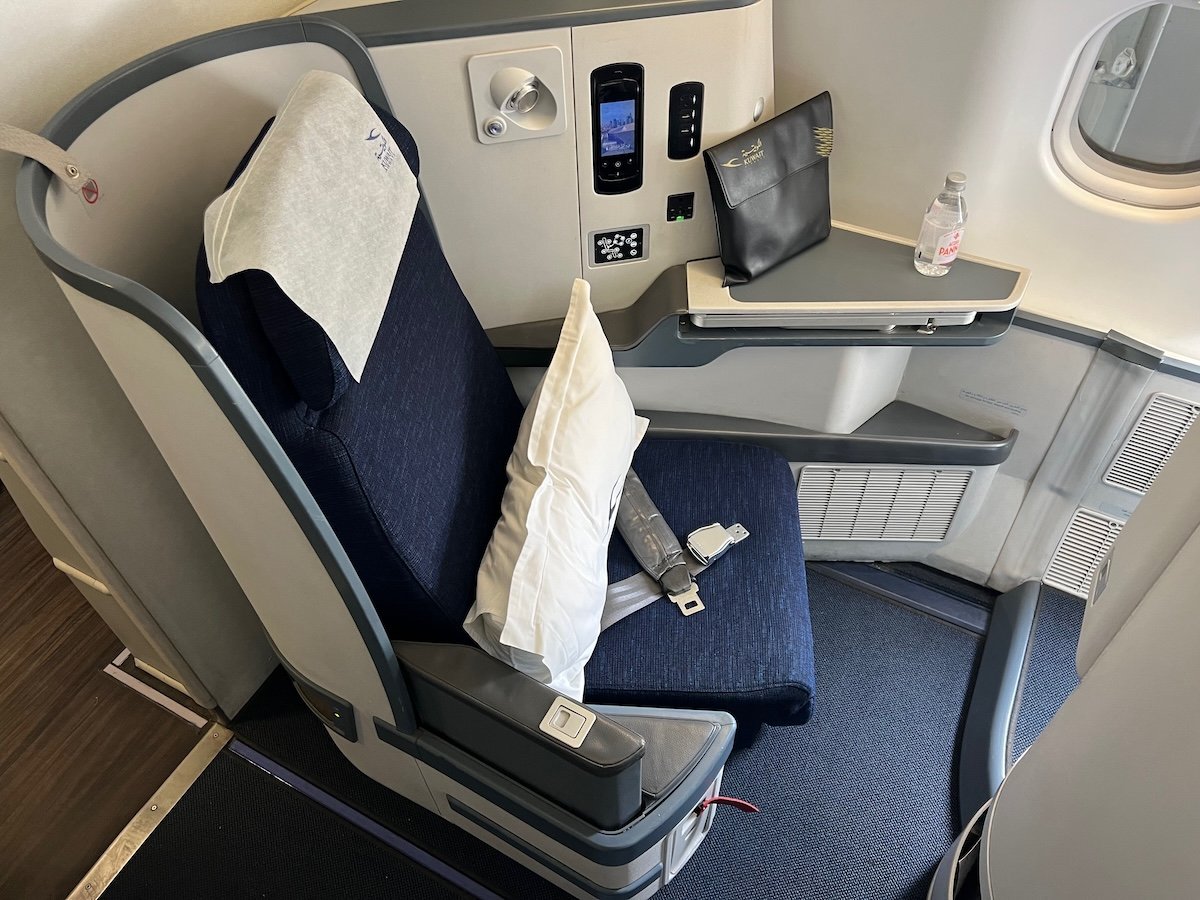
From a comfort perspective, there are pros and cons to the three-point belt vs. the airbag seatbelt. While the three-point belt might be a bit less comfortable for taxi, takeoff, and landing (since you have to wear it then), I appreciate that it doesn’t have to be used while at cruising altitude.
Meanwhile I find the airbag seatbelt can be a bit more uncomfortable throughout the flight, especially when sleeping, since you always feel it a bit more easily. So it’s a tradeoff between having a belt that’s more comfortable during takeoff and landing, and having one that’s more comfortable inflight.
Bottom line
While most airplane seats have a simple lap belt, others have a three-point belt that goes over the shoulder. These enhanced belts are installed in situations where they’re required in order to comply with regulations, and they’re most common in seats that aren’t directly forward and rear facing. As an alternative, airlines can elect to install airbag seatbelts, which are also pretty common in reverse herringbone seats.
For premium seats that require more than a lap belt, do you prefer three-point seatbelts or the airbag seatbelts?
source