


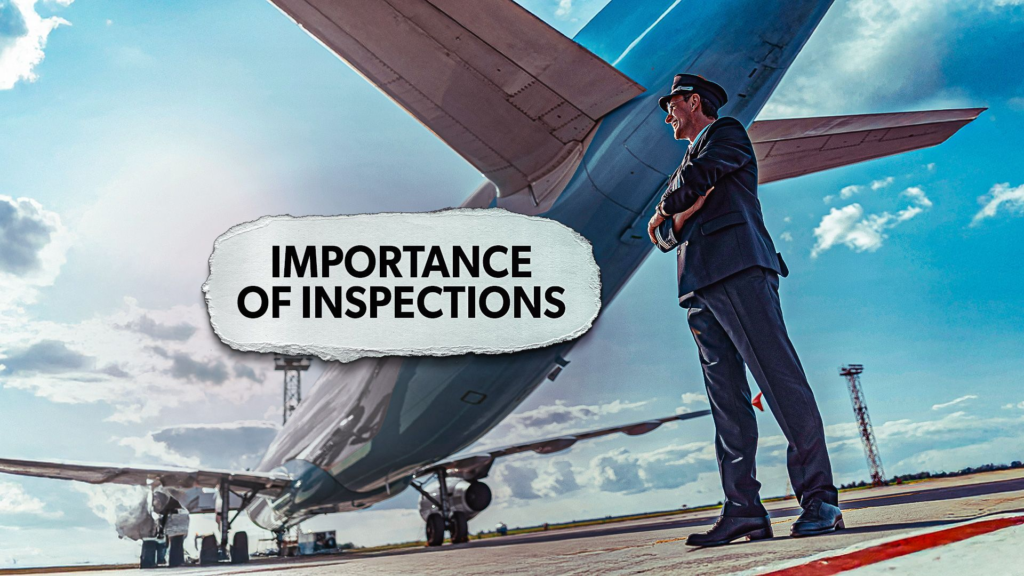
Sometimes, when passengers are at the gate, with a clear view of the plane they are waiting to board, they may notice the pilots walking around the plane. At this point in the preflight checks, a final inspection of the plane is conducted by the pilots, during which they do a full walk around the plane. This check is the final chance for operators to check for anything out of order before the plane takes off.
This inspection is called the preflight walk-around, and during this phase of preflight checks, pilots occasionally find items that have been missed by maintenance crews, which will certainly cause problems later on. This article provides a look at the preflight walk-around, including why it happens, what pilots look for, and what happens when something is found.
An Overview Of The Preflight Walk-Around

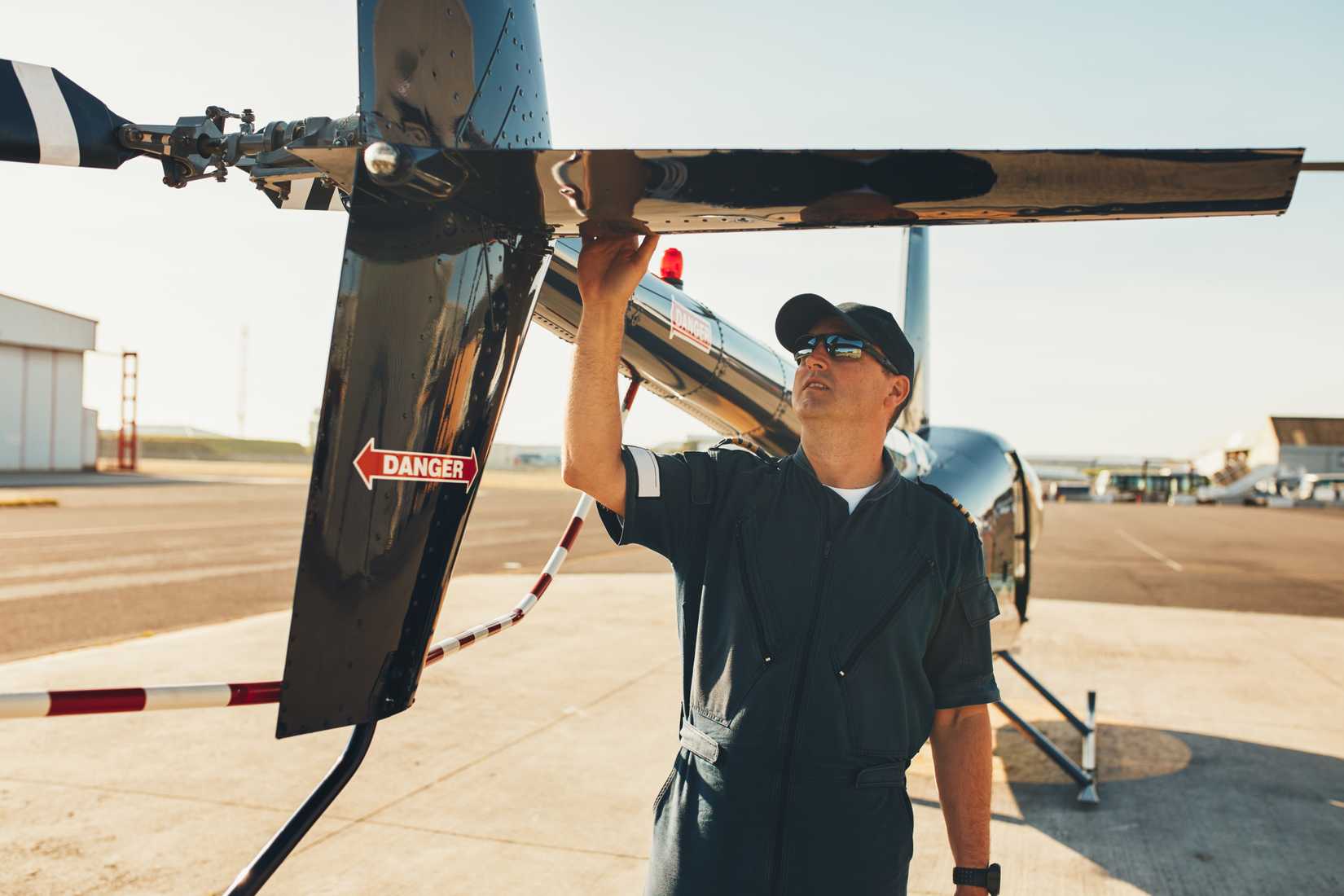
For pilots, safety is the absolute highest priority, and they generally won’t think twice about making a decision that results in hours of delay, rather than flying an unsafe plane. With this in mind, they take the physical condition of the aircraft extremely seriously. So, before each flight, in addition to their other tasks, the pilots conduct an exterior ‘walk-around’ of the aircraft, ensuring that they, as the pilot responsible for the plane and passengers onboard, are happy with its condition.
The general principle that a vehicle is the captain’s fundamental and legal responsibility, together with its occupants and cargo, is a common feature in transportation, whether it be shipping, trucking or flying. Even if the vehicle belongs to another party, the person assuming control of it for the duration of a journey is ultimately responsible for the vehicle and its safety. Therefore, the final decision of whether it is safe to use or not rests with the pilot in this case.
What Is The Walk-Around Process?

The walk-around is more than a cursory look, and this final check saves money on repairs, catches issues before they become bigger problems, and most importantly, saves lives. Issues found are often that a tire has become worn, a brake is near its limit, or a hydraulic actuator that moves a flight control is leaking. According to USA Today Travel, if an issue is discovered, a call to maintenance is made, and a licensed technician comes to inspect the component, determining if it is within limits or if maintenance must be immediately performed.
Often, such maintenance can be carried out quickly by technicians without moving the plane, and passengers would not be aware that it is occurring unless it results in a significant delay. For example, a worn-out tire can generally be changed at the gate, and usually within half an hour of being reported. Below, a typical walk-around for a commercial jetliner, the Boeing 787 Dreamliner, is outlined step-by-step, detailing which components are inspected, according to a guide from The Points Guy. Get ready for a long read, as it is pretty in-depth:
|
787 Dreamliner Preflight Walk-Around Process |
||
|
Type of Part or Area |
Part Inspected |
Procedure |
|
Starting point |
– |
Inspection begins at the front left of the aircraft, just underneath the L1 door, working around the aircraft in a methodical, clockwise route. |
|
Probes, sensors, ports and vents |
||
|
Pitot tubes and static ports |
The pitot tube faces into the oncoming air and is used to determine the speed of the aircraft. If the aircraft has been shut down overnight in cold conditions, there is a chance that the tubes will become iced up. While systems normally heat and melt ice on this component once the aircraft is powered, the check ensures that this has happened. |
|
|
Static ports in this area are used to sense the outside air pressure and deduce the aircraft’s altitude. Pilot ensures that they have not been damaged and are free from any obstructions or blockages. |
||
|
Outflow valves |
The 787 has two outflow vents as part of the pressurization system, one at the front and one at the rear. These open and close to regulate the amount of air leaving the aircraft during flight, and can be used to purge smoke from the fore or aft areas of the cabin. Pilots ensure that the vent doors are not damaged and that nothing is blocking them. |
|
|
Nose |
Weather radar system |
Located behind the nose cone, this system is used to detect thunderstorms and large build-ups of cloud and rain. Pilots ensure that there is no damage to the radar dome (radome) and that all the latches are secured. |
|
Nose wheel and fore gear bay |
The nose wheel assembly allows the plane to steer on the ground and also provides some illumination for the taxiway ahead. Tires are inspected to make sure that there is no damage and that the tread has not been worn away. Taxi lights are inspected to ensure that they are clean and that the glass is not cracked. |
|
|
Gear bay doors allow the gear to move up inside the aircraft, and nose bay doors automatically open up just after liftoff, allowing for quicker gear retraction. Both sets of doors are inspected for damage. The bay is also inspected for stowaways who may be hiding in this area. |
||
|
Lights and pack inlets |
Wing root |
Whilst outflow valves form the end of the pressurization system, the start begins in the wing root with the pack and CAC (cabin air compressor) inlets. These allow fresh air to flow from outside, into the air-conditioning system and then into the cabin. They are protected by deflector doors, which pilots must ensure are free from damage and obstruction. |
|
Landing lights |
Used at night to illuminate the runway on takeoff and landing, they also serve to help the aircraft be seen. They are often turned on for safety, even during the day, and when on the taxiway. Pilots visually inspect them to make sure that they are clean and not cracked or damaged. |
|
|
Right engine |
Visible components |
As most components are hidden away, engineers complete regular checks of the inner workings of the engine with a boroscope, examining important fittings without having to take the whole engine apart. Pilots conduct a visual inspection of the hatches, probes, sensors, fan blades and the spinner. |
|
Pressure sensors |
One is located at the front of the engine and one at the rear. These are used to determine the turbine pressure ratio (TPR). Like with pitot tubes, these are inspected for icing and obstructions. |
|
|
Right Wing |
Front and underside |
The front and underside of the 60-meter wing are checked for any damage, and all the inspection panels are ensured to be closed. |
|
Navigation lights |
Around the wingtip, pilots ensure that the navigation lights are working, and with the correct colors; green on the right wing and red on the left. |
|
|
Trailing edge |
Along the trailing edge of the wing, pilots ensure that all the static discharge wicks are in place. Any missing wicks could indicate that the aircraft has been struck by lightning and would then require further checks by an engineer. |
|
|
Right Main Gear |
Tires |
As the area that takes the most punishment on a daily basis, the main landing gear is built to be strong. Each assembly has four wheels, and the tread of each tire is inspected to ensure that it is deep enough to deal with rain, slush and snow. |
|
Brake units |
Each wheel has its own braking unit, and the condition of each must be checked. The brake wear indicator provides an easy way to check this, and if they are too worn down, they must either be changed before the flight or declared inactive. |
|
|
Tail |
Tail exterior |
As the tail is so high up, visual inspection involves checking for any obvious damage to the leading edge of the horizontal stabilizer and the tailfin. |
|
APU exhaust |
APU exhaust is visually checked for any fuel leaks. |
|
|
Rear-facing navigation lights |
Checked in the same manner as other lights. |
|
|
Rest of the aircraft |
– |
The left-hand side of the aircraft is checked in exactly the same manner as the right-hand side. |
For pilots, checking these areas themselves provides an extra layer of security, lowering the likelihood that problems in these areas are present, but also gives the pilot extra peace of mind, which for newer pilots, will help them keep a cool head and perform to the best of their abilities.
What Do Pilots Report Finding During Inspections?


Commercial pilots shared their own experiences with the preflight walk-around on a Reddit thread, and some of their accounts reveal some other things that can be discovered during an inspection. Some pilots ended up being quite lucky, finding nothing more significant than bird feathers on the engine blades. However, the accounts do show the benefit of the procedure, especially when made in conjunction with those made by maintenance (MX) crews:
“IIRC I’ve found two things that needed to be corrected this year. One was a latch that was open on the engine, and the other were chips in the fan blades. A lot of the times I do feel useless because the airplanes I fly usually have MX personnel do walk arounds every flight. Though, when I found the fan blade chips. I had to get the mechanic after he was walking from the airplane after completing their walk around.”
In the pilots’ accounts, there were some finds that resulted in lengthy delays for passengers. However, the worst finds mentioned were not too sensational, often only resulting in delays and on-the-spot maintenance. There were few finds, such as the one below, which resulted in a plane being grounded, but even that was fixed a few hours later, which is a testament to the skill of the airport engineers:
“Found a missing screw on a panel around the pylon connection area of an engine (PW-A321n). The captain was in disbelief of the fact that I was able to see it. He thought it was nothing but I knew it would ground the aircraft. We had already started boarding so some passengers had to be deboarded and transported back to the terminal. It was fun. Mx personnel said a missing screw on a PW was a bitch to fix. At least 4 hours.”
However, having multiple teams work on maintaining and inspecting the same aircraft can occasionally have unintended consequences, and sometimes the separation between teams can lead to things falling through the cracks, as one pilot’s findings show below. That said, there would likely be many more incidents, were it not for multiple sets of eyes being cast over the plane before flight.
“I found a can opener in my engine inlet one cold dark morning on an A-320. Apparently MX had been using it to open the engine oil cans and were using the engine inlet as the work bench.”
“Damn. Good catch! Esp. on a cold, dark morning when it could have easily been missed. Would have been an expensive mistake. MX would have been canned (pun intended).”
How Useful Is The Walk-Around?


It certainly provides some reassurance to have pilots conduct an additional check, although most passenger jetliners are so large that doing so from the ground leaves something to be desired, as some important components cannot be inspected from a distance. While drones may allow visual checks to be performed from elevated angles, there really is no substitute for seeing something with human eyes, especially those of an experienced pilot.
As discussed on Aviation Stack Exchange, pilots are well positioned to conduct this final check, they have training and experience to know what is safe, and the legal authority to stop the flight. That said, a visual inspection can only reveal so much, and if more parts had condition indicators, as the brake units do, more helpful information might be revealed. In many cases, such a solution is not applicable, however.
source