


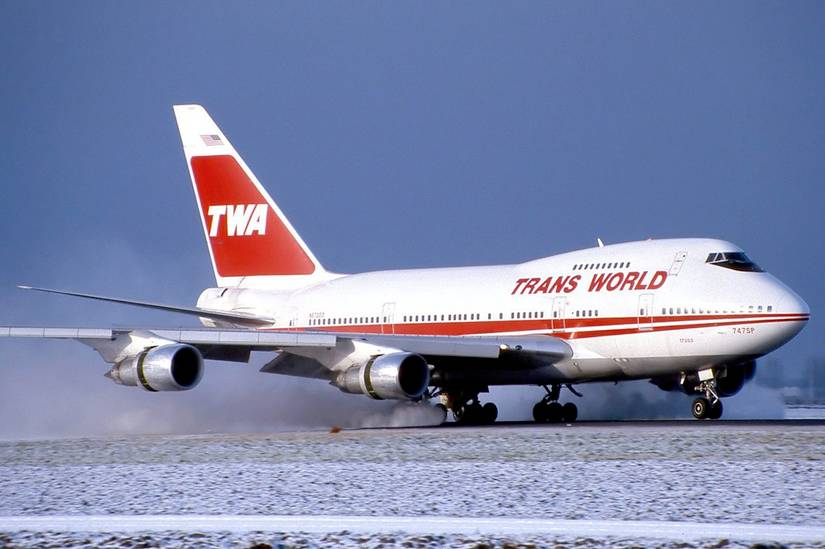
When aviation enthusiasts saw a new Boeing 747 variant roll out of the Everett factory in 1975, many did a double-take. From head-on, it had the familiar hump and four engines of the “Queen of the Skies,” but side-on, it looked surprisingly different. The fuselage had been shortened by almost 15 meters, giving the jet the stance of a muscle car rather than a long-legged ocean liner. The vertical tail towered over the cut-down body, an oversized fin that looked almost cartoonish but was essential to keep the aircraft stable. To casual observers, the proportions felt wrong, stubby and compressed, yet to Boeing, this odd-looking airplane was the only way to squeeze new performance out of existing technology.
This was the Boeing 747SP, a rare moment in airliner history when a manufacturer decided that the route to more range was fewer airplanes. Only 45 were built, but the Special Performance jumbo pushed the limits of subsonic speed, altitude, and range, opening nonstop links that had never existed before. So why did Boeing take the world’s largest airliner and chop almost 50 feet out of its fuselage? The answer sits in a battle for ultra-long-haul prestige, two very demanding launch customers, and an engineering brief that puts raw performance ahead of capacity.
The Race To Fly Nonstop Across The World

In the early 1970s, the “Golden Age” of jet travel was entering a new phase. Widebodies like the Boeing 747-100 and Boeing 747-200 had transformed long-haul flying with huge cabins and lower seat-mile costs, but there were still routes that they could not cover nonstop. Some of the most prestigious city pairs in the world were just beyond their reach.
The push for the 747SP began with two carriers that wanted to skip the fuel stop altogether. Pan American World Airways was looking for an aircraft that could handle New York–Tokyo against strong winter headwinds without putting passengers through an intermediate stop. Iran Air, meanwhile, wanted a nonstop Tehran–New York service that would have become the longest commercial flight in the world at roughly 5,400 nautical miles. A standard 747-200 could get close, but not close enough, with a commercially useful payload.
|
Route |
distance (nm, approx.) |
|---|---|
|
New York (JFK) – Tokyo (NRT) |
~5,850 nm |
|
Tehran (THR) – New York (JFK) |
~5,400 nm |
|
Seattle (SEA) – Cape Town (CPT) |
~8,900 nm |
|
East Asia – US West Coast |
~5,800 nm |
At the same time, Boeing was under pressure in the long-range market from the new tri-jets. McDonnell Douglas and lockheed were promoting the DC-10 and L-1011 as efficient, long-legged alternatives that slotted neatly between the Boeing 707 and the full-sized 747. Boeing needed a competitor in that “long and thin” segment but did not have the financial room for a clean-sheet program. If it wanted to move quickly, it would have to rework what it already had on the 747.


Inside Pan Am’s 1986 Boeing 747SP Cabin
Pan Am’s Boeing 747SP featured luxurious cabins and dining, reinforcing its legacy.
Shrinking The Jumbo To Make It Fly Farther


Chief Engineer Joe Sutter and his team were faced with a familiar equation: more range usually means more fuel or lower burn. Engine technology of the day could only offer so much improvement, so the easiest way to stretch the range was to remove weight from the airframe. One early idea was a three-engine 747, echoing the DC-10’s layout, but that would have required a new wing center section and tail structure, wiping out any cost advantage.
Instead, Boeing took a far more brutal path. The solution was a “body chop.” Large sections of fuselage were removed ahead of and behind the wing, creating the 747SB “Short Body” which later received the more marketable name 747SP. In total, 48 feet 4 inches of fuselage disappeared. The shortened jet lost about 45,000 pounds of operating empty weight compared with a 747-200, yet it kept the same four Pratt & Whitney JT9D or Rolls-Royce RB211 engines as its bigger sisters.
Those choices completely changed the way the aircraft performed. With full-sized jumbo thrust pushing a much lighter airframe, the SP gained a power-to-weight ratio no other widebody could match. It climbed faster, reached cruise altitude sooner, and could sit higher and slightly faster than the standard 747s on the same routes.
|
Features |
B747-200B |
B747SP |
|---|---|---|
|
Length |
231ft 10in |
184ft 9in |
|
Tail height |
63ft 5in |
65ft 10in |
|
Seats |
~450 seats |
~330 seats |
|
MTOW |
833,000lbs |
700,000lbs |
|
MAX Range |
~5,600nm |
~6,600nm |
Fixing The Physics Of A Shorter Jumbo


Simply cutting metal out of the fuselage would never have been enough. Shortening the aircraft changed its basic geometry. One of the biggest headaches was the reduced moment arm, the distance between the center of gravity and the tail surfaces that provide pitch and yaw control. With the tail now closer to the wings, the vertical stabilizer and rudder had less leverage to keep the nose pointed straight, especially after an engine failure.
To claw that control back, Boeing engineers enlarged the tail surfaces. The vertical fin was raised by about five feet, and the horizontal stabilizers were extended, restoring some of the lost authority. Even that was not quite sufficient, so the 747SP gained a distinctive double-hinged rudder. Instead of a single large surface, the rudder was split into two sections that could move in a coordinated manner, providing greater effectiveness at low speeds and during asymmetric thrust conditions.
The wing also evolved. The original 747-100 used complex triple-slotted flaps to generate very high lift at slow speeds. The much lighter SP did not need that level of lift, so Boeing switched to simpler single-slotted flaps, saving weight and maintenance. The famous upper-deck hump was cut back to end at the wing box, a profile that later carried over to the 747-300 and 747-400, when Boeing chose to extend the upper deck forward rather than upward.

The 5 Engine Jumbo Jet: The Pratt & Whitney Boeing 747 SP
A Hot Rod At 45,000 Feet


All of these tweaks produced one of the most extreme performers in civil aviation. The 747SP became the fastest subsonic airliner in regular service, certified at Mach 0.92, with a typical cruise speed around Mach 0.86. It could climb to 45,100 feet, well above much of the weather and traffic, and cruise there comfortably, a level that even many modern jets do not routinely reach.
|
Aircraft |
Typical cruise Mach |
Max operating Mach |
Service ceiling (ft) |
Max range (nm, approx.) |
|---|---|---|---|---|
|
Boeing 747SP |
M 0.86 |
M 0.92 |
45,100 |
~6,600 |
|
Boeing 747-200B |
M 0.840 |
M 0.890 |
~41,000 |
~5,600 |
|
DC-10-30 |
M 0.84 |
~M 0.88 |
~42,000 |
~5,800 |
|
L-1011-500 |
M 0.84 |
~M 0.88 |
~43,000 |
~5,800 |
The records came quickly. Before the type had even settled into everyday schedules, a South African Airways 747SP flew nonstop from Seattle to Cape Town, covering about 10,290 miles and landing with fuel in hand, setting a new benchmark for unrefueled commercial distance. In May 1976, Pan Am’s “Liberty Bell Express” used the SP’s range and speed to circle the globe in 46 hours 26 minutes with only two stops, in Delhi and Tokyo. For a brief period, if you wanted to cross half the planet as directly and quickly as possible, there was nothing quite like the SP.
Why The Hot Rod Jumbo Couldn’t Pay Its Own Bills


For all its technical brilliance, the 747SP never became a big seller. Boeing once talked about a market for around 200 aircraft; in the end, just 45 were delivered. The problem was not what the jet could do, but what it cost to do it.
Shrinking an aircraft is rarely kind to economics. The SP carried the full structural weight of a widebody wing and landing gear, burned fuel through four large engines, and needed a cockpit crew that still included a flight engineer. What it did not carry was as many paying passengers. On most routes, airlines found they were lifting almost as much metal and fuel as a standard 747 but spreading the cost over far fewer seats. Against tri-jets like the DC-10-30 and L-1011-500, which offered good range with one less engine to feed, the SP looked expensive.
As the decade progressed, the case for the SP weakened further. Improvements to the standard 747-200B, including more capable JT9D variants, stretched its range closer to that of the SP while keeping over 100 extra seats. For many airlines, it made more sense to fly a -200B with a few empty rows than to operate a full 747SP.
The SP therefore settled into a small but important niche. It served airlines that truly needed its combination of range and performance: South African Airways, forced to detour around closed African airspace during the apartheid era; Qantas, threading heavily loaded aircraft into Wellington’s relatively short runway; and carriers like China Airlines and Korean Air, which used the SP to connect East Asia and the US West Coast nonstop before other types could manage the same sectors.
From Passenger Jet To Observatory And Royal Transport

When the type’s front-line airline career wound down, Iran Air kept the last examples in scheduled service until 2016; the 747SP’s unusual mix of traits found it a second life. Its ability to cruise stably around 45,000 feet above most of the atmosphere’s water vapor made it an ideal platform for astronomy. nasa converted a former Pan Am aircraft into SOFIA, the Stratospheric Observatory for Infrared Astronomy, cutting a huge door into the aft fuselage to expose a telescope to the sky. For years, this “Baby Jumbo” flew nighttime missions, studying the universe from the stratosphere.
Heads of state also took a liking to the SP. Governments in countries such as Yemen, Oman, and Qatar turned the short-bodied jumbo into flying residences, combining the prestige and range of a 747 with a smaller footprint and strong performance from hot and high airports. In that role, the aircraft’s generous fuel capacity and relatively low seat count were suddenly advantages rather than liabilities.

NASA’s SOFIA Boeing 747 Takes Off For The Final Time
The iconic jumbo jet and flying observatory has touched down next to its final home in Tucson, Arizona.
What Replaced The Baby Queen In The End

In hindsight, the 747SP arrived slightly ahead of its time. It proved that ultra-long-haul routes were technically achievable, but the engines and fuel prices of the 1970s made the concept hard to justify on a large scale. Only when efficient twin-engine designs like the Boeing 787 and Boeing 777-200LR arrived did the business case finally catch up with the distances the SP had been flying decades earlier.
The “Baby Jumbo” has now disappeared from airline timetables, but its influence lingers. The latter 747-400 inherited the long legs the SP pioneered while restoring the capacity airlines wanted, and today’s long-range twin jets follow the same idea with far better fuel burn. The 747SP remains a striking, much-loved outlier, a bold attempt to bend an existing design to new extremes, and a reminder that sometimes, to go further, you really do have to build smaller.
source