


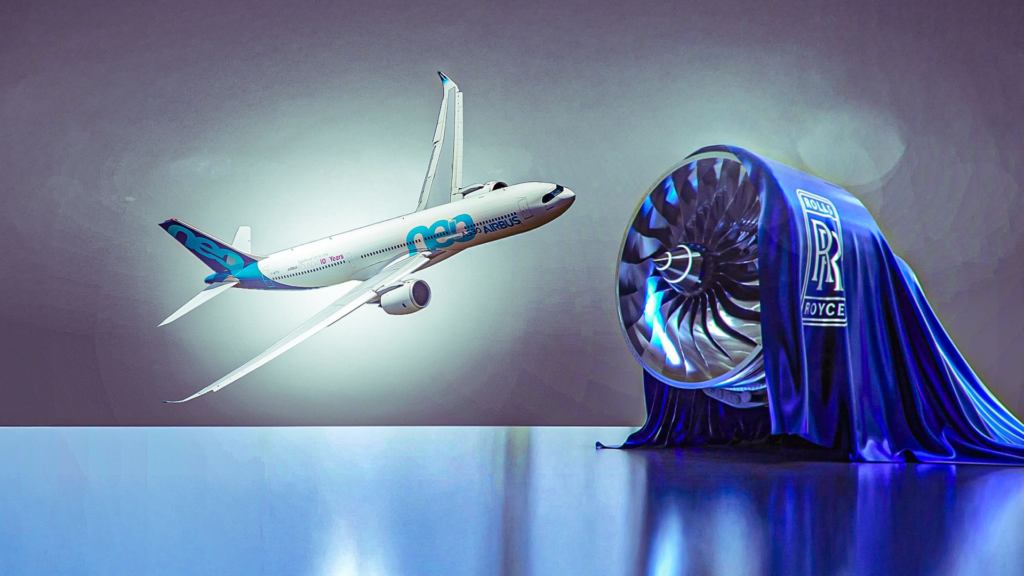
The Airbus A330 is a widebody airliner that first entered service with Air Inter in January 1994. Airbus received orders for the aircraft as early as June 1987, and since its release, the manufacturer has delivered 1,643 examples as of September 2025, making it a fairly popular and widespread passenger twinjet. However, the slightly older A320 was much more popular, and with over 12,000 produced, the A320 is the most widespread jetliner ever made.
4,157 of the A320s are of the re-engined A320neo variant, standing for ‘new engine option’, which feature modern high-bypass turbofans. Like the A320, the A330 also has an updated, re-engined variant, the A330neo, and is the only aircraft variant powered by Rolls-Royce Trent 7000 engines. This article takes a closer look at the A330neo, its engines, and what makes the aircraft an improvement over its predecessor.
The New And Improved A330neo

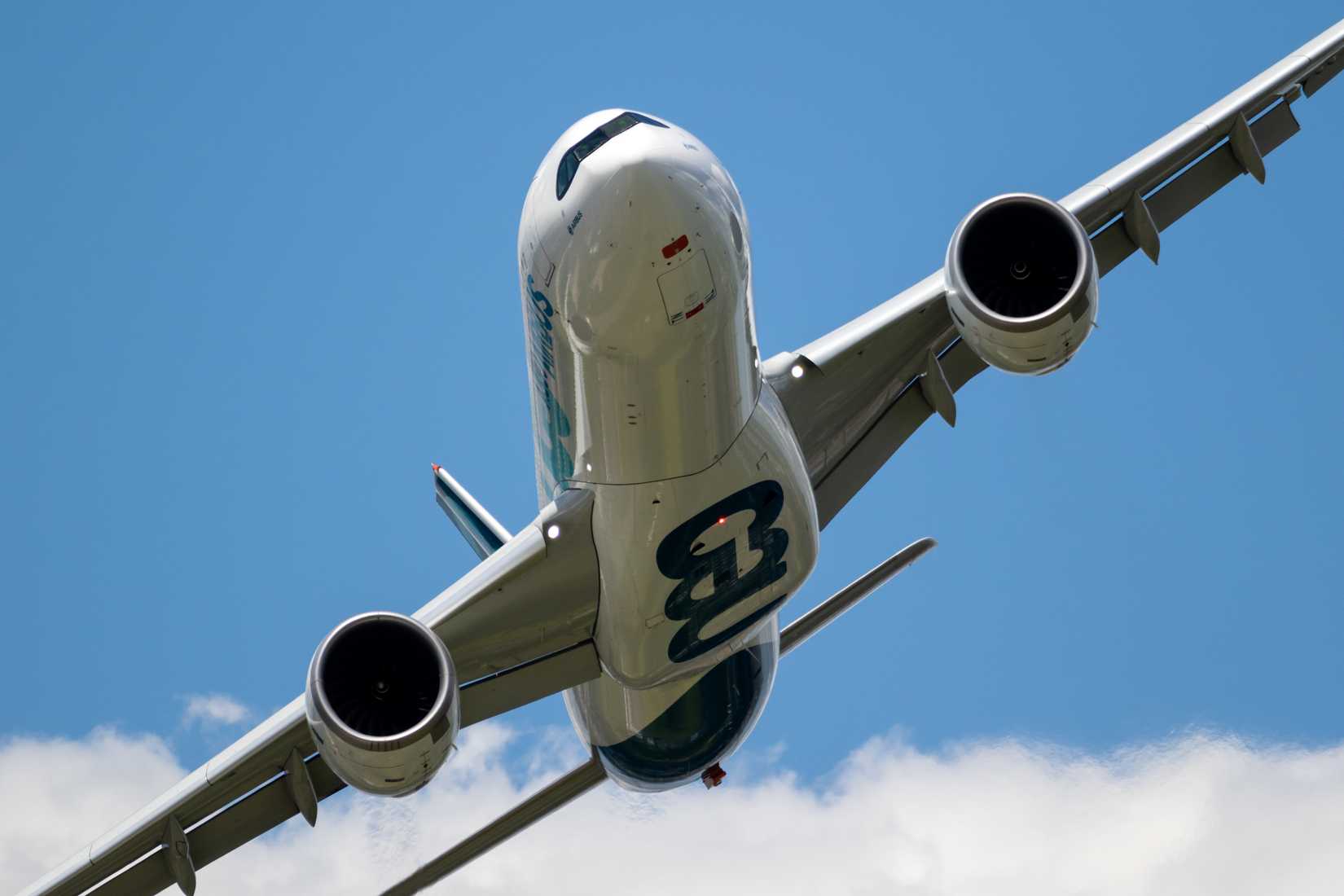
The A330neo is a modernized variant of the A330, a design which dates back to the 80s. Indeed, the A330neo shares 95% of its parts with the older A330, typically called the A330ceo (current engine option). However, the updated parts have a large effect on the NEO’s performance. According to Airbus, the new Trent 7000 engines improve the fuel burn per seat by 14% compared to the CEO. Furthermore, the sharklet-style winglets and new engine pylons improve performance by an additional four percent.
In September 2018, the first of the A330neo variants to receive its EASA type certification was the A330-900, the variant based on the older A330-300, the original A330 design. Next, the A330-800 received EASA type certification in February 2020 and was based on the shorter, longer-range A330-200. The -900 was first delivered to TAP Air Portugal in November 2018, while the -800 was delivered to Kuwait Airways in October 2020.
|
Aircraft |
Range |
|---|---|
|
Airbus A350-900ULR |
9,700 NM |
|
Boeing 777-200LR |
8,555 NM |
|
Airbus A380 |
8,350 NM |
|
Airbus A330-800 |
8,100 NM |
|
Boeing 747-8 |
7,730 NM |
|
Boeing 787-9 |
7,635 NM |
In terms of their performance, both NEO variants are top-notch. The -900 can carry up to 287 passengers within a range of 7,350 nautical miles, while the lighter -800 can carry 257 passengers within a range of 8,100 nautical miles, making the -800 one of the longest-range operational passenger aircraft in the world, potentially ranking fourth. As of September, a total of 464 A330neos have been ordered by more than 30 airline customers, with 170 delivered to date.
Features Of The Trent 7000


The older Airbus A330ceo was powered by the Rolls-Royce Trent 700 turbofan engine, the seventh Trent engine to be developed. The Trent 700 shared the characteristic three-shaft architecture of the RB211, which inspired the Trent high-bypass turbofan family and powers the Lockheed L-1011 TriStar.
The Trent 7000, which exclusively powers the A330neo, offers many improvements over the older Trent 700. According to Rolls-Royce, the 7000 boasts the lowest noise and emissions along with the lowest lifetime fuel burn on the market, and therefore the best environmental performance and revenue-earning capacity as a result.
|
Rolls-Royce Trent 700 and 7000 Engines Compared |
||
|
Feature |
Trent 700 |
Trent 7000 |
|
EASA type certification (month and year) |
January 1994 |
July 2018 (as a Trent 1000 variant) |
|
Thrust (pounds of force) |
67,500–71,100 |
68,000–72,000 |
|
Bypass ratio |
5:1 |
10:1 |
|
Pressure ratio |
36:1 |
50:1 |
|
Fan diameter (inches) |
97.4 |
112 |
As seen above, the improvements Rolls-Royce made from the Trent 700 to the 7000 were not in the area of thrust. The mandates of customers and regulatory bodies in the passenger aviation industry lean toward increased efficiency to reduce emissions and improve fuel economy. This is achieved by increasing the fan diameter a little, but it is mainly achieved by significantly increasing the bypass and pressure ratios of the engine.
Why Are High-Bypass Turbofans More Efficient?

Making a turbofan or turbojet engine more efficient is a careful balancing act. As a rule of thumb, it is more fuel-efficient to move a lot of air a little bit than it is to move a little air a lot, and this is the principle that makes modern turbofan engines so much more efficient than they were in the past, and more efficient than turbojet engines used in faster planes. Essentially, the more air the fan moves per RPM, the better. Posts on a Reddit thread discussing turbofan versus turbojet efficiency explain:
“We want our thrust, which is the change in momentum (mass times velocity) to take up the least amount of energy, which is 1 half of the mass times velocity squared. If you increase mass expelled by a factor of, say, 2 , thrust doubles, and power consumption doubles. If you increase velocity of exhaust by a factor of 2, thrust also doubles, but power increases by 4, 2 to the power of 2, since velocity in the energy formula is squared.”
Different engine architectures can also greatly improve efficiency, and additions like gearboxes to a turbofan can be very impactful. In the case of the Trent family, the three-spool design, patented by Rolls-Royce, increases efficiency by rotating the fan at an ideal RPM for the relative amount of air it encounters. In terms of the engine shape and size, a high mass of air passing the fan rather than passing through the ignition chamber increases efficiency by a significant amount:
“This is what makes turbofans more efficient. They are significantly larger and so have a much greater mass flow, most of which passes through the bypass duct and forms a low velocity jet. Turbojets are much smaller and so produce high velocity jets to get to the same thrust.”
The heat of the air in the engine is also a major factor, as when air is heated, it expands. In theory, a turbofan and turbojet can have the same thermal efficiency, both extracting the same amount of useful energy per unit of fuel input, but the difference between turbofans and turbojets is apparent in how the extracted energy is used.
“In a jet all thrust is provided by the exhaust gas. […] If you were to try to expand the gas through another turbine stage, you would just cause the engine to spin faster. [… Jet engines] tend to be at their peak efficiency at a very high rpm. In a turbofan some of this heat is converted through extra expansion, and is released through a high bypass fan. […] Hence the energy has been converted to kinetic energy rather than heat.”
Recent Orders For The A330neo


In June this year, Rolls-Royce reported the recent large order of 40 Trent 7000 turbofan engines, destined for use on 20 A330neos to be operated by Vietjet, a Vietnamese low-cost airline. Taking into account the 40 7000 engines the airline had already ordered for aircraft last year at the Singapore Airshow, the airline is set to equip 40 A330neos for use in its fleet. Rob Watson, President of Civil Aerospace at Rolls-Royce said the following about the orders:
“Today’s commitment for an additional 40 Trent 7000 engines demonstrates the airline’s confidence in the Trent 7000 and A330neo combination. The incredible versatility of this aircraft and engine combination allows customers to serve different markets and maximise the resilience of their fleet. […] Vietjet Air is a key partner for Rolls-Royce in the Asia-Pacific region, and we are proud to support their mission of connecting Vietnam with the world.”
Despite being able to operate very long routes, the A330neo occupies an advantageous position in the 250-300-seat market because of its low purchase price. Being a modernization program rather than a clean-sheet design, the A330neo does not include many of the expensive changes that increase lightness, such as composite wings, which optimize the aircraft for long-haul routes. Because of this, orders for operations at regional airlines play into the A330neo’s strengths.
|
Airbus A330ceo and A330neo Compared |
||
|
A330-300 |
A330-900 |
|
|
Maximum Capacity |
440 |
440 |
|
Range |
6,340 nautical miles |
7,200 nautical miles |
|
Length |
208 feet 10 inches |
208 feet 10 inches |
|
Wingspan |
197 feet 10 inches |
210 feet 0 inches |
|
Cruise Speed |
Mach 0.82 |
Mach 0.86 |
|
Maximum takeoff weight |
534,000 pounds |
553,400 pounds |
|
Fuel Capacity |
36,740 US gallons |
36,750 US gallons |
|
Powerplant |
2x GE CF6 / PW4000 (except -200F) / Trent 700 (64,500–71,100 pounds of thrust each) |
2x Rolls-Royce Trent 7000-72 turbofan engines (65,005 pounds of thrust each) |
For airlines using older, less fuel-efficient aircraft, such as the A330ceo, short-to-medium-haul routes are the most economically viable for them to operate, as less time is spent at cruise. However, for regional or low-cost airlines, the upgrade to the more efficient NEO may still be worth it, as the increased maximum range increases the flexibility of routes that the airline can operate, and according to Rolls-Royce, the 7000 may save up to $3 million in fuel costs per aircraft each year.
Materials Also Play Their Part

According to Leeham News and Analysis, the Trent 7000 is essentially the same design as the Trent 1000, with a bleed air feature instead of an electrically based system. This clever eco-friendly system extracts air from the engines to power various aircraft systems and engine functions, reducing the overall amount of power the aircraft consumes.
Material changes in the engine also set it apart, as it features efficient hollow Titanium fan blades. However, there have been issues with the reliability of the Trent 7000, which have made the A330neo’s early years of service difficult. Industry insiders told Leeham that the engine had a lower than expected time-on-wing, requiring more frequent maintenance. However, a lack of spare parts for repair has impacted maintenance and return to service afterward.
Experts have also said that the protective coatings on the engine’s turbine blades have been a factor in these issues. However, Rolls-Royce strongly denies that the engine has inherent reliability issues, saying: “Our fleet of Trent 7000 engines is performing exceptionally well, and has delivered industry-leading levels of reliability to our customers over the last 18 months.” Time will tell whether the A330neo will shake itself free of these issues, or whether the Boeing 787 will steal its thunder.
source