


The Boeing 777X is soon to enter the market, and it will be exclusively powered by the GE Aerospace GE9X turbofan. But why is it exclusively powered? After all, the original Boeing 777 series was optionally powered by the Pratt & Whitney PW4000, the Rolls-Royce Trent 800, and the General Electric GE90. However, the second-generation successor family (777-200LR and 777-300ER) was then exclusively powered by the GE90.
While previous generation aircraft were typically powered by two or three engine choices, that has become impractical today. Today, the Boeing 787 Dreamliner and the Airbus A320neo stand out as being optionally powered by two engine types. But the 787 has the largest widebody market, and the A320neo is the most popular narrowbody airliner. Here is why the Boeing 777X is exclusively powered, and why other engines can’t power it.
Limited Pool Of Potential Bidders For Limited Market

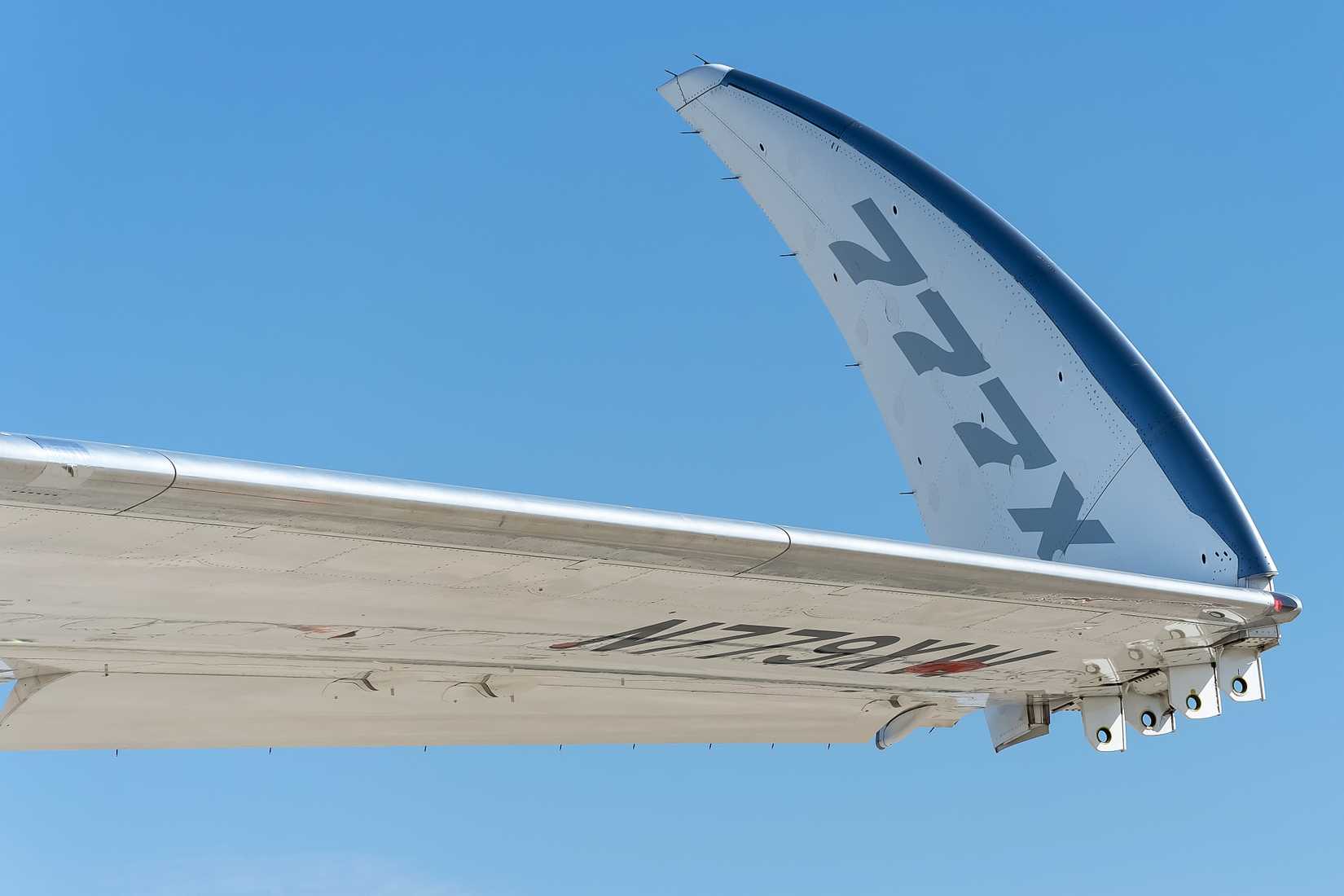
There are only three contenders in the widebody engine market: GE Aerospace, Rolls-Royce, and Pratt & Whitney. As such, another way to angle the question is why Rolls-Royce and Pratt & Whitney didn’t develop an engine for it. Simply put, sometimes these companies aren’t interested in developing engines for certain aircraft. Indeed, GE mostly declined Airbus’ request to develop an engine for the A350, while RR demanded exclusivity to develop an engine for the A330neo.
The Boeing 777X is an update on the older second-generation 777-200LR and 777-300ER. This is a very specialized market segment. Whereas the Boeing 737 and A320 have market sizes of many thousands, the market size for the 777X is limited. The world’s aviation industry has been moving away from ultra-large aircraft for years. As of December 2025, no airline in North or South America has ordered the 777X, with United Airlines saying it is too big for its model.
While the aircraft has attracted 565 firm orders, around half of that number is from just two airlines: Qatar Airways and Emirates, both of which already operate 777s with GE90 engines. The costs of developing a bespoke 100,000 lbf engine for the 777X are extremely expensive. It is unclear if the market is large enough to justify developing two engines. Even if Rolls-Royce did develop its own engine, it’s unclear if it would attract enough orders to cover the development costs.
GE Aerospace Was In A Favorable Position
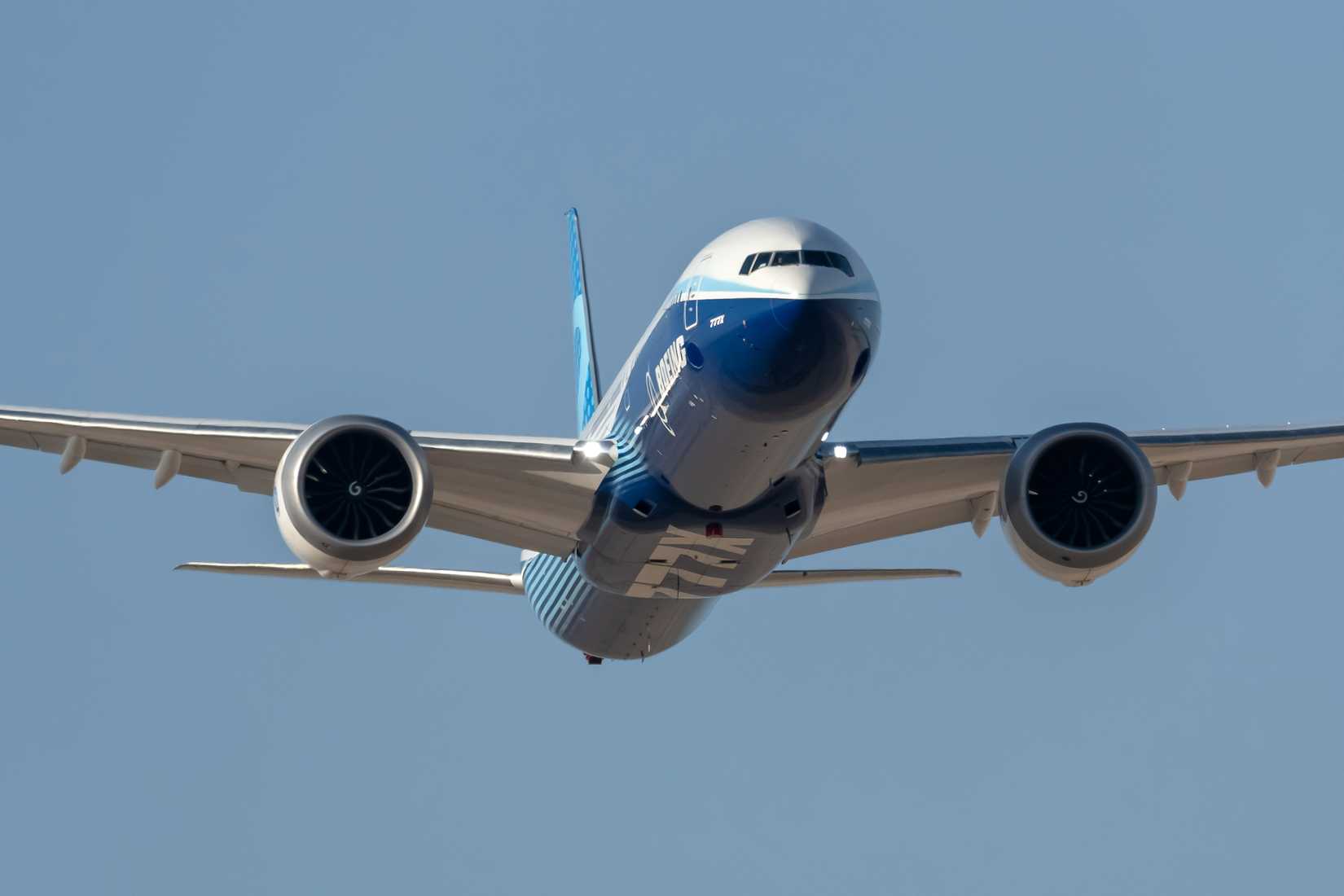
One important factor in industry is relationships, and Boeing has a very close relationship with GE Aerospace. Just as Boeing and Airbus have their relationship with Original Equipment Manufacturers, so too do airlines have relationships with OEMs. Airlines want to standardize the engines on their aircraft to help ease the burden of maintenance and because of industry relationships.
The Boeing 787 Dreamliner was developed with two engines, partly because it was not only replacing the Boeing 767, but also competing with Airbus aircraft. Having two engines helps airlines select the engine from their preferred OEM. However, the Boeing 777X is designed to replace the Boeing 777-300ER and Boeing 777-200LR, both of which were exclusively powered by the GE90.
|
Boeing 777X Specs (per Boeing) |
|
|---|---|
|
Engine |
GE Aerospace GE9X |
|
Number ordered |
565 |
|
Launch date |
2027 (expected) |
|
Launch customer |
Lufthansa |
|
Variants |
777-8, 777-8F, 777-9 |
As such, airlines replacing their old 777s with new 777s will enjoy the benefit of continuing with the same OEM. It is not far wrong to say GE Aerospace now powers all of Boeing’s commercial aircraft. For instance, the Boeing 737 MAX is exclusively powered by the CFM International LEAP-1B, which is a 50/50 joint venture with France’s Safran.
The remaining 777Fs are powered by the GE90, the remaining 767-300Fs are powered by the GE CF6, and the upcoming 777X by the GE9X. The main exception is the 787, where it is optionally powered by the Rolls-Royce Trent 1000 and GEnx. However, the GEnx has essentially won, and the Trent 1000 could go out of production by around 2030. Meanwhile, the Pratt & Whitney PW4000 powers military KC-46s (Boeing 767).


Rolls-Royce Trent XWB Vs. General Electric GE9X? Which Engine Is More Powerful?
The GE9X is more powerful than the Trent XWB, although there is more than thrust that makes a good engine.
Rolls-Royce Did Offer The RB3025
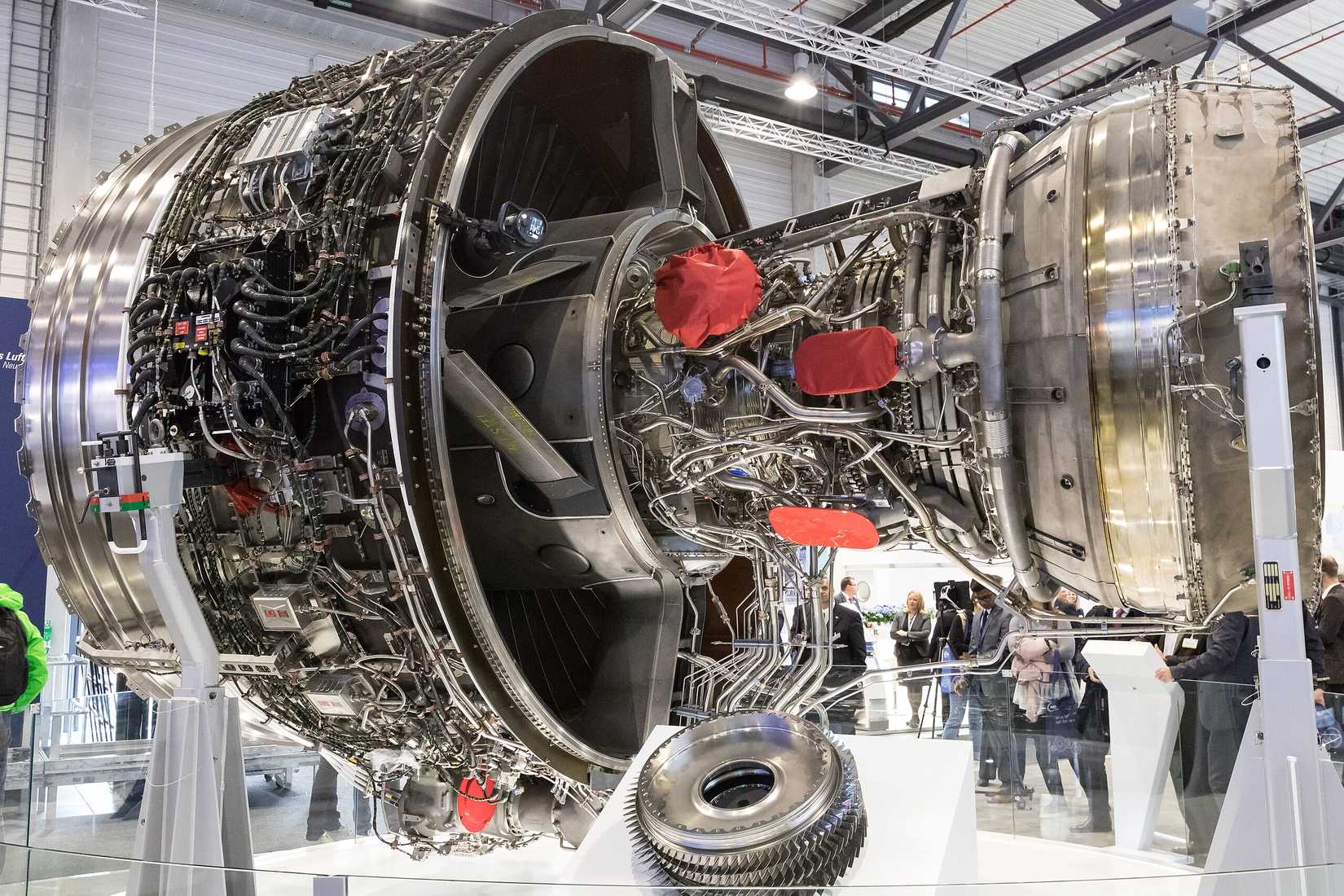
Despite the reasons listed above, Rolls-Royce did offer to produce an engine in 2012. Rolls-Royce did propose a concept engine for the 777X called the RB3025, derived from its Trent series. This was in response to Boeing’s request for information issued in 2011. It is unclear how serious this proposal was, but, at the time, most observers correctly predicted that GE would retain exclusivity with the 777X.
The RB3025 would have had a thrust rating of 99,500 lbs, and its fan diameter would have spanned 132.5 inches. It would have come with a bypass ratio of 12:1. Rolls-Royce claimed at the time that it would have offered a 10% fuel burn improvement over the older GE90-115B and a 15% improvement over the Trent 800 that powered early 777s. The engine would have built on Rolls-Royce’s Trent 1000 and XWB engines, which power the 787 and A350 respectively.
Rolls-Royce said its engine would have been ready by the end of the decade, and would have had a lower 88,000 lbf thrust for the smaller 777-8 variant. Notably, the Trent XWB has two thrust variants optimized for the two A350 variants. Ultimately, however, Boeing did not take Rolls-Royce up on its proposal.
Why No Pratt & Whitney Engine?


Of the three OEMs, Pratt & Whitney was in the weakest position. The Boeing 777X did represent an opportunity to develop a geared turbofan for a widebody aircraft, and P&W considered developing a geared turbofan in the 70,000 to 100,000 lbf class. A 100,000 lbf engine would have had a fan diameter of 130 to 140 inches. However, P&W appears not to have been very serious in developing a widebody GTF engine.
At the same time, Boeing was happy sticking with GE and its GE9X successor to the GE90 engine. Having failed to win contracts for the Boeing 787 Dreamliner, the Boeing 777X, the Airbus A350, and the A330neo, Pratt & Whitney found itself pushed out of the widebody engine market. It is now concentrating on the narrowbody and regional market, where it is the exclusive supplier for the A220 and Embraer E-Jet, while also being one of two engine options for the A320neo.
In principle, Rolls-Royce and Pratt & Whitney could have developed an engine for the 777X, but it just didn’t make economic sense. The costs and risks of doing so are very high, and OEMs often demand exclusivity to help ensure they will recover their billions of dollars spent in developing an engine. For example, after Airbus refused to provide GE exclusivity with the A330neo, GE refused to develop an engine for the aircraft.

Why Did Rolls-Royce Develop The Trent XWB Engine?
Rolls-Royce had the advantage of producing a solution for the XWB earlier, while GE was not very interested and P&W lacked a workable solution.
Rolls-Royce UltraFan Not For 777X

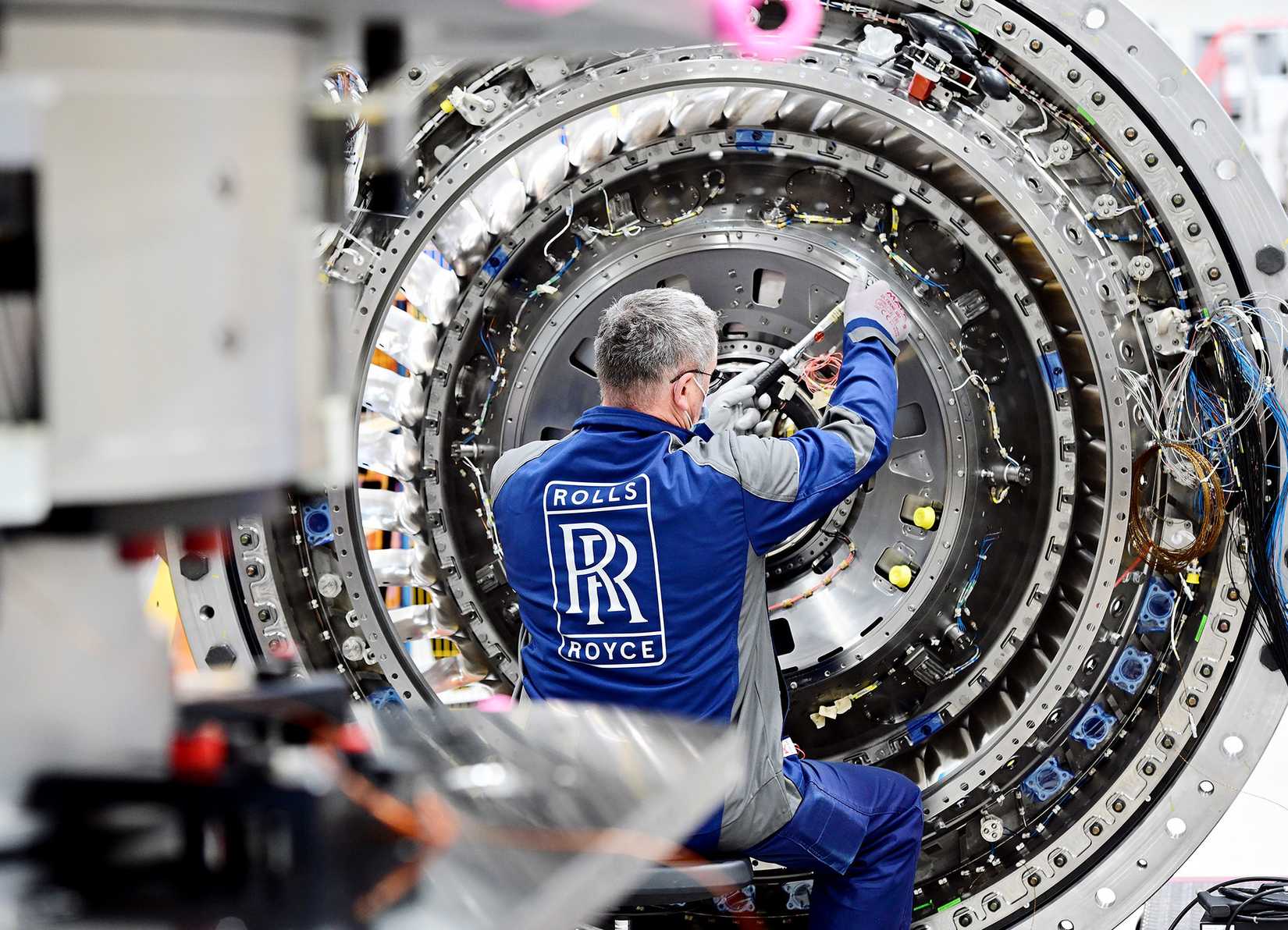
Rolls-Royce has developed the extra-massive UltraFan demonstrator. The purpose of the engine is to develop scalable technologies that Rolls-Royce can use on other engines. However, while the engine is physically large, it has only been test run at around 85,000 lbf, not the 100,000 lbf+ required for the 777X.
Still, Rolls-Royce may be able to scale a variant with 100,000 lbf+, but that would be expensive and would require Boeing to make all the certification tests, nacelle/installation adaptations, and more, and would take years. Boeing is already losing billions on delays and cost overruns on the 777X, so including a Rolls-Royce engine would cost billions more when the aircraft doesn’t really need another engine type.
It may sound simple to attach a scaled UltraFan 777X variant, but, in reality, it would be a massive technical and financial undertaking for both Rolls-Royce and Boeing. It is unclear if Boeing would be able to grow the 777X market if the aircraft had two engines. It’s also important to remember that the 777X was meant as a cost-effective and relatively quick upgrade compared to developing a clean-sheet airliner.
The Airbus A350 + RR vs Boeing 777 + GE

There was a time when GE was on the verge of having to cut its losses and withdraw its GE90 from the 777. However, GE was saved when it managed to win exclusivity with Boeing’s 777-200LR and 777-300ER, a deal that saved GE’s engine. Not only that, but the Boeing 777 and GE90 combo had a major effect on forcing the Airbus A340 out of the market and forcing Airbus to develop the A350.
The development of the clean-sheet A350 put stress on the second-generation 777, forcing Boeing to develop the third-generation 777X. With the Boeing 777X years behind and now expected until 2027, it may be strange to hear that Boeing even said in 2012 that the 777X would render Airbus’ A350-1000 obsolete before it was delivered.
The fact that the Boeing 777X is set to compete with the A350-1000 is not just a matter for Boeing and Airbus. Even if Rolls-Royce were to develop an engine for the 777X, then it could eat into A350-1000 sales for which it is the exclusive engine supplier. Put another way, with Pratt & Whitney out of the picture, the 777X is GE Aerospace’s larger widebody airliner, and the A350 is Rolls-Royce’s.
source