


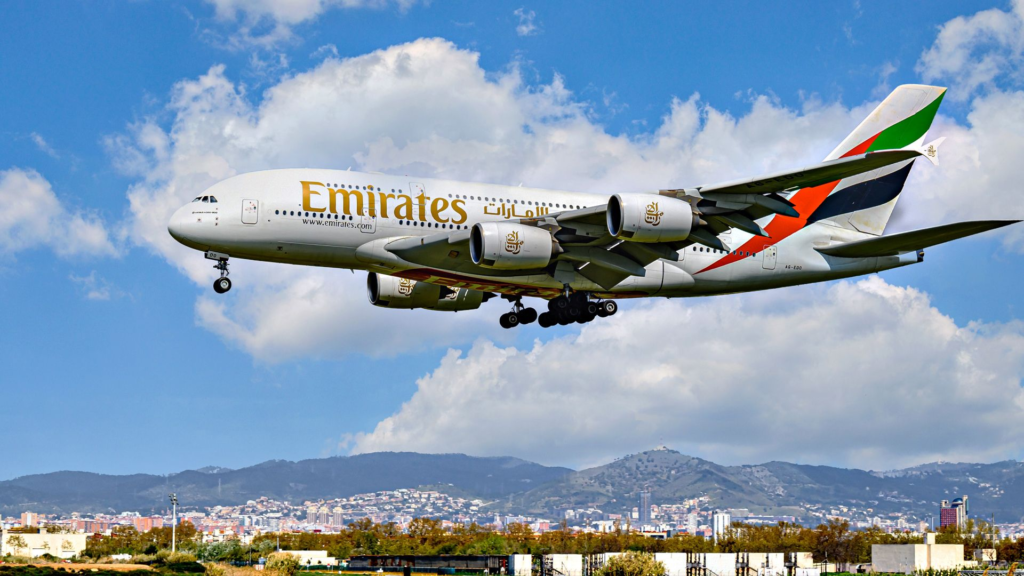


In this article, we use data from Cirium, an aviation analytics company, to take a closer look at the routes on which Emirates operates the most Airbus A380 flights in 2025. We will also consider the legacy of the A380 on the wider commercial aviation industry.
Emirates’ Busiest Airbus A380 Route

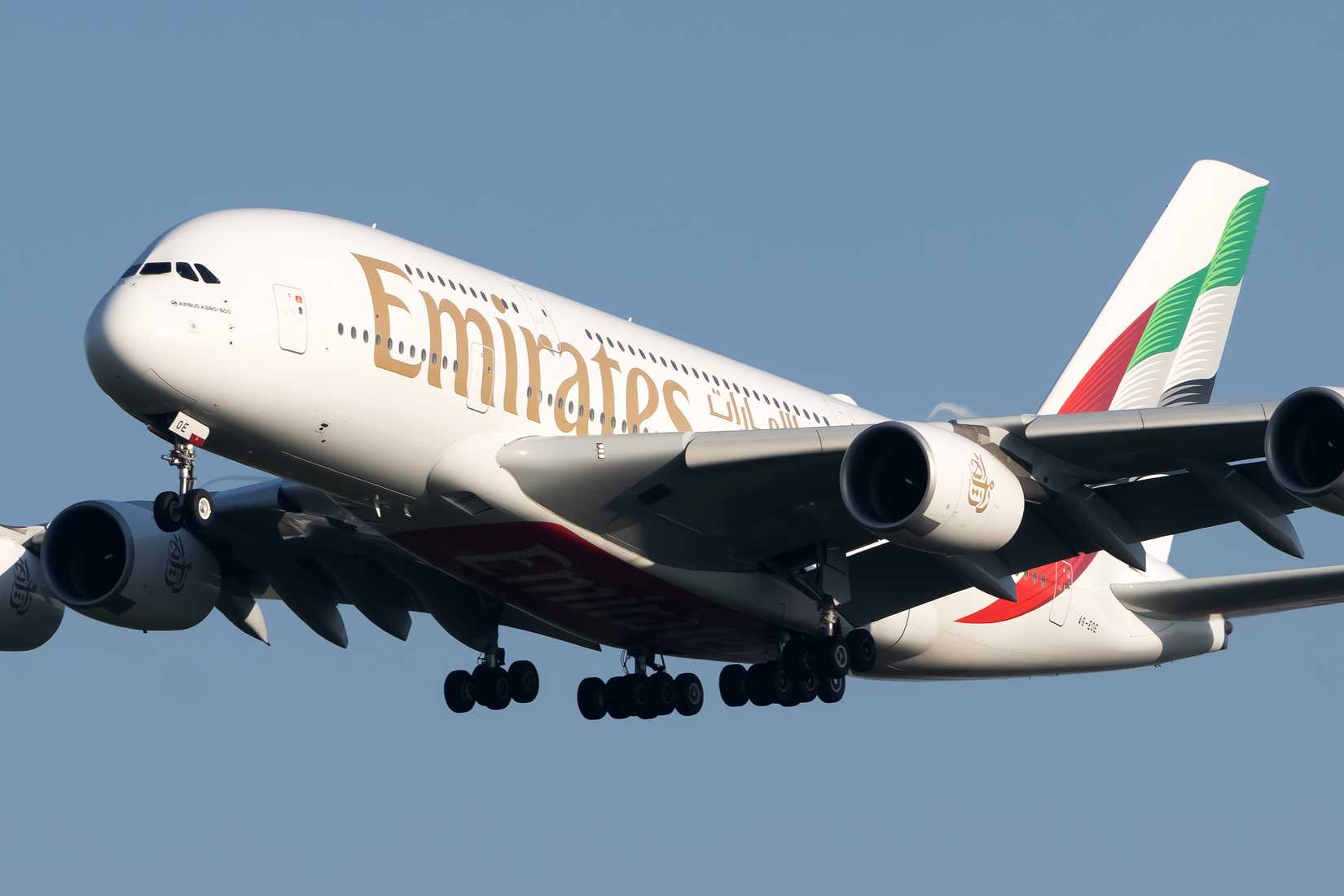
By far Emirates’ busiest route in terms of flights operated by the carrier’s Airbus A380s in 2025 is between its hub at 

Emirates currently operates 48 weekly flights in each direction on its route between Dubai International Airport and 
Emirates goes head-to-head with the UK carriers British Airways and Virgin Atlantic on this route, as well as Royal Brunei Airlines, which uses Dubai International Airport as a stopover on its flights to and from Brunei International Airport (BWN). Last year, Dubai International Airport was the second-busiest destination overall from London Heathrow Airport, with more than 2,856,000 passengers. This put it behind services to New York John F. Kennedy International Airport (JFK), which saw a total of 3,328,000 passengers.
From West To East
For Emirates’ second-busiest Airbus A380 route in 2025, we head east to Thailand, with the carrier operating a total of 1,413 flights in each direction between Dubai International Airport (DXB) and Bangkok Suvarnabhumi International Airport (BKK). This equates to an average of three or four flights per day. Emirates is the only airline to operate direct flights between Dubai and the Thai capital.
Emirates’ route between Dubai International Airport and Cairo International Airport (CAI) is its third-busiest overall when it comes to the number of flights operated by the Airbus A380 in 2025. Throughout the year, the carrier will operate a total of 1,095 flights between the two destinations, averaging at three flights per day in each direction. Emirates’ service to Cairo International Airport is one of the shortest routes to feature in this list.
Triple Daily Services

In addition to services to Cairo International Airport (CAI), Emirates deploys its Airbus A380 three times per day on routes to several other destinations, as illustrated in the table below:
|
Departure Airport |
Arrival Airport |
Number Of Flights |
|---|---|---|
|
Dubai International Airport (DXB) |
Cairo International Airport (CAI) |
1,095 |
|
Dubai International Airport (DXB) |
Paris Charles de Gaulle Airport (CDG) |
1,095 |
|
Dubai International Airport (DXB) |
Manchester Airport (MAN) |
1,095 |
|
Dubai International Airport (DXB) |
Sydney Airport (SYD) |
1,095 |
Emirates is the only airline operating direct flights between Dubai International Airport and both Manchester Airport and Sydney Airport. However, it faces direct competition on the other two routes mentioned above – EgyptAir also offers non-stop flights between Dubai and Cairo International Airport, while Air France operates direct services to and from its main hub at Paris Charles de Gaulle Airport.
Emirates’ seventh-busiest Airbus A380 route in 2025 is between Dubai International Airport and Jeddah King Abdulaziz International Airport (JED) in Saudi Arabia, with a total of 1,066 flights in each direction. The carrier goes head-to-head with flydubai, flynas, and Saudia on this popular route. Emirates has a long‑standing and growing presence in Saudi Arabia, serving four main gateways – Riyadh King Khalid International Airport (RUH), Jeddah King Abdulaziz International Airport (JED), Medina Prince Mohammad bin Abdulaziz International Airport (MED), and Dammam King Fahd International Airport (DMM). The airline is also investing in airport facilities, lounges, and logistics services, aligning with Saudi Arabia’s booming aviation demand and broader goals outlined in its Vision 2030 growth plan.
Another UK Destination

A third UK destination is the next-busiest Airbus A380 route for Emirates, highlighting the importance and volume of the UK market for the carrier. This time, we are talking about the carrier’s services between Dubai International Airport (DXB) and 
Throughout 2025, Emirates will operate a total of 933 flights with the Airbus A380 in each direction on this route. However, this will change in early 2026, when the carrier will launch a fourth daily flight and will change the aircraft operating on the service – two of the four daily flights will be operated by the Boeing 777-300ER, one by the Airbus A350-900, and one by the A380. Emirates took delivery of its first A350-900 in 2024, with plans to operate a total of 65 of the modern widebody aircraft.
Emirates’ expansion at London Gatwick Airport forms part of a broader UK growth strategy. With the new flight, total daily services by Emirates to London airports (Heathrow, Gatwick, Stansted) will reach 12 per day. Also, the UK network as a whole (including Manchester, Birmingham, Glasgow, Edinburgh, Newcastle) will see about 140 weekly flights from Emirates to eight UK gateways.
Rounding Out The Top Ten


Emirates’ services to 
It is perhaps unsurprising that Emirates operates such a high volume of Airbus A380 to Singapore Changi Airport, given the airport’s prominence on the global stage. It is one of the world’s leading air hubs, renowned for its efficiency, cleanliness, and passenger experience, and serving as the primary gateway to the country and a major transit point in Asia. Singapore Changi Airport handles over 60 million passengers annually and connects to more than 400 cities worldwide from its four terminals, including the Jewel complex, which is made up of indoor gardens, retail, dining, and the world’s tallest indoor waterfall.
Emirates & The Airbus A380
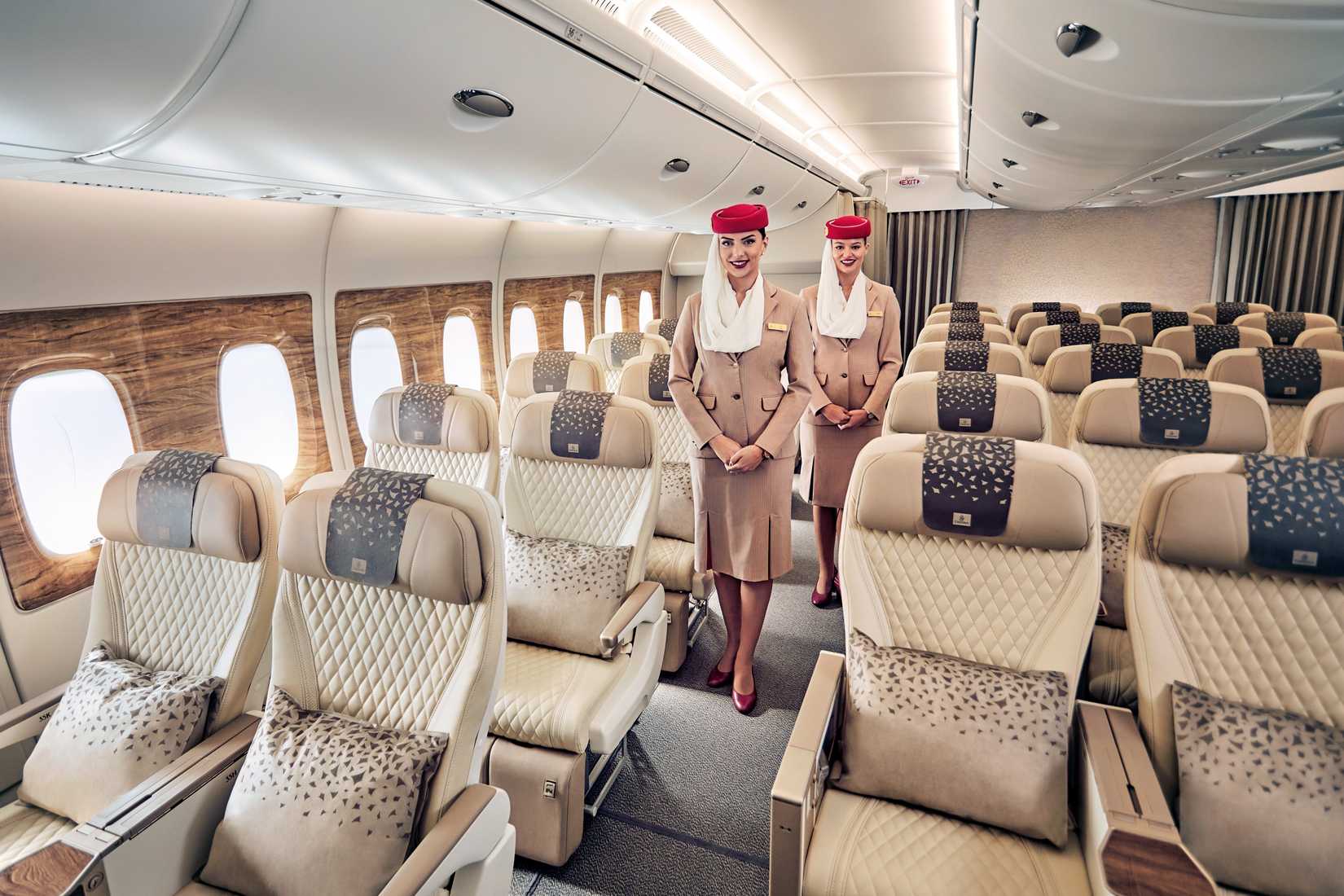
Emirates is, by far the world’s largest operator of the Airbus A380, with a staggering 166 in its fleet, as per the latest data from ch-aviation. The carrier has a variety of different cabin layouts on its A380s, ranging from a premium-heavy four-class configuration with capacity for 468 passengers to a high-density two-class layout able to carry up to 615 passengers.
In addition to increasing capacity on key routes, Emirates has also used the Airbus A380 to drive significant improvements in its passenger experience, delivering a blend of luxury, comfort, and technological innovation. The carrier’s first class passengers enjoy private suites with sliding doors for greater privacy, which also come with luxurious finishes, mood lighting, and an exclusive shower spa onboard, allowing travelers to freshen up during long‑haul flights. Meanwhile, in business class, all beds are lie-flat with direct aisle access, personal storage, and minibars, with passengers also having access to the onboard lounge area and social space.
Although production of the Airbus A380 ended in 2021, the aircraft could still be flying for several more years. The A380 still plays a prominent role in the fleets of many airlines around the world, with the largest operators listed in the table below:
|
Ranking |
Airline |
Airbus A380 |
|---|---|---|
|
1 |
Emirates |
116 |
|
2 |
Singapore Airlines |
12 |
|
3 |
British Airways |
12 |
|
4 |
Qantas |
10 |
|
5 |
Etihad Airways |
9 |
|
6 |
Lufthansa |
8 |
|
7 |
Qatar Airways |
8 |
|
8 |
Korean Air |
7 |
|
9 |
Asiana Airlines |
6 |
|
10 |
All Nippon Airways |
3 |
Looking ahead, Emirates intends to keep its Airbus A380s flying for many years, into the late 2030s, and in recent years, has embarked on a retrofit program of its aircraft, bringing in new cabins and introducing its premium economy cabin. These refurbishments reflect market changes and increased customer demand for a premium travel experience.
The routes on which Emirates operates the most Airbus A380 flights in 2025 are summarized in the table below:
|
Ranking |
Departure Airport |
Arrival Airport |
Number Of Flights |
|---|---|---|---|
|
1 |
Dubai International Airport (DXB) |
London Heathrow Airport (LHR) |
2,190 |
|
2 |
Dubai International Airport (DXB) |
Bangkok Suvarnabhumi International Airport (BKK) |
1,413 |
|
3 |
Dubai International Airport (DXB) |
Cairo International Airport (CAI) |
1,095 |
|
4 |
Dubai International Airport (DXB) |
Paris Charles de Gaulle Airport (CDG) |
1,095 |
|
5 |
Dubai International Airport (DXB) |
Manchester Airport (MAN) |
1,095 |
|
6 |
Dubai International Airport (DXB) |
Sydney Airport (SYD) |
1,095 |
|
7 |
Dubai International Airport (DXB) |
Jeddah King Abdulaziz International Airport (JED) |
1,066 |
|
8 |
Dubai International Airport (DXB) |
London Gatwick Airport (LGW) |
933 |
|
9 |
Dubai International Airport (DXB) |
Singapore Changi Airport (SIN) |
797 |
|
10 |
Dubai International Airport (DXB) |
Amsterdam Schiphol Airport (AMS) |
730 |
source