


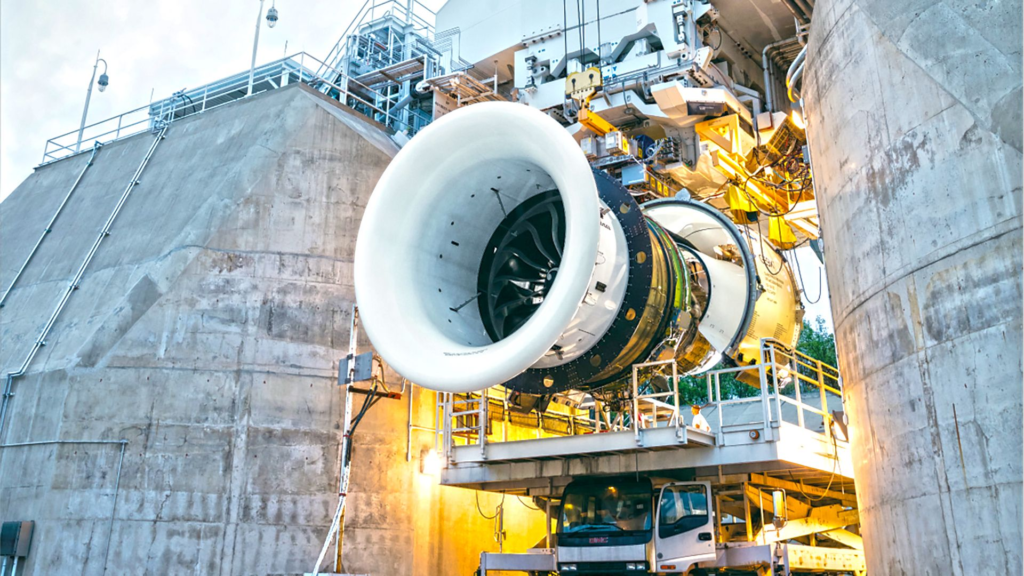
The Boeing 777X has attracted attention not only for its folding wingtips but also for the immense power behind them. That power comes from the General Electric GE9X, an engine so large it could easily fit the entire fuselage of a regional jet inside its fan diameter. The engine represents the latest evolution of GE’s high-bypass turbofan design and marks a new era of performance and sustainability in aviation. Its combination of size, technology, and efficiency has reshaped what airlines expect from next-generation long-haul engines. Understanding what makes this engine a “monster” means looking at the innovation that lies inside it.
Beyond its sheer size, the GE9X tells a story of decades of engineering refinement. It reflects GE’s ongoing commitment to making engines both powerful and environmentally responsible. With over 100,000 pounds of thrust and a fan diameter of more than 11 feet, the GE9X redefines what a modern jet engine can achieve. Yet despite its enormous size, it delivers better fuel efficiency than smaller predecessors. This article explores the design breakthroughs, testing milestones, and competitive context that make the GE9X the world’s largest and most advanced commercial jet engine.
Engineering Brilliance Behind The Massive GE9X

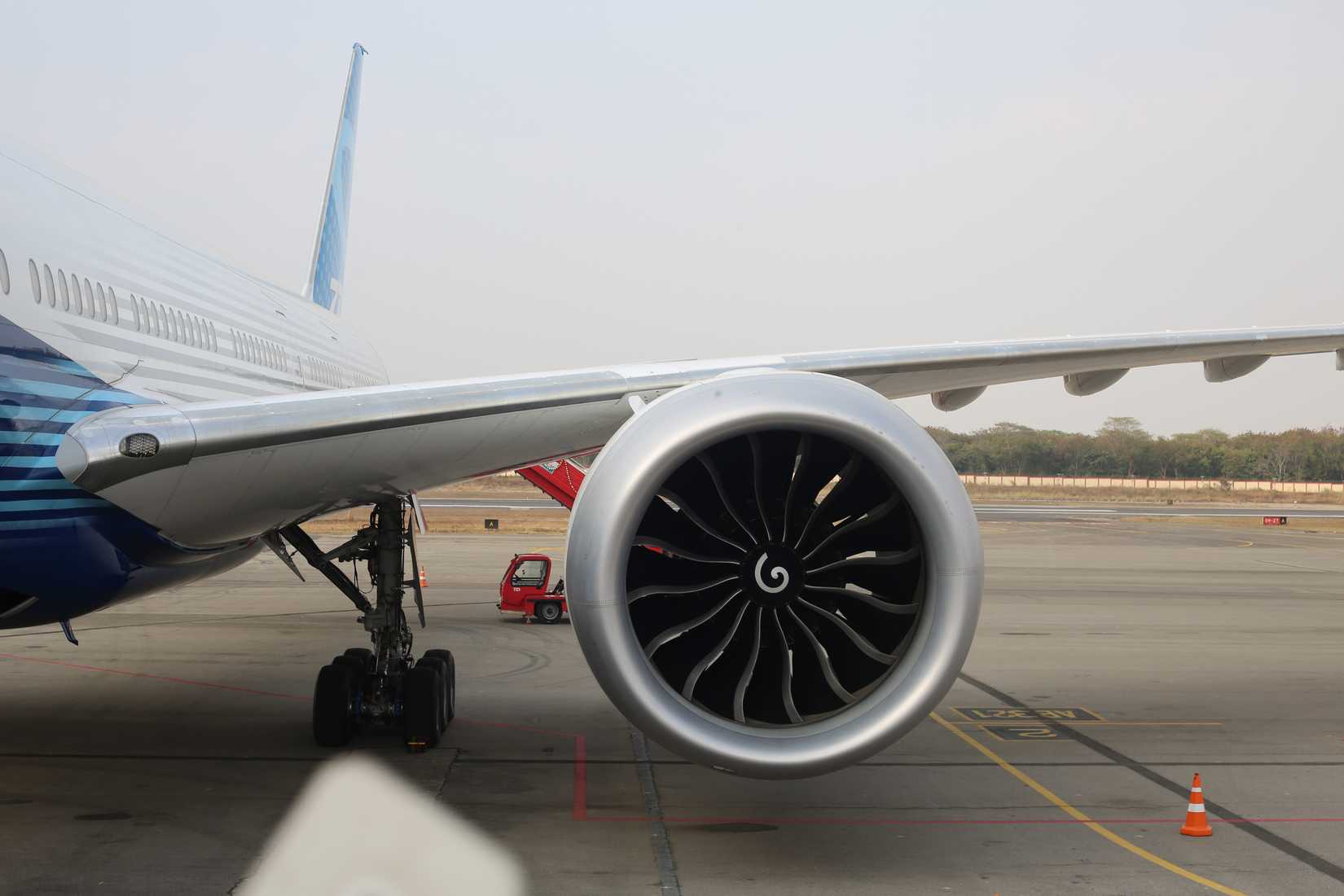
The GE9X was designed specifically for the Boeing 777X, a widebody aircraft requiring an unprecedented combination of thrust and efficiency. Each engine produces up to 134,000 pounds of thrust, making it the most powerful certified commercial jet engine in history. According to Energy Reporters, the engine’s fan diameter measures 11 feet across, nearly matching the fuselage of a Boeing 737. Its large composite fan blades and lightweight materials allow this size without a corresponding weight penalty. GE engineers focused on maximizing airflow while reducing drag to achieve superior fuel burn performance.
The engine’s high bypass ratio—over 10:1—plays a key role in its efficiency. This means that for every unit of air passing through the core, ten times that amount bypasses it, creating more thrust with less fuel. The GE9X’s composite fan blades and case construction keep the overall mass low while maintaining structural integrity. Advanced 3D-printed parts and ceramic matrix composites withstand higher temperatures, improving both durability and efficiency. Energy Reporters notes that this technological blend provides a 10 percent fuel-burn advantage over previous GE90 engines used on older 777 models.
In developing the GE9X, GE Aviation built on lessons learned from the GE90 and GEnx programs. Engineers improved turbine cooling, reduced noise, and introduced new materials that extended component lifespans. The result is an engine that not only sets performance records but also demonstrates progress toward lower emissions. Every element—from blade curvature to core architecture—was optimized to push the boundaries of efficiency. For 

Design Innovation That Redefines Scale And Efficiency


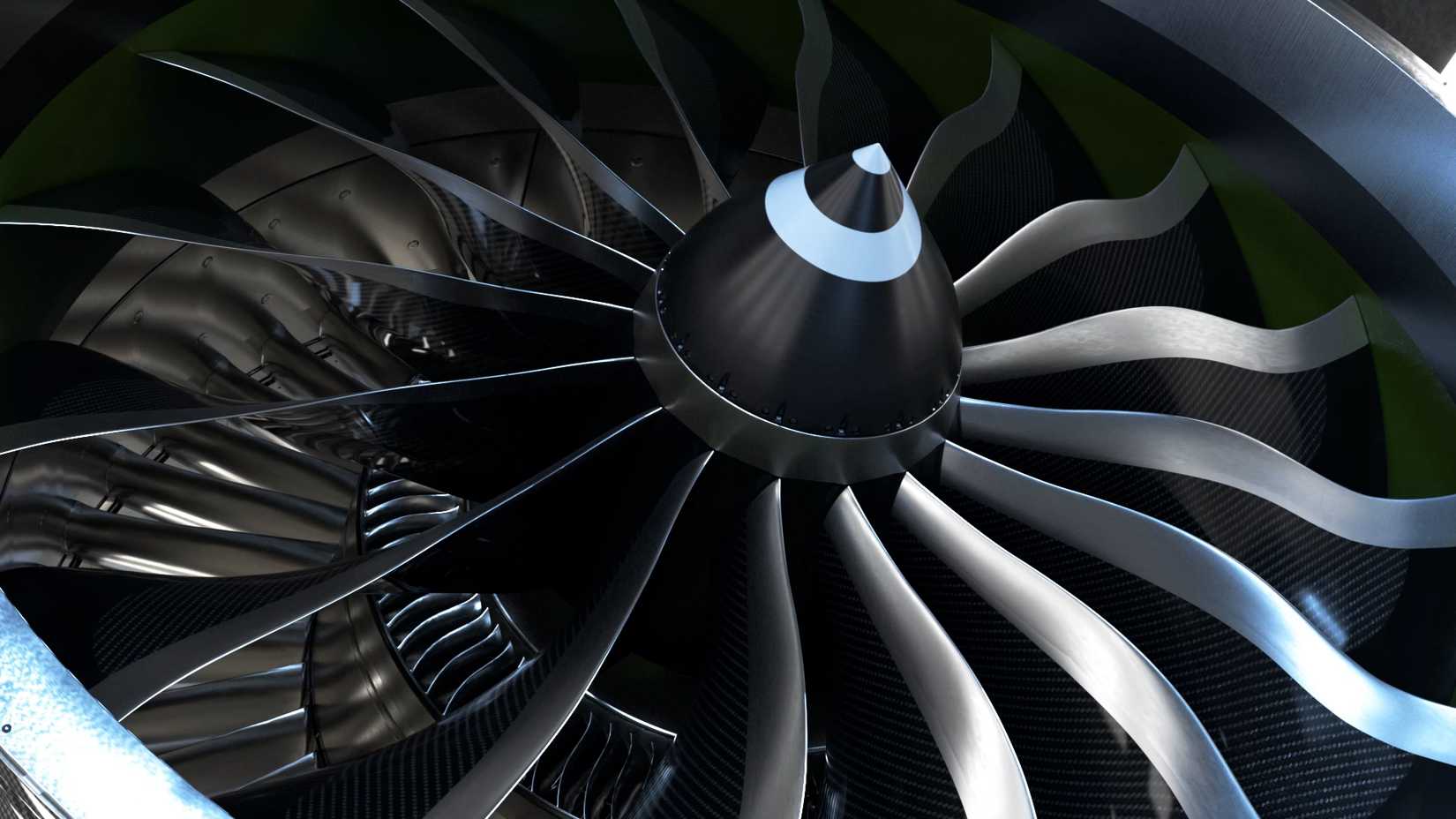
The GE9X’s design stands out for its combination of massive scale and intricate efficiency improvements. The 134-inch fan, sculpted from lightweight carbon-fiber composites, rotates more slowly than those of older engines, reducing drag and noise. Its eleven blades, fewer than the sixteen on earlier GE90s, are longer and thinner but stronger. This simplified design cuts aerodynamic resistance while improving air distribution through the engine. The result is smoother airflow and quieter operation at takeoff and cruise.
According to WECB, one peculiar feature that draws attention is the engine’s vast front intake area. Engineers had to ensure the engine could withstand bird strikes and extreme conditions without compromising performance. The GE9X incorporates advanced sensors and digital monitoring systems that continuously assess health and performance. This real-time data collection helps airlines optimize maintenance schedules and maximize reliability. The report highlights that this attention to detail has been crucial in convincing Boeing and major airlines to adopt the 777X program despite its delays.
Comparison Of GE9X And Rival Widebody Engines
|
Engine Model |
Fan Diameter |
Max Thrust |
Material Composition |
Primary Aircraft |
|
GE9X (General Electric) |
134 in (11.2 ft) |
134,000 lbf |
Carbon-fiber fan blades, ceramic matrix composites |
Boeing 777X |
|
GE90-115B (General Electric) |
128 in (10.6 ft) |
115,000 lbf |
Composite fan blades, titanium alloys |
Boeing 777-300ER |
|
Trent XWB-97 (Rolls-Royce) |
118 in (9.8 ft) |
97,000 lbf |
Titanium fan blades, composite casing |
Airbus A350-100 |
|
UltraFan Prototype (Rolls-Royce) |
140 in (11.6 ft) |
100,000 lbf |
Composite fan system, geared architecture |
Future Widebody |
Noise reduction was another major design target. GE introduced acoustic linings and refined fan spacing to suppress tonal noise frequencies typical in high-thrust turbofans. The fan casing and exhaust were shaped to improve pressure recovery and lower decibel output around airports. Together, these refinements make the GE9X one of the quietest engines in its thrust class. Its performance proves that size no longer has to come at the expense of comfort or environmental responsibility.
How GE9X Achieved Its Record Fuel Efficiency

Efficiency lies at the heart of the GE9X’s engineering breakthroughs. The engine’s ceramic matrix composites operate at higher temperatures than traditional metal alloys, allowing better combustion efficiency and reduced cooling air use. GE’s digital twin modeling predicted a consistent ten percent improvement in fuel consumption compared to the GE90. According to Energy Reporters, this advantage helps the 777X achieve range and performance levels comparable to those of smaller aircraft while burning less fuel. It represents one of the largest efficiency jumps between engine generations in decades.
The massive fan diameter increases the bypass ratio, reducing specific fuel consumption. GE’s designers used an advanced high-pressure core with fewer stages, streamlining the combustion process and cutting weight. The low-pressure turbine also gained redesigned airfoils that extract more energy from each combustion cycle. Each of these innovations contributes to the engine’s reduced environmental footprint and cost savings for airlines. Testing confirmed that the GE9X meets strict emissions and noise standards without sacrificing thrust.
For operators, these gains translate directly into lower fuel bills and greater operational flexibility. Long-haul routes that once required higher fuel loads can now be flown more efficiently. The data from certification trials shows consistent savings across various flight profiles, even under heavy payloads. Airlines adopting the 777X will benefit from lower maintenance intervals thanks to improved materials and predictive maintenance software. Together, these features secure the GE9X’s reputation as both a performance and sustainability leader.
Expert Opinions On GE9X And The Competition

The aviation community has hailed the GE9X as a leap forward in jet engine technology. Boeing’s engineering teams have repeatedly emphasized how the engine enables the 777X to compete with new-generation widebodies from Airbus. Energy analysts also view the GE9X as an answer to growing environmental pressures and stricter airline efficiency requirements. Its power and lower emissions make it attractive to long-haul carriers seeking to modernize their fleets. The industry consensus is that the GE9X sets a new performance benchmark for the decade ahead.
At the same time, rival manufacturers are pursuing their own efficiency improvements. According to Rolls-Royce, its upcoming UltraFan program aims to rival GE’s design with scalable architecture and advanced composite components. The UltraFan’s geared fan system promises efficiency gains similar to those of the GE9X while focusing on modular adaptability. Rolls-Royce has positioned this development as part of its long-term vision for sustainable propulsion. The company’s fact sheet highlights similar goals around higher bypass ratios, lightweight construction, and reduced emissions.
While competition remains strong, the GE9X currently holds a clear lead in commercial readiness and certification. It has already powered multiple test flights and achieved full FAA approval. Boeing’s collaboration with GE ensures integration across flight controls, performance systems, and digital monitoring. Experts predict that this partnership will extend into future aircraft programs. For now, the GE9X’s proven performance makes it the engine to beat among next-generation widebody powerplants.
Risks, Challenges, And Long-Term Outlook
Despite its impressive achievements, the GE9X program has faced delays and technical scrutiny. Boeing postponed the 777X’s entry into service multiple times, slowing the engine’s rollout. Some observers initially expressed concern about early wear findings during testing. According to WECB, engineers resolved these issues by making material adjustments and improving cooling in the turbine section. The process underscored the difficulty of introducing a new engine at such a scale.
The GE9X’s success also depends on the 777X’s commercial performance. If Boeing’s newest twinjet faces lower-than-expected orders, engine production could slow. However, GE remains confident that the demand for efficient widebodies will grow as airlines renew older fleets. Environmental regulations and fuel prices continue to drive interest in modern propulsion systems. The GE9X’s durability and cost-saving potential align with these long-term market trends.
From a maintenance perspective, the engine’s digital monitoring technology reduces unexpected downtime. Airlines can perform predictive checks before failures occur, improving fleet reliability. This feature helps offset the engine’s high initial cost. As sustainability standards tighten, GE’s proven ability to integrate high-efficiency systems offers an advantage over experimental models. Industry experts expect the GE9X to remain relevant for decades as airlines seek greener yet powerful solutions.
The Takeaway On Aviation’s Most Powerful Engine


The GE9X stands as a testament to what modern aerospace engineering can achieve when size and sustainability are balanced. It combines unprecedented thrust with record-breaking efficiency, enabling Boeing’s 777X to push performance boundaries. Each component—from the carbon-fiber fan blades to the ceramic turbine materials demonstrates innovation born of decades of testing. According to Energy Reporters, the engine’s success lies in its ability to deliver power while reducing emissions and operational costs. It symbolizes how aviation can move forward responsibly without compromising capability.
Looking ahead, the GE9X will influence future engine designs across the industry. Its success proves that large engines can still meet the strictest noise and emission standards. Rival manufacturers are taking note, with Rolls-Royce’s UltraFan and other concepts following its lead. As sustainability goals become central to fleet planning, the lessons learned from GE9X will guide the next generation of propulsion systems. The result is a more efficient and environmentally conscious future for long-haul travel.
Ultimately, the GE9X is more than an engineering milestone—it is a bridge between traditional power and modern sustainability. Its performance secures its place among aviation’s greatest innovations, alongside the turbofans that revolutionized flight decades earlier. Every element of its design contributes to lower emissions, greater reliability, and unmatched scale. The engine defines what is possible for commercial aviation in the 21st century. As the Boeing 777X enters service, the GE9X will remain its defining feature and the benchmark for future powerplants.
source