


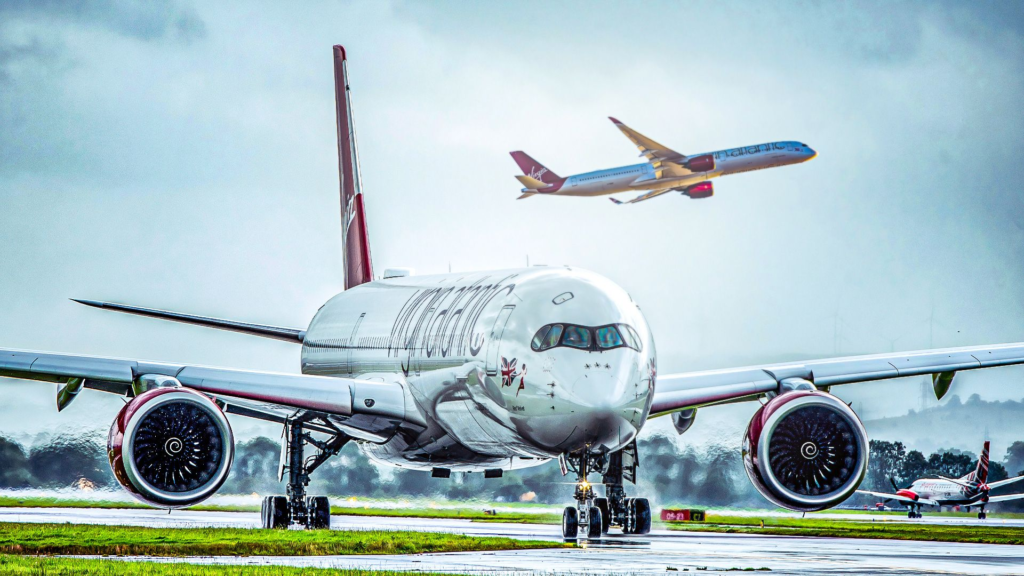
Virgin Atlantic is a UK-based long-haul carrier that primarily operates out of 

According to fleet data made available by ch-aviation, Virgin Atlantic has a relatively small all-widebody fleet that consists of just 43 aircraft. This figure is split between six Airbus A330-300s, eight A330-900s (it also has another 16 on order), 12 A350-1000s, and 17 Boeing 787-9s. However, despite its small size, the carrier has three different styles of business class seats. Let’s take a closer look at them all.
All About The A330neo


As Virgin bounced back from the pandemic, one of its key milestones was the launch of its Airbus A330-900 jets. Per aeroLOPA, these have 32 Upper Class, 46 premium economy, and 184 economy seats onboard, with the former laid out in eight four-abreast (1-2-1) rows. These are staggered, with half the window seats being ‘true’ and half having some seat structure between the passenger and the window.
As pictured above, the seats face directly forward, with the model in question being the Thompson Vantage XL. These spacious seats are 22 inches wide, and measure 76 inches long when converted to a lie-flat bed. They also feature a 17.3-inch HD screen with Bluetooth audio, and universal AC, USB-A, and USB-C power sockets. At the time of the aircraft’s launch, Virgin Atlantic said about Upper Class on the A330neo:
“Designed to provide a premium, personalized experience for every single customer, the [A330neo’s] Upper Class cabin boasts a brand new seat, an evolution of its iconic social space, and the unveiling of The Retreat Suite.”
The A350: Similar But Different

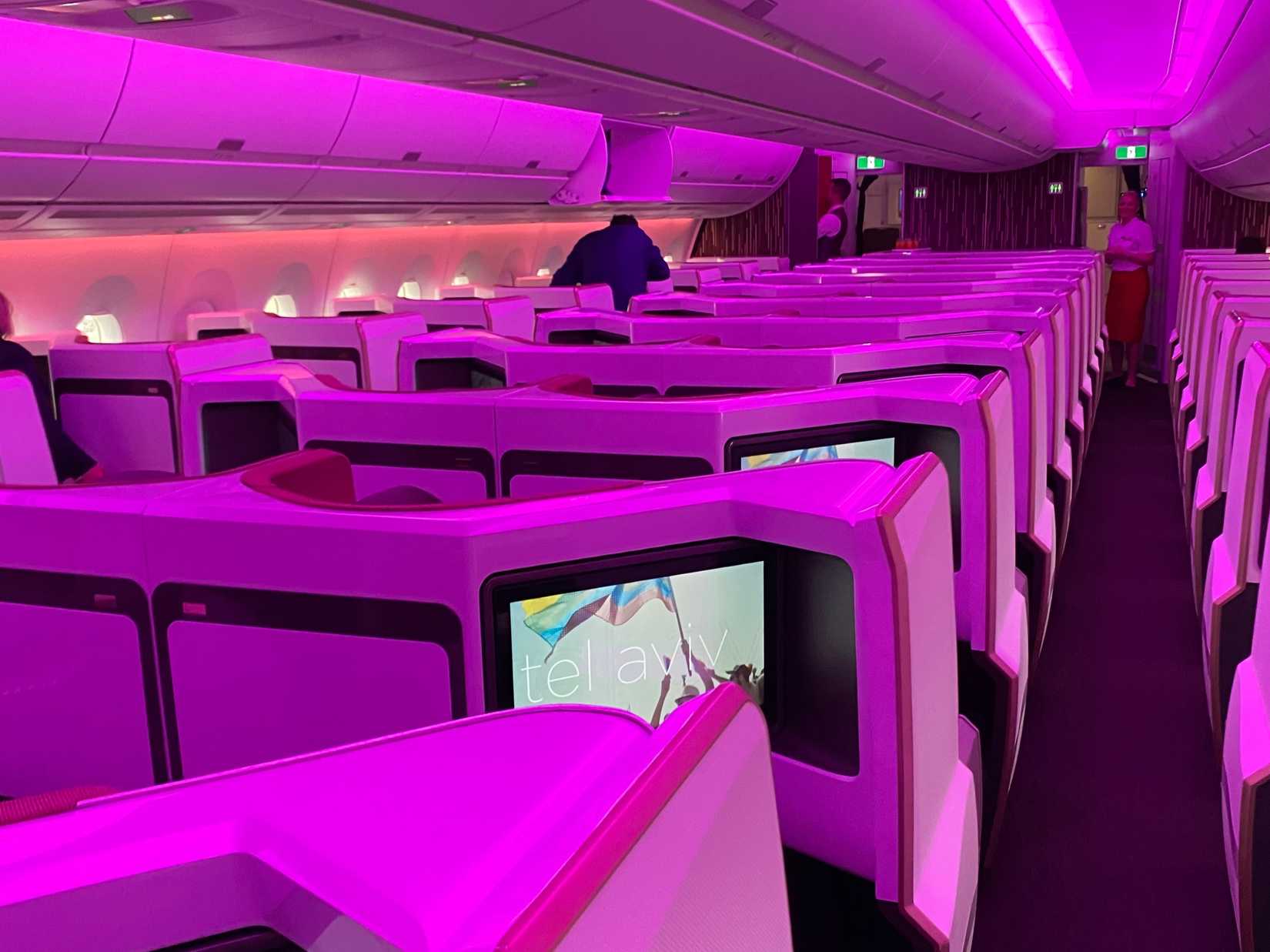
The Airbus A350 family is the European planemaker’s other widebody twinjet series that is in production today, with Virgin Atlantic opting for the larger A350-1000 variant. It has two different seating configurations, with one (designed for high-density leisure routes to destinations such as Orlando in Florida), consisting of 16 seats in Upper Class, 56 in premium economy, and a whopping 325 in economy class.
Meanwhile, routes that see more premium demand are served by A350s with 44 Upper Class, 56 premium economy, and 235 economy class seats. However, while the amount of Upper Class capacity differs between the two layouts, the seats themselves are the same model: the Saffran Cirrus NG.
These are also laid out four-abreast, but, rather than facing forward, are angled towards the windows for the outer solo seats, with the middle pairs facing away from each other and into the aisle. At 20 inches wide, they are not as spacious as those on the A330neo, but, when converted to a bed, are six inches longer, at 82 inches. The IFE screens are also bigger, clocking in at a measurement of 18.5 inches.
The A330-300 & 787 Are Comparatively Outdated


Virgin Atlantic’s older aircraft are its Airbus A330-300 and Boeing 787-9 models. On these aircraft, Upper Class seating is laid out three-abreast in a 1-1-1 layout that, at face value, might sound better than the four seats per row on its newer jets. However, the nuances of this setup mean that, despite having just three seats per row, the way that they are angled actually makes them less spacious and private.
Both the A330-300 and 787-9 have 31 Upper Class seats onboard, with, as pictured above, the left (A) seats facing away from the port windows. These are arguably the best ones in terms of privacy, as, while they face into the aisle, there is a wall opposite them. Meanwhile, the right (K) seats face into the aisle and the middle (G) seats, resulting in a much more open experience where privacy is minimal.
These seats are examples of the Zodiac UCS3 model, and measure 20 inches in width. Their maximum recline in a seated setup is 42 degrees, but they can also be converted into lie-flat beds. They also show their age in terms of IFE, with the screen measuring just 11.1 inches. Still, regardless of the seat, Virgin Atlantic’s personable service is among the best in the skies, as detailed in my review from 2022.
source