



US Central Command said on May 23, 2026, that its forces have redirected 100 commercial vessels since beginning a maritime blockade of Iran on April 13, with two carrier strike groups and a Marine expeditionary unit anchoring an enforcement effort supported by “more than 200 aircraft and warships.”
The announcement comes six weeks into the blockade. CENTCOM said more than 15,000 soldiers, sailors, marines and airmen are now committed to the mission, which has disabled four vessels and allowed 26 humanitarian aid ships to pass since enforcement began.
Carrier airpower at the center
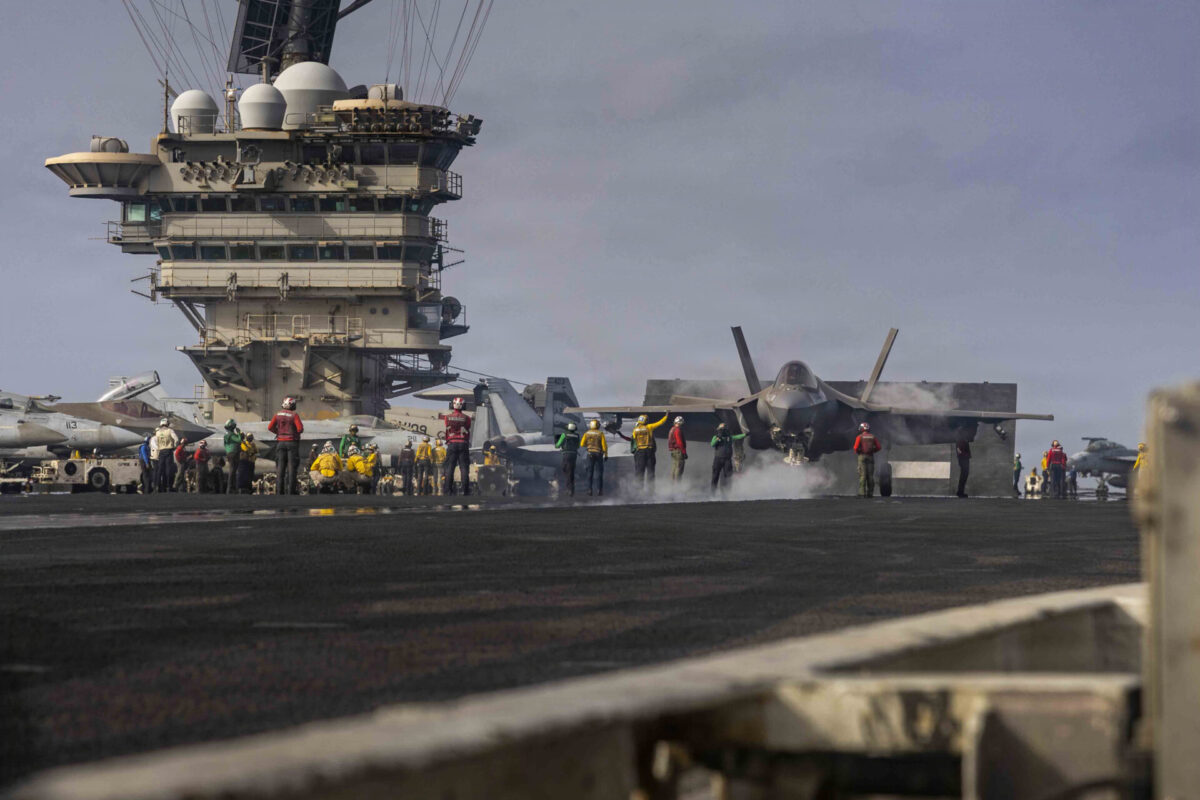
The aviation footprint behind the blockade is built around two carrier strike groups. CENTCOM listed the Abraham Lincoln Carrier Strike Group, the George H.W. Bush Carrier Strike Group, the Tripoli Amphibious Ready Group with the embarked 31st Marine Expeditionary Unit, and multiple guided-missile destroyers as the principal forces supporting the mission.
The USS Abraham Lincoln, flagship of Carrier Strike Group 3, was redirected from the Indo-Pacific in January 2026 and has since become the most visible US naval presence in the region. A Carrier Air Wing 9 F-35C operating from the carrier shot down an Iranian Shahed-139 drone in the Arabian Sea in February, and on May 6, 2026, an F/A-18 Super Hornet launched from the same deck disabled an Iranian-flagged oil tanker in the Gulf of Oman with 20mm cannon fire.
Pressure on Iranian ports
CENTCOM commander Admiral Brad Cooper said the operation had allowed “zero trade into and out of Iranian ports.” The blockade applies to vessels of all nations entering or departing Iranian ports, including all Iranian facilities on the Arabian Gulf and the Gulf of Oman.
The maritime enforcement effort is the latest phase of Operation Epic Fury, which began on February 28, 2026, and has absorbed a sustained share of US airpower in the Middle East. The campaign has also drawn down the supporting air bridge, with a US Air Force KC-135 tanker lost over western Iraq on March 12, 2026, and a US Air Force E-3 Sentry damaged at Prince Sultan Air Base in a March 2026 Iranian strike.
The closure of the Strait of Hormuz and the loss of Gulf refinery output continue to weigh on commercial aviation, pushing jet fuel prices to record highs and reshaping cost positions across the global airline industry.
