


When it comes to clearing immigration at airports in the United States, a vast majority of people do so upon arrival. However, many people may not be aware that the United States has what’s known as a Preclearance program, whereby you clear immigration prior to boarding your US-bound flight when departing from select airports.
The United States is the only country in the world to have a program like this (probably largely because we also don’t have sterile international transit), so I’d like to take a closer look at the program in this post. Which airports have such a facility, and how does it even work?
What are US Preclearance facilities at airports?
US Customs and Border Protection (CBP) has what’s known as the Preclearance program, whereby passengers departing select airports clear immigration prior to boarding their flight to the United States, so they then land as a domestic passenger. That means they don’t have to clear immigration or security upon arrival, and that’s very convenient if you have a connecting flight.
To briefly go through the logistics, Preclearance facilities are available at select airports, and you’ll find US CBP officers stationed there. You’ll have to leave more time before departure when using these facilities:
- You have to go through a special security check approved by the United States, different from the standard one that a foreign airport may have
- You then have to be screened by a US CBP officer, just as you otherwise would be on arrival; there are typically still Global Entry kiosks and Mobile Passport Control lanes, should you be eligible for one of those programs
- Once you clear immigration, you’re then basically on “US soil,” for all practical purposes, even though you’re in a foreign country
- The plane then lands the same as any domestic flight would; if you have a connecting flight, you don’t have to clear security, while if you’re terminating your travels at that airport, you can collect your bag at a domestic baggage claim carousel
Below is a video outlining the Preclearance process.
Then below is an interesting video about the history of these facilities. As you can see, they date back quite a long time, and were initially used for ferries, and not airplanes.
Which airports have US Preclearance facilities?
Currently there are 16 US Preclearance facilities, spread across six countries:
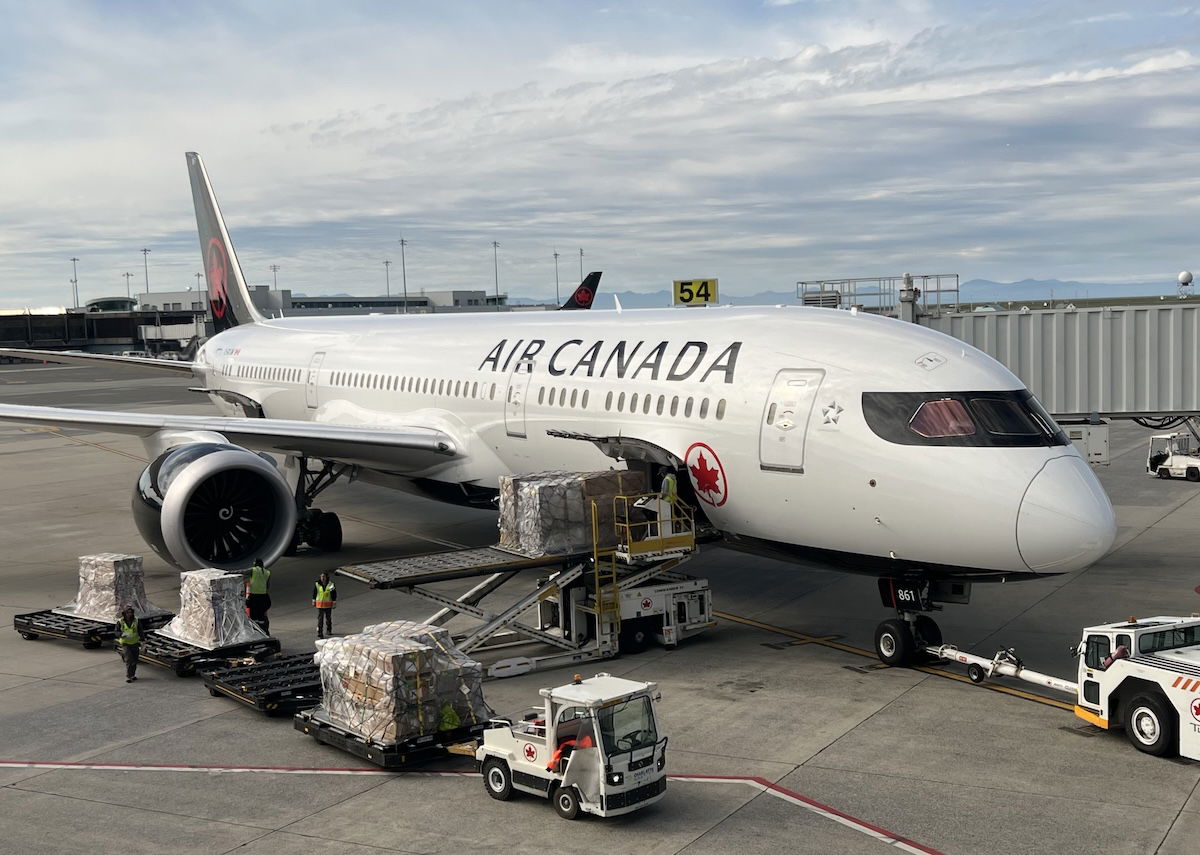
- Calgary (YYC), Edmonton (YEG), Halifax (YHZ), Montreal (YUL), Ottawa (YOW), Toronto (YYZ & YTZ), Vancouver (YVR), Victoria (YYJ), and Winnipeg (YWG), in Canada
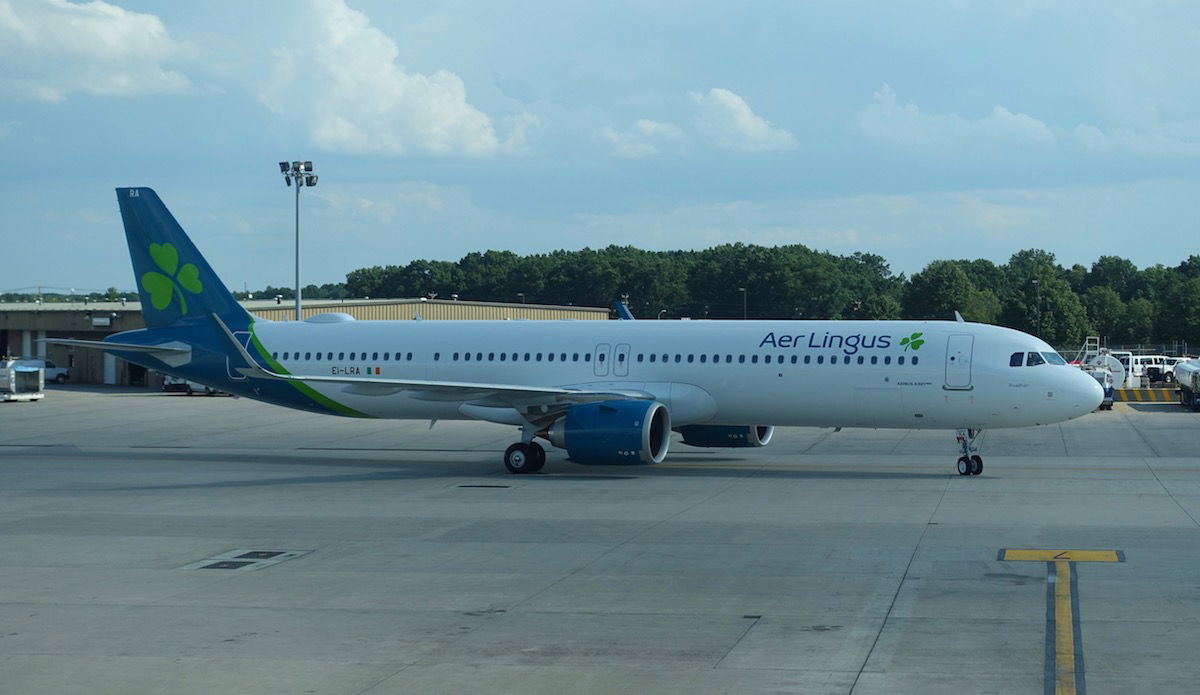
- Dublin (DUB) & Shannon (SNN), in Ireland
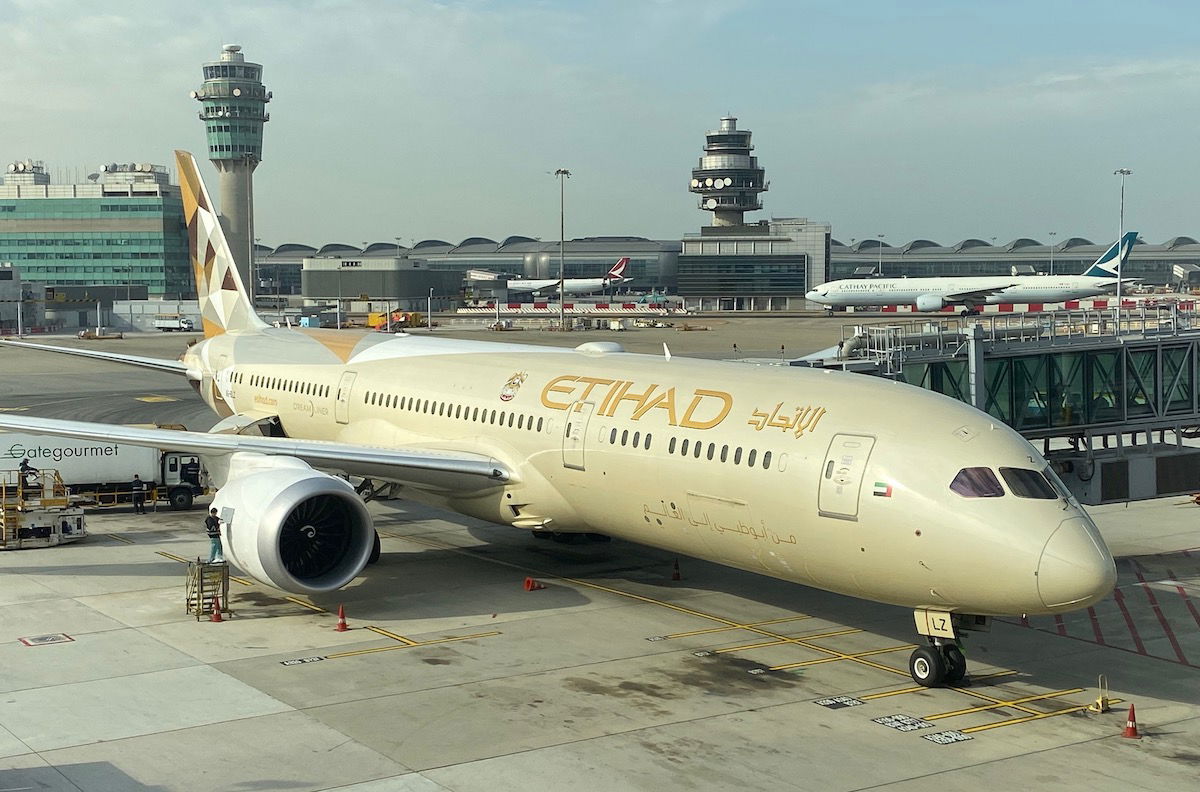
- Abu Dhabi (AUH), in the United Arab Emirates
- Aruba (AUA), Bermuda (BDA), and Nassau (NAS), in the Caribbean

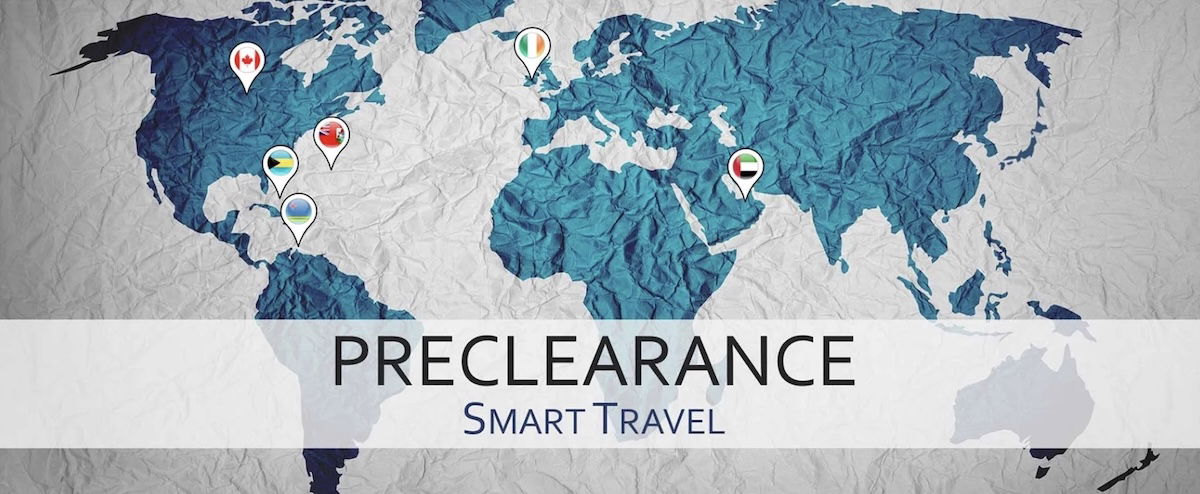
As you can see, the bulk of these facilities are in Canada, though you’ll also find some in other countries. Over time, we’ve seen lots of talk of other countries being interested in opening these facilities, though as far as I know, no finalized contracts have been signed for more to be added.
In the past, we’ve seen interest expressed for these facilities at airports in Bogota (BOG), Brussels (BRU), and Dubai (DXB), among others, though nothing ever came of that.
Who pays for US Preclearance facilities?
As you can tell, the selection of airports where you’ll find US Preclearance facilities seems rather random. How exactly are these decided on? Let me share my understanding, though others correct me if I’m wrong, since obviously not all of this is public.
My understanding is that foreign countries can apply to introduce Preclearance facilities. If a deal is reached, the cost for these facilities is shared between the US government and the country that applied. The US largely pays for the CBP staff, while the applicant country is responsible for providing the space at the airport for the facility, as well as building the facility.
As you can see, there’s a significant investment on the part of the applicant, as it’s not just the US footing the bill.

How do governments benefit from US Preclearance facilities?
What are the pros and cons of these US Preclearance facilities from the perspective of the government?
For the United States, the benefit of Preclearance facilities is that travelers can be screened before they board a flight, which in theory enhances security. After all, it’s better to determine if someone should be eligible to travel to the United States before they get on the plane. Furthermore, this program helps ease congestion upon arrival.
However, even with the foreign government footing part of the bill, I have to imagine that the US is paying more per average person screened through this program than it does at home, purely in terms of scalability. For example, Shannon has a CBP facility, but has a very limited number of flights to the United States. The cost per processed passenger can’t be competitive to what it would be at a major airport in the US.
From the perspective of the foreign country, the benefits are twofold. For one, it’s intended to make an airport more attractive for US-bound passengers, as airlines market the ease of this service, and hope it’s a point of differentiation. Furthermore, these facilities are often part of a larger diplomatic deal, to promote close relationships between the United States and the foreign country.

How do passengers benefit from US Preclearance facilities?
How do international travelers feel about these US Preclearance facilities? Well, it depends entirely on who you ask. For that matter, a person may have a different opinion depending on the type of trip they’re on.
Let me start by acknowledging that clearing airport immigration can be stressful for travelers, so there’s something to be said for getting that out of the way prior to a long flight, and then being able to relax.
That being said, it’s also important to acknowledge that for many travelers, immigration isn’t nearly as stressful as it used to be. Admittedly not everyone is eligible for these programs, but if you use Global Entry or Mobile Passport Control, then immigration is often a painless process.
The way I view it, these are the travelers that benefit most from these facilities:
- If you’re not eligible for US expedited traveler programs, then US Preclearance is probably pretty desirable
- If you’re connecting after an international flight from the same terminal (and especially if you’re checking a bag), then it’s great to not have to clear security again or to have to collect your bag, as that saves quite a bit of time and hassle
I think it’s also important to acknowledge that clearing immigration has become so much more efficient over the years thanks to programs like Global Entry. So for those of us who are eligible for Global Entry and who are terminating our travels at our US point of entry, I don’t consider this to be much of a value add.
It’s also important to at least mention the downside to these facilities. If you’re connecting from another flight onto your US-bound flight (like if you’re flying from Delhi to Abu Dhabi to New York), you’re more likely to misconnect, because you can’t just make your connection if you have very limited time. Clearing the facility takes time, and you often have to be through there an hour or so before departure.
I guess what I’m most curious about is to what extent these facilities actually impact consumer behavior. Does Etihad actually pick up any US-bound traffic that would otherwise go to Emirates due to having a US Preclearance facility? I’m not saying it’s a bad thing, I just feel like it’s a significant investment, and I wonder if there’s actually a return on it.

Bottom line
US CBP has Preclearance facilities at 16 foreign airports, whereby you can clear immigration prior to boarding your US-bound flight. It’s great to be able to deal with the stress of immigration prior to boarding a flight, and it potentially makes connections easier, both for the passenger and their bags.
Just how valuable the program is really depends on the type of passenger you are, though. If you have Global Entry, you’ll probably find this less useful than if you’re a foreigner who usually deals with long immigration lines on arrival.
What’s your take on US Preclearance facilities? Would you like to see the program expand?
source