


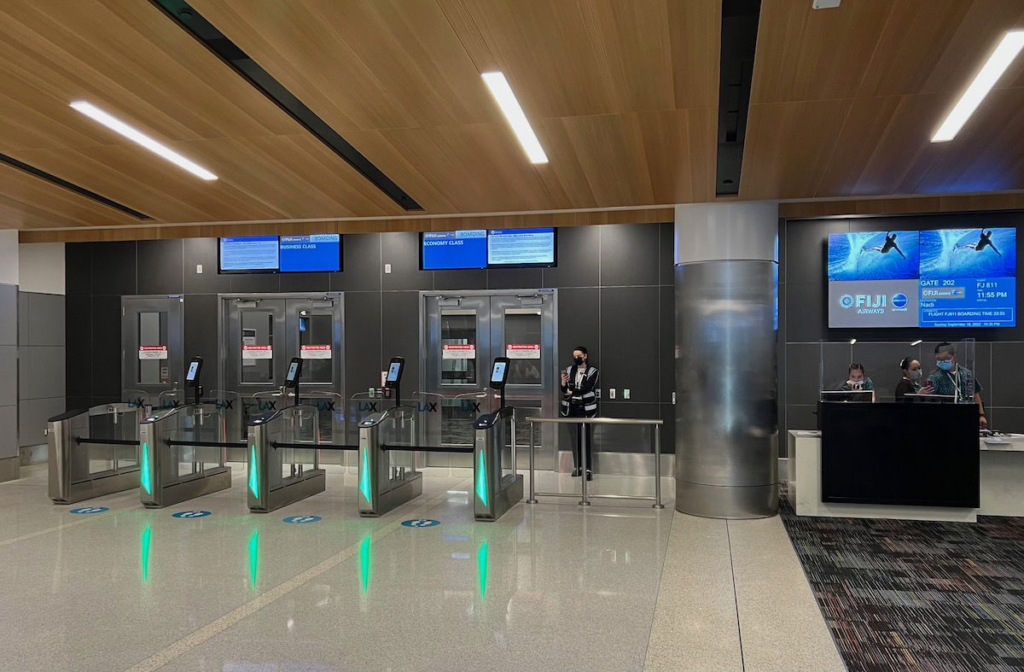
When you travel internationally by air from many countries, there’s some sort of a departure check by immigration authorities, to be be able to track arrivals vs. departures. Historically, this isn’t really something that the United States has done, probably in part because our airports aren’t set up to easily facilitate that.
However, it appears that this is slowly starting to change, and could be rolled out on a more widespread basis soon, as reported by The New York Times, and flagged by View from the Wing.
United States expands “biometric exit” for international travelers
The United States is increasingly rolling out a biometric exit program, which involves taking photos of passengers leaving the country, and then using facial recognition technology to ensure that travelers match their identification documents.
On the surface, this is something that has been allowed for some time, but it hasn’t been rolled out consistently. However, on September 15, 2025, the Office of Information and Regulatory Affairs approved a proposed rule, clearing the way for the program to expand to all airports, seaports, and land crossings, across the country. While this program has been quietly growing for years, this approval formalized its expansion.
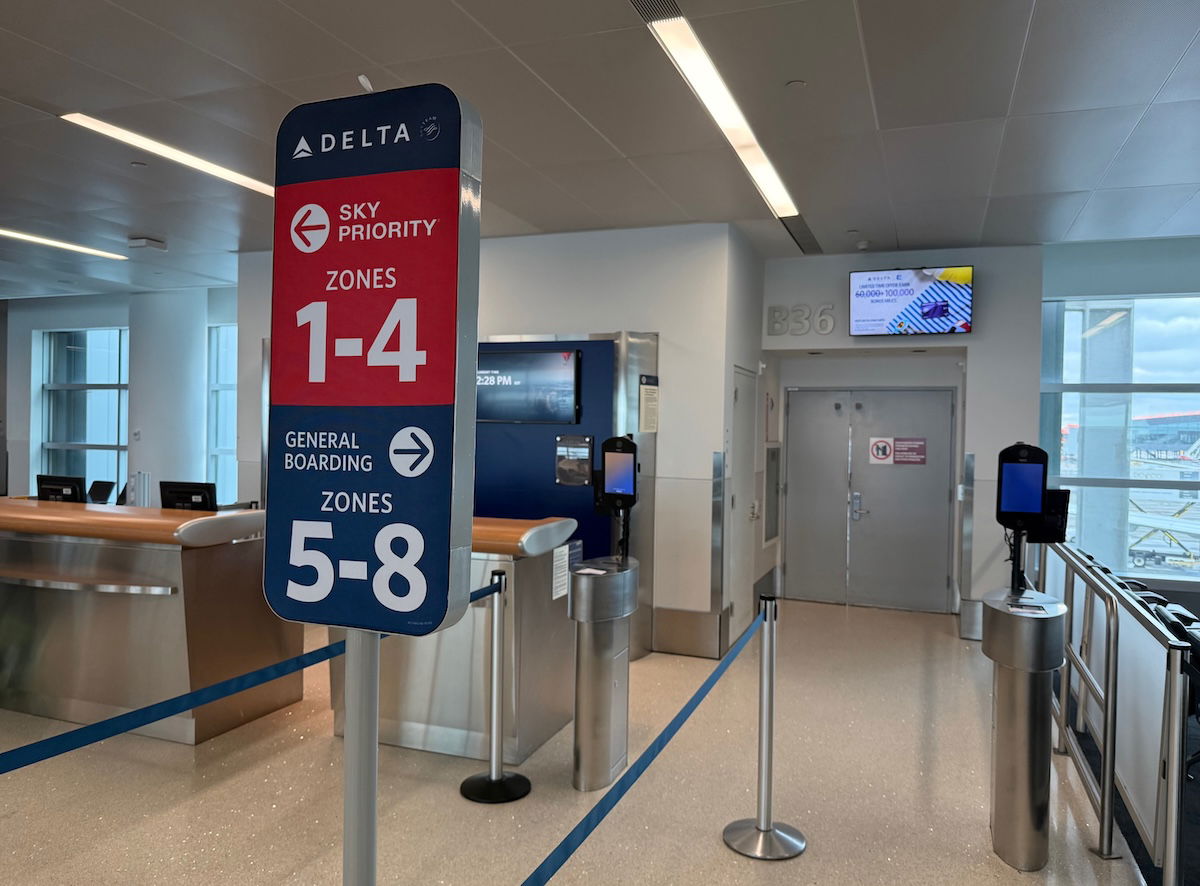
For air travelers, the way this works is that Customs and Border Protection officers are stationed at gates for departing international flights. In some situations, there will be cameras on a stick, that take the pictures of departing passengers. In other situations, the officers are positioned in jet bridges during boarding with their smartphones.
For foreign nationals, the photos can remain in a database for 75 years, while for US citizens, the photos are matched to passports and deleted within 12 hours. US citizens can opt out and request to be verified manually by showing their passport, and undergoing a visual face comparison. However, it seems this is being discouraged, with some travelers stating that officers told them they’d have to wait until everyone else boarded, in order to be able to do that.
Here’s the part that’s shocking, at least to me — today, 52% of departing air travelers are “biometrically confirmed,” and since June 2017, 810 million people have undergone this process, and 500,000 foreign nationals who have overstayed their visas have been confirmed using this process. I’m confused — does this really refer to international air travelers, or just biometric verification at TSA checkpoints?
Opponents of this concept point out that these photos could be used for more than just biometric exit, and that facial recognition is prone to false positives, particularly for people of color and women.

My take on expanding exit controls in the United States
Around the globe, departure control with immigration officials is a common practice, so it’s an area where the United States is definitely playing catch up.
As much as some people may have privacy concerns, the reality is that we have zero privacy when traveling by air as is, and I don’t see this as materially infringing on any rights to privacy. Our passport photos are already on file with the government, our IDs are scanned at security checkpoints, airlines use biometric boarding, there are cameras all over the terminal, etc. So while I don’t love the world of over-surveillance we live in, I think that’s just the reality of the times…
If anything, my concern is that this just seems like a really impractical, makeshift solution. The problem is that our airports in the United States aren’t set up with separate parts of the terminal for departing international travelers, so we can’t have some centralized departure check.
I don’t have a huge issue with these cameras at the gate, though at least in terms of optics, it seems kind of creepy and unprofessional for the process to be that immigration officers are taking pictures of passengers with smartphones.
I’m surprised to learn that over half of air travelers are already getting some sort of biometric exit verification, as I wouldn’t have expected that number to be so high.

Bottom line
The United States is expanding its biometric exit program, whereby outbound air travelers are having their biometric data scanned before departing on international flights. While this has already been in use for some time, it sounds like we can expect to see it expanded significantly in the near future.
So if you see immigration officers in the jet bridge taking pictures of passengers with their smartphones, now you know why.
What do you make of the US expanding biometric exit?
source