


In this roundup of historic American airports, we will be reviewing 10 of the longest-running small fields in the US. Looking at how these airports have evolved, we find an eclectic sampling of different operations, from humble general aviation centers to ultra-exclusive business jet hubs, and low-cost carrier (LCC) headquarters.
Spread out across the nation, where the first successful man-made aircraft first took flight, each of these fields has carved out a little slice of history for itself. Some may have played bigger roles than others in the evolution of flying in the United States, but their enduring contribution to the network of American air travel is a testament to the living legacy that each airport was founded on.
Where Aviation First Took Flight

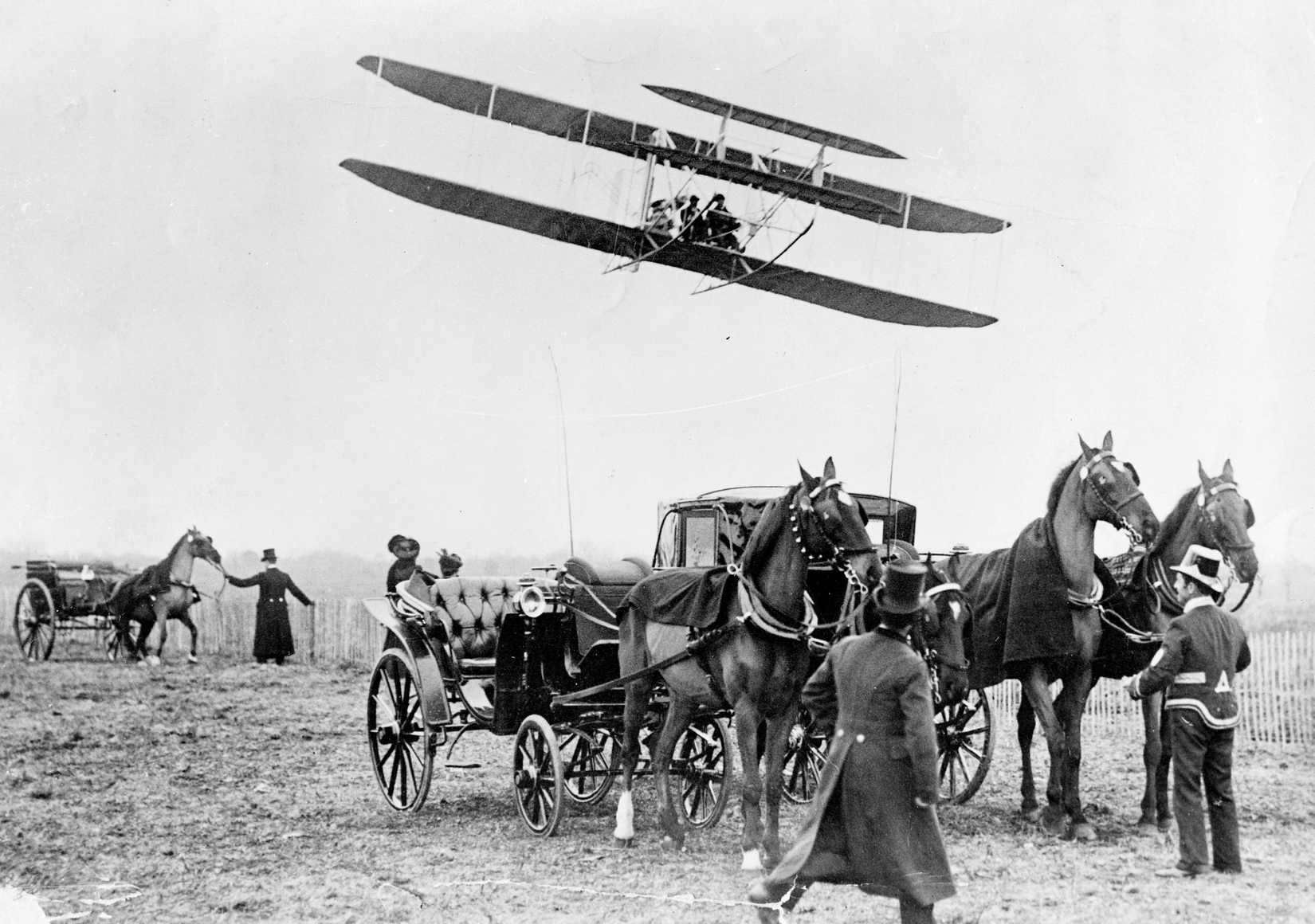
College Park Airport in Maryland is the oldest airport in the United States, and is also a relatively smaller field, as are a few others on this list. However, there are a couple of big names that may be immediately recognizable to some readers. Dallas Love Field and Teterboro Airport may not be enormous hubs, but each plays a strategic role in how Americans fly.
Let’s start off with an introduction to our list and a couple of the smaller fields. Take a look below at the 10 oldest regional airports in the United States:
|
Airport Name |
Year Founded |
|---|---|
|
College Park Airport (CGS) |
1909 |
|
Pearson Field (VUO) |
1911 |
|
Bowman Field (LOU) |
1915 |
|
Dallas Love Field (DAL) |
1917 |
|
Teterboro Airport (TEB) |
1919 |
|
Brainard Airport (HFD) |
1921 |
|
Spartanburg Downtown Memorial Airport (SPA) |
1927 |
|
Asheville Regional Airport (AVL) |
1928 |
|
Lawrence Regional Airport (LWC) |
1929 |
|
Albert Whitted Airport (SPG) |
1929 |
Bowman Field functions as a reliever airport for the much larger nearby Louisville Muhammad Ali International Airport (SDF), helping to alleviate traffic by handling smaller, lighter aircraft operations. Established in 1919, it is one of the oldest continuously operating general aviation airports in the United States. Parts of the James Bond movie Goldfinger were filmed at Bowman Field in the 1960s.


The First Airport Ever Built In America


College Park Airport (CGS), located in College Park, Maryland, holds the distinction of being the world’s oldest continuously operating airport. Established in 1909, it is a site of immense historical significance in American aviation, often referred to as the “Field of Firsts.” The airfield is very close to Washington, DC, but still serves private aviation and houses a museum that is an affiliate of the Smithsonian Institute.
Wilbur Wright came to the field in 1909 to train the US Army’s first two military officers to fly in the government’s first airplane, effectively establishing the first US military flight school. The first flight to achieve a mile high in altitude was flown at this airfield by Army Lieutenant Henry “Hap” Arnold in 1912.
Some of the very first prototype helicopters took flight at College Park, and one of the stops in the very first US Air Mail routes was established at the airfield. Development and testing of early radio navigation aids and “blind landing” systems by the National Bureau of Standards paved the way for modern instrument flight systems.


Celebrating The Anniversary Of The Wright Brothers’ First Flight
The Wright Brothers conducted their first flight on December 17th, 1903.
The Launchpad Of Affordable Airfare


Dallas Love Field is the birthplace of Southwest Airlines, and the airline’s history is fundamentally intertwined with the three-star regional airport. Opened as a US Army Air Service training base in 1917, the airfield was named after Lieutenant Moss Love, an Army aviator who died in a training flight. After World War I, it transitioned to civilian use and became Dallas’ primary commercial airport, growing into a major regional hub by the 1960s.
By the late 1960s, it was clear Love Field was reaching capacity and hemmed in by urban development, preventing expansion for the new jumbo jets. The federal government mandated that Dallas and Fort Worth collaborate on a single, massive new airport, which became Dallas/Fort Worth International Airport (DFW). A 1968 agreement required all existing commercial carriers to move their operations to DFW when it opened in 1974.
Southwest Airlines (originally Air Southwest), founded by Herb Kelleher and Rollin King in 1967, did not sign on to the DFW agreement. The new airline faced immediate and extensive lawsuits from established carriers, Braniff and Texas International, as well as the cities of Dallas and Fort Worth. This history has resulted in Southwest’s continued dominance at Love Field, operating over 90% of the airport’s flights and maintaining its corporate headquarters adjacent to the terminal.
After national airline deregulation in 1978, Southwest planned to expand interstate. The Wright Amendment of 1979 was drafted to protect DFW. This federal law severely restricted most flights from Love Field to only destinations within Texas and its four bordering states, limiting Southwest’s growth from its home base for decades. The Wright Amendment was gradually weakened by subsequent legislation and finally repealed in 2014, allowing Southwest to offer unrestricted nonstop flights nationwide from Love Field.

Where It All Started: The Tribute To Southwest Airlines’ Founder At Dallas Love Field
Discover how Herb Kelleher’s bold vision and Dallas Love Field shaped Southwest Airlines into America’s most admired low-cost carrier.
New York’s Luxury Airfield


Teterboro Airport (TEB) is a premier general aviation airport located in Bergen County, New Jersey, just 12 miles northwest of Midtown Manhattan. The airport has developed into New York’s most luxurious private aviation hub. Teterboro is renowned for its convenience to Manhattan, making it the preferred choice for executives and high-net-worth individuals. Aircraft are limited to a maximum weight of 100,000 pounds, which effectively eliminates commercial aviation as an option.
Teterboro is also the oldest operating airport in the New York and New Jersey metropolitan area, with a history dating back to 1917, and has been a hub for key aviation developments and military operations. Walter Teter, a New York investment banker, first acquired the marshland, and the first flight took off in 1919. The famous Dutch aircraft designer, Anthony Fokker, used the airport as his US base of operations after World War I.
The US military took over the Airfield during World War II, and Teterboro became a center for production and testing. A few years after the war, the Port Authority of New York and New Jersey purchased the airport from its private owner. Pan American World Airways (Pan Am) leased the airfield as the jet era of commercial aviation entered the golden years in the 1970s.
The advent of jets also led to noise restrictions and weight limits toward the end of the decade. The Aviation Hall of Fame of New Jersey is located on the grounds to preserve this history alongside the ultra-premium executive aircraft operations that it now serves.
Landmarks To American Ingenuity


Thanks to the vision of World War I “Ace” Bob Cates, Spartanburg Downtown Memorial Airport (SPA) was the first commercial airport in South Carolina. As part of his nationwide tour following his historic solo transatlantic flight, renowned aviator Charles Lindbergh landed the Spirit of St. Louis at the airport just one month after it opened.
In 1928, the airport became the state’s first airport with direct airmail service. Greenville-Spartanburg Jetport (GSP) (now Greenville-Spartanburg International Airport) opened in 1962 to take over commercial traffic. Today, it continues to host general aviation and executive jet flights.
The first commercial airline flight in history took off at Albert Whitted Airport (SPG) in St. Petersburg, Florida, in 1914. The first known regularly scheduled airline activity was a modest airboat flight to Tampa. But by 1934, National Airlines, one of the first airlines in American history, started operating at the field. One of the first airports to serve as the base for Goodyear’s renowned blimps was Albert Whitted.
Today, Albert Whitted serves as a reliever airport for commercial traffic at nearby Tampa International Airport (TPA) and St. Petersburg-Clearwater International (PIE). It also supports flight training, charters, corporate travel, and medical transport flights.

Europe’s Oldest Airports Still In Operation
From muddy fields to megahubs, these are Europe’s oldest airports that still have commercial operations.
A Living Legacy


Pearson Field is located in Vancouver, Washington, in the Pacific Northwest. Even before fixed-wing aircraft began flying out of Pearson, dirigibles used its runways for landing and takeoff. Pearson’s property housed the largest airframe-grade spruce wood mill in America in 1918, as aviation expanded into a large-scale business due to a demand for military aircraft during World War I.
During the first airborne circumnavigation of the world, the Army’s Douglas World Cruisers made a stopover at Pearson Field. The first nonstop transpolar flight from Moscow was completed by the ANT-25 monoplane, carrying three Soviet pilots, and also landed at Pearson in the pioneering days of the aviation industry’s first steps.
Legendary aviators, including Eddie Rickenbacker, Jimmy Doolittle, and Charles Lindbergh, have all visited the field over the years. The National Park Service and the city work together to maintain the airport, which is still a busy hub for general aviation today. K–1 children can participate in active STEM (science, technology, engineering, and math) education programs at the on-site aviation history museum.
source