


United Airlines has confirmed that its frequency from 


United’s Denver-Anchorage Flights Rise To Four Daily


Until this weekend’s schedule update to Cirium Diio, United’s plan for next summer involved two flights a day to Anchorage. For obvious reasons, this frequency was to be operational from May 21 until September 13, 2026. Although entirely unrelated, May 21 is also when British Airways will resume using the Airbus A380 to Dallas.
United’s latest schedule sees three daily flights from Denver to Anchorage from May 21 until June 25. For the absolute peak season, with the highest demand and fares, four daily departures will be available from June 26 until August 10.
Frequencies will fall to three daily services between August 11 and September 7. Two daily departures will be available from September 8 until September 23, and one from September 24 onwards.
This Is United’s New Schedule


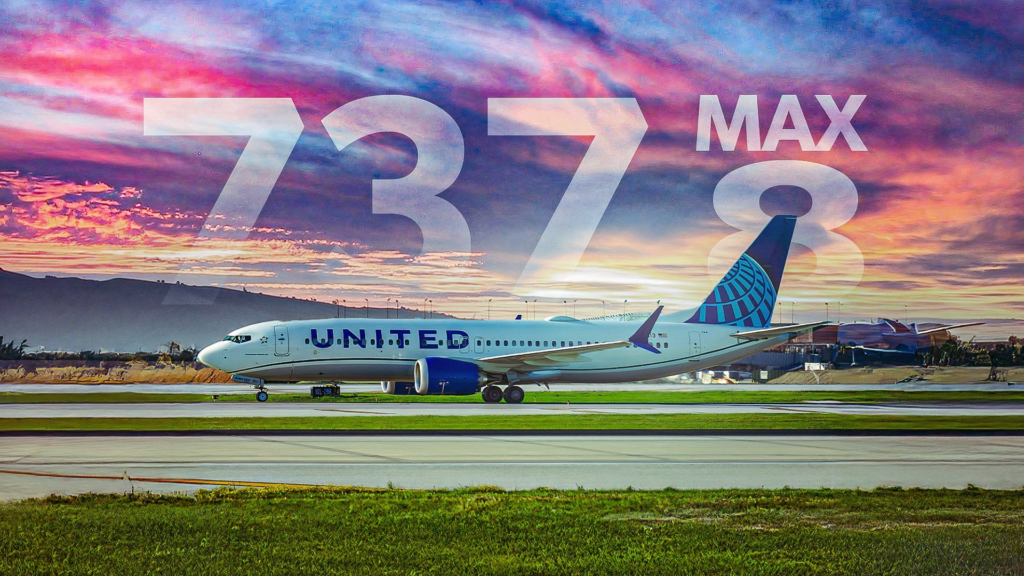
Covering 2,090 nautical miles (3,871 km) each way, United’s new schedule for the peak summer of 2026 is shown below. All four daily flights are due to be operated by the 166-seat Boeing 737 MAX 8. This has 16 domestic first seats (2-2; 36.7″ pitch), 54 in economy plus (3-3; 33.5″ to 38.8″), and 96 in economy (3-3; 30.3″). There is one toilet for the 16 seats in first class, while there are two for the 150 seats in economy plus/economy.
It will be United’s seventh-longest narrowbody-operated route from its Denver hub next July, which is not a fortress hub due to Southwest and Frontier’s strong presence. Flights to Lihue, Kahului, San Juan, Punta Cana, Fairbanks, and San Jose (Costa Rica) will all cover a greater distance.
Compared to what was scheduled a few days ago, the 07:45 and 16:00 departures from Denver are new. What was 19:00 has been pushed back to 20:20. 
|
Frequency |
Denver-Anchorage In July; Local Times |
Frequency |
Anchorage-Denver In July; Local Times |
|---|---|---|---|
|
Daily |
07:45-11:20 |
Daily |
05:15-12:32 |
|
Daily |
11:30-15:05 |
Daily |
12:15-19:35 |
|
Daily |
16:00-19:35 |
Daily |
16:00-23:22 |
|
Daily |
20:20-23:54 |
Daily |
23:45-07:02+1 |
United Between Denver And Anchorage


US Department of Transportation data for August 2024-July 2025 shows that United carried 125,400 round-trip passengers between Denver and Anchorage. It filled 81% of the available seats. Only 37,400 of United’s traffic was local (30%). The remaining 88,000 passengers transferred to another flight in Denver (70%).
Unsurprisingly, its two most popular months were July 2025 (16,800 passengers) and August 2025 (16,100). However, its seat load factor was only 78% to 83%. In July, the additional traffic did not keep pace with the higher capacity.
Imagine the situation next year, with four daily flights instead of two. It’ll have particularly low loads or lower fares during the peak season to help fill its aircraft or direct more passengers via Denver than its other hubs. While it might change, United’s base fare for a round-trip service in the first week of July is currently $732. Southwest’s minimum is over $1,100.
Of course, United wants Southwest to remove the route, which is unlikely to happen. If it did happen, United would, after a short period of time, reduce frequencies back to the usual peak offering of two departures a day. Then it would not have the problem of very high excess capacity.
source