


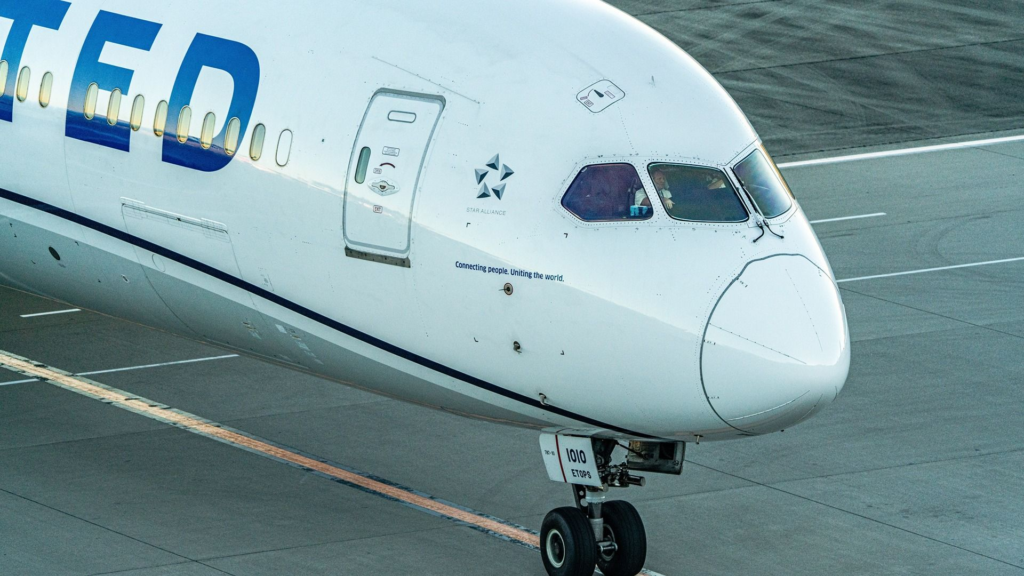


The Boeing 787, an ultra-long-range, highly-efficient twin-engine aircraft has, for several years now, served as the backbone of United’s fleet. This impressive long-haul aircraft can service the far-flung corners of United’s route map, all while offering exceptional operating economics. The aircraft is equipped with the most modern premium cabins in United’s fleet, allowing the carrier to sell its highest-yield products in these unique markets efficiently. In this article, we will take a deeper look at the airline’s Boeing 787 fleet, examine the role that these jets serve, and then take a deeper look at the longest individual routes on which the carrier deploys its fleet.
A Brief Overview Of United Airlines’ Long-Haul Network Strategy


United Airlines has built out a long-haul network that centers around maximizing yield through a number of major gateway hubs. The airline’s principal East Coast gateway hubs, Newark Liberty International Airport (EWR) and Washington Dulles International Airport (IAD), are both primary departure points for flights to Europe, Africa, and the Middle East. San Francisco International Airport (SFO) anchors the airline’s Pacific network, with continental hubs at Chicago O’Hare International Airport (ORD), Houston’s George Bush Intercontinental Airport (IAH), Los Angeles International Airport (LAX), and Denver International Airport (DEN), adding further depth and geographic diversification to the airline’s rapidly growing network. United has developed a system of banking its flight schedules, with evening departures for Europe and the Middle East paired with late-night departures to Asia, all of which are paired with morning arrival banks to facilitate transcontinental and trans-network flow.
Fleet strategy has underpinned the airline’s route map, with the Boeing 787 family operating long-thin routes where the most important considerations for the airline are efficiency and range. The Boeing 777-300ER, by contrast, serves as the airline’s high-capacity flagship, handling trunk routes and high-demand markets, with mid-capacity widebodies designed to serve seasonal or transatlantic leisure travel peaks. United Airlines aims to offer Polaris, its most luxurious premium product, on high-yield business and premium leisure routes across its network.
Partnerships with other legacy airlines have allowed United Airlines to expand its network while limiting execution risk. In the Star Alliance, the airline maintains high-profile joint ventures that support its long-haul network strategy. This includes strategic partnerships with Lufthansa Group, Air Canada, and ANA. The airline also aims to serve a selection of routes that are served secondarily, primarily with United being the only long-haul carrier operating services. This also allows the airline to adjust capacity seasonally, rather than making a substantial commitment to year-round flying. Finally, revenue generated from belly cargo plays a key role in the airline’s long-haul network decisions.
A Brief Overview Of The United Airlines Boeing 787 Fleet

The long-haul backbone of United Airlines’ fleet is undoubtedly the Boeing 787 Dreamliner, which the carrier deploys in three different variants. The airline is one of the few operators to fly all three versions of the Boeing 787. The Boeing 787-8 is primarily deployed for low-demand, long-and-thin markets. The higher-capacity Boeing 787-10 is used for dense transatlantic and transpacific routes that require better operating economics than United’s other twin-aisle jets. The Boeing 787-9 offers superior operating economics, striking a balance between capacity and range. As of 2025, the United Airlines fleet includes the following breakdown of Boeing 787 family jets:
|
Aircraft Variant: |
Number In United Airlines Fleet: |
|---|---|
|
Boeing 787-8 |
12 |
|
Boeing 787-9 |
46 |
|
Boeing 787-10 |
21 |
All of these jets are fitted with United Polaris cabins, which are not only the airline’s top-of-the-market premium products but also a key revenue-generating asset. Boeing 787-9 deliveries will soon be equipped with the latest generation of Polaris Studio suites, which feature doors and offer superior privacy compared to older-generation products. The principal upgrades include more comfortable seats, bigger 4K entertainment screens, and an expanded premium capacity. United plans to receive the first of these upgraded jets by the end of the year and intends to fit more jets with these capabilities throughout 2026, including the addition of Starlink WiFi.
From a strategic perspective, Boeing’s 787 fleet is designed as the replacement engine for its aging twin-aisle fleet, which consists mainly of inefficient Boeing 767s and 777s. The airline has the future of its fleet thoroughly planned out, with a record order for 100 Boeing 787 Dreamliners (in addition to 100 purchase options) placed back in 2022. Deliveries of these new models will continue through 2032. The airline will begin slowly phasing out older-generation 767s and some 777-200 models in favor of these ultra-efficient aircraft.
Where Does United Deploy Its Boeing 787s?

According to network scheduling data provided to Simple Flying by aviation industry data firm Cirium, United uses its dynamic Boeing 787 fleet to serve all kinds of destinations. The clear workhorse of the fleet is the Boeing 787-9, which serves not only the highest-capacity long-haul destinations but also some of the longest-range destinations across the board. The jet is deployed on key routes like Newark Liberty International Airport to O.R. Tambo International Airport (JNB) in Johannesburg, South Africa. Similar rotations can be observed on transpacific services.
The Boeing 787-10 is primarily used for high-density international and domestic routes that United is looking to add more premium capacity to. Examples include Chicago O’Hare International Airport (ORD) to Frankfurt Airport (FRA) and Newark Liberty International Airport (EWR) to Lisbon Airport (LIS). The Boeing 787-8 primarily backfills medium-demand on several long-haul sectors, including flights from Washington Dulles International Airport (IAD) to Kotoka International Airport (ACC) in Accra, Ghana.
The extensive domestic usage of the airline’s Boeing 787 fleet is fascinating to explore. The domestic usage of the fleet is supported by the high degree of seasonality in the airline’s operations, with more than 520 flights operated by the aircraft per year between Newark and San Francisco alone. The aircraft is also extensively used to connect Newark Liberty International and Los Angeles International.
What Are United’s Longest Boeing 787 Routes?


United Airlines deploys its Boeing 787 on many transoceanic flights that push the upper limits of the aircraft’s range capabilities. The majority of the longest routes operated by the airline are served by the Boeing 787-9, which is a natural fit for this as it offers the longest range of the three Boeing 787 models in the airline’s fleet. The following table displays route specifics for the five longest nonstop routes operated by the airline using the Boeing 787.
|
Route: |
Total 2025 Flights: |
Total Miles: |
|---|---|---|
|
Houston to Sydney |
155 |
8,587 |
|
San Francisco to Singapore |
732 |
8,440 |
|
San Francisco to Adelaide |
10 |
8,068 |
|
Newark to Johannesburg |
356 |
7,988 |
|
Cape Town to Washington, D.C. |
157 |
7,923 |
As we can immediately notice, United’s longest-haul services, operated by the Boeing 787-9, reach a diverse range of destinations all across the globe. These destinations push the limits of the 787-9’s capabilities, and would likely not be operationally feasible if it were not for the jet’s impressive performance.
These routes all connect some of the farthest-flung corners of the airline’s route map, with cities like San Francisco being linked to destinations in the Southern Hemisphere. These routes would have been unimaginable in an era constrained by the economics of twin-engine aircraft.
Why Does This Network Deployment Work Well For United?


United’s Boeing 787s next year will operate nearly 40,000 individual flights, with the Boeing 787-9 doing the heavy lifting here, operating more than 55% of all flights operated by the type. Around 30% are operated by the Boeing 787-10 and the remainder are operated by the smaller, more nimble Boeing 787-8. These aircraft are each deployed in their own unique ways, with each subtype filling its own unique niche in the market.
The Boeing 787-9 covers the longest and thickest missions that the airline is looking to operate, while also having the extended-range capabilities to connect some extremely far-flung points. The Boeing 787-8 is United’s primary aircraft for long-haul, thin services, including many destinations in Africa.
The jet is also used for secondary destinations in Europe. This system allows United to accurately cover all the points in their network that they are trying to hit.
What Is The Bottom Line?


A brief dive into this scheduling analysis helps build our picture of what United Airlines’ network is going to look like over the next year. The carrier is going to continue pushing to expand into new kinds of markets.
Legacy airlines like United are focusing on driving growth in premium cabins, where margins are their highest. The Boeing 787 is an aircraft that allows this to be done most effectively.
On ultra-long-haul routes, where passengers are onboard for upwards of twelve hours, customers are even more willing to pay for an upgrade. United is positioning itself very effectively to capture this kind of demand.




- IATA Code
-
UA
- ICAO Code
-
UAL
source