


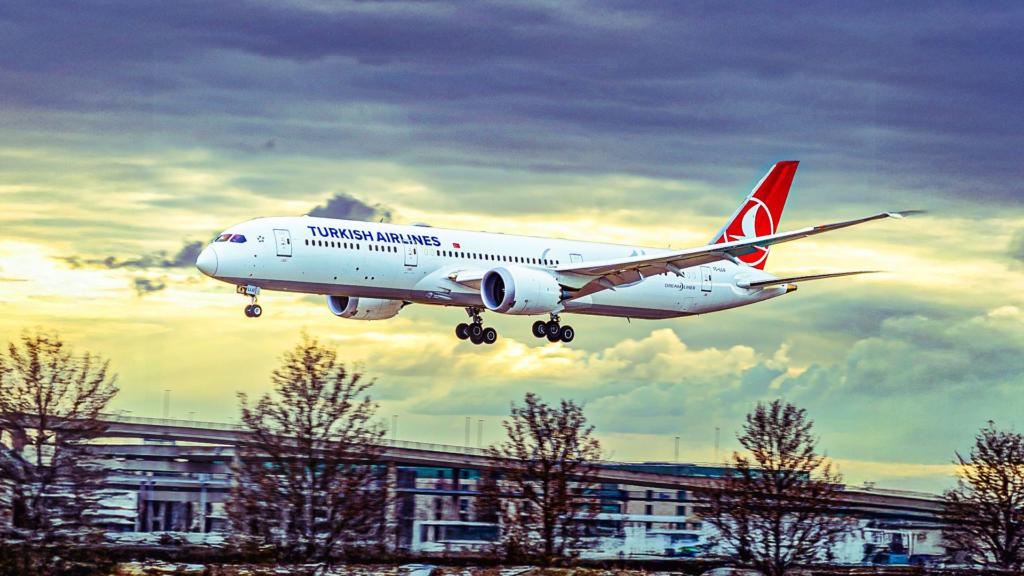
Turkish Airlines has shared its third-quarter financial results for July to September of 2025 with the world. The Istanbul-based 

Indeed, year-on-year growth in both passenger and cargo traffic last month has left 
Key Figures


Turkish Airlines confirmed in a statement released earlier today that it had had its best-ever third quarter in terms of the number of passengers carried, with this figure reaching a grand total of some 27.2 million from July to September of this year. The carrier has now seen 18 consecutive quarters of growth, with its Q3 capacity rising by a factor of 8.2% year-on-year. Compared to pre-pandemic levels, this figure is 43% higher.
On the financial side of things, Turkish Airlines’ total revenues rose to around $7 billion, representing a 4.9% year-on-year increase. When looking at passenger revenues specifically, this growth was even greater, at a factor of 6.1%. However, while the airline achieved a Q3 mainline operating profit of $1.1 billion, this represented a 21.3% decrease, with the carrier citing “softening in yields and ongoing cost pressures.” Ahmet Bolat, its Chair, said:
“The profit we achieved in the third quarter of 2025 once again underscored Turkish Airlines’ adaptability under a wide range of operational conditions through its diversified revenue structure. (…) We are committed to achieving long-term and sustainable success.”
Diving Deeper Into The Data


Turkish Airlines uses EBITDAR (Earnings Before Interest, Tax, Depreciation, Amortization, and Rent) to measure its operational cash generation capacity. In the third quarter of 2025, this figure amounted to a grand total of $2.1 billion. This sum ultimately represented a margin of 29.6%.
Going forward, the Istanbul-based Turkish flag carrier is expecting a steady fourth quarter, with its “full-year 2025 EBITDAR margin expected to remain within the Company’s long-term target range of 22%–24%.” The airline cites “strong forward bookings” for this projection, as well as a positive October.
Indeed, last month saw Turkish Airlines experience growth in both its passenger and cargo traffic, with these metrics respectively enjoying year-on-year increases of 19% and 16%. This reflects success in the airline’s growth strategy, which also saw it acquire a minority stake in Spanish carrier Air Europa in the third quarter of 2025. Elsewhere, Turkish Airlines had a busy Q3 on the commercial front, as it continued to expand its partnerships.
The Airline Has Its Heart Set On Considerable Growth In The Coming Years

Turkish Airlines’ growth in the third quarter of 2025 also concerned its fleet, with the carrier’s portfolio of commercial aircraft as of September 2025 being some 8.4% larger than was the case a year beforehand. The airline achieved this despite, as it puts it, “ongoing bottlenecks in aircraft production.”
As reported by Simple Flying, in order to further its fleet expansion efforts, the Turkish flag carrier has succeeded in sealing a $400 million financing deal from the Bank of China. With the airline aiming to roughly double its fleet by 2033, by which time it plans to have more than 800 aircraft at its disposal, such investment will be required in order to help it to grow in a sustainable manner. September also saw it place a sizeable Boeing order.
This deal consisted of firm orders for 50 widebody twinjet aircraft from the Boeing 787 Dreamliner family with options for 25 more, as well as 100 firm orders and 50 options for the Boeing 737 MAX series. As of September, Turkish Airlines had 506 aircraft in its fleet, and this figure is only going to get bigger.
source