


The Boeing 787 Dreamliner has become a major piece of many airlines’ operations. This is no exception for Turkish Airlines either. Turkey’s flagship carrier has heavily integrated the type into its operations, using its hub at Istanbul Airport to service destinations worldwide.
The 787’s efficiency and range make it the perfect fit for many airlines. 

Development Of The Boeing 787


The Boeing 787 Dreamliner was launched in 2004 as Boeing’s response to rising fuel costs and airline demand for more efficient long-haul aircraft. A key innovation was the extensive use of carbon-fiber reinforced plastic for the fuselage and wings, which accounts for about 50% of the aircraft’s structural weight, marking one of the largest applications of composite materials in commercial aviation at the time.
To achieve these goals, 
Following entry into service, the aircraft introduced several advanced technologies, including a more-electric systems architecture, new high-bypass engines, and aerodynamic improvements like raked wingtips. Passengers benefited from larger dimmable windows, higher cabin humidity, and lower cabin altitude for improved comfort.
Turkish Airlines And The 787


Turkish Airlines has a significant and growing relationship with the Boeing 787 Dreamliner. The carrier placed its first major order for the type in 2017, committing to a mix of 787-9s as part of a broader long-haul fleet expansion. Turkish Airlines took delivery of its first 787-9 in 2019, introducing it with a new long-haul business-class product featuring a staggered 1-2-1 layout.
The 787 plays an important role in Turkish Airlines’ strategy of expanding long-haul connectivity through its hub in Istanbul Airport, where the aircraft’s fuel efficiency and range allow it to serve routes to North America, Asia, and Africa. Because the 787-9 fits well between the airline’s Airbus A330s and Boeing 777-300ERs in both size and economics, it has become a flexible aircraft for launching to new destinations or increasing frequency on existing routes.
In day-to-day operations, Turkish Airlines deploys the 787 on a mix of high-demand intercontinental routes as well as thinner long-haul markets where the larger 777 would offer more capacity than needed. Its fuel efficiency, lower operating costs, and right-sized seating make it ideal for opening new destinations, increasing flight frequency, and maintaining profitability on routes with variable seasonal demand. The aircraft also enhances the passenger experience with modern cabins, improved humidity and pressurization, and a more comfortable interior, strengthening the airline’s competitive position on long-haul flights.


37,000+ Flights: These Are Turkish Airlines’ Busiest Routes
Turkish Airlines flies 37,000+ flights in October: its busiest route was Istanbul–Antalya, and new destinations joined the network.
Longest Frequent Deployments


The most significant route in this segment, and arguably the whole list, is Istanbul Airport (IST) to 
At a close second is another route from the airlines’ hub to Mexico. Istanbul Airport (IST) to 
|
Specification / Feature |
Value |
|---|---|
|
Aircraft type |
Boeing 787-9 Dreamliner |
|
Maximum range |
7565 nautical miles (14,010 km) |
|
Wingspan |
196 feet 10 inches (60 meters) |
|
Length |
206 feet 8 inches (63 meters) |
|
Height |
55 feet 9 inches (17 meters) |
|
Maximum speed (cruise) |
593 mph / 515 knots (954 km/h) |
|
Business class legroom |
43.7 inches (111 cm) |
|
Economy seat width |
17.3 inches (44 cm) |
|
Economy seat pitch |
30.7 inches (78 cm) |
|
Business class layout |
1-2-1 |
|
Economy class layout |
3-3-3 |
Another significant route between Europe and North America is the round-trip offering between Istanbul Airport (IST) — 
Long Haul Deployments

Making up the bulk of Turkish Airlines’ most frequent 787-9 deployments is the long-haul sector, typically covering around 10–13 hours and 4,000–6,000 miles (6,500-9,500km). The most frequent route offering is Istanbul Airport (IST) – 
Another frequent service operated in this route segment is between Istanbul Airport (IST) – 
The shortest route in this segment covers 4,672 miles (7,663 km) from Turkey to Thailand, between Istanbul Airport (IST) – 

Why The Boeing 787 Dreamliner Has Such Unparalleled Fuel Efficiency & Range Flexibility
Discover how Boeing’s 787 Dreamliner achieves its fuel efficiency and range flexibility through advanced materials, aerodynamics, and smart design
Widebody Application On Short Haul Routes


Although principally designed as and used on medium/long-haul routes, the Boeing 787-9 also has the flexibility to be deployed on some shorter routes, where aircraft availability or demand permits/requires. This allows airlines to maximize fleet utilization, accommodate peak travel periods, and provide a premium passenger experience even on shorter segments.
One of the most significant routes in this segment is the 1,882-mile (3,028 km) trip between Istanbul Airport (IST) and 
The shortest route in this distance segment is very short, even by narrowbody standards. Covering just 320 miles (515 km). The route between Istanbul Airport (IST) – Antalya International Airport (AYT), offers 68,400 seats across 228 flights, totaling 21,888,000 ASMs. This Turkish Airlines’ route is significant because it links the country’s main international hub with its largest tourism destination, supporting both domestic and global travel flows. It also boosts regional economic activity by facilitating year-round tourism, business travel, and seamless international connections via Istanbul.
Long-Term Plans With The 787

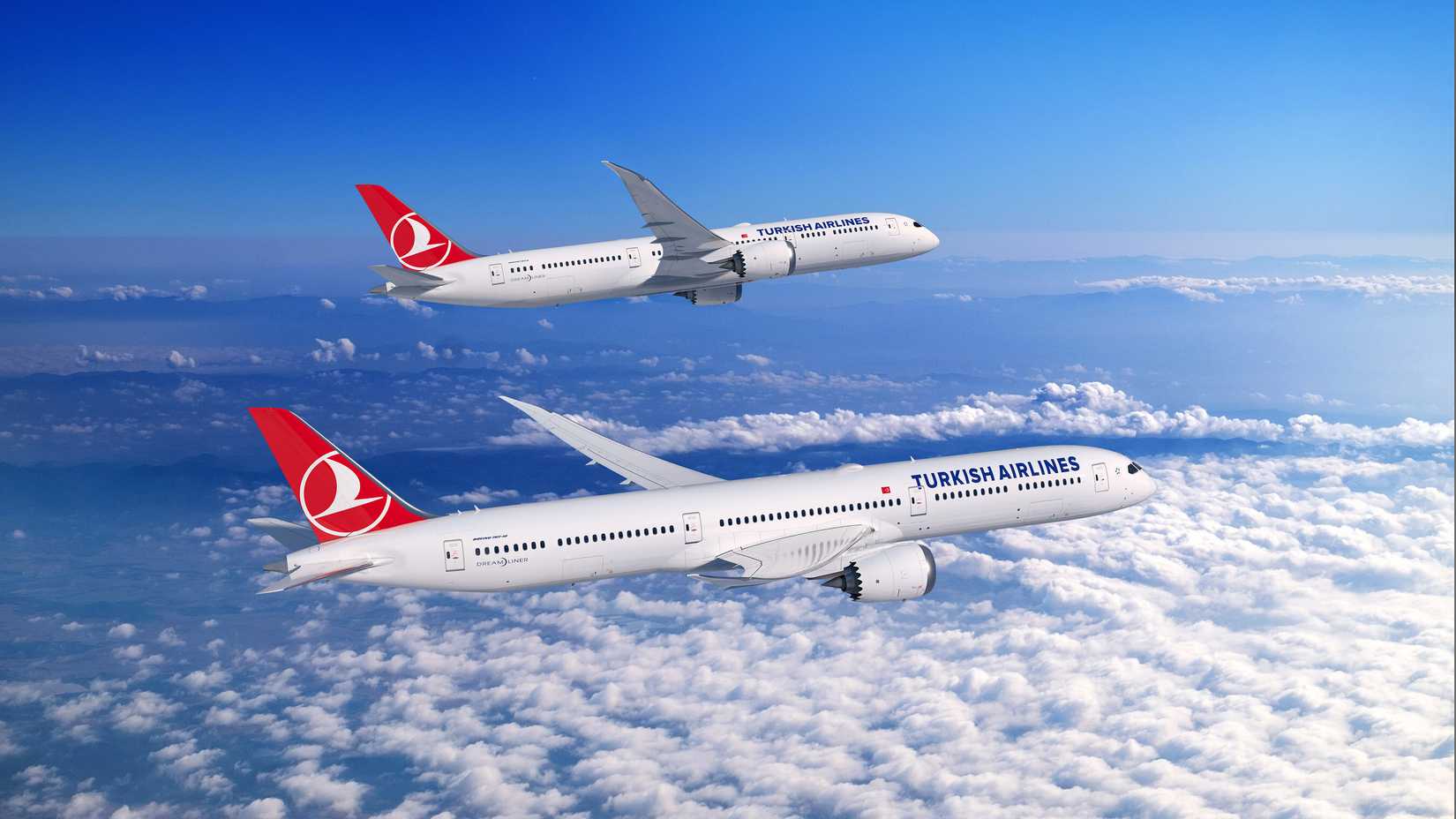
Turkish Airlines recently placed a landmark order for up to 75 Boeing 787s, 35 of the 787-9 model and 15 of the larger 787-10, plus options for 25 more. This is the largest widebody purchase Turkish Airlines has ever made. Delivery of this expanded 787 fleet is planned between 2029 and 2034.
This expansion supports Turkish Airlines’ broader long-term strategic vision: by 2033 where the carrier aims to grow its total fleet to around 800 aircraft, with a very high share of “next-generation” jets (modern, more fuel-efficient aircraft) to replace older types. The 787 Dreamliner, with its fuel efficiency, range, and passenger comfort, is therefore a cornerstone of this renewal and expansion plan.
The inclusion of the 787-10 in addition to the 787-9 gives Turkish Airlines flexibility: the larger 787-10 offers greater passenger and cargo capacity, making it well-suited for high-demand intercontinental routes, such as between Istanbul and destinations in North America, Africa, Southeast Asia, and the Middle East. The airlines’ use of the A350-900 can work in tandem with its Dreamliner fleet. Over time, the expanded Dreamliner fleet will help the airline increase route frequency, open new long-haul destinations, and better match aircraft size to demand, improving both operational efficiency and passenger experience.
source