


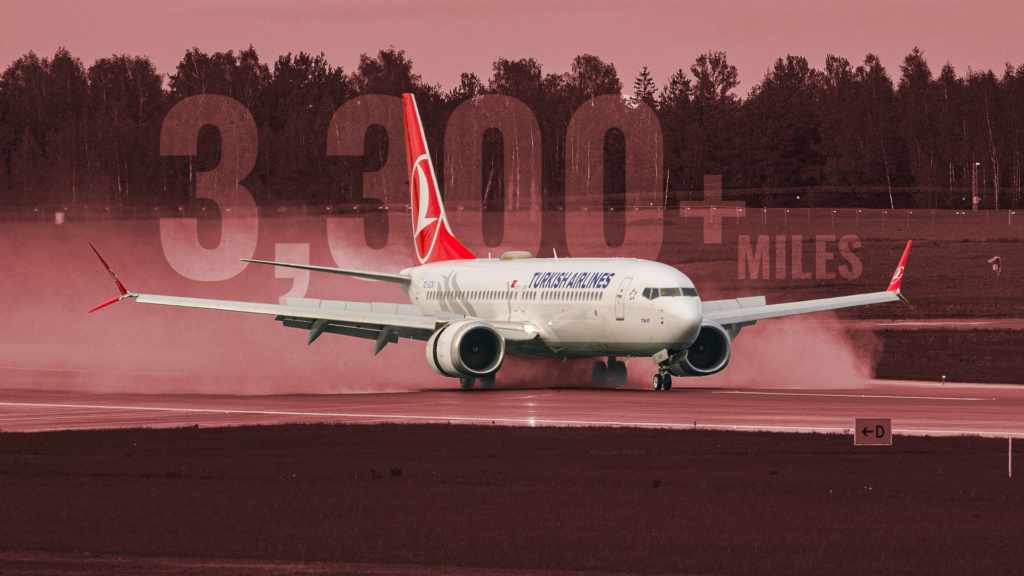
For many travelers, long-haul travel still primarily conjures images of widebody jets, but 

This pattern reflects a broader shift in the industry, with carriers from all across the globe beginning to use narrowbody jets for more long-haul routes. Turkish Airlines operates a large, mixed Airbus and Boeing narrowbody fleet, and it has returned the 737 MAX to front-line service, while also committing to up to 150 additional Boeing 737 MAX aircraft later this decade in order to underpin long-term growth. The overall result is a network where single-aisle jets can reach even farther from Istanbul, stitching together thinner city pairs that would be difficult to justify with a widebody aircraft. This article looks at how Turkish Airlines uses the Boeing 737 MAX, and what data from ch-aviation provided to Simple Flying reveals about route choices and why these aircraft matter financially for the carrier.
A Brief Overview Of Turkish Airlines And Its Boeing 737 MAX Operations


Turkish Airlines has progressively grown from a small national carrier originally founded in 1933 to a genuine global giant, one that operates close to 400 aircraft and serves more than 300 destinations across more than 130 countries from its Istanbul hub. A large part of that scale comes from narrowbody jets, which account for more than half of the fleet and allow the airline to operate dense banks of medium- and long-range flights into Europe, the Middle East, Africa, and Central Asia.
With this narrowbody mix, the Boeing 737 MAX 8 and the 
|
Category |
Boeing 737 MAX 8 Specification |
Boeing 737 MAX 9 Specification |
|---|---|---|
|
Maximum Range |
3,500 nm (6,480 km) |
3,300 nm (6,110 km) |
|
Length |
130 ft (40 m) |
139 ft (42 m) |
|
Wingspan |
35.9 m (117 ft 10 in) |
35.9 m (117 ft 10 in) |
This is all part of a broader plan for the airline to grow its fleet to roughly 800 aircraft by 2033 and transition to an all-new-generation fleet by the middle of the 2030s. As Pratt & Whitney engine issues sideline many Airbus A320neo-family aircraft, additional CFM-powered Boeing 737 MAX jets also offer valuable diversification. Against this backdrop, the long-range Boeing 737 MAX is becoming a key weapon for the carrier and how it deploys long-haul capacity to thinner markets.
A Deeper Look At Turkish Airlines’ Network Strategy


Turkish Airlines’ entire strategy is built around the utilization of Istanbul as a super-hub that sits comfortably between Europe, Africa, the Middle East, and large parts of Asia. Rather than focusing solely on huge local markets, the airline specializes in stitching together hundreds of secondary cities through a single connection, relying on high-frequency services and tightly timed banks of arrivals and departures.
Narrowbody aircraft are central to this model, especially in Africa. Turkish Airlines now serves around 50–51 destinations on the continent, one of the largest African networks outside the continent itself. Roughly two-thirds to three-quarters of these flights are actually operated by a single-aisle aircraft like the Boeing 737 NG, the Boeing 737 MAX, or the Airbus A321neo. These aircraft allow the carrier to offer daily or near-daily service to cities that could not support a large widebody aircraft every day.
Long-haul Boeing 737 MAX routes operated by the carrier pretty much all fit into this playbook. Cities like Dar es Salaam, Zanzibar, Mombasa, and Kilimanjaro attract strong point-to-point demand from Turkey and the wider region. The Boeing 737 MAX gives Turkish Airlines the range needed to fly these kinds of routes nonstop while keeping costs low and in line with the often seasonal and leisure-oriented nature of demand.
Cracking Into The Data: Long African Spokes
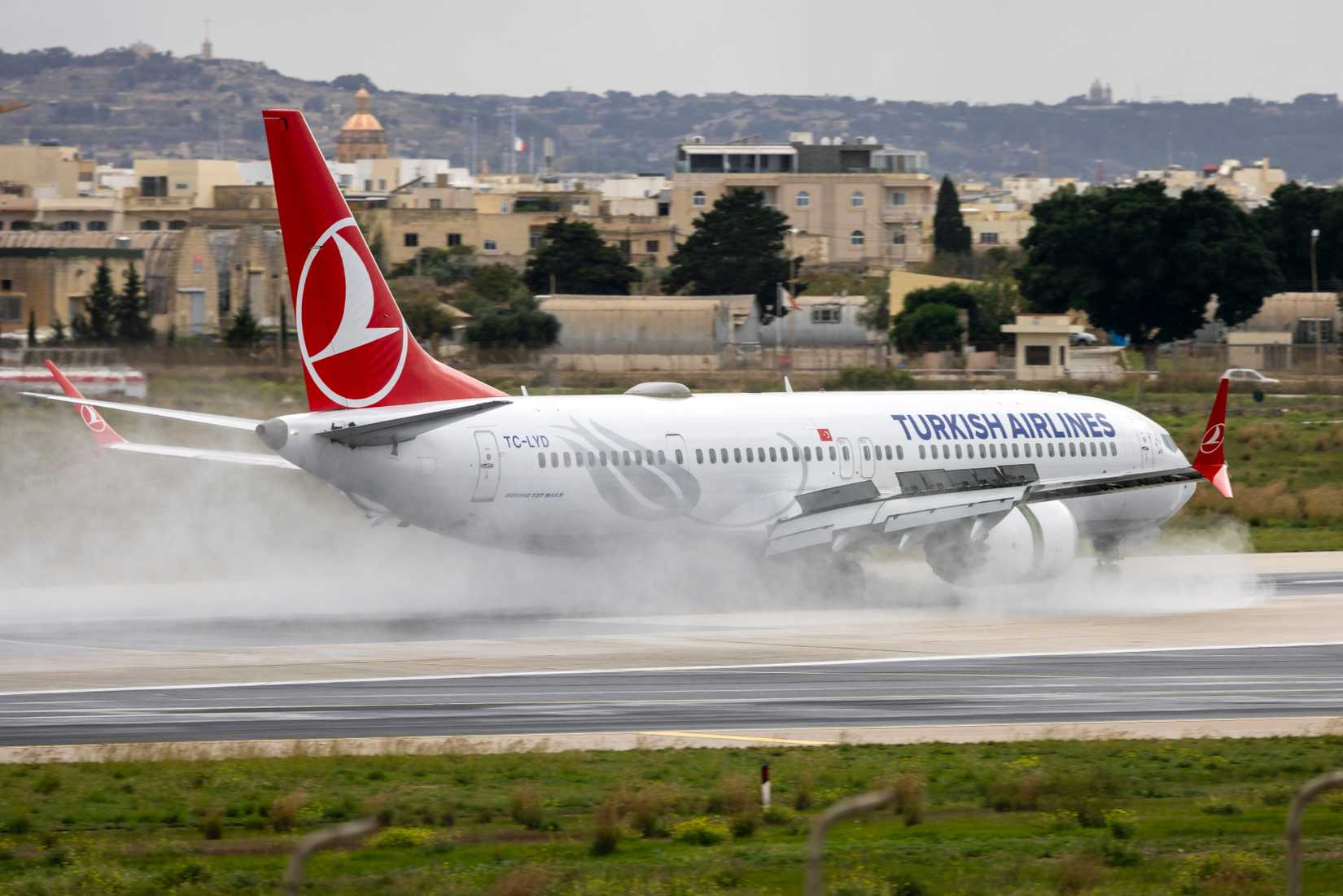
We analyzed scheduling data for Turkish Airlines’ longest Boeing 737 MAX routes. The first thing that jumped out in this analysis is how heavily the airline’s long-haul Boeing 737 MAX routes are tilted towards Africa. African destinations served by the Boeing 737 MAX by Turkish Airlines include Dar es Salaam (DAR), Pointe-Noire (PNR), Banjul (BJL), Zanzibar (ZNZ), Kinshasa (FIH), Abidjan (ABJ), Mombasa (MBA), Kilimanjaro (JRO), Nouakchott (NKC), Libreville (LBV), Accra (ACC), and Kigali (KGL). These are not classic megacity markets but rather a more diversified mix of coastal tourism destinations, resource-rich capitals, and fast-growing regional hubs.
These routes push the upper limits of the aircraft’s capabilities, hitting the sweet spot of where the Boeing 737 MAX can comfortably operate without payload penalties while still delivering major fuel-burn savings over a widebody. The longest route on this list connects Istanbul Airport with Pointe Noire in the Congo, which sits at around 3,350 miles (5,440 km). This illustrates how far the airline is willing to push a single-aisle jet to lock in non-stop connectivity.
Critically, these are not one-off experiments. Many routes demonstrate that the aircraft is used efficiently in both directions, and that capacity is only seldom ramped up to that of a larger widebody when demand justifies doing so. Legacy operators of these kinds of routes, that did not have such a versatile jet at their disposal, would be forced to use a less efficient aircraft for these kinds of services.
The Boeing 737 MAX Has Proven Itself As A Narrowbody Workhorse

When one digs deeper into the routes operated by the Turkish Airlines Boeing 737 MAX, it becomes extremely clear that the aircraft is not just a long-range trophy, but the workhorse of the airline’s narrowbody fleet. The aircraft is used at varying frequencies, allowing the carrier to effectively match demand with supply. Dar es Salaam has only a handful of Boeing 737 MAX 9 sectors and a few hundred rotations of the Boeing 737 MAX 8, demonstrating the type’s interoperability.
The data also highlight how Turkish Airlines bounces between higher-demand days and seasons, using both the dynamic aircraft to serve the amount of demand that exists on any given day. Good examples of routes where the carrier deploys this strategy include Abidjan, Kilimanjaro, and Kigali. On these kinds of routes, the Boeing 737 MAX 8 is used for anchor service while the larger model is layered in on higher-demand days.
Another nuance comes from directional balance, with the airline operating a handful of triangular services in Africa using the jet. These are routes where the aircraft’s versatility and operational capabilities make it the ideal choice for carriers.
What Financial Value Does The Boeing 737 MAX Offer Turkish Airlines?

The Boeing 737 MAX is attractive to Turkish Airlines for a few key reasons. For starters, the aircraft offers improved fuel burn and lower carbon emissions in comparison to older Boeing 737-800s, reducing overall unit costs on long sectors, the places where fuel is the biggest line item for the airline.
Second, the Boeing 737 MAX’s range allows Turkish Airlines to replace some widebodies on thin, 3,000-plus-mile routes without sacrificing non-stop service, freeing up Airbus A330s and Boeing 787s for markets that require the capacity of a large widebody. The aircraft has thus become a go-to for these kinds of long, but thin, routes.
The standardization of new-generation narrowbodies helps the airline achieve its 2033 strategy of operating a larger, more efficient fleet of up to roughly 800 aircraft, with a heavy tilt towards these ultra-efficient next-generation models. Lastly, the 737 MAX gives Turkish Airlines some insulation from ongoing engine issues related to its Pratt & Whitney-powered Airbus A321neos, which have served as core pieces of its fleet for years now.
What Are Our Key Takeaways From This Analysis?

Our analysis of Turkish Airlines’ 2025 Boeing 737 MAX network highlights how far single-aisle technology has come. From Istanbul, the airline regularly flies its Boeing 737 MAX 8s and Boeing 737 MAX 9s nearly 3,400 miles to destinations across East, West, and Central Africa. It is turning what used to be classic widebody space into high-frequency narrowbody markets.
The data we have analyzed confirms that these are not just showcase routes for the carrier, but rather high-frequency corridors that see hundreds of annual flights and high amounts of ASMs, helping underscore the MAX’s role as a true workhorse. Strategically, this dovetails with Turkish Airlines’ broader hub-and-spoke model, which has been built around Istanbul.
Narrowbody aircraft feed a vast global network for the airline, with Africa as a core growth pillar. With around 25 Boeing 737 MAX jets in service with plans for up to 150 more, the airline is clearly betting that long-range single-aisle models will be central to its next decade of expansion.
source