


For the first time, NATO saw a naval UCAV conducting a live-fire exercise when the Baykar TB3 launched MAM-L guided munitions on a floating target.
Turkey’s Bayraktar TB3 Unmanned Combat Aerial Vehicle (UCAV) attained two major milestones over the last week during NATO’s ongoing Steadfast Dart 2026 drill in the Baltic Sea. The TB3 demonstrated its capabilities as a Medium-Altitude High Endurance (MALE)-class maritime surveillance-strike drone while operating from the TCG Anadolu amphibious assault ship, now serving also as drone carrier, while participating in the exercise.
On Feb. 15, 2026, developer Baykar released footage of the aircraft dropping two Roketsan MAM-L guided bombs on a floating sea target, marking the first time a naval drone conducted live-munitions fires in a NATO exercise. Baykar later said on Feb. 18 the TB3 completed a total of 232 naval sorties during the exercise.
TB-3 UAV, launched from TCG Anadolu, conducted an 8-hour flight in the Baltic Region in coordination with Enhanced Vigilance Activities in the region. See more👇 https://t.co/IZipgyNVEU
— NATO Allied Joint Force Command Brunssum – JFCBS (@NATOJFCBS) February 21, 2026
Two TB3 prototypes, the PT-4 and PT-2, participated in these drills in freezing -6 degrees celsius cold temperatures and strong winds. The company also released footage from the drone’s optical systems and the TCG Anadolu showing digital illumination of the upper deck markings and the flight path aiding the fully autonomous landing and recovery system.
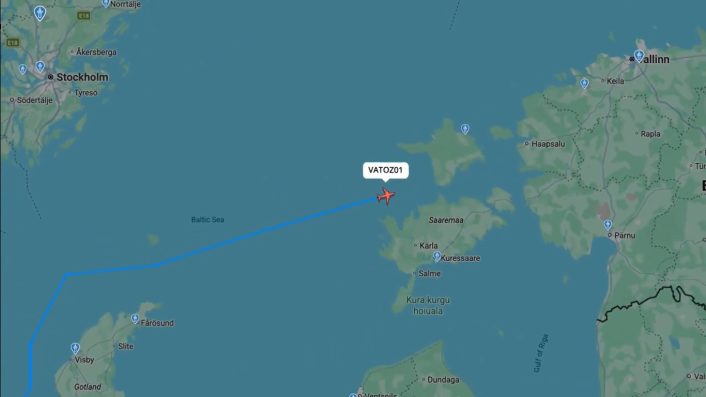
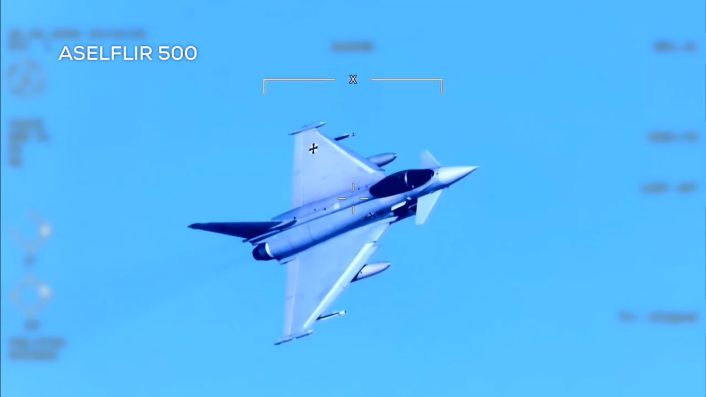
A second major milestone was reported on Feb. 20, after the TB3 conducted a day earlier a joint exercise with Luftwaffe (German Air Force) Eurofighter Typhoons, during an eight-hour flight to the Baltic coastline near Estonia. The TB3 also captured German and Italian Typhoons with its ASELFIR 500 EO system.
✈️ #BayraktarTB3 ⚓️🚀
⚓️ TCG ANADOLU🛫 Steadfast Dart-2026 NATO Tatbikatı | Exercise
🤝 Eurofighter’larla Ortak Tatbikat
🕐 Baltık Denizi | 8 Saat Uçuş
📍 1.700 km Mesafe🤝 Joint Exercise with Eurofighters
🕐 Baltic Sea | 8 Hours of Flight
📍 1,700 km Distance… pic.twitter.com/UDWLRDbC03— BAYKAR (@BaykarTech) February 20, 2026
NATO and the Turkish Ministry of National Defense said that the flight, which covered a 1,700 km distance, was a part of the alliance’s Enhanced Vigilance Activities in the Baltic Region. The aircraft was also visible on flight tracking websites, as shown by the video released by Baykar.

Steadfast Dart 2026
Hosted by Germany under NATO’s Joint Force Command (JFC) Brunssum, Steadfast Dart 2026, which commenced on Jan. 2 and will conclude on Mar. 18, is NATO’s major joint deployment maneuver in 2026. Approximately 10,000 personnel from 11 member nations are participating in the drills.
The exercise validates the newly established Allied Reaction Force’s (ARF) rapid reinforcement capabilities across land, sea, air, space, and cyber domains. With no U.S. forces participating in this installment, the drill indicates Europe’s pursuit of building military capacity and deterrence, independent of American support, in response to strained transatlantic relations under President Donald Trump.
#BayraktarTB3 ✈️⚓️🚀
⚓️ TCG ANADOLU✅ Steadfast Dart-2026 NATO Tatbikatı
2️⃣ x MAM-L Salvo Atışı
🎯 Tam İsabet✅ Steadfast Dart-2026 NATO Exercise
2️⃣ x MAM-L Salvo Firing
🎯 Bull’s Eye#MilliTeknolojiHamlesi 🌍🇹🇷 pic.twitter.com/sweP9o7SiN— BAYKAR (@BaykarTech) February 15, 2026
Beside the TCG Anadolu, the Turkish Navy has also sent frigates TCG Istanbul, TCG Oruçreis, and fleet replenishment tanker TCG Derya. During the MAM-L demonstration, Gen. Ingo Gerhartz, former Luftwaffe chief and current commander of NATO’s Allied Joint Force Command (JFC) at Brunssum, Netherlands, was present on board the TGC Anadolu.
“Steadfast Dart 2026 shows that the Alliance can act swiftly, stand united, and respond decisively under the leadership of Joint Force Command Brunssum – exactly when it matters most,” Gerhartz said.
#BayraktarTB3 ✈️⚓️🚀
⚓️ TCG ANADOLU✅ Steadfast Dart-2026 NATO Tatbikatı | Exercise
🛫 Toplam Deniz Sortisi: 232
🛬 Total Naval Sorties: 232#MilliTeknolojiHamlesi 🌍🇹🇷 pic.twitter.com/HkSkNDPRFi— BAYKAR (@BaykarTech) February 18, 2026
MAM-L firing
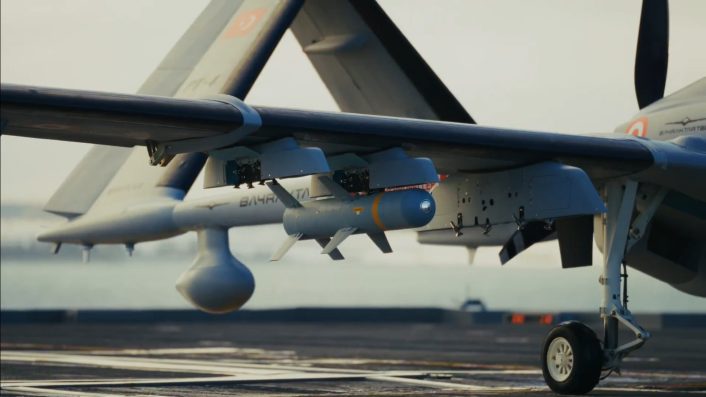
In the munitions firing, the TB3, considered a naval version of the Bayraktar TB2 UCAV, carried two Roketsan MAM-L semi-active laser guided munitions that were released simultaneously on the target. The drone’s operation, control and weapons engagement were carried out by Baykar personnel present onboard the TCG Anadolu.
Prototype PT-4 was used in this test. The TB-3 has fired both the MAM-L and the laser-guided MAM-T glide bombs before but, according to TurDef, this was “the first use of a shipborne UCAV in a NATO exercise.”
TB3’s use in a NATO exercise also comes at a time when Turkey’s Baykar and Italy’s Leonardo have formed the LBA Systems joint venture, with Europe being a primary market for these Turkish drones with specialized European mission systems and certification.
Eight-hour Baltic Sea patrol
The patrol over the Baltic Sea was described as a “joint exercise with Eurofighters.” The TB3 took off around 6 am on Feb. 20 from the TCG Anadolu, which was south of the Swedish island of Gotland.
The track released by Baykar showed that the TB3, flying with callsign VATOZ01, had entered well into the northwestern Estonian region of Happsalu, before retracing its journey. The Baltic Sea region sees frequent Russian Navy drills with units based out of the exclave of Kaliningrad, while fighter-bomber, intelligence and other aircraft are also routinely intercepted by Allied fighters.
TB3 UCAV
TB3 made its maiden flight in October 2023, and reports a year later said it already had entered mass production, with export orders expected by early 2025, although there are conflicting reports. It is also not clear which prototype design has been frozen to be rolled out on the factory line.
The TB3 made history on Nov. 19, 2024, when the UCAV’s second prototype conducted its first take-off and landing from the TCG Anadolu. Baykar added at the time that the landing was fully autonomous.
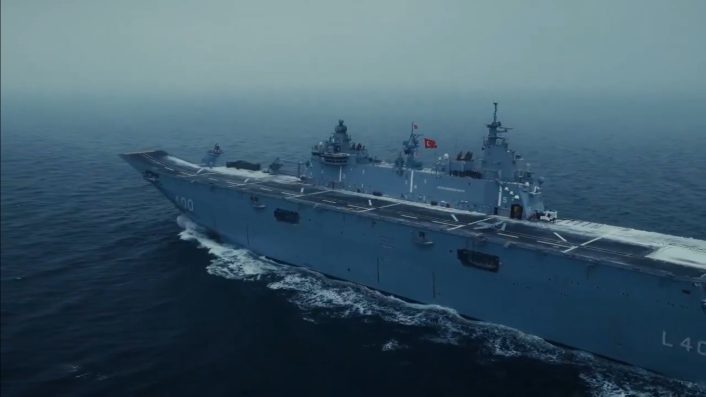
The TB3’s prototype PT-2 demonstrated on that occasion its specially designed braking system, which eliminated the use of arrestor hooks. Advanced flight control algorithms kept the aircraft stable despite significant crosswind throughout the approach to the ship’s deck.
Turkish defense software and IT solutions company Havelsan also announced on Feb. 22, 2026, that it successfully completed integration tests between its ADVENT combat management system and the TB3 during the Steadfast Dart exercise.
source