


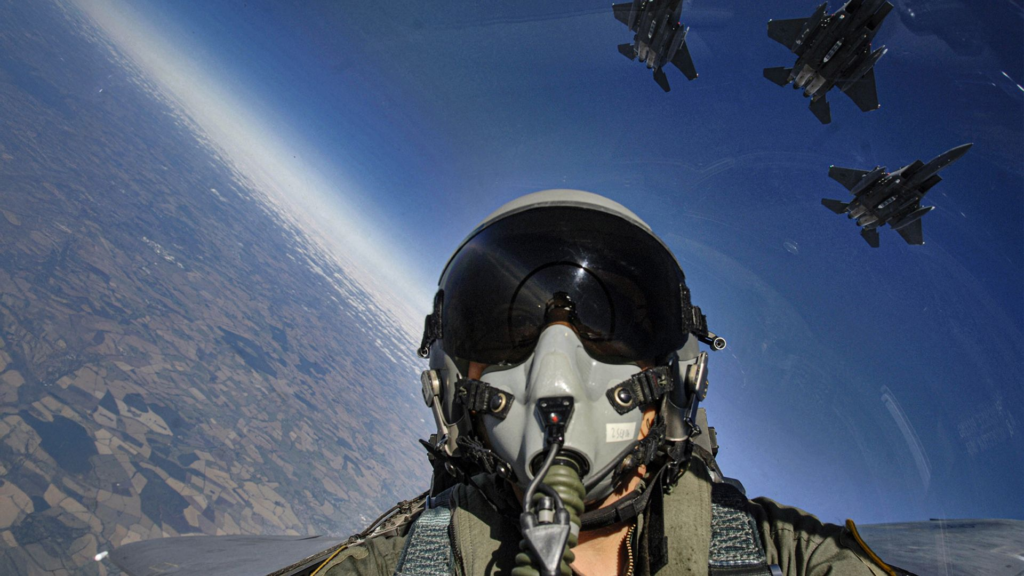
The partnership between the United States Air Force (USAF) and American aerospace companies, that of a defense industrial base, is arguably the most powerful “secret weapon” the USAF has. Instead of one individual technological marvel, the secret weapon is rather an intricate system of industrial efficiency, manufacturing scale, and innovative collaboration.
That relationship has kept the superiority of American air power at the forefront around the world for decades, hearkening back to lessons from World War II, when the US outpaced its enemies by pivoting its powerful industrial base to wartime needs. Termed the “Arsenal of Democracy,” the defense industrial base is still a significant force multiplier.
The effort behind Lockheed Martin’s F-35 Lightning II is one excellent example of this relationship, as are the Northrop Grumman B-21 Raider and the Boeing T-7A Red Hawk. Even still, the Collaborative Combat Aircraft (CCA) and the upcoming sixth-generation 

Equally as important as state-of-the-art “exquisite” platforms are the legacy airframes that presently serve as the workhorses of the air force today. The relationship between sustaining and modernizing legacy jets while developing state-of-the-art warplanes is a central pillar of the USAF doctrine that could be described as a logistical and manufacturing “defense in depth” strategy.
A Legacy Of Air Power


The Air Force’s longstanding partnership with US aerospace firms is a prime example of the development of US military dominance, which is marked by a remarkable industrial capacity that quickly adjusts to production demands during times of war and guarantees continued air superiority. This dynamic famously emerged during World War II, when the Allied victory depended heavily on the US industrial base.
The government successfully leveraged the capacity and innovation of private industry through the War Production Board, transforming civilian manufacturers into military organizations. The United States supplied nearly two-thirds of all Allied military equipment in WWII, including an astounding 297,000 aircraft. That was possible thanks to the transition of makers like Boeing, Lockheed, General Motors, and Ford transitioning from consumer goods production to the output of warplanes, tanks, and ships.
This massive production output, coupled with continuous technological advancements like the Boeing B-29 bomber, highlighted the unmatched capabilities of the US industry to dominate global air power. America maintains its air power advantage through ongoing innovation and manufacturing efficiency.
Winning The Arms Race


During the Cold War, a massive military-industrial complex arose, designed to sustain the technological edge over the Soviet Union. Innovation became emblematic of US strategic doctrine. On top of focusing on the development of long-range, nuclear-capable bombers such as the B-52 and B-1, it also yielded advanced fighters like the F-15 to counter Soviet technology.
The B-2 stealth bomber and Lockheed and Boeing’s fighters shared R&D expenses while investing in critical national infrastructure, and laid the groundwork for technologies like the internet and GPS – just two examples of cooperative programs that showed how closely government and commercial business worked together.
The ability to develop advanced, networked platforms like the F-35 and B-21 Raider is the foundation of the US military force projection strategy worldwide. In order to increase productivity and preserve technological leadership in manufacturing, the aerospace industry is embracing digital transformation and modernizing facilities with advanced automation and digital engineering.
The High-Low Fleet


The US Air Force’s “high-low” fleet strategy maximizes existing legacy platforms while integrating state-of-the-art platforms by balancing cutting-edge capabilities with cost-effective volume, which in turn facilitates the modernization of its industrial base. Legacy jets can operate as force multipliers, often in conjunction with advanced aircraft, leveraging the superior situational awareness provided by fifth-generation platforms or acting as sensor-data nodes within a broader network.
The low end of the mix, currently comprising aircraft like the F-16 and some F-15 variants, are used for missions in less-contested or permissive environments where the advanced capabilities and stealth of fifth-generation fighters are not essential. This preserves the more expensive, high-end assets for critical, high-threat scenarios.
Instead of costly redesigns, legacy platforms receive targeted, software-driven updates and service life extension programs (SLEP) to keep them relevant against evolving threats and extend their operational life. Continued maintenance and upgrades of legacy aircraft ensure a sustained demand signal for specific skills and components within the defense industrial base, preventing the complete loss of expertise for older systems.
One of the USAF’s most important contractors, Boeing, has a highly concentrated center for defense aerospace in the St. Louis area. Those facilities not only produce the F-15EX Eagle II but will likely be the manufacturing hub of the sixth-generation F-47 fighter. The co-location of production sustainment for both the most advanced legacy fighter in the Air Force and the most high-tech stealth fighter makes this aerospace hub a prime example of the Air Force’s secret weapon.
The F-15EX program enhances legacy platform capabilities while maximizing existing infrastructure, allowing the USAF to introduce new capabilities while minimizing logistical burdens. The F-47 Next Generation Air Dominance (NGAD), on the other hand, introduces advanced tech and engineering for the production of the multi-spectral stealth, long-range fighter. As the production of the F/A-18 Super Hornet Strike Fighter winds down, the T-7A Red Hawk trainer and the MQ-25 unmanned aerial tanker are also ramping up.
All of the platforms, high or low, will serve as components in a “family of systems,” enhancing integrated fleet operations alongside uncrewed Collaborative Combat Aircraft (CCAs). The substantial investment in the F-47 program has also led to significant upgrades to the St. Louis facilities, establishing it as a modern defense technology hub, keeping the industrial base stable for years to come.
The Bomber Plant

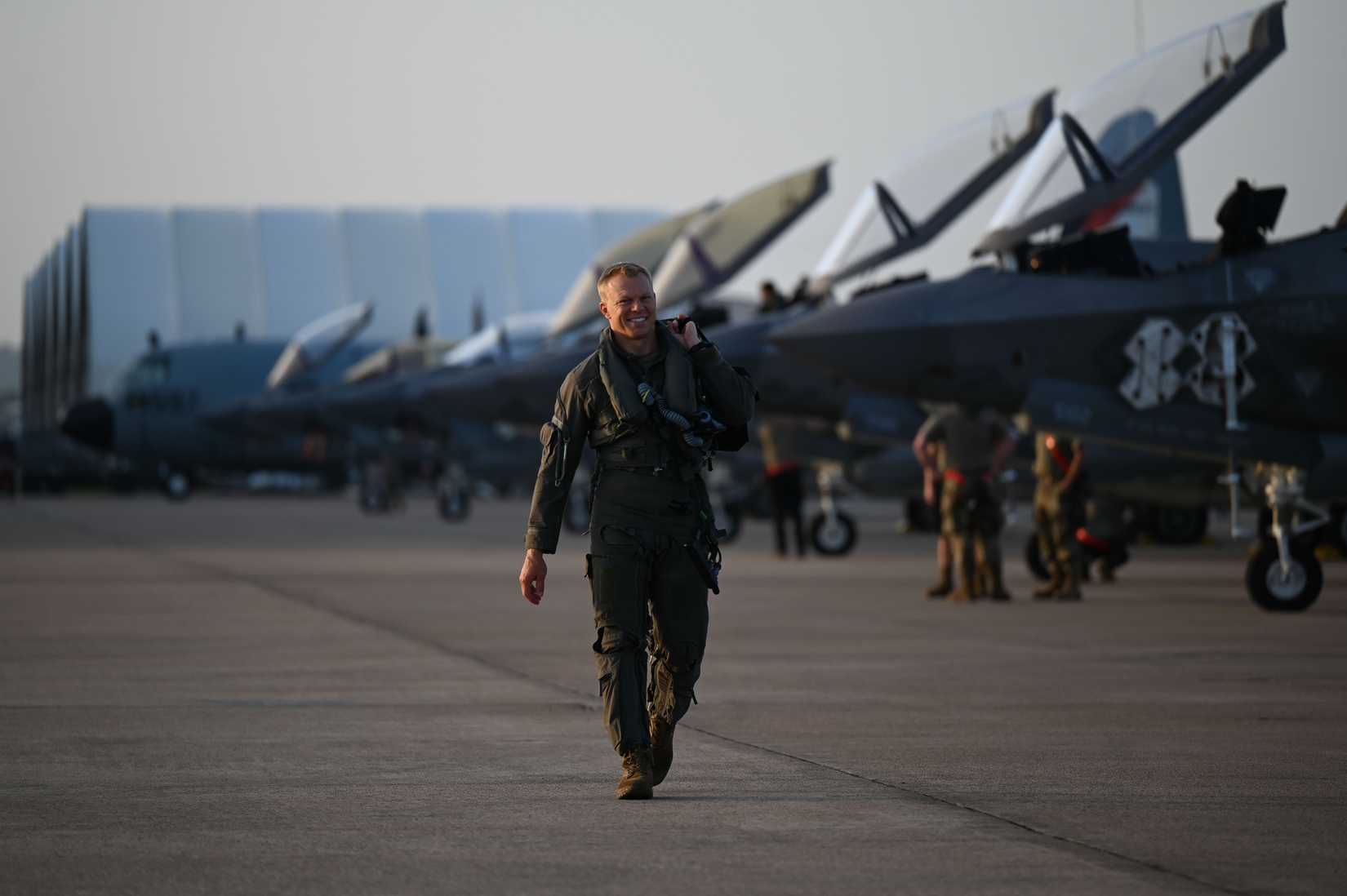
The F-35 final assembly facility in Fort Worth, Texas, historically known as Air Force Plant 4 or the “Bomber Plant,” exemplifies the Air Force’s strategy to maximize efficiency and modernize its industrial base. The bomber plant was originally constructed to produce B-24 Liberator bombers. Since then, it has gone on to build the B-36 Peacemaker, and it now makes both the F-16 and the F-35. The mile-long facility is also called “The Fighter Factory” by many.
The integration of smart factory concepts through data-driven analytics and quality control systems not only enhances the F-35 production process but also sets new benchmarks for future aircraft programs. In order to produce the fifth-generation stealth fighter with the exacting tolerances required, a host of innovative technologies was incorporated into the facility, which spurred an extensive modernization drive.
That modernization also incorporated artificial intelligence (AI). Greg Forrest, vice president of AI Foundations and Commercialization at Lockheed Martin, remarked:
“Lockheed Martin’s AI ecosystem has consistently pushed the boundaries of what’s possible in defense. So instead of keeping these innovations in-house, we’re sharing them with our industry partners. We’re all facing similar challenges, and by working together with a foundation of responsible AI, we can accelerate critical solutions to deliver real-world results.”
The Fort Worth crucial manufacturing facility is not only steeped in history, but its modern-day function is vital to the Air Force’s high-low fleet strategy. The continued production sustainment of the F-16 Fighting Falcon is one of the most vital cost-effective platforms in the low end of the fleet. At the same time, the F-35 is the backbone advanced fighter for the data-centric warfare strategy of 21st-century air power.
A Common Airframe

The development of the F-35 Joint Strike Fighter as a common airframe for three services of the Department of Defense, as well as 19 allied partner nations, is a major step forward in this USAF strategy. The benefit of having a single, standardized global fleet allows for one massive consolidated manufacturing source, training apparatus, and supply chain. The procurement and sustainment of a fifth-generation fighter with a worldwide support network not only makes it more lethal but also makes it more cost-effective and resilient.
The unified logistics system (Autonomic Logistics Information System, or ALIS) serves as a common framework for maintenance, training, and operational coordination for all users around the world. The 80% parts commonality that all variants share allows for an exceptionally simple spare parts pool that can be shared between all services and allied nations. That is critical for maintaining readiness and rapidly repairing jets during wartime operations in forward-deployed locations.
Upgrades and modernization efforts (like the Block 4 enhancements) are developed once and then integrated across the entire global fleet, rather than developing separate updates for disparate airframes. This accelerates the fielding of new capabilities and ensures all operators remain at the technological forefront efficiently.
Exquisite Platform Pairing
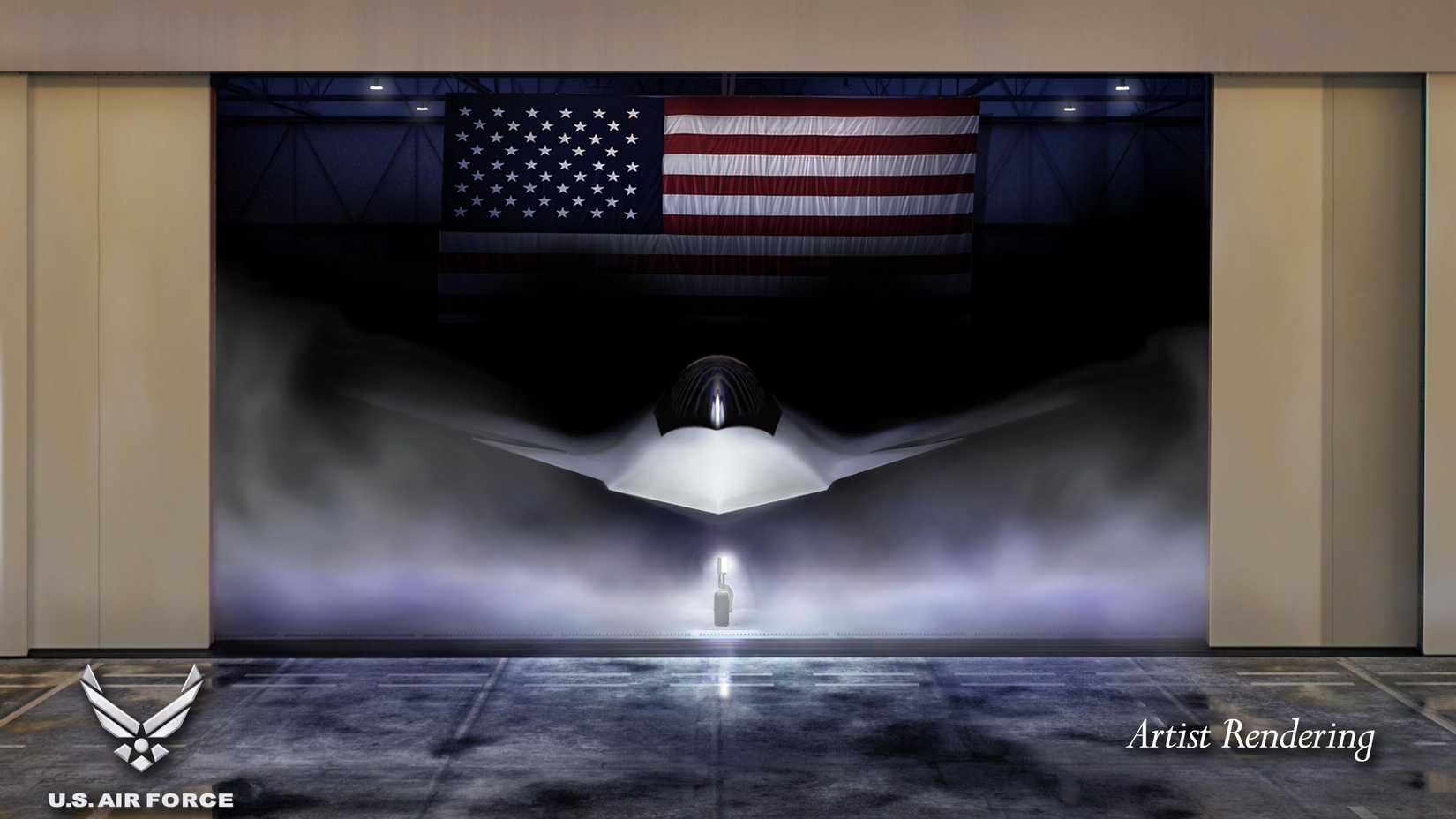
The high-low mix is a transitional strategy that manages the financial and operational challenges of modernization. It allows the USAF to maintain the necessary fleet size for its global commitments (low end), while simultaneously developing and fielding the superior capabilities required for future conflicts (high end).
This approach supports operational agility, avoids capability gaps, and provides a long-term, sustained demand for industry, which is crucial for a healthy and responsive defense industrial base.
Introducing new aircraft drives the modernization of Air Force depots as well as contractor factories. This allows for the adoption of new “smart factory” concepts that improve overall efficiency and productivity throughout the entire sustainment apparatus. New programs stimulate defense industrial base investment in cutting-edge production practices like digital engineering, advanced manufacturing (3D printing), robotics, and advanced data analytics.
source