


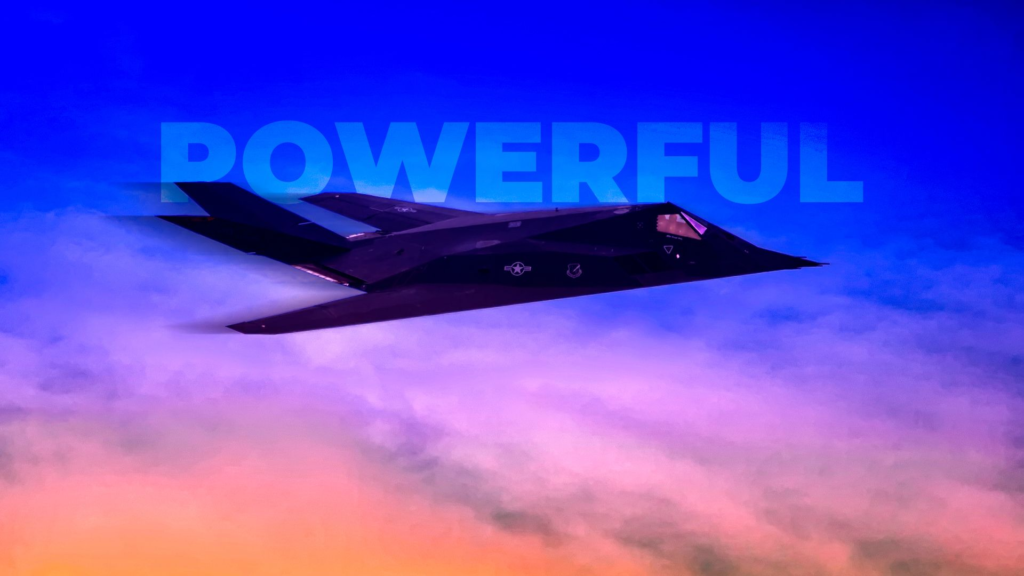
The Skunk Works division of Lockheed delivered the world’s first stealth warplane in 1981, but its existence wouldn’t be made public knowledge until several years after it began service. The F-117 Nighthawk dramatically changed modern warfare. It served for decades before the 21st arms race for fifth and sixth-generation fighters we see today. The Nighthawk proved itself on the battlefield, and even though a single aircraft was lost in combat, it showed the game-changing possibilities of stealth warplanes.
The introduction of stealth technology was a watershed moment and how modern militaries view air power. The legacy of the F-117 is easily apparent in current 5th-Gen aircraft like the Lockheed Martin F-22 Raptor, F-35 Lightning II, and Northrop Grumman B-2 Spirit. Forthcoming platforms like the 6th-Gen Boeing F-47 Next Generation Air Dominance fighter or B-21 Raider stealth bomber build upon the foundation that the Nighthawk laid.
The Nighthawk Goes To War

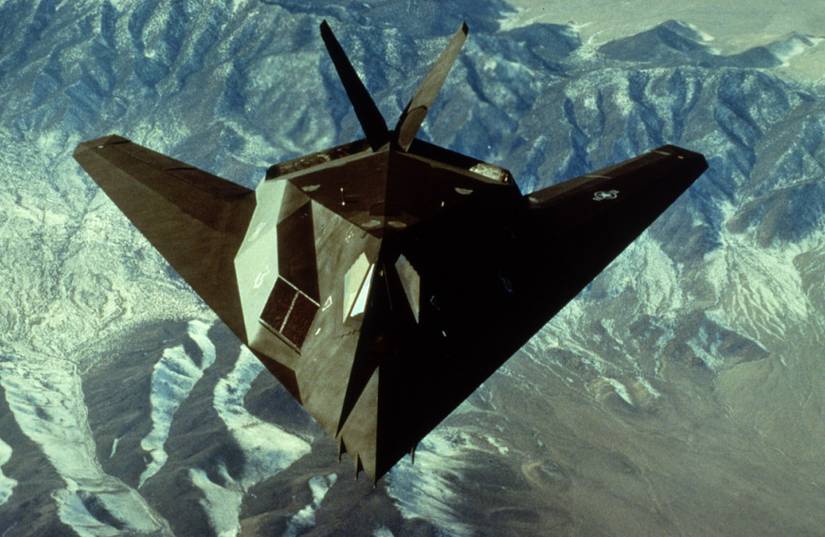
The F-117 is a product of the dramatic arms race of the Cold War that gave rise to many technological breakthroughs, which have changed our world forever. The constant effort to stay ahead of the Soviet Union inspired the creation of the Nighthawk, but it outlasted its original adversary and went on to serve in the most important conflicts of the late 20th and early 21st century.
The first combat sorties of the F-117 launched from their home base at Tonopah test range and flew directly to Panama under the cover of night. The mission required seven in-flight refuelings before the stealth fighters would arrive over their target areas, according to an account reported by Key Aero. The 3000-mile Journey was flown by 8 Nighthawks accompanied by two KC-10A tankers in support of a US Army Ranger dawn raid on December 19, 1989.
The opening Salvo of the F-117’s combat career was not a mission of Destruction but rather a distraction. The bombs dropped by The Nighthawks intentionally did not destroy or kill anything, but rather confused the elite soldiers of General Manuel Noriega. The US Army Rangers were then able to overcome Noriega’s fiercely loyal and skilled unit, Battalion 2000.
The commander of the 18th Airborne Corps, Lieutenant General Carl Steiner, later stated that the air raid was executed perfectly, according to F117A.com. The first publicly known mission of the Nighthawk was a resounding success, and the struggle to bring down Noriega’s military regime would continue until his surrender on January 3, 1990.
The Gulf War Era


In the first Gulf War, the F-117 flew over 1,000 missions against over 1,500 high-value targets in Iraq. Primarily during Air Raids Over Baghdad amidst heavy anti-aircraft fire, the Nighthawk Fleet would rack up almost 7000 flight hours. The F-117 was so effective that it was assigned nearly 20 times more missions than any other aircraft of the conflict.
In addition to being the only stealth fighter in the world at that time, the F-117 was one of the few warplanes capable of dropping laser-guided bombs. Almost every Nighthawk in the US Air Force fleet would contribute to the Coalition Forces’ air campaign. By the end of the 1991 air war, the Nighthawk squadron accounted for roughly one-third of all bombs dropped by the USAF.
In the 2001 Operation Enduring Freedom against the Taliban of Afghanistan, the F-117 would see action, but far less so, as there was no significant counter-air threat. On the other hand, the first strikes against Saddam Hussein in the second Gulf War were executed by Nighthawks. The very first bombs dropped in Operation Iraqi Freedom were targeted at Saddam Hussein himself. They would not succeed in assassinating the dictator, but the jets would drop many bunker busters on other hardened targets during the campaign.
Operation Allied Force

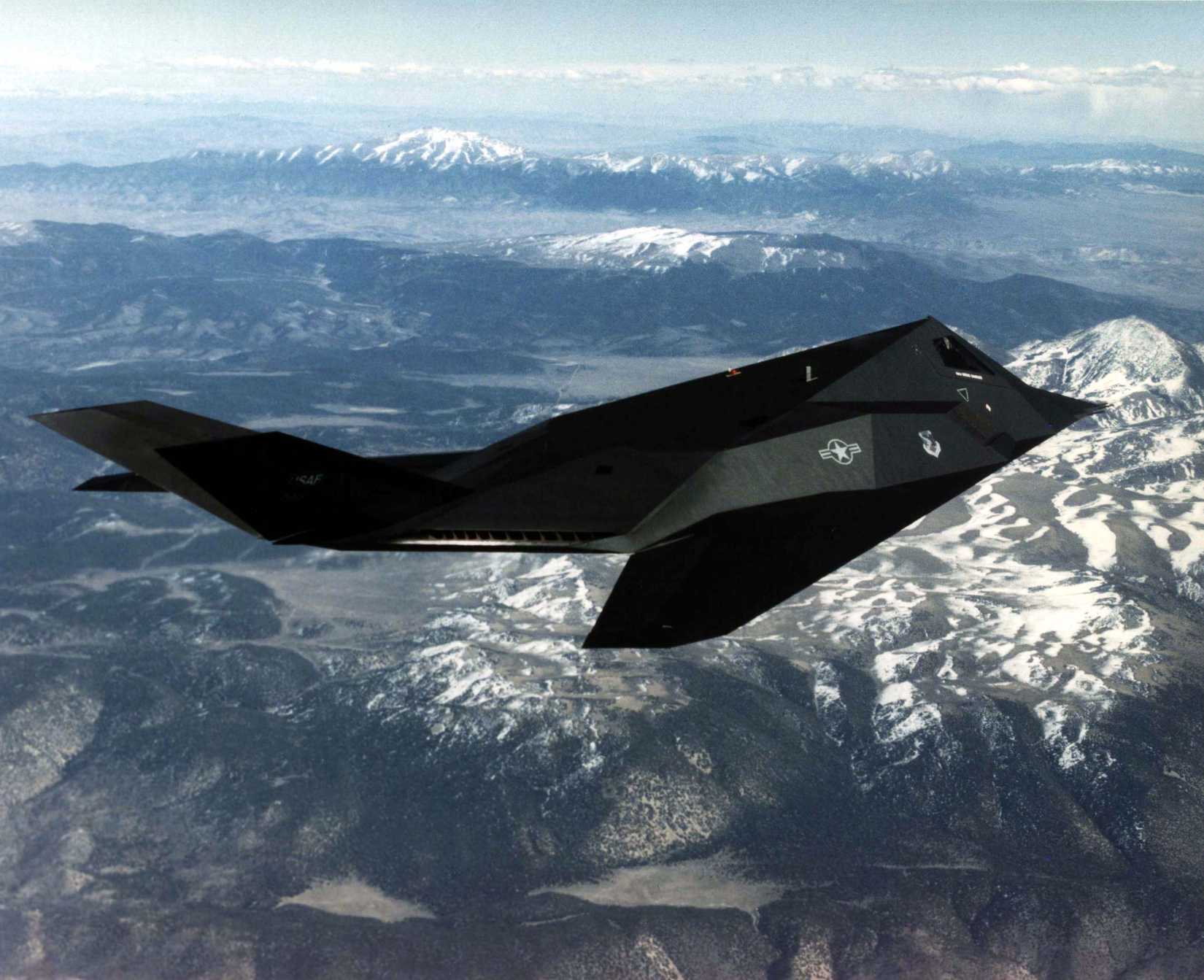
Arguably, the peak of the Nighthawk’s career was also the Final Chapter in its combat service record. When NATO launched a coalition air campaign against the Army of Yugoslavia in 1999, the F-117 was once again called upon. The massive air war was triggered by Serbian President Slobodan Milosevic’s campaign of ethnic cleansing of Kosovar Albanians.
This time, the Nighthawk would be complemented by Northrop Grumman’s B-2 Spirit stealth bomber. Operation Allied Force would see the first air attacks launched by the B-2 and other non-stealth platforms. The F-117 would still be used extensively to attack hardened targets and high-value targets defended by surface-to-air missiles and other defenses that conventional jets could not penetrate.
A single F-117 piloted by USAF Colonel Daryl Zelko was successfully struck by a missile fired by Yugoslavian Colonel Zoltan Dani. The Yugoslavian Army was using a chain of spotters in an attempt to catch The Nighthawks at their most vulnerable stage of flight so that the radar of their missiles would be able to lock on. Thanks to this system, Dani succeeded in bringing down Zelko, whose callsign was ‘Vega 31.’
At the moment when he was targeted by the SA-3 ‘Goa’ Soviet missile, Zelko said that his bomb-bay doors had just opened. F-117 serial number 82-0806 was destroyed by Patrick successfully ejected. Zelko landed barely a mile from the crash site and, after a dramatic eight-hour search and rescue effort, was extracted by Air Force Parajumper rescue teams.
Press and civilians arrived at the crash site before other Air Force jets could destroy the wreckage of Zelko’s jet, named Something Wicked. After the war, Zelko and Dani would eventually be reunited as the two veterans bore no animosity but rather respect and shared a powerful bond from the battle. The movie Behind Enemy Lines was even inspired by the incident, which is still the one and only shoot down of a US stealth aircraft.
Return To Tonopah

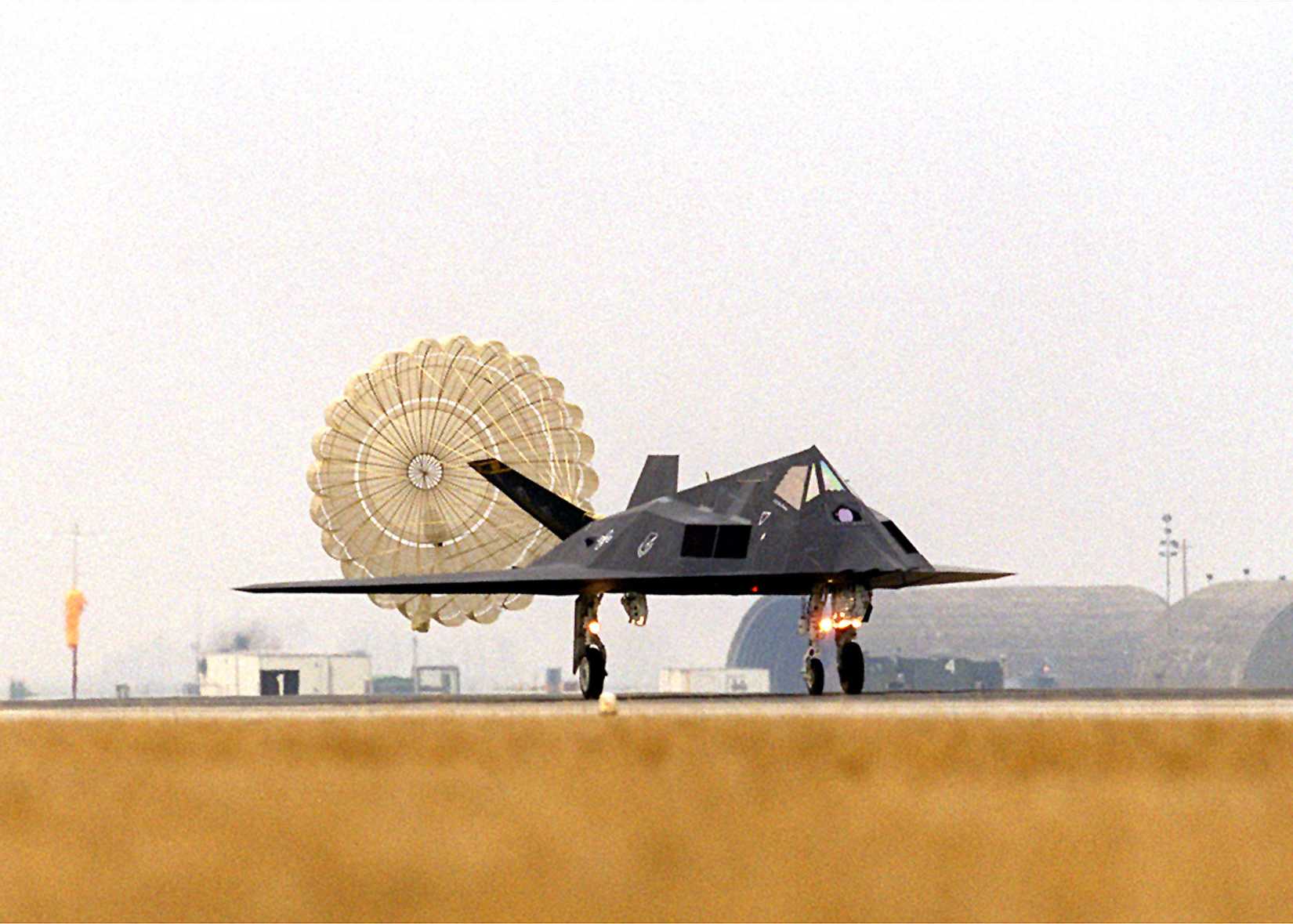
The F-117 isn’t finished yet either. A squadron of 45 aircraft is still maintained in flying or readily restorable condition by the United States Air Force. The USAF reportedly demilitarizes and decommissions a couple of jets per year, but the other aircraft are still used in testing, training, and can be deployed for frontline duty if required.
The retired F-117s are stored in their original hangars at the Tonopah Test Range, unlike the majority of USAF aircraft, which are retired to Davis-Monthan AFB. As part of the 2007 National Defense Authorization Act, Congress mandated that all F-117s that were mothballed starting in 2006 be kept in a state that would permit their recall to future service.
Decommissioned aircraft are typically slated for scrapping or dispersed to museums. The F-117s are instead kept in their original climate-controlled hangars at Tonopah after having their wings removed. Technically, the Air Force sunset the F-117 fleet in 2008, but the Nighthawk isn’t expected to be truly retired until 2034 at the earliest.
The aircraft has proven to be a valuable training asset, primarily serving as an aggressor for fighter squadron training. The small number of flying examples still in service have participated in training at Nellis Air Force Base, Marine Corps Air Station Miramar, and have even participated in large-scale exercises throughout the country.
The F-117 is one of the most significant contributions in the incredibly impressive portfolio of Skunk Works aircraft development. The legacy of the Nighthawk is not only incredibly impressive, but continues to live on in the cutting-edge combat aircraft currently serving the United States Armed Forces, including those not made by Lockheed Martin.
Nighthawk Rumors


At least one F-117 is confirmed to have been dismantled, partially as a process test to prove a method for demilitarizing and destroying the jets. However, speculation abounds that the Air Force has never followed through with the congressionally approved quota of four aircraft decommissioning per year.
In 2019, eleven years after the official retirement of the Nighthawk, The War Zone reported that the Air Force confirmed that all 51 jets were being kept in ‘Type 1000’ storage and not destroyed. Of the 59 total aircraft produced, the Air Force currently acknowledges 45 remaining in storage, according to Air & Space Forces Magazine. The veracity of that number is impossible to confirm, given that the planes are kept in extremely classified hangars.
In fact, rumors have circulated that the jets were used in covert bombing raids between 2016 and 2019, as AeroTime reported. Those claims were all made through unsubstantiated eyewitness accounts, and no hard evidence was ever produced to provide confirmation. However, given the secretive nature of the aircraft’s origin as well as the clandestine records of other aircraft like the Lockheed U-2 Dragon Lady and SR-71 Blackbird, it’s also not that far-fetched.
The Nighthawk By The Numbers


The Lockheed Martin F-117 Nighthawk debuted four decades before Russia and the People’s Republic of China publicly announced their first stealth aircraft. The technology used by the F-117 is still not terribly lower ineffectiveness by comparison. China has built many Chengdu J-20 Mighty Dragons since 2017, but Russia has not produced more than a handful of examples the Sukhoi Su-57 Felon.
|
Metric |
Lockheed F-117 Nighthawk Specifications |
|---|---|
|
Delivered |
1982-summer 1990. |
|
Initial Operating Capability |
October 1983 |
|
Dimensions |
Span 43.3 feet, length 65.9 feet, height 12.4 feet. |
|
Weight |
Max 70,000 lbs. |
|
Power Plant |
Two General Electric F404-GE-F1D2 non-afterburning turbojets, each with 9,040 lbs of thrust. |
|
Performance |
Speed Mach 0.9, mission radius unrefueled (5,000-lb weapons load) 656 miles. |
|
Ceiling |
35,000 feet. |
The one and only combat loss of an F-117 in 1999 did not see any attempt by the US military to destroy the wreckage. The Air Force claimed that its technology was already outdated and not worth pursuing at the time, yet it is believed that Russia and China likely studied the remains. Despite being far surpassed in technology by its successors, the Nighthawk remains a Marvel of American aerospace technology to this day.
source