



Aerospace engineering has long been held in prestige by the academic and STEM community as a discipline that demands sharp minds and dedicated study of the highest orders. The science, technology, engineering, and math (STEM) realm of education has been increasingly lauded for decades as the best path for professional success and earning potential. So, how much does an engineer in the aviation business really make?
In broad strokes, entry-level pay in the United States hovers around $85,000. The top end of the spectrum is just over $200,000 in annual salary. That puts the middle-of-the-range right at $135,000 a year, which is equivalent to an hourly rate of $65. Naturally, many factors, such as location, employer, specialization, and more, influence these figures.
There are a range of specialties that engineers in the aerospace sector can choose from includes commercial airliner production, defense projects like stealth fighters and missiles, as well as spacecraft like Boeing’s X-37B drone shuttle or SpaceX’s rocket and shuttle programs. Then there’s a myriad of commercial and defense satellite makers, as well as drone producers that make civil and military machines.


The US Bureau of Labor Statistics defines aerospace engineers as: engineers who design, develop, and test aircraft, spacecraft, satellites, and missiles. The Bureau says that the industry has a higher projected rate of job growth than the national average at 6% year over year. In 2024, the Bureau recorded over 71,000 job openings and predicts an increase in 2034 by more than 4,000 jobs.
A bachelor’s degree in aerospace engineering or a similar discipline is required for entry into the field. If a candidate pursues one of the many openings on projects involving national defense, aerospace engineers can require a security clearance. That involves background checks and screenings, including drug testing and interviews.
The need for aerospace engineers is forecast to increase as commercial aircraft are redesigned to reduce noise pollution and improve fuel efficiency. Satellite launches are also less expensive now, thanks to technological advances. Apace is more accessible, and the barrier will continue to drop. Advancements in small satellites have great commercial viability and will generate demand for aerospace engineers to support development and production.
Interest in drones for more intensive applications, such as detecting forest fires, alongside the commercial applications they already serve in surveying, agriculture, and construction, will contribute to the expansion of jobs for engineers. Overall, the current job market is healthy for both new graduates and experienced professionals, and is expected to get better in the coming years.
Aeronautical Engineers


The beginning of a career in making aircraft will consist of basic design and analysis duties under the supervision of more senior engineers. Entry-level jobs will have engineers designing relatively simple parts of projects that steadily increase in complexity over the course of several years. Some areas of specialization include aerostructures, propulsion, and avionics.
Engineers may be designing systems and parts all day or overseeing development and production. Advanced education, such as a master’s degree or doctorate, is helpful for career progression and higher pay. After several years of experience, the next step is to manage and oversee junior engineers, unless one chooses a more technical track.
Choosing to be a systems engineer, principal engineer, or technical specialist is an alternative to management. These roles focus on solving the most difficult engineering challenges of the day. Opting to pursue increased project authority or refined technical focus will both lead to lucrative careers that pay over the $200,000 benchmark at the highest levels, especially with industry-leading companies, such as 

Astronautical Engineers


The astro track of aerospace engineering is much like the aero side of the house, but solely dealing with spacecraft instead of aircraft. That means designing and analyzing the components, systems, and structures of machines intended to operate in space. Satellites, rockets, reusable shuttle craft, and peripheral systems are all examples of the projects common in the field.
Career progression is also similar to aero, and although not required for all entry-level positions, engineers can obtain a Professional Engineer (PE) license to boost their resumes. This requires a degree from an accredited program, passing the Fundamentals of Engineering (FE) exam, and gaining relevant work experience. That will help secure a position at one of the many US-based space companies. The leading private companies are the same as Aero with the addition of some others like SpaceX, Sierra Nevada Corporation, and Blue Origin.
Another option in this field is to work at NASA, the renowned space agency. It is highly competitive to get a job at the agency, but it can be extremely rewarding to work on the cutting edge of scientific and engineering possibilities. The pay may be higher at some private firms, especially at the most senior levels, but NASA offers respectable salaries and outstanding benefits to its employees.
Commercial Aerospace


The business of making airplanes can be a cycle of boom-and-bust periods, with supply and demand highly sensitive to market forces. The COVID-19 Pandemic had a severe impact on the global air travel and aerospace production sectors, particularly on Boeing. The current market conditions are highly favorable as resurging demand for air travel has created massive backlogs of commercial airliner orders.
Boeing has slipped behind its historic rival, Airbus, as the decade has gone on, even allowing the A320 to overtake the 737 as the best-selling airliner in history. That is primarily due to the compounding effects of the Coronavirus halt on air travel and the deadly 737 MAX mishaps that led to the most severe fleet grounding in aviation history. Boeing is back on track since it began to make major efforts to improve its quality under the oversight of the Federal Aviation Administration (FAA).
Airbus has also stepped up its US-based manufacturing presence with a large plant in Mobile, Alabama, that makes A220 regional aircraft and A320neo narrowbody jetliners. Many smaller US companies produce world-class products like Bell Aircraft, Cessna-Textron, Honeywell, Pratt & Whitney, Howmet, and Rolls-Royce, to name just a few.
Defense Aerospace

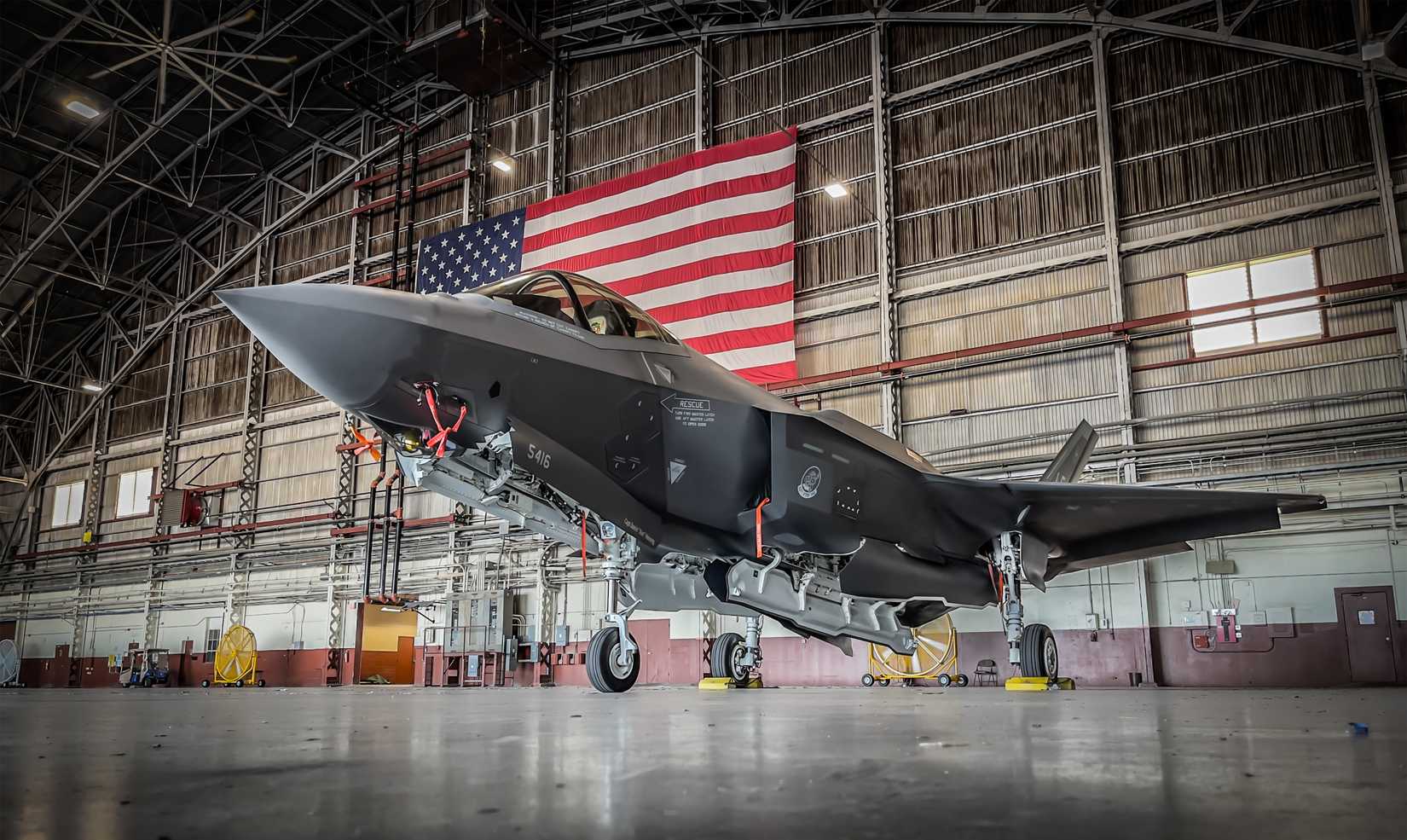
The US Armed Forces are a huge consumer of aerospace products, with all service branches fielding an array of aircraft and missiles. The United States Air Force has even surpassed the Army for largest budget recently, and Lockheed Martin’s F-35 Lightning II program is the largest defense project in US history by price tag. A renewed push to advance air power technology has taken hold in recent years, driving advances in stealth and unmanned systems.
The industry has exceptionally high pay scales thanks to generous budgets for the most intensive programs. The field is also more stable thanks to government funding, and defense-related activities generally remain untouchable due to their importance to national security. The mix of legacy systems like the Boeing B-52 Stratofortress and cutting-edge platforms like the B-21 Raider means that a variety of specialties are in demand.
The top names in the defense industry are Northrop Grumman, Lockheed Martin, Boeing, General Dynamics, Honeywell, and Raytheon. Pratt & Whitney and General Dynamics are also major powerplant suppliers for a variety of programs. The massive scale of the F-35 program, alongside bleeding-edge projects like the Northrop Grumman B-21 Raider stealth bomber and the Boeing F-47 sixth-generation fighter, will keep demand for engineers high over the coming decade.
Artificial intelligence applications, unmanned aircraft technologies, stealth aircraft, and hypersonic missiles are among the top focus areas for the defense side of the aerospace industry. The US consulting firm Deloitte reports that employment in the industry has surged since the pre-COVID era. The average age of talent in this field is higher than in many other industries, and retirement-related turnover has created an urgent push by employers to recruit and retain talent.
Aerospace Engineering And Operations Technologists


For those interested in the aerospace field but do not plan to pursue a university education, the field of aerospace engineering and operations can be entered with an associate’s degree or a high school diploma. A training program is necessary to develop competitive skills to secure a position. These highly trained technicians are the “boots on the ground” that operate the specialized equipment required to develop, test, produce, and sustain aircraft and spacecraft.
The pay range in this field starts around $50,000 and generally tops out at $85,000, with the median salary at $75,000, or about $39 an hour. The Bureau of Labor Statistics predicts a much higher growth rate than the national average over the next decade, projecting 8%. In 2024, the Bureau recorded 9,300 job openings and expects 800 more to be added to that total.
Most positions are full-time and are based in laboratories, factories, and offices, depending on the specialization and project. Some technicians may fabricate components, while others install insect assemblies and systems. Work duties include using specialized instruments and equipment to assemble, manufacture, and analyze a wide range of aerospace products.
source