


For airlines, a younger fleet means lower operating costs due to fuel efficiency and reduced maintenance, fewer CO2 emissions, and enhanced reliability. Passengers, on the other hand, enjoy an improved inflight experience since newer aircraft feature more modern cabins, technology, and comfort. It is then also interesting to look at which kind of airline has the world’s youngest fleet.
That’s why we’ll take a deep dive into the Taiwanese airline STARLUX, the airline with the world’s youngest fleet. When thinking of Taiwan and aviation, most people will likely immediately think of EVA Air and/or China Airlines. However, back in 2020, a third player entered the Taiwanese aviation market: STARLUX Airlines. And although this airline is only a few years old, it has already proven itself to be one of the best and most successful airlines in the world.
A Look At The Youngest Airline Fleet In The World


According to ch-aviation’s Youngest Aircraft Fleet Award 2025, the Taiwanese airline STARLUX Airlines has the world’s youngest fleet at an average age of 3.2 years. As of writing, the airline’s fleet consists of 28 Airbus aircraft with another 40 still on order. The first aircraft to be delivered to the fleet, and thus the airline’s oldest, was an A321neo (B-58201), which was delivered from the Airbus factory in Hamburg on October 29, 2019. It was not until January 23, 2020, that the aircraft operated its first commercial flight.
Today, the airline’s A321neo fleet consists of 13 aircraft with six more on order. The average age of these aircraft is 4.2 years, with the oldest (B-58201) being 6.1 years old (B-58213) and the newest three years. Onboard the STARLUX A321neo, there are 188 seats divided between business class (eight seats) and economy class (188 seats). Besides the A321neo, the airline also operates a widebody fleet, including five Airbus A330-900neo and ten Airbus A350-900. STARLUX Airlines’ A330-900neos have an average age of 3.2 years and seat 297 passengers across 28 seats in business class and 269 in economy. The oldest aircraft (B-58301) in the fleet is 4.1 years of age, and the newest (B-58305) is 1.5 years old.
In addition, six new A330-900neo are expected to join the fleet soon. Last, but not least, is the airline’s Airbus A350-900 fleet, which has an average age of only 1.8 years. These aircraft are primarily used on the airline’s long-haul routes and seat 306 passengers across four cabin classes: four in first, 40 in business, 36 in premium economy, and 270 in economy. The oldest A350-900 (B-58501) is 3.2 years old, whereas the newest (B-58510) was only delivered in April 2025 and is thus only a few months, or 0.7 years to be exact.
In the table below is an overview of STARLUX Airlines’ fleet, per ch-aviation at the time of writing:
|
Aircraft Type |
Number in Fleet |
Number on Order |
Average Age |
Capacity |
|---|---|---|---|---|
|
Airbus A321neo |
13 |
6 |
4.3 years |
188 (8 business; 188 economy) |
|
Airbus A330-900neo |
5 |
6 |
3.2 years |
297 (28 business; 269 economy) |
|
Airbus A350-1000 |
18 |
350 (4 first; 40 business; 36 premium economy; 270 economy) |
||
|
Airbus A350-900 |
10 |
1.8 years |
306 (4 first; 26 business; 36 premium economy; 306 economy) |
|
|
Airbus A350F |
10 |
111 tons (30 standard pallets; 40 lower-deck LD3 containers) |
In addition to the earlier-mentioned orders for the A321neo and the A330-900neo, STARLUX Airlines also placed an order for 18 larger A350-1000 aircraft and ten A350 Freighters. Back in June 2025, when STARLUX expanded its existing A350 order, the airline’s CEO, Glenn Chai said the following regarding the decision for the aircraft:
“This aircraft offers efficiency, range and comfort, making it the perfect fit for our strategy to optimize long-haul operations while delivering an exceptional passenger experience. As we continue to strengthen our international network, the A350-1000 will play an important role in driving growth, sustainability and operational flexibility.”
However, it is not all positive and back in June 2025, Chai also told Bloomberg that the airline was impacted by Airbus delivery delays and that fewer aircraft will be delivered. Due to these delays, the airline expects to only have taken delivery of five aircraft at the end of 2025, which is four less compared to the nine aircraft expected at the beginning of the year. According to Chai, this means the planned capacity growth for 2025 will not exceed 20-30%, whereas the airline had planned for a capacity growth of 50%. These delays are not unique to STARLUX Airlines, and Airbus expects delays to last another three years. The main reason for the delivery delays at Airbus is supply chain issues with some key structural parts as well as the engines.


Airbus Continues Paris Air Show Sweep With Order Of 10 Airbus A350-1000 Widebodies From 5-Star Airline
Taiwanese carrier STARLUX Airlines has confirmed a firm order for additional A350-1000s.
The Story Of Starlux Airlines


STARLUX Airlines was founded by Chang Kuo-wei, the former chairman of EVA Air, back in 2018. However, as mentioned earlier the airline would not operate its first commercial flight until early 2020. The reason for Chang Kuo-wei to start STARLUX Airlines was his discontent with his removal as chairman of EVA Air, owned by the Evergreen Group, after the company’s founder and Chang Kuo-wei father passed away.
The airline positions itself as a “boutique carrier” focusing on luxury, comfort, and service. Although STARLUX is only a few years old, it is already considered one of the best airlines in the world. Back in June 2025, the famous airline rating agency Skytrax certified the airline with a five-star rating based on a comprehensive audit of both the airport and onboard experience. In addition to the 5-star recognition, the airline also received the World’s Most Improved Airline award. Besides the 5-star recognition by Skytrax, STARLUX also received an APEX Five-Star Global Airline designation for 2025 and 2026. This award is based completely on neutral, third-party feedback and is reserved for airlines that truly excel in providing a great passenger experience.
“We are pleased to see STARLUX Airlines achieving this highest 5-Star Airline Rating in 2025, which is a fabulous achievement. A key determinant in awarding this 5-Star Airline status to STARLUX Airlines is the high level of quality consistency delivered to customers, with an excellent onboard product across First, Premium Economy, Business and Economy class, which combines with very efficient and sincere staff service.”
– Glenn Chai –

Results Are In: Qatar Airways Wins SKYTRAX World’s Best Airline Award
The SKYTRAX World Airline Awards have been running since 1999 and are among the most recognized honors in the industry.
An Overview Of The Starlux Airlines Route Network

The STARLUX Airlines route network currently covers 33 routes to 29 destinations across Asia and North America. The airline operates most of these routes from its hub at Taiwan Taoyuan International Airport (TPE), the country’s busiest airport, primarily serving Taipei. Most of STARLUX Airlines’ routes connect Taoyuan International Airport with the Asia-Pacific. In addition, the airline operates several long-haul routes to the US West Coast destinations including Seattle (SEA), San Francisco (SFO), Los Angeles (LAX), and Ontario (ONT). The latter route, which might come as a surprise to some, supplements the airline’s Los Angeles operations, providing convenience to the large Asian diaspora in the Ontario area.
In addition to the airlines’ hub in Taipei, STARLUX also operates a smaller secondary hub at Taichung International Airport (RMQ), the country’s second-largest city. From Taichung, STARLUX’s route network primarily focuses on leisure destinations such as Phu Quoc (PQC) and Da Nang (DAD) in Vietnam or Macau (MFM) in China. The airline’s long-haul network consists of a handful of US destinations served from Taoyuan International Airport. Next year, STARLUX is also planning to open another secondary base at Kaohsiung International Airport (KHH), marking a key expansion into Southern Taiwan.
Over the next few years, STARLUX Airlines is expected to continue growing its network. Starting in early 2026, the airline will also commence flights between Taipei and Phoenix (PHX), which will operate three to four flights a week using its Airbus A350-900 fleet. In addition to this, the airline is eyeing flights to destinations such as New York, Washington, Chicago, Dallas, and Houston. To complement its growing US network, the airline is also investing heavily in strategic partnerships with other airlines. In August of this year, Starlux signed an interline agreement with American Airlines, improving connectivity between Asia and the US via Los Angeles and soon also, Phoenix. Soon after, the airline also announced the expansion of its existing codeshare agreement with Alaska Airlines with 12 new destinations via Seattle and San Francisco. Furthermore, it is also expected that Starlux will soon announce the first routes to Europe, as the airline has recently obtained the required permissions to start flights to Helsinki (HEL) in Finland. In addition to Helsinki, the Czech capital, Prague, is frequently named as a potential destination.

What US Travelers Can Experience On The New Starlux Airbus A350 Route To Ontario
The carrier will soon be the Southern California airport’s newest operator.
The 5 Airlines With The Youngest Fleet
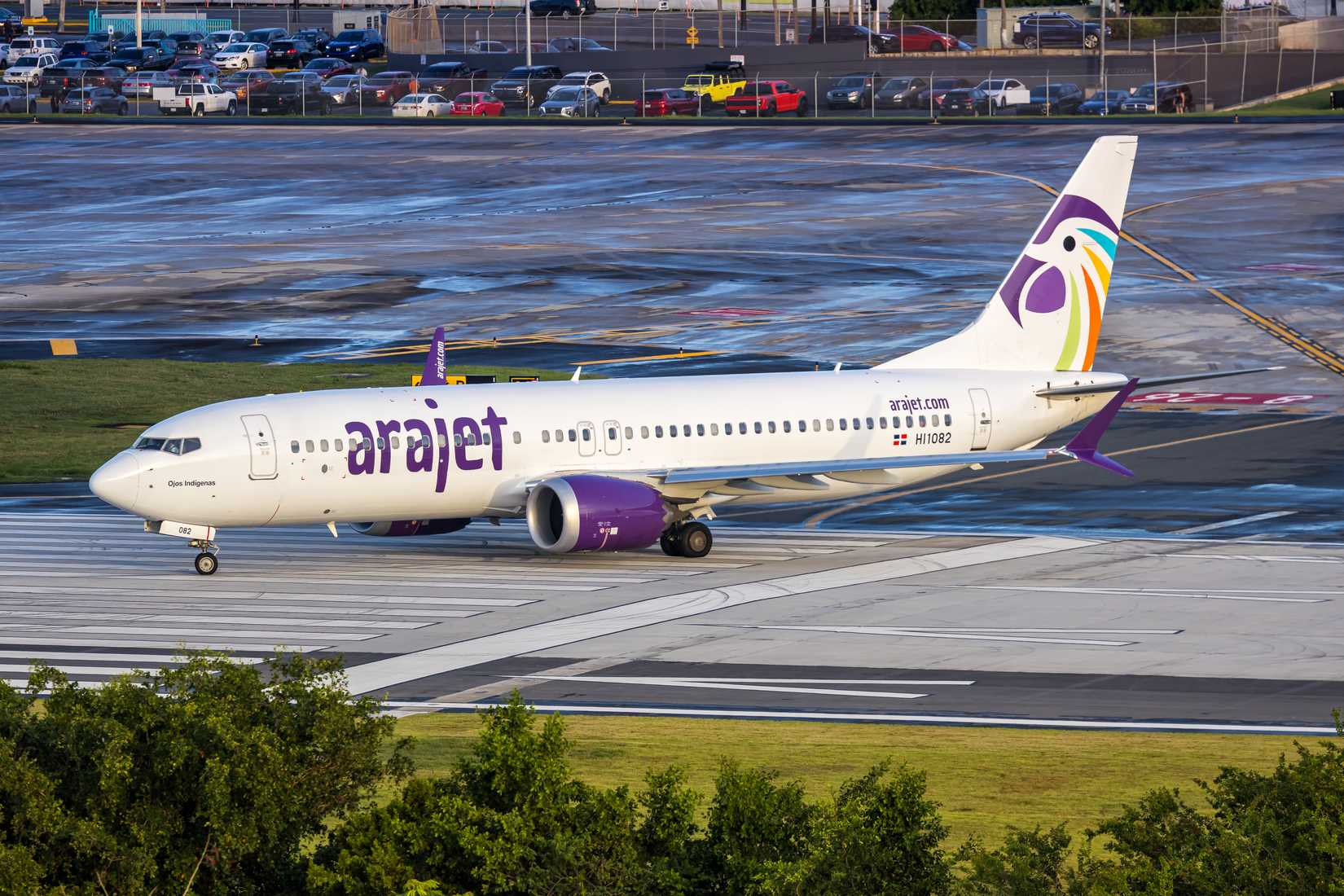
Besides STARLUX, other airlines such as KM Malta Airlines, Flyadeal, Flynas, and Arajet also received recognition for their young fleet in ch-aviation World’s Youngest Aircraft Fleet Award 2025. At the time of the award, second place was claimed by the Maltese airline, KM Malta Airlines, which today has an average fleet age of 4.2 years and operates eight aircraft Airbus A320 family aircraft. KM Malta Airlines is the predecessor of the bankrupt Air Malta, which had been struggling financially for some years and was not allowed to receive more state aid to remain afloat in compliance with EU regulations.
In third and fourth place are Saudi Arabian low-cost airlines Flyadeal and Flynas, with an average fleet age of 4.8 and 5.2 years. Flyadeal was founded by flag carrier Saudia back in 2016 and operated its first commercial flight in 2017. Since then, the airline has grown its fleet to an all-Airbus fleet of 41 A320 Family aircraft and is also expecting delivery of ten A330-900neo aircraft. The other Saudi Arabian airline on the list, Flynas, was founded back in 2007 as Nas Air and was one of the first airlines in Saudi Arabia other than Saudia. It wasn’t until 2013 that the airline re-branded to Flynas. Today, the airline operates an all-Airbus fleet consisting of 65 aircraft including both narrowbodies and widebodies.
|
Position Youngest Aircraft Fleet Award 2025 |
Airline |
Country |
Year First Flight |
Fleet Size |
Average Age* |
|---|---|---|---|---|---|
|
1. |
Starlux Airlines |
Taiwan |
2020 |
28 |
3.2 years |
|
2. |
KM Malta Airlines |
Malta |
2024 |
8 |
4.2 years |
|
3. |
Flyadeal |
Saudi Arabia |
2017 |
41 |
4.8 years |
|
4. |
Flynas |
Saudi Arabia |
2007 |
65 |
5.2 years |
|
5. |
Arajet |
Dominican Republic |
2022 |
12 |
4.1 years |
*The ranking is based on the ch-aviation World’s Youngest Aircraft Fleet Award 2025. However, the average age is up-to-date as of writing with data from Planespotter.net.
Last but not least is the flag carrier and largest airline of the Dominican Republic, Arajet. In the World’s Youngest Aircraft Fleet Award 2025, this airline claimed 5th spot. However, in the most recent data, it climbed to second place with an average fleet age of 4.1 years. However, Arajet was founded in 2014 as Dominican Wings, its first commercial flight as Arajet did not take place until December 15, 2022. Today the airline operates an all-Boeing fleet consisting of 12 Boeing 737 MAX aircraft with 25 more on order.
source