


Over the past few years, airlines have continued to compete to offer the most luxurious and comfortable business class seats, catering to an increasingly high-spending demographic of leisure travelers. This is led by Gulf and Asian carriers, which are unveiling more lavish products than ever before. In 2025, however, 

Originally built around full-height doors, a chaise-lounge style seat, and meticulous branding, this product represents a clean break from American’s previous widebody cabins, and it even challenges the relevance of traditional international first-class cabins. Crucially, this is not a one-off flagship offering, with the airline planning to roll out this suite product across the majority of its long-haul fleet and premium transcontinental network by the end of the decade. Like many of its peers, the carrier is looking to dramatically increase the share of high-yielding premium seats that it sells. The result is thus a sweeping premium pivot that turns a once-ordinary business-class cabin into one of the most modern ways to cross the Atlantic or the Pacific today. The aircraft underpins American Airlines’ renewed push to be taken seriously as a true global premium airline.
What Exactly Is The Flagship Suite Concept?


American Airlines first teased out the Flagship Suite concept in 2022, when it promised a private premium experience on all of its new Boeing 787-9 and Airbus A321XLR models, alongside retrofits of the business class cabins on its Boeing 777-300ER fleet. The core idea behind this cabin is relatively simple, with each business-class traveler being able to enjoy a self-contained suite with a closing door. The airline will also offer direct aisle access to all passengers.
The seat itself is incredibly flexible, switching between an armchair, a lounger, and a fully lie-flat bed. On the Boeing 787-9, there are 51 of these suites laid out in a 1-2-1 configuration across two different cabins, while the Airbus A321XLR squeezes around 20 suites into a single-aisle jet in a striking 1-1 layout. Storage is a major upgrade in comparison to older versions of the cabin. The carrier will be offering each passenger access to multiple cubbies, shelves, and a large side console that is available for laptops and amenity kits, according to documents published by the airline.
|
Aircraft Type: |
Number Of Flagship Suites: |
|---|---|
|
Boeing 787-9 (78P) |
51 |
|
Airbus A321XLR |
10 |
Connectivity is another core element of the cabin’s design, with all seats paired with USB-C, AC power, and built-in wireless charging capabilities. A special Flagship Suite Preferred row at the bulkheads also offers even more room for passengers, effectively turning two rows into an ultra-premium mini-cabin that supports even stronger pricing power. The designer behind the cabin is Teague, who has chosen a denim-and-leather-inspired theme for the cabin. In a statement, Heather Garboden, the airline’s Chief Customer Officer, had the following words to share on the new in-flight product:
“Every aspect of our new 787-9 is designed to feel premium in nature. Whether flying for business or pleasure, having the opportunity to explore other parts of the world should be an exciting and memorable experience that begins the moment you book your flight, long before you reach your final destination.”
Where Will American Airlines Be Deploying This New Seat?
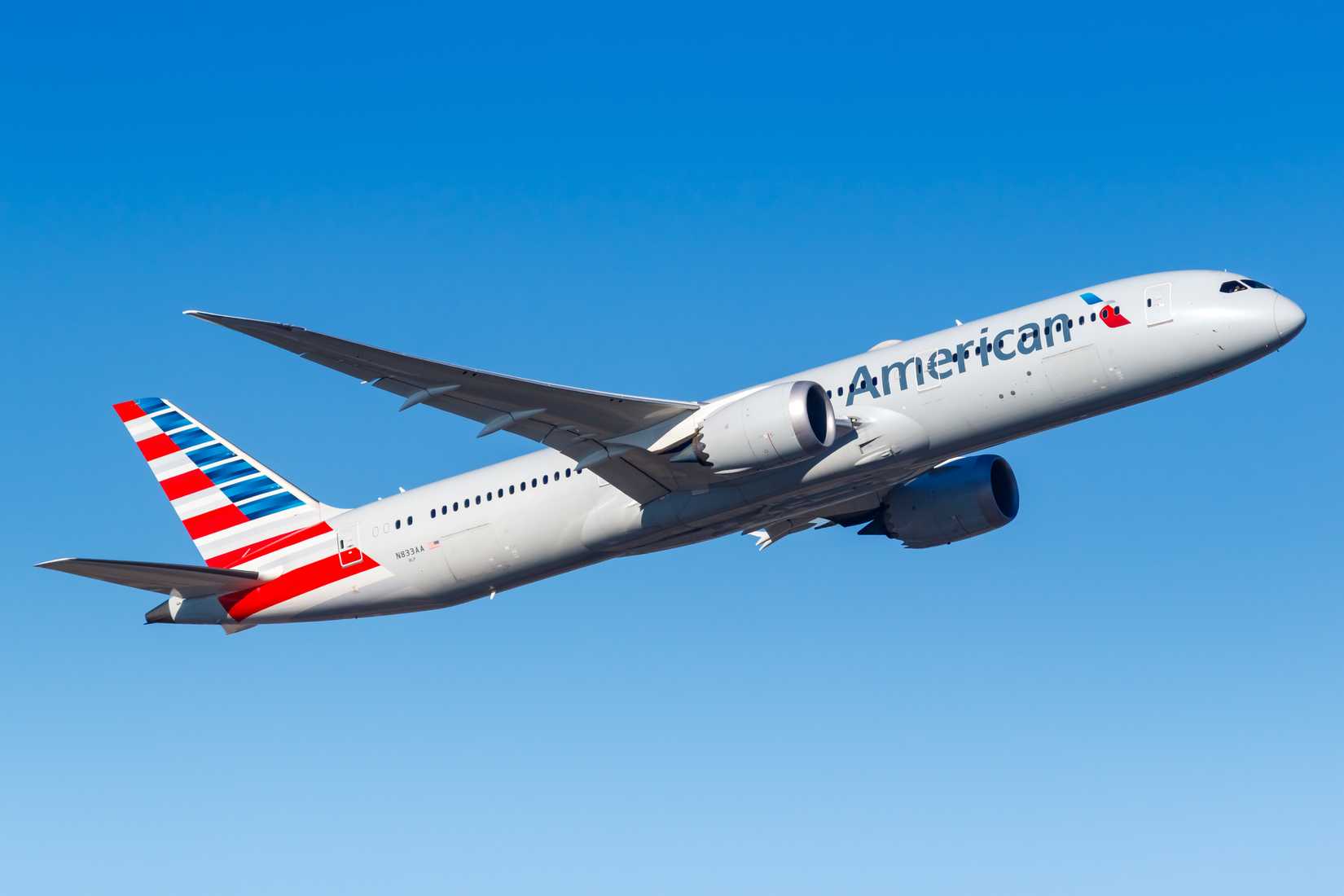
American Airlines launched flights using its Flagship Suite in June 2025, when American’s newly-built Boeing 787-9s entered service between Chicago and Los Angeles, before they continued on to London Heathrow Airport (LHR) for the international debut of the new cabin. Since that time, the airline’s network has expanded rapidly. American Airlines now routinely assigns the Boeing 787-9P, an aircraft with a premium-oriented configuration, to high-yielding transatlantic markets. The jet is used primarily out of Philadelphia International Airport (PHL) and Chicago-O’Hare Airport (ORD).
Further winter services with the aircraft are planned from Dallas/Fort Worth International Airport (DFW), with additional seasonal services to airports in Australia and New Zealand also set to see the model. On these ultra-long-haul routes, the cabin will offer American a better competitive edge, especially on these kinds of ultra-long sectors. Some flights from Dallas to Ministro Pistarini International Airport (EZE) in Buenos Aires will also see this upgraded model.
For those booking flights online, passengers should look for the 78P premium code when booking in order to ensure that they can book one of these 51 individual upgraded suites. American Airlines expects to operate up to 30 of these premium-heavy Dreamliners by 2029, meaning that over the next few years, a growing share of its Europe, South America, and South Pacific network will quietly convert to the new cabin without the airline needing to advertise every time it adds the premium model to a new route.


Luxury Comfort: Inside American Airlines’ New Premium Boeing 787-9
The airline has introduced brand new business class suites and revamped the premium economy and main cabin.
Long-Haul Suites Will Also Debut On Airbus A321XLR Services


The Boeing 787-9 will undoubtedly be the model where this new cabin immediately begins to make an impact. However, the Airbus A321XLR will also feature this product in a manner that will allow American Airlines to enter new kinds of high-yielding markets. Each Airbus A321XLR carries 20 Flagship Suites arranged in 10 rows, with just one seat on either side of the aisle. This gives each business-class passenger a window, direct aisle access, and their own sliding door, a layout much more reminiscent of a boutique first-class cabin than what the carrier traditionally offers to passengers on a narrowbody.
Joining these suites are 12 premium economy recliners and 123 Main Cabin seats, turning the aircraft into a versatile three-class tool that can be deployed on long-and-thin routes across the airline’s network. This aircraft first entered service on premium transcontinental sectors that it previously used its premium-oriented Airbus A321T to serve. This offers exceptional premium capacity on routes like New York to Los Angeles and New York to San Francisco.
From there, the jet will stretch onto overnight runs from the East Coast deep into Europe, where its range and low trip costs allow American Airlines to open service in secondary markets that would never otherwise justify a widebody. Executives frame this project as bringing a widebody experience to a narrowbody jet, with full-size suites, large entertainment screens, Bluetooth audio, and fast Wi-Fi.
Extensive Upgrades To The Airline’s Soft Product
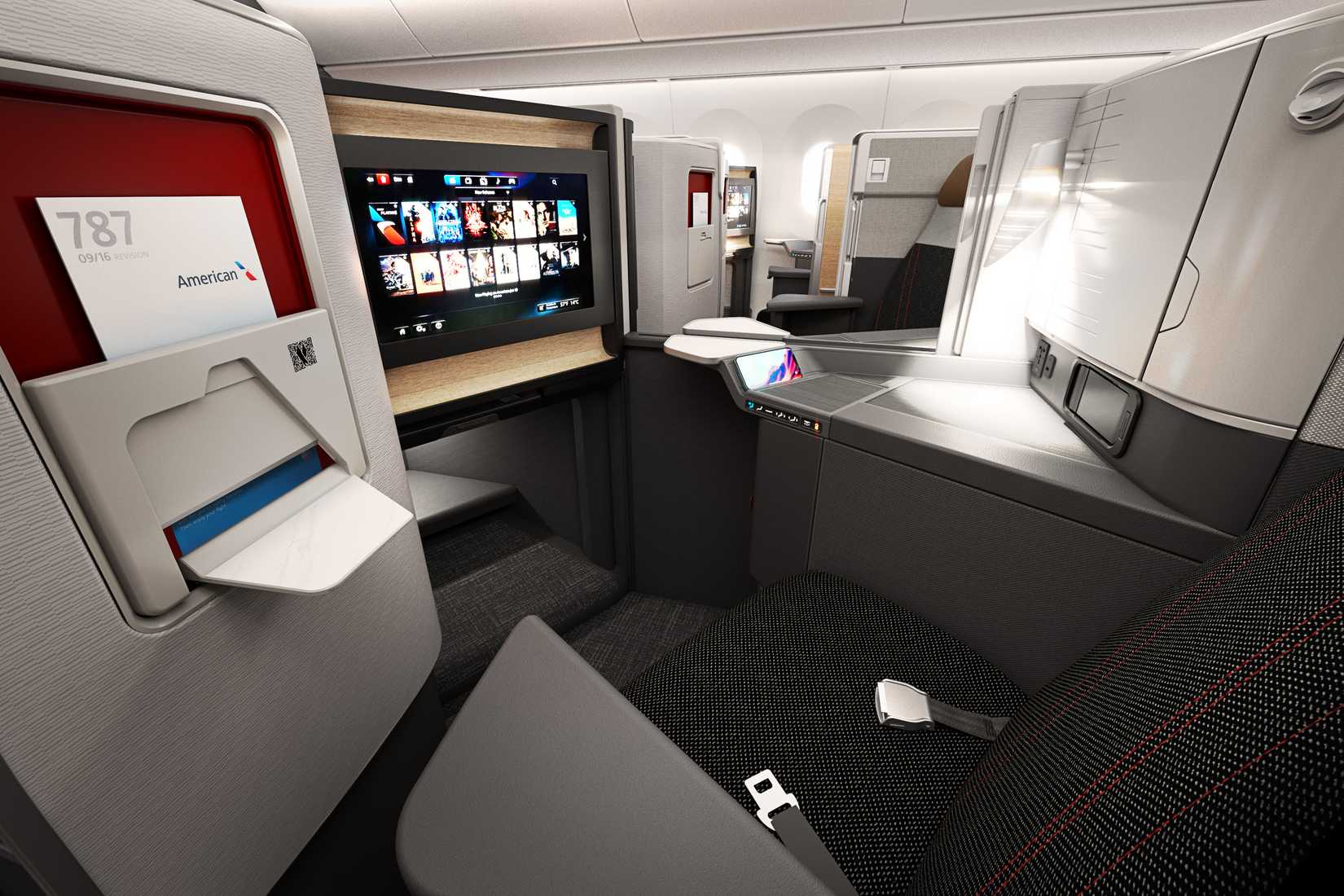
The airline’s business class hardware on its own is not what makes this modern business-class seat so impressive. American Airlines has also upgraded the service and additional products offered in its cabin. Passengers will get priority check-in, security, and boarding, alongside access to Flagship Lounges with restaurant-style dining and craft cocktails before they board any kind of long-haul flight.
Onboard, the Boeing 787-9 and the Airbus A321XLR debut upgraded bedding, including plush duvets, dual-sided cool-touch pillows, and, on ultra-long routes to Asia, the Middle East, India, Australia, and New Zealand, mattress pads and pajamas that were once reserved exclusively for those traveling in first class. Amenity kits have also been refreshed with upmarket skincare brands and sleeker designs, while menus resemble those of the regions in which the service is operating.
Every suite also comes along with an impressive entertainment setup, including 4K entertainment screens that feature Bluetooth audio. Bang & Olufsen premium headsets are available for passengers to use. The airline is also rolling out free high-speed Wi-Fi for AAdvantage members on many of its long-haul aircraft, effectively turning the cabin into a workable in-flight office.

Boeing 777-200ER Revamp: Inside American Airlines’ Latest Retrofit Program
The new interior offers more premium capacity, including AA’s new Flagship Suites.
What Is Behind This Premium Pivot?

American Airlines’ premium pivot is mostly about long-haul operating economics. Demand has slowly shifted towards fewer, higher-yield seats rather than packing every single widebody with basic economy seating. American Airlines is looking to chase revenue on a per-departure basis, as opposed to simply trying to offer as much capacity to the market as possible, as has been a traditional strategy for the airline.
Corporate travel may have recovered unevenly, with companies that are flying still willing to pay for privacy, beds, and productivity, especially on overnight transatlantic services. At the same time, there is a growing cohort of premium leisure travelers who are happy to burn miles or co-branded credit card points for aspirational business-class trips. This dovetails neatly with the AAdvantage program’s booming loyalty revenue growth, a key catalyst for the airline’s continued positive trajectory.
The airline is ultimately looking to replace small and rarely-filled first-class cabins with as many suites as possible to improve overall cabin flexibility. The carrier can ultimately offer selective discounts on these products without undermining a premium brand. As a result, this new flagship product is less of a design exercise but a demonstration of exactly how serious the airline is about capturing more high-margin traffic.
What Is Our Bottom Line With This New Product?

At the end of the day, American Airlines is undoubtedly upping its game when it comes to business class travel, and it is, critically, doing so ahead of its competitors. United Airlines, with which the airline has been engrossed in a high-profile turf war, is behind the airline in terms of next-generation premium product rollouts.
The question is now whether American Airlines will be successful in consistently filling these seats. The airline is certainly advertising its ability to achieve high load factors on premium-oriented routes, and investors will anxiously await to see if that is the case.
In the meantime, premium-oriented customers can look forward to a product catered to meet their needs at every step of the journey, all while offering a cabin that feels designed for a Middle Eastern or Asian five-star airline. If American Airlines has its way, the carrier could have a reputation as a premium carrier as soon as 2030.
source